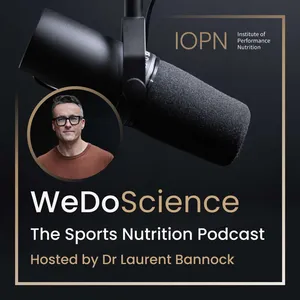
Free Daily Podcast Summary
We Do Science - The Sports Nutrition Podcast: Daily Summaries Delivered
by Dr Laurent Bannock
For current and aspiring sports and exercise nutritionists! The Institute of Performance Nutrition's We Do Science podcast, hosted by Dr Laurent Bannock, features a wide variety of leading guest experts (elite practitioners and scientists) with expertise in sport and exercise nutrition, and related fields relevant to real-world practice.
Latest Episodes
The most recent episodes — sign up to get AI-powered summaries of each one.
- 4 days ago1h 28m
The Human Side of Sports Nutrition: Disordered Eating, Trust & Career Lessons | Dr Emily Jevons
In this episode of We Do Science, Dr Emily Jevons shares her journey from academic research to professional cycling and explores the human realities of sports nutrition practice. We discuss career development, credibility and trust, and the key challenges of recognising disordered eating, understanding athlete wellbeing, and knowing when to refer for specialist support.CHAPTERS00:00 Introduction02:31 Introducing Dr Emily Jevons05:48 From swimming to sports nutrition08:38 Research, a self-funded PhD and a helpline role15:36 Career paths, credibility and connecting with clients23:13 Emily's PhD research29:01 After the PhD: lecturing and finding her path32:26 Maternity leave and building a consultancy36:36 Working in WorldTour pro cycling40:16 Who can call themselves a nutritionist?51:51 Why disordered eating became her focus56:04 Disordered eating vs eating disorders59:39 Eating disorders, REDs and knowing when to refer1:06:18 Orthorexia and the obsession with clean eating1:12:58 Warning signs to look out for in athletes1:17:34 How to raise concerns with an athlete1:23:04 Advice for aspiring nutritionistsIf you enjoy the episode, please subscribe to We Do Science and share your thoughts in the comments.Connect with EmilyInstagram: https://www.instagram.com/emilyjevonsnutritionLinkedIn: https://www.linkedin.com/in/emily-jevons-phd-rnutr-5b680991Connect with Laurent:Substack: https://substack.com/@laurentbannockWebsite: https://www.laurentbannock.comInstagram: https://www.instagram.com/laurent_bannock
- 1 weeks ago1h 37m
Performance Nutrition: What Really Matters? | Prof. Shawn Arent
In this episode of We Do Science, I’m joined by Professor Shawn Arent to explore what still matters in performance nutrition and how to separate established scientific principles from changing trends. We discuss what has evolved in sports nutrition, which fundamentals remain important, and what matters when translating scientific evidence into real-world practice.Shawn explains why hydration, carbohydrates and protein remain central to athletic performance, while addressing common misconceptions around nutrient timing, the anabolic window and fasted training. We explore the relationship between nutrition, training stress and recovery, why individual circumstances matter, and why advice intended for the general population may not always apply to competitive athletes.We also discuss the practical challenges of working with athletes and coaches, including how to communicate scientific evidence and build effective relationships. Shawn shares insights from his experience in elite sport, exploring the value of performance testing, body composition assessments and biomarkers. We examine the limitations of measurement tools, the importance of interpreting results correctly, and why collecting more data doesn't necessarily lead to better decisions.Whether you’re a sports nutrition practitioner, coach or athlete, this conversation explores how to identify what genuinely matters in performance nutrition, apply scientific evidence effectively, and make informed decisions based on the needs of the individual athlete.CHAPTERS00:00 Introduction05:09 Introducing Prof. Shawn Arent12:09 What's changed in performance nutrition?17:39 Nutrition myths, trends and pseudoscience22:44 The fundamentals: Hydration, carbohydrates and protein27:19 Energy deficits, training stress and recovery33:34 Individual needs and the relationship with food41:09 Communicating science to athletes and coaches51:29 Performance testing, monitoring and biomarkers1:03:29 Interpreting results and measurement limitations1:09:09 Body composition and tracking athlete progress1:17:09 Blood testing, wearables and performance data1:27:39 Key takeaways and practical applicationsIf you enjoy the episode, please subscribe to We Do Science and share your thoughts in the comments.Connect with Shawn:LinkedIn: https://www.linkedin.com/in/shawnmarent/Connect with Laurent:Website: https://www.laurentbannock.com Instagram: https://www.instagram.com/laurent_bannock
- 2 weeks ago1h 22m
Sodium Bicarbonate for Performance: Benefits, Dosing and Side Effects | Prof. Lewis Gough
In this episode of We Do Science, I’m joined by Professor Lewis Gough to explore sodium bicarbonate supplementation and its role in sport and exercise performance. We discuss how it works, what the research tells us, and what matters when translating that evidence into practice.Lewis explains the science of buffering, clears up common misconceptions about lactate and muscle fatigue, and shares insights from his research with athletes. We explore which types of exercise may benefit, why individual responses vary, and why a study’s average result doesn’t tell the whole story.We also discuss the practical considerations: dose, timing, gastrointestinal side effects, and the differences between powders, capsules and newer delivery systems. Lewis shares his perspective on combining sodium bicarbonate with other supplements, including beta-alanine, caffeine and nitrates, highlighting where the evidence is stronger and where questions remain.Whether you’re a sports nutrition practitioner, coach or athlete, this conversation explores how to assess sodium bicarbonate’s place within a performance nutrition strategy—and why the individual athlete and their sporting demands matter.CHAPTERS00:00 Introduction02:24 Introducing Prof. Lewis Gough14:03 Lactate, muscle fatigue and how buffering works27:59 Performance evidence and research limitations40:19 Why individual responses vary48:02 Which sports and athletes may benefit?52:04 Side effects, delivery methods and dosing1:03:42 Repeated exercise bouts and recovery1:06:13 Combining bicarbonate with other supplements1:18:38 Key takeawaysIf you enjoy the episode, please subscribe to We Do Science and share your thoughts in the comments.Connect with LewisLinkedIn: https://www.linkedin.com/in/professor-lewis-gough-40550857/Connect with Laurent:Substack: https://substack.com/@laurentbannockWebsite: https://www.laurentbannock.comInstagram: https://www.instagram.com/laurent_bannock
- 3 weeks ago1h 5m
Women's Training and Nutrition: What the Evidence Says | Dr. Lauren Colenso-Semple
Should women train and eat differently from men? In this episode of We Do Science, I’m joined by Dr Lauren Colenso-Semple to explore female physiology, resistance training and how we translate research into practical recommendations.Drawing on her experience as both a coach and a researcher, Lauren discusses her work examining muscle protein synthesis across menstrual cycle phases. We explore the evidence behind cycle syncing, the importance of measuring hormones accurately, and why findings from animal studies don’t automatically translate into training advice for humans.We also discuss hormonal contraceptives, energy availability, injury-risk claims and resistance training across the menopause transition. Throughout, we distinguish between blanket recommendations for women and individual adjustments that account for symptoms, preferences, training goals and lived experience.For nutrition practitioners, coaches, athletes and anyone interested in women’s training, this conversation examines which claims are supported by research, where uncertainty remains, and how to personalise an approach without adding unnecessary complexity.Subscribe to We Do Science for more conversations on the science and practice of performance nutrition.Connect with Lauren:Website: www.drlaurencs.comInstagram: @drlaurencs1Connect with me:Substack: @laurentbannockWebsite: laurentbannock.comInstagram: @laurent_bannockKey chapters00:00 Episode preview and introduction04:50 Lauren’s journey from coach to researcher10:21 Studying women in exercise science16:28 What research tells us about women’s training26:26 Menstrual cycle hormones and muscle protein synthesis36:15 Symptoms, lived experience and individualised coaching39:32 Hormonal contraceptives and training adaptations44:35 Energy availability and menstrual health46:40 Cycle syncing, marketing and injury-risk claims53:34 Menopause, resistance training and interpreting research1:02:21 Main takeaways for practice
- Oct 23, 20261h 34m
NFL Nutrition: From the Lab to the Pitch | Dr. Matt Frakes
What does it take to deliver performance nutrition in the NFL? In this episode of We Do Science, I’m joined by Dr Matt Frakes of the New York Giants to explore the realities of supporting elite athletes and turning nutrition research into everyday practice.Matt shares his journey from college football player and clinical dietitian to working in collegiate sport and the NFL. We discuss why qualifications alone don’t earn an athlete’s trust, how to build relationships with players and their support networks, and what individualised nutrition looks like within a team environment.We also explore Matt’s doctoral research into nutrition and concussion recovery, his experience supporting an athlete during Ramadan, and the practical challenges of feeding players both inside and outside the training facility. Along the way, we discuss supplements, commercial testing and the demands of supporting recovery across a long, physically demanding season.For sports nutrition practitioners, coaches and students, this conversation offers an honest look at the communication, collaboration and judgement involved in working at the highest level—and the lessons Matt would share with someone starting out.Subscribe to We Do Science for more conversations on the science and practice of performance nutrition.Connect with Matt:Instagram: https://www.instagram.com/superiorfrakes/Linkedin: https://www.linkedin.com/in/mrfrakes89/Connect with me:Substack: https://substack.com/@laurentbannockWebsite: https://www.laurentbannock.comInstagram: https://www.instagram.com/laurent_bannockChapters00:00 Introduction and Matt’s journey to the NFL09:00 From clinical nutrition to elite performance16:47 Building trust and individualising athlete support27:50 Nutrition and concussion research33:27 Understanding the athlete: beliefs, habits and Ramadan44:12 Delivering individualised nutrition across a team50:02 Food provision and nutrition outside the facility1:05:48 Supplements, commercial testing and player trust1:14:05 The demands of NFL nutrition and recovery1:24:23 Career lessons and advice for practitioners
- Oct 16, 20261h 12m
Can Muscle Adapt When You're Eating Less? | Dr Jose Areta
What happens to your muscles when you exercise in a calorie deficit? In this episode of We Do Science, I’m joined by Dr José Areta, Associate Professor in Exercise Metabolism and Nutrition at Liverpool John Moores University, to explore how muscle responds when energy intake is reduced—and why muscle size is only part of the picture.José takes us through his research examining five days of low energy availability alongside aerobic exercise in men. Looking beyond body weight and lean mass, his team tracked changes in individual muscle proteins to understand how the muscle was adapting.We discuss what they found, including changes in proteins involved in energy production, and explore the distinction between muscle quantity and quality. We also consider how the body prioritises energy, the role of protein intake, and the relevance of these findings to athletes managing their body composition.Throughout, we address the study’s limitations and why short-term changes shouldn’t be taken as evidence that prolonged energy restriction improves performance. For practitioners, coaches, athletes and students, this conversation offers a closer look at the relationship between nutrition, exercise and muscle adaptation.CHAPTERS00:00 Introduction and José’s background06:43 Understanding energy availability11:40 Why study muscle during an energy deficit?22:23 How the body prioritises energy35:36 The study: diet, exercise and muscle measurements45:02 Key findings: hormones and muscle adaptation51:06 Short-term versus prolonged energy restriction54:27 The roles of protein and exercise1:04:03 Main takeawaysConnect with Jose:Instagram: https://www.instagram.com/jose_l_areta/Linkedin: https://www.linkedin.com/in/jose-areta-8671738a/Connect with Laurent:Substack: https://substack.com/@laurentbannockWebsite: https://www.laurentbannock.comInstagram: https://www.instagram.com/laurent_bannockSubscribe to We Do Science for more conversations on the science and practice of performance nutrition.
- Oct 9, 20261h 6m
The Food Matrix: Rethinking Protein Nutrition | Prof. Nick Burd
Is more protein always better? In this episode of We Do Science, I’m joined by Professor Nick Burd to explore protein nutrition, muscle adaptation and why the amount of protein we eat is only part of the story.Returning to the podcast after six years, Nick shares insights from his research at the University of Illinois into protein metabolism and the food matrix: how a food’s structure and surrounding nutrients influence the way our bodies respond to it. From eggs and salmon to whey and casein, we examine what we can learn from studying whole foods alongside isolated proteins and supplements.We discuss the difference between maximal and optimal protein intake, why muscle protein synthesis shouldn’t automatically be equated with muscle growth, and how protein strategies may differ between strength and endurance athletes. We also explore anabolic resistance, muscle quality and the questions researchers are still working to answer.Whether you’re a sports nutrition practitioner, coach, athlete or student, this conversation offers a closer look at how to interpret protein research and apply it in practice, with a reminder of the central role of consistent exercise in supporting muscle adaptation.Subscribe to We Do Science for more conversations on the science and practice of performance nutrition.Connect with Nick:LinkedIn: https://www.linkedin.com/in/nicholasburd/Connect with Laurent:Substack: https://substack.com/@laurentbannockWebsite: https://www.laurentbannock.comInstagram: https://www.instagram.com/laurent_bannockChapters:01:59 Protein, the food matrix and the questions ahead03:03 Nick’s background and research06:25 A career investigating protein metabolism09:03 Making sense of muscle protein synthesis12:28 Muscle remodelling versus muscle growth14:30 How protein research shapes recommendations16:52 Understanding the protein RDA23:21 Individual responses and personalised nutrition25:36 Maximal versus optimal protein intake29:59 Food first, supplements and questions about timing31:42 Strength versus endurance athletes33:20 Looking beyond total protein intake35:29 Understanding the food matrix36:08 Lessons from eggs, salmon and minced meat41:54 Whey, casein and attempts to improve the response46:58 Exercise, protein and anabolic resistance50:45 Anabolic resistance in different populations54:45 Muscle size, strength and quality59:52 Are we too focused on protein quantity?
- Oct 2, 20261h 33m
Nutrition for Pro Cycling: From Plate to Performance - Dr. Dana Lis & Nicki Strobel
On this episode of We Do Science, Dr Laurent Bannock welcomes back Dr Dana Lis, registered dietitian and performance nutrition practitioner, alongside chef and nutritionist Nicki Strobel, to discuss their paper Plate to Performance: Culinary Nutrition Support for Professional Road Cycling, part of the UCI Sports Nutrition Project.Drawing on years of experience in elite cycling, Dana and Nicki explain how the culinary nutrition team of nutritionists, chefs and soigneurs turns evidence into food riders will actually eat across Grand Tours, Classics and training camps. The conversation covers the chef–nutritionist relationship, on-bike fuelling, menu planning around stage demands, and how power meter data, doubly labelled water and continuous glucose monitors inform daily decisions.Laurent, Dana and Nicki also discuss educating riders in a decentralised sport, building buy-in across the team, planning for illness, crashes and kitchens without power, and where the journey from science to plate most often breaks down. With lessons that apply well beyond cycling, this episode offers sports nutritionists, chefs, coaches, students and athletes a practical look at how performance nutrition is delivered in the real world.Subscribe for more conversations exploring the science and practice of sports nutrition.Read the paper:Plate to Performance: Culinary Nutrition Support for Professional Road Cyclinghttps://journals.humankinetics.com/view/journals/ijsnem/36/3/article-p335.xmlConnect with Dana:LinkedIn: https://www.linkedin.com/in/dr-dana-lis/Connect with Nicki:LinkedIn: https://www.linkedin.com/in/nicki-strobel-44b41347/Connect with Laurent:Substack: https://substack.com/@laurentbannockLinkedIn: https://www.linkedin.com/in/laurentbannock/Instagram: https://www.instagram.com/laurent_bannockWebsite: https://www.laurentbannock.comChapters:00:00 Introduction03:13 Welcoming Dana and Nicki to We Do Science04:31 Bridging the gap between science and practice06:35 Dana's background and career10:08 Nicki's journey from Michelin-star chef to pro cycling15:20 How the Plate to Performance paper came about20:38 Why chefs and nutritionists need a shared language23:18 Cooking on the road: chefs, hotels and logistics26:27 Prioritising nutrition interventions28:41 The chef–nutritionist relationship33:12 On-bike nutrition and the role of soigneurs38:02 Keeping the evidence intact across the team42:01 Planning menus around race demands45:15 Day types, fuelling time points and daily adjustments49:56 The data behind fuelling decisions52:55 Energy availability and RED-S in the field56:16 Turning precise numbers into real meals59:36 Rider education in a decentralised sport1:04:06 Building rider buy-in1:07:11 Working through the rider's support network1:11:04 Establishing yourself in a new team1:15:25 When things go wrong on the road1:17:26 Planning for illness and injury1:22:09 Where the science breaks down in practice1:24:47 What Dana and Nicki have changed their minds on
Get We Do Science - The Sports Nutrition Podcast summaries in your inbox
Free AI-powered daily recaps. Key takeaways, quotes, and mentions — in a 5-minute read.
Get Free Summaries →Free forever for up to 3 podcasts. No credit card required.
You Might Also Like
Listeners also like.

Perform with Dr. Andy Galpin
Explores science-based strategies for optimizing physical and mental performance for all fitness levels.

Science Vs
A show that investigates popular topics and myths by analyzing scientific evidence to determine what’s fact, fiction, or uncertain.

Nutrition Diva
Monica Reinagel explains evidence-based nutrition research to help listeners make informed, practical food and health choices.

ZOE Science & Nutrition
Experts break down cutting-edge health and nutrition science to help you make better choices for your body and gut.
The Model Health Show
Shawn Stevenson explores health and fitness topics including nutrition, sleep, hormones, and exercise with expert guests.
The Stronger By Science Podcast
A science-focused fitness podcast that breaks down research, trends, and practical strategies for strength and health.

The Dr. Gabrielle Lyon Show
Discusses health, longevity, and mental resilience through science-based conversations with medical and wellness experts.
Sam Miller Science
Sam Miller
The Nick Bare Podcast
Nick Bare explores nutrition, human performance, and disciplined habits to help people consistently show up for what matters.
The NANP Nourishing You Podcast
National Association of Nutrition Professionals (NANP)
TRAINED
Discusses fitness and wellness through interviews with athletes, scientists, and health experts on mindset, nutrition, movement, recovery, and sleep.

Nutrition Made Simple
Nicole Aucoin
About We Do Science - The Sports Nutrition Podcast
For current and aspiring sports and exercise nutritionists! The Institute of Performance Nutrition's We Do Science podcast, hosted by Dr Laurent Bannock, features a wide variety of leading guest experts (elite practitioners and scientists) with expertise in sport and exercise nutrition, and related fields relevant to real-world practice.
Customized Recaps
AI-powered recaps with compact key takeaways, quotes, and insights.
Straight to Your Inbox
Get key takeaways from We Do Science - The Sports Nutrition Podcast in a 5-minute read.
Save Hours Every Week
Stay current on your favorite podcasts without falling behind.
Frequently Asked Questions
What is Podzilla's We Do Science - The Sports Nutrition Podcast daily summary?
It's a free AI-powered email that summarizes new episodes of We Do Science - The Sports Nutrition Podcast as soon as they're published. You get the key takeaways, notable quotes, and links & mentions — all in a quick read.
How does the We Do Science - The Sports Nutrition Podcast podcast summary work?
When a new episode drops, our AI transcribes and analyzes it, then generates a personalized summary tailored to your interests and profession. It's delivered to your inbox every morning.
Is this an official We Do Science - The Sports Nutrition Podcast product?
No. Podzilla is an independent service that summarizes publicly available podcast content. We're not affiliated with or endorsed by Dr Laurent Bannock.
Can I get summaries of other podcasts too?
Absolutely! The free plan covers up to 3 podcasts, any in the catalog. Basic raises that to 15, Pro to 40 and Max to 100. Browse our full catalog at /podcasts.
How often does We Do Science - The Sports Nutrition Podcast release new episodes?
We Do Science - The Sports Nutrition Podcast publishes weekly. Our AI generates a summary within hours of each new episode.
What topics does We Do Science - The Sports Nutrition Podcast cover?
We Do Science - The Sports Nutrition Podcast covers topics including Science, Education, Nutrition, Fitness, Health & Fitness. Our AI identifies the specific themes in each episode and highlights what matters most to you.
Start getting We Do Science - The Sports Nutrition Podcast summaries tomorrow morning.
Free forever for up to 3 podcasts. No credit card required.
Free forever for up to 3 podcasts. No credit card required.