Free Daily Podcast Summary
Science Vs: Daily Summaries Delivered
by Spotify Studios
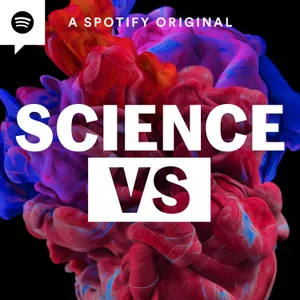
There are a lot of fads, blogs and strong opinions, but then there’s SCIENCE. Science Vs is the show from Spotify Studios that finds out what’s fact, what’s not, and what’s somewhere in between. We do the hard work of sifting through all the science so you don't have to and cover everything from 5G and ADHD, to Fluoride and Fasting Diets.
Latest Episodes
The most recent episodes — sign up to get AI-powered summaries of each one.
- 3 days ago44 min
Could AI Really Kill Us All?
Could artificial intelligence really wipe out humanity? Claims that AI poses an existential threat are going gangbusters. AI agents from OpenAI recently hacked into another company, Hugging Face, which has people talking about whether AI can go “rogue.” And some current and former AI company employees are raising the alarm. CEOs have called for a slowdown, and one Anthropic employee just quit, saying that the companies creating this tech are putting us all at risk — and adding that “the people building AI earnestly believe that it could kill us all by the end of the decade.” So — are we really creating a monster? Could AI escape human control and take us all out? If so … how?! And are these scary claims just a distraction from the stuff that AI is already being used for out in the world? We talk to cyber security expert Professor David Parry, philosopher Dr. Nick Bostrom, and scientist Dr. Michael Vermeer to find out. Find our transcript here: https://tinyurl.com/ScienceVsAIApocalypse In this episode, we cover: AI is scaring the crap out of people The Hugging Face hack The paperclip maximizer How would superintelligent AI take us out? Could AI unleash nuclear war? Could AI unleash biological weapons? How worried should we be about AI?? This episode was produced by Meryl Horn, with help from Michelle Dang, Rose Rimler, and Ekedi Fausther-Keeys. We’re edited by Blythe Terrell. Wendy Zukerman is the executive producer. Fact checking by Erika Akiko Howard. Video editing and sound by Bobby Lord. Music written by Bumi Hidaka, Peter Leonard, Emma Munger and Bobby Lord. Thanks to the researchers we spoke to for this episode including Dr. Cameron Domenico Kirk-Giannini, Dr. Jascha Bareis, Dr. Leonard Aaron Dung, and Professor Niusha Shafiabady. And thanks as well to Humdinger Studios in Melbourne and Wolff Island Studios in NYC. Special thanks to Christopher Suter. Science Vs is a Spotify Studios Original. Listen for free on Spotify or wherever you get your podcasts. You can also find us on YouTube, TikTok and Instagram. Learn more about your ad choices. Visit podcastchoices.com/adchoices
- 1 weeks agonarrative45 min5-min read
Where Have The Insects Gone?? With Dr. Jessica Ware
Insects, often misunderstood and feared, are essential to life on Earth, yet their populations are plummeting at an alarming rate. This episode of Science Versus unpacks the science behind insect decline, explores their surprising complexity, and challenges listeners to rethink their relationship with these tiny but vital creatures.
- 2 weeks agonarrative31 min5-min read
Protein-Maxxing: Is It Actually Bad For Us?
The episode explores the growing debate around protein consumption, questioning whether the current trend of 'protein maxing' is beneficial or if science suggests we should instead reduce protein intake for longevity. It reveals a tension between popular fitness culture and emerging aging research, ultimately urging listeners to reconsider how much protein they really need.
- 3 weeks agonarrative50 min6-min read
Sunscreen: Could It Be Toxic??
Sunscreen has been widely criticized online for being toxic, blocking vitamin D production, and even causing cancer, but the scientific evidence shows that routine use of sunscreen is safe and effective at reducing certain skin cancers, especially for people with lighter skin. Despite concerns about chemical absorption and vitamin D deficiency, the overwhelming consensus is that the benefits of sunscreen outweigh the risks.
- Aug 20, 2026conversational52 min5-min read
Hank Green: What No One Tells You About the Algorithm
In a candid and wide-ranging conversation, science communicator Hank Green reflects on nearly two decades of YouTube, the evolution of viral content, and how algorithmic recommendation systems now shape what we see online. He also shares his personal journey through Hodgkin lymphoma, revealing how chemotherapy made his urine cloudy with fragments of dead cancer cells — a visceral sign of treatment working. The discussion culminates in deeper philosophical questions about AI, misinformation, and the biological inevitability of cancer in multicellular life.
- Aug 13, 2026narrative1h 1m5-min read
We Solve the 49ers Viral Conspiracy Theory
The San Francisco 49ers' injury woes sparked a viral conspiracy theory blaming a nearby electrical substation, but a deep investigation by Science Versus and Pablo Torre Finds Out reveals the science doesn't support it — and the data behind the team's injury rate is more nuanced than fans believe.
- Aug 6, 2026narrative39 min5-min read
Weight Cycling: Is 'Yo-Yo Dieting' Dangerous?
Weight cycling, often called yo-yo dieting, is extremely common and emotionally taxing, but the scientific evidence does not support the widespread internet claim that it irreparably damages your metabolism or overall health. Instead, the data suggests that healthy behaviors—like eating more vegetables and exercising—are what truly matter for long-term well-being, regardless of whether weight is maintained.
- Jul 30, 2026narrative31 min4-min read
Free Will: Does It Exist?
The episode explores whether free will is real or an illusion, using neuroscience experiments and philosophical arguments to challenge and defend our intuitive sense of control over decisions. Despite brain studies showing unconscious activity precedes conscious choice, the show argues that free will may still exist as an emergent phenomenon.
Get Science Vs summaries in your inbox
Free AI-powered daily recaps. Key takeaways, quotes, and mentions — in a 5-minute read.
Get Free Summaries →Free forever for up to 3 podcasts. No credit card required.
You Might Also Like
Listeners also like.
Conspiracy Theories
Examines conspiracy theories surrounding major historical events and cultural phenomena, exploring their origins and influence.

Science Friday
Explores diverse science and technology topics, from space to microscopic life, with engaging educational stories.
Unbiased Science
Two scientists analyze health topics using objective, evidence-based approaches to inform everyday decisions.
The World, the Universe and Us
Explores big scientific questions about life, consciousness, climate, and the cosmos with expert scientists and New Scientist journalists.
Science Quickly
A bite-sized science podcast exploring discoveries with journalists and experts.
Unsung Science
Explores the overlooked stories behind major scientific and technological breakthroughs and the people who created them.
Radiolab
Explores complex questions through investigative journalism, blending science, history, and human stories with innovative sound design.
Inquiring Minds
Explores the intersection of science and society through critical thinking and in-depth analysis.
The Rest Is Science
Two science communicators explore the strange, unanswered questions behind everyday phenomena and challenge assumptions about reality.
CrowdScience
Explores listener-submitted questions about life, Earth, and the universe with scientists at the forefront of research.

Science Magazine Podcast
Weekly episodes covering original scientific research, global science news, and expert commentary.
Science Weekly
The Guardian provides weekly updates on the latest science and environment news.
Mentions
Most frequently mentioned across all episodes.
People
Books
Companies
Research & Papers
About Science Vs
There are a lot of fads, blogs and strong opinions, but then there’s SCIENCE. Science Vs is the show from Spotify Studios that finds out what’s fact, what’s not, and what’s somewhere in between. We do the hard work of sifting through all the science so you don't have to and cover everything from 5G and ADHD, to Fluoride and Fasting Diets.
Customized Recaps
AI-powered recaps with compact key takeaways, quotes, and insights.
Straight to Your Inbox
Get key takeaways from Science Vs in a 5-minute read.
Save Hours Every Week
Stay current on your favorite podcasts without falling behind.
Frequently Asked Questions
What is Podzilla's Science Vs daily summary?
It's a free AI-powered email that summarizes new episodes of Science Vs as soon as they're published. You get the key takeaways, notable quotes, and links & mentions — all in a quick read.
How does the Science Vs podcast summary work?
When a new episode drops, our AI transcribes and analyzes it, then generates a personalized summary tailored to your interests and profession. It's delivered to your inbox every morning.
Is this an official Science Vs product?
No. Podzilla is an independent service that summarizes publicly available podcast content. We're not affiliated with or endorsed by Spotify Studios.
Can I get summaries of other podcasts too?
Absolutely! The free plan covers up to 3 podcasts. Upgrade to Pro for 15, or Premium for 50. Browse our full catalog at /podcasts.
How often does Science Vs release new episodes?
Science Vs publishes weekly. Our AI generates a summary within hours of each new episode.
What topics does Science Vs cover?
Science Vs covers topics including Science, Education, Fitness, Health & Fitness. Our AI identifies the specific themes in each episode and highlights what matters most to you.
Start getting Science Vs summaries tomorrow morning.
Free forever for up to 3 podcasts. No credit card required.
Free forever for up to 3 podcasts. No credit card required.