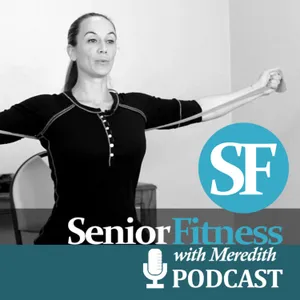
Free Daily Podcast Summary
Senior Fitness With Meredith: Daily Summaries Delivered
by Senior Fitness with Meredith
A podcast discussing wellness for seniors, fitness trainers and healthcare industry with enriching topics such as physical and mental wellness, nutrition, positive spirits and motivation for a healthy and active lifestyle.
Latest Episodes
The most recent episodes — sign up to get AI-powered summaries of each one.
- 2 days ago29 min
6 Ways To Track Your Progress Without Using A Scale
In this episode we're sharing six meaningful ways to measure your health and fitness progress without becoming focused on the number on a scale. We explain why body weight alone doesn't tell the whole story and how improvements in strength, energy, mobility, confidence, and everyday activities can be much better indicators of your overall wellness. Whether you're just beginning your fitness journey or have been exercising for years, these practical ideas can help you recognize and celebrate the progress you're making. In This Episode You Will Learn: 1. Don't let the scale define your health. Your weight naturally fluctuates throughout the day, and gaining muscle while losing fat may leave the number unchanged or even cause it to increase. A scale doesn't reveal how healthy, strong, or capable your body is, so it shouldn't be your only measure of success. 2. Track changes through body measurements. Using a measuring tape to track your waist, chest, arms, and thighs can help you recognize physical changes over time. Remember that measurements may increase as you build muscle, so focus on understanding the changes rather than assuming smaller numbers always mean better progress. 3. Celebrate personal fitness milestones. Set realistic goals that reflect what you want your body to accomplish. Being able to do three wall pushups instead of none, stand up from a chair more easily, or stretch farther are meaningful achievements that demonstrate improvement. 4. Pay attention to your energy levels and mood. Feeling more energetic, positive, confident, and motivated throughout the day can be a sign that your fitness routine is helping. Improved posture, feeling more alert, and having the desire to participate in additional activities are also valuable indicators of progress. 5. Recognize when you can complete workouts you couldn't do before. Completing an entire workout, exercising for longer periods, lifting a heavier dumbbell, or advancing to a more challenging workout level are all accomplishments worth celebrating. These improvements demonstrate the benefits of dedication, consistency, and continuing to try even when something initially feels difficult. Your fitness journey should be measured by how much stronger, healthier, more energetic, and more confident you feel—not simply by what a scale says. By recognizing improvements in your abilities and celebrating the small victories along the way, you can stay motivated and appreciate the progress your body makes at every age. Team MeredithSee omnystudio.com/listener for privacy information.
- 3 days ago3 min
Start - MWM
“Start where you are. Use what you have. Do what you can.” — Arthur Ashe This quote reminds us that no matter where we are at in our health, wellness, and fitness journeys, you can do it! MeredithSee omnystudio.com/listener for privacy information.
- 1 weeks ago29 min
When To Push And When To Rest
In this episode we discuss how to recognize when your body is ready for a greater challenge and when it needs time to recover. Through practical advice on exercise, energy levels, motivation, and fatigue, we're explaining why listening to your body and developing self-awareness are essential for staying active, making progress, and maintaining independence as you age. The goal is to find a healthy balance between pushing yourself forward and giving yourself permission to slow down. In This Episode You Will Learn: 1. Recognize when you have the energy to do more. Increased energy, feeling refreshed, and having the desire to be more active can be signs that your body is ready for a little extra effort. Pay attention to how you feel rather than automatically following the same routine every day. 2. Build on consistent progress gradually. When an exercise becomes easier or you can complete more repetitions without struggling, it may be time to increase the duration, intensity, or resistance slightly. Make changes gradually, monitor how your body responds, and avoid pushing beyond your abilities. 3. Pay attention to how you feel after exercise. If you feel refreshed and recover well after your workouts, you may be able to take on a little more. The goal is to make progress safely—not to exercise until you're exhausted, reach failure, or risk injury. 4. Take persistent fatigue seriously. If you frequently wake up tired, feel worn down after exercising, or experience ongoing physical and mental exhaustion, your body may need more recovery time. Resting when necessary can help you avoid overtraining and return to activity feeling better. 5. Treat ongoing aches and pains as a signal to slow down. Persistent soreness or discomfort may mean you need to reduce the intensity of your activities. Rest doesn't always mean stopping completely; it could involve lighter weights, seated exercises, gentle range-of-motion movements, stretching, or a shorter walk instead of a longer workout. /// The key to long-term fitness is balancing effort with recovery and recognizing that your needs can change from day to day. By listening to your body, making gradual adjustments, and allowing yourself to rest when needed, you can work toward staying active, healthy, and independent for years to come. Team MeredithSee omnystudio.com/listener for privacy information.
- 1 weeks ago4 min
Movement - MWM
“Lack of activity destroys the good condition of every human being, while movement and methodical physical exercise save it and preserve it.” – Plato This quote reminds us how important moving is for us!! MeredithSee omnystudio.com/listener for privacy information.
- 2 weeks ago29 min
6 Downsizing And Decluttering Tips For Seniors
In this episode, we explore six practical tips to help seniors navigate downsizing and decluttering while protecting their physical safety and emotional well-being. After years of accumulating furniture, keepsakes, gifts, and family memories, deciding what to keep and what to let go of can feel overwhelming, especially when preparing to move to a smaller home or a senior living community. We're discussing a step-by-step approach to making the process more manageable, organized, and safe. In This Episode You Will Learn: 1. Understand Why and When to Downsize. Consider whether your current home and belongings still meet your needs. Downsizing may make daily life easier, reduce maintenance, and improve safety by removing obstacles that could cause trips or falls. Focus on your individual circumstances rather than a specific age. 2. Start Early and Work at a Comfortable Pace. Decluttering can be both physically demanding and emotionally draining, so avoid leaving everything until the last minute. Begin months ahead when possible, work in short sessions of 10–20 minutes, and give yourself time to make thoughtful decisions rather than feeling rushed. 3. Declutter One Room at a Time. Breaking the home into smaller areas makes the task less overwhelming. Review kitchens, bedrooms, closets, bathrooms, and living spaces to identify items you no longer use, excess furniture, unnecessary duplicates, and expired medications. 4. Handle Sentimental Items with Care. Photographs, children's artwork, gifts, and other keepsakes often carry meaningful memories. Give yourself or your loved ones time to reflect on these items, share the stories behind them, and consider creating a memory box rather than feeling pressured to discard everything. 5. Use a Simple Sorting System. Create separate categories for items to keep, donate, sell, give to family or friends, and discard. Using labeled boxes, bins, or sticky notes can help you stay organized, make progress visible, and allow useful belongings to benefit others. Downsizing and decluttering are more than physical tasks; they involve memories, emotions, and important decisions about how you want to live. By planning ahead, taking small steps, respecting sentimental attachments, and putting safety first, seniors and their families can make the transition smoother and create a living space that better supports their needs. Team MeredithSee omnystudio.com/listener for privacy information.
- 2 weeks ago5 min
Right Amount - MWM
“If we could give every individual the right amount of nourishment and exercise, not too little and not too much, we would have found the safest way to health.” – Hippocrates This quote reminds us how important what we eat and exercise are, but it is a balancing act to not go overboard in either direction. MeredithSee omnystudio.com/listener for privacy information.
- 3 weeks ago29 min
The 5 Health Benefits Of Functional Fitness
In this episode we discuss the five key benefits of functional fitness and explain how everyday movements can help people stay strong, active, and independent as they age. Rather than focusing on lifting the heaviest weights or performing intense workouts, functional fitness emphasizes practical exercises that make daily activities—such as carrying groceries, climbing stairs, getting out of a chair, and gardening—easier and safer. We highlight how people of all fitness levels can incorporate simple, purposeful movements into their routines to support long-term health and quality of life. In This Episode You Will Learn: 1. Improve Mobility and Flexibility. Maintaining flexibility and range of motion helps keep muscles and joints moving comfortably. Simple stretches throughout the day, including shoulder rolls, ankle circles, and gentle neck and wrist movements, can help reduce stiffness and support everyday mobility. 2. Build Strength for Daily Activities. Functional fitness uses familiar movements such as squats, lunges, pushing, pulling, and standing up from a chair to strengthen the muscles needed for daily tasks. Starting with light weights or seated exercises and gradually progressing can help people build strength safely. 3. Improve Balance and Coordination. Balance becomes increasingly important with age, particularly when walking, stepping onto stairs, or moving around the home. Incorporating balance-focused exercises and controlled standing movements can help improve stability and coordination. 4). Choose Safe, Practical Exercises That Fit Your Abilities. Not every popular or intense exercise is appropriate for everyone. Put more emphasis on choosing movements that serve a real purpose, avoiding unnecessary risks, and adapting exercises to individual abilities—including using a chair or staying seated when needed. 5). Stay Consistent, Start Slowly, and Include Variety. Functional fitness is a long-term commitment rather than a quick fix. Regular movement, gradual progression, and a variety of exercises for strength, flexibility, balance, and core stability can help people build lasting benefits without comparing themselves to others. Functional fitness helps people maintain the strength, mobility, balance, and confidence needed to stay active and independent throughout life. By starting at a comfortable level, exercising consistently, and choosing safe movements that support everyday activities, people can make meaningful progress at any age. Team MeredithSee omnystudio.com/listener for privacy information.
- 3 weeks ago5 min
Two Things - MWM
“There are two things a person should never be angry at: what they can help and what they cannot.” - Plato This quote reminds us to not be angry at anything that happens in life…we must enjoy the journey! MeredithSee omnystudio.com/listener for privacy information.
Get Senior Fitness With Meredith summaries in your inbox
Free AI-powered daily recaps. Key takeaways, quotes, and mentions — in a 5-minute read.
Get Free Summaries →Free forever for up to 3 podcasts. No credit card required.
You Might Also Like
Listeners also like.

FoundMyFitness
A podcast exploring health, science, nutrition, aging, and fitness.

BETTER! with Dr. Stephanie Estima | Women's Strength, Body Composition and Hormones
Women in perimenopause and menopause learn science-based strategies for strength, hormones, and body composition from expert interviews.

The EMPWR Podcast
A fitness entrepreneur shares workout tips, nutrition advice, and personal stories to support holistic wellness and self-empowerment.
Unfinished Business
Audrey Adams and Mason Mahoney

The Dr Vonda Show
An orthopedic surgeon discusses aging, movement, bone health, and resilience with experts and women athletes.
The Fitness League
Alessandra and Josh Scutnik, Joelle Cavagnaro
Everyday Wellness: Midlife Hormones, Menopause, and Science for Women 35+
A nurse practitioner shares science-based strategies for managing midlife hormones, menopause, and women's health.
Move Well, Live Well, Perform Well
A sports physiotherapist explores movement, injury recovery, and performance optimization with expert guests.

The Dan Buettner Podcast
Shares practical habits and insights from the world’s longest-lived populations to improve longevity and well-being.

TRAINED
Discusses fitness and wellness through interviews with athletes, scientists, and health experts on mindset, nutrition, movement, recovery, and sleep.

The Health Continuum
High-performing professionals learn science-based health strategies to sustain energy, focus, and resilience in demanding careers.

The FastFit Podcast
FastFit
About Senior Fitness With Meredith
A podcast discussing wellness for seniors, fitness trainers and healthcare industry with enriching topics such as physical and mental wellness, nutrition, positive spirits and motivation for a healthy and active lifestyle.
Customized Recaps
AI-powered recaps with compact key takeaways, quotes, and insights.
Straight to Your Inbox
Get key takeaways from Senior Fitness With Meredith in a 5-minute read.
Save Hours Every Week
Stay current on your favorite podcasts without falling behind.
Frequently Asked Questions
What is Podzilla's Senior Fitness With Meredith daily summary?
It's a free AI-powered email that summarizes new episodes of Senior Fitness With Meredith as soon as they're published. You get the key takeaways, notable quotes, and links & mentions — all in a quick read.
How does the Senior Fitness With Meredith podcast summary work?
When a new episode drops, our AI transcribes and analyzes it, then generates a personalized summary tailored to your interests and profession. It's delivered to your inbox every morning.
Is this an official Senior Fitness With Meredith product?
No. Podzilla is an independent service that summarizes publicly available podcast content. We're not affiliated with or endorsed by Senior Fitness with Meredith.
Can I get summaries of other podcasts too?
Absolutely! The free plan covers up to 3 podcasts, any in the catalog. Basic raises that to 15, Pro to 40 and Max to 100. Browse our full catalog at /podcasts.
How often does Senior Fitness With Meredith release new episodes?
Senior Fitness With Meredith publishes daily. Our AI generates a summary within hours of each new episode.
What topics does Senior Fitness With Meredith cover?
Senior Fitness With Meredith covers topics including Fitness, Health & Fitness. Our AI identifies the specific themes in each episode and highlights what matters most to you.
Start getting Senior Fitness With Meredith summaries tomorrow morning.
Free forever for up to 3 podcasts. No credit card required.
Free forever for up to 3 podcasts. No credit card required.