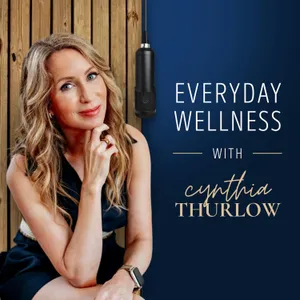
Free Daily Podcast Summary
Everyday Wellness: Midlife Hormones, Menopause, and Science for Women 35+: Daily Summaries Delivered
by Everyday Wellness
Looking for the latest strategies for dealing with menopause, hormones and midlife health issues? You're in the right place! Cynthia Thurlow is a nurse practitioner, host of the Everyday Wellness podcast, author and international speaker, with over 15 million views for her second TEDx talk (Intermittent Fasting: Transformational Technique). With over 25 years experience in health and wellness, Cynthia is a globally recognized expert in perimenopause/menopause and intermittent fasting, and has been featured on ABC, FOX5, KTLA, CW, Medium, Entrepreneur, and The Megyn Kelly Show. Her mission is to help empower women to live their most optimal lives in perimenopause and beyond.
Latest Episodes
The most recent episodes — sign up to get AI-powered summaries of each one.
- Yesterday1h 29m
Ep. 644 Insulin Resistance and Advanced Lipid Testing with Dr. Tom Dayspring
Today, I’m honored to reconnect with fan favorite, Dr. Tom Dayspring. Dr. Dayspring is a fellow of both the American College of Physicians and the National Lipid Association, and is certified in internal medicine and clinical lipidology with extensive experience in perimenopause and menopause management. He has been a frequent contributor and educator at Everyday Wellness. In this episode, we discuss labs that help to monitor changes in insulin resistance (specifically the LPIR score), the clinical practice limitations Dr. Dayspring believes stem from a lack of humility, and aspects of women’s medical histories that may indicate greater heart disease risk. We examine statin therapy and other treatment modalities, premature menopause and cardiovascular disease risks, Lp(a) as the primary inherited risk factor for heart disease, and current guidelines, treatment goals, and recommendations. Dr. Dayspring also shares his thoughts on estrogen patch shortages and oral estradiol therapy challenges with elevated triglycerides. As always, this is an invaluable conversation with Dr. Tom Dayspring. Stay tuned for an upcoming podcast with Dr. Dayspring, where we'll focus on lipids and brain health. IN THIS EPISODE, YOU WILL LEARN: Lipoprotein changes and how they can reveal insulin resistance before fasting insulin or glucose begin to rise Why someone can be insulin resistant while showing normal triglyceride levels The importance of looking at a woman’s broader medical history to find potential cardiovascular risk signals Why premature menopause and premature ovarian failure should be taken seriously as cardiovascular and long-term health risk factors How Lp(a) is the most inherited risk factor for atherosclerotic heart disease across the population Why women may benefit from repeat Lp(a) testing around the menopausal transition What clinicians may address when Lp(a) is elevated, including other modifiable cardiovascular risk factors Oral estrogen may have a beneficial effect on Lp(a). How epidemiological evidence has linked endometriosis with heart disease Why Dr. Dayspring recommends checking ApoB when triglycerides are elevated Connect with Cynthia Thurlow Follow on X, Instagram & LinkedIn Check out Cynthia’s website. Submit your questions to support@cynthiathurlow.com Join other like-minded women in a supportive, nurturing community: The Midlife Pause/Cynthia Thurlow. Purchase Cynthia’s book, The Menopause Gut. Cynthia’s Intermittent Fasting Transformation Book The Midlife Pause Supplement Line Connect with Dr. Tom Dayspring On X (@DrLipid) LinkedIn
- 3 days ago41 min
Ep. 643 What Menopause Does to Lp(a) and Cholesterol |Menopause, Perimenopause, Cholesterol
Welcome to the latest Midlife Minute. This episode unpacks ongoing research on Lp(a), explores how women’s lipids change during the perimenopause-to-menopause transition, and clarifies what we can do about it. Stay tuned for more! IN THIS EPISODE, YOU WILL LEARN: How total cholesterol, LDL, and ApoB tend to rise most steeply around the final menstrual period, rather than increasing gradually with chronological aging Why women should have their Lp(a) checked both before and after menopause How oral and transdermal estradiol can affect LDL, HDL, triglycerides, and Lp(a) differently Why I recommend including ApoB when checking your lipids during the perimenopause window How your lifestyle can reduce your cardiovascular risk, even when your Lp(a) is elevated Why omega-3 fatty acids and commonly used lipid medications do not lower Lp(a) Why supplements are not replacements for statins in genuinely high-risk patients I review the various PCSK9 inhibitors currently available, how they are administered, and their effects How a CAC, a CT angiogram, and an AI-assisted CT angiogram can help women and their providers determine how aggressive their approach should be when Lp(a) is elevated Connect with Cynthia Thurlow Follow on X, Instagram & LinkedIn Check out Cynthia’s website. Submit your questions to support@cynthiathurlow.com Join other like-minded women in a supportive, nurturing community: The Midlife Pause/Cynthia Thurlow. Purchase Cynthia’s book, The Menopause Gut. Cynthia’s Intermittent Fasting Transformation Book The Midlife Pause Supplement Line References: 1. Menopause Transition and Cardiovascular Disease Risk: Implications for Timing of Early Prevention: A Scientific Statement From the American Heart Association.Circulation. 2020. El Khoudary SR, Aggarwal B, Beckie TM, et al.Guideline 2. Menopause: A Cardiometabolic Transition. The Lancet. Diabetes & Endocrinology. 2022. Nappi RE, Chedraui P, Lambrinoudaki I, Simoncini T.Review 3. Dyslipidemia Across the Menopause Transition: Mechanisms, Trajectories, and Opportunities for Cardiovascular Prevention. Maturitas. 2026. Castaneda R, Tatit CP, Hurtado Andrade MD, Faubion SS, Shufelt CL.RecentReview 4. Lipoprotein(a) and Women's Cardiovascular Health: A Review. JACC. Advances. 2026. Michos ED, Saucier S, Mehran R, Koschinsky ML. 5. Lipid Metabolism in Women: A Review. Atherosclerosis. 2025. van Oortmerssen JAE, Mulder JWCM, Kavousi M, Roeters van Lennep JE.Review 6. Are Changes in Cardiovascular Disease Risk Factors in Midlife Women Due to Chronological Aging or to the Menopausal Transition?. Journal of the American College of Cardiology. 2009. Matthews KA, Crawford SL, Chae CU, et al.Observational 7. Trajectories of Lipids Around the Menopause Transition in Chinese Women: Results of the Kailuan Cohort Study. Fertility and Sterility. 2023. Dai Q, Wu S, Cao Z, et al. 8. Lipid Management in Patients With Endocrine Disorders: An Endocrine Society Clinical Practice Guideline. The Journal of Clinical Endocrinology and Metabolism. 2020. Newman CB, Blaha MJ, Boord JB, et al.Guideline 9. The Effects of Menopause Hormone Therapy on Lipid Profile in Postmenopausal Women: A Systematic Review and Meta-Analysis. Frontiers in Pharmacology. 2022. Nie G, Yang X, Wang Y, et al.SR 10. Perspectives on Dyslipidemia and Coronary Heart Disease in Women. Journal of the American College of Cardiology. 2005. Bittner V.Review 11. Dyslipidemia in Midlife Women: Approach and Considerations During the Menopausal Transition. Maturitas. 2022. Torosyan N, Visrodia P, Torbati T, Minissian MB, Shufelt CL.Review 12. Effects of gender, age and menopausal status on serum apolipoprotein concentrations.13.Lipoprotein(a).The Journal of the American Medical Association. 2025. Mora S, Kronenberg 14. Why, how and in whom should we measure levels of lipoprotein(a): A review of the latest evidence and clinical implications. Diabetes, Obesity & Metabolism. 2025. Razavi AC, Bhatia HS, Blumenthal RS, Shapiro MD, Mehta A.RecentReview 15. Red Yeast Rice for Hypercholesterolemia: JACC Focus Seminar. Journal of the American College of Cardiology. 2021. Cicero AFG, Fogacci F, Zambon A.Review 16. Overall and Sex-Specific Effect of Berberine for the Treatment of Dyslipidemia in Adults: A Systematic Review and Meta-Analysis of Randomized Placebo-Controlled Trials. Drugs. 2023. Blais JE, Huang X, Zhao JV.SR 17. Non-Genetic Influences on Lipoprotein(a) Concentrations. Atherosclerosis. 2022. Enkhmaa B, Berglund L.Review 18. NHLBI Working Group Recommendations to Reduce Lipoprotein(a)-Mediated Risk of Cardiovascular Disease and Aortic Stenosis. Journal of the American College of Cardiology. 2018. Tsimikas S, Fazio S, Ferdinand KC, et al.Review 19. Consumption of a defined, plant‐based diet reduces lipoprotein(a), inflammation, and other atherogenic lipopro
- 4 days ago46 min
Ep. 642 Metabolic Health and Brain Aging with Dr. Zaldy Tan | Menopause, Perimenopause, Metabolic Health
Today, I am honored to connect with Dr. Zaldy Tan, a geriatric medicine and memory disorder specialist whose research career has centered on the Framingham Heart Studies Offspring Cohort. Dr. Tan currently directs Cedar Sinai’s memory and healthy aging programs, after previously leading the memory clinic at Beth Israel and Harvard Medical School. His book, Age Proof Your Mind, translates his clinical and research background into a practical framework for people trying to assess and protect their own cognitive trajectory. In our conversation, Dr. Tan explains why middle age is the old age of youth and the youth of old age. We discuss common symptoms of memory issues and those that are reversible. We explore the Framingham Offspring Study and its impact on brain health over time, looking at the effects of sleep, depression, vitamin deficiencies, alcohol, loneliness, and nutrition, and Dr. Tan shares the three Ds, dementia, delirium, and depression- the red flags he sees in his clinical practice, explains how he helps prepare caregivers for caring for loved ones with neurocognitive memory loss, and discusses late-stage issues, medications, blood-based biomarkers, and the role of genetics in brain health. Stay tuned for a truly fascinating discussion with Dr. Zaldy Tan. IN THIS EPISODE, YOU WILL LEARN: The importance of being sensitive to how your memory changes over time Various factors that could contribute to memory problems The profound effect alcohol has on the brain and neurologic function How social isolation can increase the risk of dementia in future years Dr. Tan discusses the Framingham Offspring Study and the links between metabolic dysregulation and brain MRI markers of brain aging. How the 3 Ds, delirium, dementia, and depression, can overlap The red flags in a patient’s history that lead Dr. Tan to believe there may be a more serious issue What care partners should be aware of when a family member is experiencing dementia The importance of protecting sleep and maintaining consistent sleep patterns for those with memory problems How genetic testing is incorporated into Dr. Tan’s care model Bio: Dr. Zaldy Tan is the Director of the Memory & Healthy Aging Program at Cedars-Sinai Medical Center, which U.S. News & World Report ranked in 2024 as the best hospital on the U.S. West Coast and among the top hospitals in the country. He holds the Carmen & Louis Warschaw Endowed Chair in Neurology and is a professor at the David Geffen School of Medicine, University of California, Los Angeles. Dr. Tan was the founding director of the Memory Disorders Clinic at Harvard Medical School/Beth Israel Deaconess Medical Center. Dr. Tan performs aging and dementia research covered by The New York Times, Time, CNN, The Wall Street Journal, NPR, The Washington Post, The Chicago Tribune, Reuters, ABC News, and NBC News. He regularly speaks at major national and international conferences and is the author of Age-Proof Your Mind and What to Remember When You Are Forgetting. Connect with Cynthia Thurlow Follow on X, Instagram & LinkedIn Check out Cynthia’s website. Submit your questions to support@cynthiathurlow.com Join other like-minded women in a supportive, nurturing community: The Midlife Pause/Cynthia Thurlow. Purchase Cynthia’s book, The Menopause Gut. Cynthia’s Intermittent Fasting Transformation Book The Midlife Pause Supplement Line Connect with Dr. Zaldy Tan Dr. Tan at Cedars Sinai (Los Angeles) On Instagram Dr. Tan’s book, What to Remember When You Are Forgetting, is coming out on September 15th, 2026. Pre-order HERE.
- 6 days ago1h 15m
BONUS: Spermidine and Autophagy with Leslie Kenny | Menopause, Perimenopause, Longevity
Welcome to the latest episode in our series of highly vetted companies I like to share with my Everyday Wellness community. Today, I’m delighted to connect with Leslie Kenny, Founder and CEO of Oxford Healthspan. After being diagnosed with multiple autoimmune conditions and being told she was unlikely to have any biological children, Leslie put her autoimmune conditions into remission through nutrition and lifestyle changes and later went on to conceive naturally at 43. Her personal experience led her into a research collaboration with Oxford immunologist Professor Katya Simon, where she was introduced to spermidine, a naturally occurring polyamine studied for its role in autophagy—our cells’ internal recycling and cleanup process. She later founded Oxford Healthspan to bring a whole-food Japan-sourced spermidine supplement, Primadine, to market. She also co-founded the non-profit Oxford Longevity Project alongside Oxford scientists to educate the public more broadly on healthspan research. In our conversation, we discuss self-advocacy, autoimmunity, infertility, and empowerment, exploring how modern life affects perimenopause and menopause, as well as spermidine research and its mechanisms of action. We discuss intermittent fasting, autophagy, mitophagy, gut health, food-based sources of spermidine, how our spermidine levels decrease with age, and why supplementation is truly beneficial. Leslie also shares feedback on how Primadine impacts memory, cognition, hair, skin, and nails; how clock genes and circadian biology work; and biological versus chronological age. Stay tuned for a truly fascinating conversation with Leslie Kenny- one you’ll most likely want to revisit more than once. IN THIS EPISODE, YOU WILL LEARN: The changes Leslie implemented after being diagnosed with rheumatoid arthritis and lupus How patients need to ask questions and collaborate with their clinicians rather than simply following instructions Leslie describes how she worked with doctors to monitor her symptoms and address problems early during the perimenopause-to-menopause transition. How Leslie came to learn about spermidine and its connection to autophagy and mitophagy How spermidine can support healthy aging How ultra-processed foods can affect the gut, and foods that contain natural sources of spermidine The types of improvements customers taking Primadine have reported Leslie explains the distinction between biological and chronological age Why intermittent fasting, although beneficial, may not work the same way for all women Bio: Leslie Kenny is an Oxford-based longevity entrepreneur, TEDx Oxford speaker, and healthspan advocate. She is the founder of Oxford Healthspan, creator of Primeadine®, co-founder of the Oxford Longevity Project, and Global Executive Ambassador for the Japan Autophagy Consortium, whose senior adviser is Yoshinori Ohsumi, recipient of the 2016 Nobel Prize in Physiology or Medicine for his pioneering research on autophagy. She is a frequent international speaker and moderator on longevity, biological aging, and the future of preventive medicine, with a particular focus on translating emerging research into practical, evidence-based strategies for extending healthspan. Leslie has been an early advocate for the role of autophagy, cellular renewal, and nutrition in healthy aging, helping to pioneer broader awareness of spermidine and its relevance to longevity pathways. Connect with Cynthia Thurlow Follow on X, Instagram & LinkedIn Check out Cynthia’s website. Submit your questions to support@cynthiathurlow.com Join other like-minded women in a supportive, nurturing community: The Midlife Pause/Cynthia Thurlow. Purchase Cynthia’s book, The Menopause Gut. Cynthia’s Intermittent Fasting Transformation Book The Midlife Pause Supplement Line Connect with Leslie Kenny Oxford Longevity Project Oxford Healthspan - Use discount code CYNTHIATHURLOW for 20% off your first Oxford Healthspan order Leslie’s New Prime
- 1 weeks ago51 min
Ep. 641 Ayurveda, Gut Health, and Inflammation with Dr. Shivani Gupta | Menopause, Perimenopause, Holistic Health
I am delighted to welcome Dr. Shivani Gupta today for the first of two interviews. Dr. Gupta is the founder and CEO of Fusionary Formulas and the author of The Inflammation Code. She has both a master's degree and a PhD in Vedic sciences, where her dissertation focused on turmeric's role in inflammation, joint health, and cardiovascular health. In today’s conversation, we explore the physical effects of chronic inflammation, habits to support stress reduction, the differences between inflammaging and normal physiologic aging, and ways to nurture ourselves in midlife (which Dr. Gupta calls the Vata season). We also discuss how ama can contribute to inflammatory processes in the body, digestive fire, constipation and strategies to address it, the importance of curcumin, and the research surrounding it. Dr. Gupta and I will continue our conversation on our next podcast together. Stay tuned for part two! IN THIS EPISODE, YOU WILL LEARN: Dr. Gupta shares the personal experiences that motivated her to write The Inflammation Code Environmental and lifestyle factors that contribute to the body’s inflammatory burden Why inflammation can become more difficult to manage during the perimenopause and menopause transition How the symptoms of normal aging could actually be signs of inflammaging Dr. Gupta explains the Ayurvedic concept of Agni, or digestive fire, and shares ways to support digestion Practical Ayurvedic ways to support regular bowel movements How Dr. Gupta approaches gut and immune health after repeated antibiotic exposure The Ayurvedic approach to diet differs from restrictive or extreme eating patterns. The potential anti-inflammatory benefits of turmeric, curcumin, and other polyphenol-rich spices How culinary turmeric differs from concentrated curcumin extracts Bio: Dr. Shivani Gupta is an Ayurvedic practitioner, turmeric researcher, and founder of Fusionary Formulas. She holds a Master's degree in Ayurvedic Sciences and completed her PhD dissertation- specifically on turmeric making her one of the world's foremost experts on its pharmacology and clinical application. She is the author of The Inflammation Code, published by Hay House, bridging ancient Ayurvedic wisdom with modern inflammation science. Dr. Gupta is known for making complex science accessible without dumbing it down — her work speaks equally to the everyday health-conscious woman and to clinicians who want to go deeper. Connect with Cynthia Thurlow Follow on X, Instagram & LinkedIn Check out Cynthia’s website. Submit your questions to support@cynthiathurlow.com Join other like-minded women in a supportive, nurturing community: The Midlife Pause/Cynthia Thurlow. Purchase Cynthia’s book, The Menopause Gut. Cynthia’s Intermittent Fasting Transformation Book The Midlife Pause Supplement Line Connect with Dr. Shivani Gupta FusionaryFormulas.com - Use the code CYNTHIA for 15% off! Website Instagram YouTube Facebook Pinterest The Inflammation Code (Book Website) The Inflammation Code Podcast
- 1 weeks ago20 min
Ep. 640 Cardiovascular Risk Markers in Midlife Women |Menopause, Perimenopause, Heart Health
Welcome to the latest Midlife Minute. Today, I’m answering listeners’ questions about cardiovascular risk, focusing on Lp(a), LDL, statins, and the changes women experience after menopause. Stay tuned for more! IN THIS EPISODE, YOU WILL LEARN: Why women should have their Lp(a) checked both before and after menopause How Lp(a) works as a risk enhancer, and how cardiovascular risk becomes more significant when elevated Lp(a) occurs alongside high LDL Why family history is particularly helpful for women with a 10-year calculated cardiovascular risk that looks reassuringly low I review the current guidelines for primary prevention Why, even though research has shown reductions in major cardiac events with GLP-1s, GLP-1s do not replace statins for lowering LDL What a CAC score can reveal about coronary artery calcification, and what it cannot detect How AI-assisted CT angiography (such as Clearly) can map, quantify, and characterize plaque throughout the coronary branches Connect with Cynthia Thurlow Follow on X, Instagram & LinkedIn Check out Cynthia’s website. Submit your questions to support@cynthiathurlow.com Join other like-minded women in a supportive, nurturing community: The Midlife Pause/Cynthia Thurlow. Purchase Cynthia’s book, The Menopause Gut. Cynthia’s Intermittent Fasting Transformation Book The Midlife Pause Supplement Line References: 1. Lipoprotein(a) and Women's Cardiovascular Health: A Review. JACC. Advances. 2026. Michos ED, Saucier S, Mehran R, Koschinsky ML.Recent 2. Sex Differences of Lipoprotein(a) Levels and Associated Risk of Morbidity and Mortality by Age: The Copenhagen General Population Study. Atherosclerosis. 2022. Simony SB, Mortensen MB, Langsted A, et al. 3. Managing Atherosclerotic Cardiovascular Risk in Young Adults: JACC State-of-the-Art Review. Journal of the American College of Cardiology. 2022. Stone NJ, Smith SC, Orringer CE, et al.Review 4. Thirty-Year Risk of Cardiovascular Disease Among Healthy Women According to Clinical Thresholds of Lipoprotein(a). JAMA Cardiology. 2026. Nordestgaard AT, Chasman DI, Moorthy V, et al.RecentObservational 5. Lipoprotein(a).The Journal of the American Medical Association. 2025. Mora S, Kronenberg 6. Clinical Practice Guideline on Lipid Management for Cardiovascular Disease Risk Reduction. Department of Veterans Affairs (2026). 2026. Paul Heidenreich, Lance Spacek, Neil Gregor, et al. Guideline 7. Lipoprotein(a) and Family History Predict Cardiovascular Disease Risk. Journal of the American College of Cardiology. 2020. Mehta A, Virani SS, Ayers CR, et al.Observational 8. 2010 ACCF/AHA Guideline for Assessment of Cardiovascular Risk in Asymptomatic Adults: A Report of the American College of Cardiology Foundation/American Heart Association Task Force on Practice Guidelines. Journal of the American College of Cardiology. 2010. Greenland P, Alpert JS, Beller GA, et al.Guideline 9. Prevalence and Prognostic Implications of Coronary Artery Calcification in Low-Risk Women. The Journal of the American Medical Association. 2016. Kavousi M, Desai CS, Ayers C, et al.SR 10. Coronary Artery Calcium Scores and Risk for Cardiovascular Events in Women Classified as “Low Risk” Based on Framingham Risk Score: The Multi-Ethnic Study of Atherosclerosis (MESA). Archives of Internal Medicine. 2007. Lakoski SG, Greenland P, Wong ND, et al.Observational 11. 2019 ACC/AHA Guideline on the Primary Prevention of Cardiovascular Disease: A Report of the American College of Cardiology/American Heart Association Task Force on Clinical Practice Guidelines. Journal of the American College of Cardiology. 2019. Arnett DK, Blumenthal RS, Albert MA, et al.Guideline 12. HOPE for Rational Statin Allocation for Primary Prevention: A Coronary Artery Calcium Picture Is Worth 1000 Words. Mayo Clinic Proceedings. 2020. Orringer CE, Maki KC.Review 13. Summary of Updated Recommendations for Primary Prevention of Cardiovascular Disease in Women: JACC State-of-the-Art Review. Journal of the American College of Cardiology. 2020. Cho L, Davis M, Elgendy I, et al.Review 14. Health Maintenance in Postmenopausal Women. American Family Physician. 2025. Plesa M, Wong A, Katsaggelos E.Guideline 15. Semaglutide and Cardiovascular Outcomes by Baseline HbA1c and Change in HbA1c in People With Overweight or Obesity but Without Diabetes in SELECT. Diabetes Care. 2024. Lingvay I, Deanfield J, Kahn SE, et al.RCT 16. Semaglutide and Cardiovascular Outcomes in Obesity without Diabetes. The New England Journal of Medicine. 2023. Lincoff AM, Brown-Frandsen K, Colhoun HM, et al.RCT 17. Long-Term Weight Loss Effects of Semaglutide in Obesity Without Diabetes in the SELECT Trial. Nature Medicine. 2024. Ryan DH, Lingvay I, Deanfield J, et al.RCT 18. Interventions for the Prevention and Management of Cardiometabolic Multiple Long-Term
- 1 weeks ago54 min
Ep. 639 Sunlight, Sleep, and Metabolism with Dr. John La Puma | Menopause, Perimenopause, Metabolic Health
I’m honored to connect with Dr. John La Puma today. Dr. La Puma spent three decades building the case that food, nature, and light are clinical tools, not just lifestyle add-ons. He was the first physician to complete a professional cooking curriculum, and he used that training to co-develop the first cooking and nutrition course taught in a U.S. medical school, a course now adapted across roughly 80% of U.S. medical schools. He later did the same thing for Nature, co-developing and teaching the first skills-based Nature as Medicine CME course for physicians with UCLA. His most recent work extends the same logic to the built environment, coining the phrase "digital obesity and indoor epidemic" to describe a specific underdiagnosed driver of modern fatigue tied to how little time people spend outdoors and how much artificial light and screen exposure they get instead. In our conversation, Dr. La Puma discusses how we went from chefs' training to co-developing the first culinary medicine course; the indoor epidemic and digital obesity; how most people spend about 93% of their lives indoors; how light impacts bone health; and deep sleep metrics. We also explore how poor air quality can reduce cognitive performance, the significance of phthalate exposure and other endocrine-mimicking chemicals, and green dopamine. Dr. La Puma highlights the health benefits of gardening, explaining how it exposes us to microbes and stimulates serotonin. We also cover nervous system awe, movement, how forest bathing can boost your immune system while reducing inflammatory markers, how exercise can help us live longer, nighttime red light therapy exposure, sleep and recovery, and animal companionship as a health intervention. Stay tuned for today’s interesting and highly informative conversation about lifestyle as medicine with Dr. John La Puma. I highly recommend his book, The Indoor Epidemic, with the actionable information it contains. IN THIS EPISODE, YOU WILL LEARN: Dr. La Puma shares his motivation for bringing nutritional science and cooking into his medical practice How spending much of your life indoors can affect your nervous system, circadian biology, and metabolism The value of morning light for supporting sleep and rebuilding bones during perimenopause, menopause, and andropause How indoor air quality impacts cognitive performance Dr. La Puma shares his approach to reducing exposure to chemicals from household cleaning products The potential benefits of gardening and spending time with your hands in the soil How intentional time outdoors can support sleep, mood, energy, and memory A bright blue-white light at night may interfere with restorative sleep. Animal companionship and how it can improve our health and wellbeing Bio: John La Puma, MD, ChefMD™ is a two-time New York Times bestselling author, board-certified internist, and professionally trained chef who pioneered Culinary Medicine. He now pioneers EcoMedicine from his small regenerative teaching farm. His upcoming book, Indoor Epidemic, reveals how spending 93% of life indoors steals sleep, focus, and years, and how reclaiming just 7% outdoors can restore them using the evidence-based Outdoor Rx framework. This is a clinically validated intervention, presenting nature as foundational medicine, an essential component of health and the missing pillar in optimizing longevity and healthspan. Connect with Cynthia Thurlow Follow on X, Instagram & LinkedIn Check out Cynthia’s website. Submit your questions to support@cynthiathurlow.com Join other like-minded women in a supportive, nurturing community: The Midlife Pause/Cynthia Thurlow. Purchase Cynthia’s book, The Menopause Gut. Cynthia’s Intermittent Fasting Transformation Book The Midlife Pause Supplement Line Connect with Dr. John La Puma On his website The (Indoor Epidemic) book website
- 1 weeks ago1h 3m
BONUS: Nutrient Deficiencies in Perimenopause with Julie Sawaya | Menopause, Perimenopause, Nutrition
This episode is another in our podcast series of conversations with highly vetted brands I feel confident recommending to my community. Today, I was delighted to connect with Julie Sawaya, Co-founder and Co-CEO of Needed, a women's health company advancing nutrition standards across the mother span, from fertility through menopause. Julie holds a degree from Northwestern and an MBA from Stanford. In our conversation, Julie and I discuss the silent epidemic of nutritional deficiency. We explore how oral contraceptives and food restriction can contribute to nutrient depletion, current RDA standards, and the impact of pregnancy, breastfeeding, the postpartum period, and perimenopause on women's nutritional needs. We examine the MTHFR SNP and its variants, explain how to read supplement labels and what pixie dusting is, and discuss why it's important to know your omega-3 index and how this can influence both food choices and supplementation. Julie also shares a "repletion, not restriction" reframe for midlife and discusses the policies and standards she would like to see improved, including updated recommendations for pregnant and breastfeeding women and a straightforward perimenopause RDA. We also discuss practical takeaways, including specific supplement recommendations and testing that may be helpful. Stay tuned for another conversation you'll likely want to listen to more than once. IN THIS EPISODE, YOU WILL LEARN: How depleted food, environmental toxins, and normalized fatigue have contributed to the silent nutrient deficiency epidemic among women How oral contraceptives can deplete key vitamins and minerals, and how pregnancy, breastfeeding, postpartum, and perimenopause increase women’s nutritional needs What the current RDA standards were developed for—and how the research underpinning them largely excluded women of reproductive age How symptoms and cycle changes can overlap between perimenopause and nutrient depletion Nutrients that are essential for bone health, cognitive function, energy, nutrient absorption, and overall health during the menopause transition Julie reviews the evidence surrounding MTHFR variants What to look for on supplement labels Why nourishing your body properly can support your metabolism more effectively than food restriction How your omega-3 index can help you decide whether supplementation is needed Julie shares practical recommendations for supporting your nutritional health during perimenopause. Bio: Julie Sawaya is the Co-Founder and Co-CEO of Needed, a women’s health company advancing nutrition standards across the motherspan—from fertility through menopause. Julie earned departmental honors in Economics at Northwestern University for her work on nutritional access and her MBA from the Stanford Graduate School of Business. She is a frequent speaker and writer on women’s health and modern motherhood. Julie is a trained nutritionist and a mother of three. Connect with Cynthia Thurlow Follow on X, Instagram & LinkedIn Check out Cynthia’s website. Submit your questions to support@cynthiathurlow.com Join other like-minded women in a supportive, nurturing community: The Midlife Pause/Cynthia Thurlow. Purchase Cynthia’s book, The Menopause Gut. Cynthia’s Intermittent Fasting Transformation Book The Midlife Pause Supplement Line Connect with Julie Sawaya Needed Instagram TikTok
Get Everyday Wellness: Midlife Hormones, Menopause, and Science for Women 35+ summaries in your inbox
Free AI-powered daily recaps. Key takeaways, quotes, and mentions — in a 5-minute read.
Get Free Summaries →Free forever for up to 3 podcasts. No credit card required.
You Might Also Like
Listeners also like.
unPAUSED with Dr. Mary Claire Haver
A board-certified OB-GYN hosts candid discussions with experts and leaders on women's health, identity, and empowerment in midlife.

Live Like a Girl with Dr. Mindy Pelz
Dr. Mindy Pelz explores women's health through hormone science and wellness conversations to help women live in rhythm with their bodies.
Treated with Dr. Sara Szal
Dr. Sara Szal explores holistic health solutions through conversations with experts and patients seeking mind, body, and soul healing.
You Are Not Broken
Explores sex, hormones, and midlife for women with science, humor, and candid conversations about body and mind reconnection.

Red Pill Your Healthcast
Two healthcare providers discuss overlooked health issues and empower listeners to make informed decisions for their families.
Good Life Project
Explores meaningful living through conversations with experts in science, culture, and the arts.
FoundMyFitness
A podcast exploring health, science, nutrition, aging, and fitness.
Peak Performance Life Podcast
Covers health, energy, and mental performance optimization through biohacking, nutrition, and lifestyle strategies.

Rooted in Wellness with Mona Sharma
A holistic nutritionist blends ancient wellness practices with modern science to address mind, body, and soul health.
The Thyroid (and Hormone) Fixer Podcast: Thyropause, Menopause, Metabolism and How to Fix It
A doctor explains science-based approaches to managing hypothyroidism and Hashimoto’s symptoms such as fatigue, weight gain, and brain fog.

Biohack-it
A weekly exploration of biohacking, holistic health, and science-driven strategies for optimizing physical and mental well-being.

Wellness, Actually with Emily Oster & Perry Wilson, MD
Two experts analyze health news, debunk wellness myths, and answer listener questions using data and medical evidence.
About Everyday Wellness: Midlife Hormones, Menopause, and Science for Women 35+
Looking for the latest strategies for dealing with menopause, hormones and midlife health issues? You're in the right place! Cynthia Thurlow is a nurse practitioner, host of the Everyday Wellness podcast, author and international speaker, with over 15 million views for her second TEDx talk (Intermittent Fasting: Transformational Technique). With over 25 years experience in health and wellness, Cynthia is a globally recognized expert in perimenopause/menopause and intermittent fasting, and has been featured on ABC, FOX5, KTLA, CW, Medium, Entrepreneur, and The Megyn Kelly Show. Her mission is to help empower women to live their most optimal lives in perimenopause and beyond.
Customized Recaps
AI-powered recaps with compact key takeaways, quotes, and insights.
Straight to Your Inbox
Get key takeaways from Everyday Wellness: Midlife Hormones, Menopause, and Science for Women 35+ in a 5-minute read.
Save Hours Every Week
Stay current on your favorite podcasts without falling behind.
Frequently Asked Questions
What is Podzilla's Everyday Wellness: Midlife Hormones, Menopause, and Science for Women 35+ daily summary?
It's a free AI-powered email that summarizes new episodes of Everyday Wellness: Midlife Hormones, Menopause, and Science for Women 35+ as soon as they're published. You get the key takeaways, notable quotes, and links & mentions — all in a quick read.
How does the Everyday Wellness: Midlife Hormones, Menopause, and Science for Women 35+ podcast summary work?
When a new episode drops, our AI transcribes and analyzes it, then generates a personalized summary tailored to your interests and profession. It's delivered to your inbox every morning.
Is this an official Everyday Wellness: Midlife Hormones, Menopause, and Science for Women 35+ product?
No. Podzilla is an independent service that summarizes publicly available podcast content. We're not affiliated with or endorsed by Everyday Wellness.
Can I get summaries of other podcasts too?
Absolutely! The free plan covers up to 3 podcasts. Upgrade to Pro for 15, or Premium for 50. Browse our full catalog at /podcasts.
How often does Everyday Wellness: Midlife Hormones, Menopause, and Science for Women 35+ release new episodes?
Everyday Wellness: Midlife Hormones, Menopause, and Science for Women 35+ publishes every few days. Our AI generates a summary within hours of each new episode.
What topics does Everyday Wellness: Midlife Hormones, Menopause, and Science for Women 35+ cover?
Everyday Wellness: Midlife Hormones, Menopause, and Science for Women 35+ covers topics including Science, Fitness, Health & Fitness, Life Sciences. Our AI identifies the specific themes in each episode and highlights what matters most to you.
Start getting Everyday Wellness: Midlife Hormones, Menopause, and Science for Women 35+ summaries tomorrow morning.
Free forever for up to 3 podcasts. No credit card required.
Free forever for up to 3 podcasts. No credit card required.