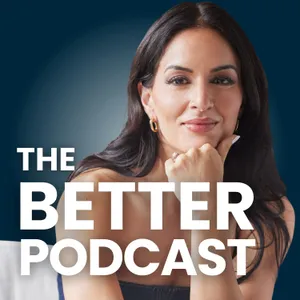
Free Daily Podcast Summary
BETTER! with Dr. Stephanie Estima | Women's Strength, Body Composition and Hormones: Daily Summaries Delivered
by Dr. Stephanie Estima, Perimenopause & Women's Fitness Expert
Most women are told that feeling exhausted, gaining weight, losing muscle, and watching their body change after 40 is just what happens. Dr. Stephanie Estima is here to tell you that's the wrong map. BETTER is the podcast for women in perimenopause and menopause who want to build real strength, understand their hormones, and take body composition seriously — without the diet culture nonsense and without the fear. Dr. Stephanie is a chiropractor, brain health expert, and one of the few voices in the menopause space who leads with fitness, muscle, and what your body is actually capable of. Each week she brings the world's leading researchers, clinicians, and practitioners into conversation — then translates the science into something you can use on Monday morning. Topics include strength training in perimenopause, body composition after 40, HRT and hormonal health, bone density, metabolic health, injury prevention, sleep, nutrition, and the kind of training that actually works when your body is changing. This is not a podcast about surviving menopause. It's about building the strongest, most capable version of yourself — at the exact moment most women are told to expect less.
Latest Episodes
The most recent episodes — sign up to get AI-powered summaries of each one.
- 3 days ago1h 5m
Are Hormones Ruining Your Deep Sleep? Chicken Soup for Your Brain with Ariel Garten (and Muse)
If you are lying awake at 3 a.m., soaked in sweat, or ready to snap at someone for chewing, this one is for you. Neuroscientist and Muse co-founder Ariel Garten explains what happens to sleep when estrogen and progesterone leave the room.They walk through the stages of sleep, why researchers think deep sleep helps the brain clear out the day’s waste, and practical ways to get more of it, from a consistent sleep window to a cooler bedroom to neurofeedback.Then they say the quiet part out loud: female rage. As Ariel puts it: “I’m feeling the sensation not because my husband is being an idiot or because my kids are annoying. I’m feeling the sensation because there is an internal biochemical process happening that is amplifying the world around me.”Get 15% off a Muse headband at https://choosemuse.com/better.OUR SPONSORS* PIQUE LIFE - Experience Transformative Results. Start your daily ritual today and elevate your morning and evening routine at https://piquelife.com/better* BEARABY - Find a more natural way to support deeper, calmer sleep. Go to https://bearaby.com and use code BETTER10 for 10% off any Bearaby weighted blanket purchase.* YOUNG GOOSE - Skin aging isn't defined by wrinkles. It's defined by skin quality. Head over to https://drstephanieestima.com/younggoose and use code BETTER for 10% off your first purchase.* SUNLIGHTEN - Boost recovery, heart health, and balance with sauna therapy. Go to https://get.sunlighten.com/DRSTEPHANIE and use code DRSTEPHANIE for a special discount.* BERKELEY LIFE - Restore your nitric oxide and get your pre-menopausal self back. Go to https://berkeleylife.com and use code BETTER20 to save.EPISODE OVERVIEW Intro: Doomscrolling, Sleep, and Dreams Why Brain Health Matters and Why Deep Sleep Disappears in Perimenopause Sleep Stages and the Glymphatic System: Chicken Soup for the Brain How to Get More Deep Sleep Deep Sleep Boost: How Pink Noise Deepens Your Sleep Female Rage, Anxiety, and Sleep Waking Up Refreshed: Sleep Cycles and Smart Wake Up Dreams, Lucid Dreaming, and Dream Recall Brain Fog, Blood Flow, and Brain Training Snoring, Breathing, and Sleep Apnea Your Daily Action Plan The After Party: with Dr. StephanieRESOURCES MENTIONEDMuse S Athena headband: https://choosemuse.com/better code BETTER for 15% off.Ariel Garten’s first appearance on BETTER (meditation and neurofeedback) - https://better-with-dr-stephanie.simplecast.com/episodes/ariel-gartenBidirectional Associations Between Sleep and Anxiety Symptoms in Emerging Adults in a Residential College Setting https://www.researchgate.net/publication/309705837_Bidirectional_Associations_Between_Sleep_and_Anxiety_Symptoms_in_Emerging_Adults_in_a_Residential_College_SettingDeep sleep brain waves offer protection against Alzheimer’s disease, new research shows https://www.hospitalnews.com/deep-sleep-brain-waves-offer-protection-against-alzheimers-disease-new-research-shows/Comparing finger and forehead sensors to measure oxygen saturation in people with chronic obstructive pulmonary disease https://pubmed.ncbi.nl
- 1 weeks ago1h 10m
No Good or Bad Foods: Why You Can't Just Enjoy a Meal with Dr. Rachel Goldman
Do you divide carbs, fats, and calories into whether they are “good” and “bad?" This episode with Dr. Rachel Goldman, a clinical psychologist and cognitive behavioural therapy specialist, will separate physiological hunger from emotional hunger and consider why many women carry disordered eating patterns from their teens and 20s—just as those methods lose effectiveness."It's the thought that follows the behaviour that's more important than the behaviour." The cookie is rarely the problem. The shame spiral after it is.This episode explores reading hunger signals, using a coping toolbox and a 10-minute pause to curb impulsive eating, rejecting food morality, and restoring pleasure via mindful eating and the raisin exercise. It examines when fasting becomes restriction—particularly for perimenopausal women—and addresses food noise, GLP-1s, avoiding speculation on celebrity bodies (and discussing them with children), supporting loved ones, and escaping societal appearance pressures.OUR SPONSORSQUALIA CREATINE+ - If you want to feel stronger, sharper, and more resilient, Qualia’s Creatine+ is my recommendation.Go to https://qualialife.com/better and use code BETTER to save. ALGAECAL - You can try AlgaeCal Collagen and get a special discount on your first purchase through our special offer. Go to: https://drstephanieestima.com/algaecalBON CHARGE - Recover Faster. Sleep Deeper. Look Better. Bon Charge brings you science-backed wellness technologies to enhance sleep, recovery, and beauty. Get 15% off the full suite at https://boncharge.com/better with code BETTER.LMNT - Stay hydrated without the sugar, food dye, and other dodgy ingredients found in popular electrolyte and sports drinks. Get a special offer when you make a purchase at https://DrinkLMNT.com/BetterCHAPTERS Intro: Body Image, Thought Spirals, and Self-Care Physiological Hunger vs. Emotional Hunger: How to Tell the Difference Emotional Eating: The Thought After the Bite, Coping Tools, and the 10-Minute Pause Good Carbs vs. Bad Carbs: Why There Are No Good or Bad Foods Mindful Eating, the Raisin Exercise, and Why Discomfort Can Help Fasting and Disordered Eating: When Restriction Becomes a Problem Menopause, Food Noise, and GLP-1s: Tool or Crash Diet? Celebrity Bodies, Hollywood, and Why We Shouldn’t Comment on Weight How to Talk to a Daughter or Loved One About Disordered Eating Social Media, Physique Competitors, and Finding Your Why The Never-Ending Goalpost: Body Image in Midlife and the Scale The After Party: Dr. Stephanie’s TakeawaysRESOURCES MENTIONEDWhen Life Happens, by Dr. Rachel Goldman. A full chapter on body image. https://whenlifehappensbook.comDr. Rachel Goldman on social media: @drrachelnycThe DSM (Diagnostic and Statistical Manual of Mental Disorders) https://my.clevelandclinic.org/health/articles/24291-diagnostic-and-statistical-manual-dsm-5The raisin exercise, a mindful eating practice. https://ggia.berkeley.edu/practice/raisin_meditationSurvey study of changes in total caloric and protein intake across the menopause transition: a preliminary analysis https://pmc.ncbi.nlm.nih.gov/articles/PMC12404059/BIODr. Rachel Goldman is a nationally recognized clinical psychologist and author of When Life Happens (April 2026). She specializes in cognitive behavioural therapy, with expertise in stress management, body image, health behaviour change, and the mind-body connection. She is a Clinical Assistant Professor in the Department of Psychiatry at NYU Grossman Scho
- 2 weeks ago1h 8m
Deep Squats Don't Wreck Knees -This Does | Joint Pain & Strength Training in Menopause
Have you been told you can’t squat because you have bad knees, or that running will wreck your joints? In this solo nerd safari, Dr. Stephanie explains why that wear-and-tear story is wrong. Your cartilage isn’t a tire with a fixed amount of tread. It’s a sponge that has to be squeezed to stay fed. She covers how joints actually get their nutrients, why they recover so much more slowly than muscle, the morning stiffness pattern that deserves a doctor’s visit, and why joint pain becomes more common for women through perimenopause and menopause.You’ll also hear what the research says about running, deep squats, and strength training versus stretching for mobility. Then comes the practical plan for training strong without getting greedy: how hard to push, a simple pain rule, and when to back off.OUR SPONSORSTIMELINE - When you purchase a one month supply of Mitopure® Gummies, you'll receive a FREE discovery size Mitopure® Firming Serum. Go to https://timeline.com/estimabundlePIQUE LIFE - Experience Transformative Results. Start your daily ritual today and elevate your morning and evening routine at https://piquelife.com/betterBERKELEY LIFE - Restore your nitric oxide and get your pre-menopausal self back. Go to https://berkeleylife.com and use code BETTER20 to save.BEARABY - Find a more natural way to support deeper, calmer sleep. Go to https://bearaby.com and use code BETTER10 for 10% off any Bearaby weighted blanket purchase.TOPICS COVEREDJoint health for women over 40Perimenopause and menopause joint painMusculoskeletal syndrome of menopauseHow cartilage gets nutrientsKnee osteoarthritis preventionIs squatting bad for your knees?Does running cause knee arthritis?Osteoarthritis vs rheumatoid arthritis morning stiffnessStrength training for joint healthStrength training vs stretching for mobilityHypermobility and end-range strengthTendon and connective tissue recoveryRESOURCES MENTIONEDPrevious episode on Tendons https://better-with-dr-stephanie.simplecast.com/episodes/the-lifting-heavy-trapVerzijl N, et al. (2000). Effect of collagen turnover on the accumulation of advanced glycation end products. Journal of Biological Chemistry. https://doi.org/10.1074/jbc.M006700200Messier SP, et al. (2005). Weight loss reduces knee-joint loads in overweight and obese older adults with knee osteoarthritis. Arthritis & Rheumatism. https://pubmed.ncbi.nlm.nih.gov/15986358/Bricca A, et al. (2019). Impact of exercise on articular cartilage in people at risk of, or with established, knee osteoarthritis: a systematic review of randomised controlled trials. British Journal of Sports Medicine. https://pubmed.ncbi.nlm.nih.gov/29934429/Alentorn-Geli E, et al. (2017). The association of recreational and competitive running with hip and knee osteoarthritis: a systematic review and meta-analysis. Journal of Orthopaedic & Sports Physical Therapy. https://doi.org/10.2519/jospt.2017.7137Hartmann H, Wirth K, Klusemann M. (2013). Analysis of the load on the knee joint and vertebral column with changes in squatting depth and weight load. Sports Medicine. https://pubmed.ncbi.nlm.nih.gov/23821469/Wright VJ, et al. (2024). The musculoskeletal syndrome of menopause. Climacteric. https://doi.org/10.1080/13697137.2024.2380363Silbernagel KG, et al. (2007). Continued sports activity, using a pain-monitoring model, during rehabilitation in patients with Achilles tendinopathy: a randomized controlled study. American
- 3 weeks ago1h 25m
Why Your Tendons Get Injured in Perimenopause (and How to Reverse It) with Dr. Keith Baar
If you’re a woman lifting weights, your muscles aren’t the only tissue adapting. Your tendons and ligaments are training right alongside them, and they respond to load very differently.Dr. Keith Baar is a professor of physiology at UC Davis and head of the Functional Molecular Biology Laboratory. He joins Dr. Stephanie Estima for a deep dive into tendon and ligament science. Whether you’re trying to stay injury-free as you build strength or you’re frustrated and want a smarter way back from an injury, this conversation gives you a framework for both.OUR SPONSORSLMNT - Stay hydrated without the sugar, food dye, and other dodgy ingredients found in popular electrolyte and sports drinks. Get a special offer when you make a purchase at https://DrinkLMNT.com/BetterOXFORD HEALTHSPAN - A whole-food spermidine supplement that supports cell renewal and healthy aging. Save at https://OxfordHealthspan.com/DrStephanie with code DrStephanie.ONESKIN - With age, skin becomes thinner, produces less collagen, proliferates at a slower rate, and accumulates damage. Fight back and save 15% at https://oneskin.co/better with code BETTER.ALGAECAL - You can try AlgaeCal Collagen and get a special discount off their first purchase through our special offer. Go to: https://drstephanieestima.com/algaecalTIMELINE - When you purchase a one-month supply of Mitopure® Gummies, you'll receive a FREE discovery size Mitopure® Firming Serum. Go to https://timeline.com/estimabundleTOPICS COVEREDTendon and ligament injury prevention for women who liftWhy lifting heavy isn’t always best for tendon healthLow-load, long-duration (3LD) isometrics explainedThe 10-minute tendon training window and 6 to 8 hour recovery gapIsometric exercises for tendinopathy and injury rehabOvercoming vs. yielding isometricsWhy RICE and rest can backfire after a tendon injuryTendon structure: stiffer near bone, softer near muscleEstrogen, testosterone, and sex differences in ACL and muscle injuriesBirth control, menopause hormone therapy, and tendon healthFlat shoes vs. heels and knee osteoarthritisBPC-157, peptides, whey, and collagen for tendon healthRESOURCES MENTIONEDSinewus https://sinewus.comKeith’s UC Davis faculty page: https://health.ucdavis.edu/basic-sciences/physiology/team/faculty/baarEffect of Estrogen on Musculoskeletal Performance and Injury Risk https://pubmed.ncbi.nlm.nih.gov/30697162/Stress Relaxation and Targeted Nutrition to Treat Patellar Tendinopathy https://pubmed.ncbi.nlm.nih.gov/30299199/Effects of Different Loading Programs on Finger Strength in Rock Climbers https://pubmed.ncbi.nlm.nih.gov/39560837/Effects of stress shielding on the mechanical properties of rabbit patellar tendon https://pubmed.ncbi.nlm.nih.gov/8445894/The R.I.C.E Protocol is a MYTH: A Review and Recommendations https://thesportjournal.org/article/the-r-i-c-e-protocol-is-a-myth-a-review-and-recommendations/Effects of high heel wear and increased weight on the knee during walking https://pubmed.ncbi.nlm.nih.gov/25532875/Relationship between knee joint laxity and knee joint mechanics d
- Oct 19, 20261h 13m
How To Build Round & Strong Glutes with Bret Contreras, PhD. aka the Glute Guy
Bret Contreras covers glute training: exercise selection (squats, RDLs, step-ups, split squats, single-leg work, abductions, kickbacks, bridges), hip thrust technique (foot placement, full extension, setup errors, machine issues), and prioritizing glute growth over quads/hamstrings.TOPICS COVEREDGlute Rapid-Fire BeginsHip Thrust MistakesPelvic Tilt and MythsMyth of Light Glute TrainingNo-Equipment Glute OptionsThe Hip Dips QuestionAesthetics and Glute GoalsWhy Hip Thrusts Recover WellGrowing Glutes Without LegsHip Thrust VariationsRecovery and Training FrequencyManaging Maximum Recoverable VolumeOUR SPONSORSSUNLIGHTEN - Boost recovery, heart health, and balance with sauna therapy. Go to https://get.sunlighten.com/DRSTEPHANIE and use code DRSTEPHANIE for a special discount.JUST THRIVE HEALTH - Your gut runs the show — mood, immunity, energy, all of it. Just Thrive's spore-based probiotics are the ones I actually trust. Take the Feel Better Challenge and save on your first order at https://justthrivehealth.com/better with code BETTER.PIQUE LIFE - Experience Transformative Results. Start your daily ritual today and elevate your morning and evening routine at https://piquelife.com/betterTIMELINE - Timeline’s clinically proven formula is now available at a great price when you go to https://timelinenutrition.com/better with code BETTER.RESOURCES MENTIONEDWebsite: https://bretcontreras.comInstagram (@bretcontreras1): https://www.instagram.com/bretcontreras1YouTube: https://www.youtube.com/c/bretcontreras1Periodization of Strength Training for Sports by Tudor BompaThe Westside Barbell Book of Methods by Louie SimmonsThe impact of resistance training on gluteus maximus hypertrophy: a systematic review and meta-analysis - https://pmc.ncbi.nlm.nih.gov/articles/PMC12018462/Glute Lab: The Art and Science of Strength and Physique Training by Bret Contreras - https://www.porchlightbooks.com/products/glute-lab-bret-contreras-9781628603460The Science & Practice of Hip Thrusts (Research & EMG Studies) by Bret Contreras - https://www.bcstrength.com/pages/about-the-inventorAdvanced Techniques in Glutei Maximi Strengthening by Bret Contreras - https://bretcontreras.com/ebook-2/Glute Medius Hip Thrust https://www.youtube.com/watch?v=Rvw9cpZ2Z1QBIOBret Contreras “The Glute Guy” PhD, CSCS is a prominent strength and conditioning specialist, researcher, and bestselling author. He is best recognized for inventing the barbell hip thrust and developing cutting-edge glute-training methodologies.He authored the bestselling book Glute Lab, Bodyweight Strength Training Anatomy, and coauthored Strong Curves. Contreras holds a Ph.D. in Sports Science and has contributed to over 50 peer-reviewed published studies. ****************************P.S. When you're ready, here are two ways Dr. Stephanie can help you:Subscribe: <a href="https://drstephanieestima.com/newsletter?utm_source=podca
- Oct 12, 20261h 35m
Skinny Is Where You Go to Die: Muscle Power & Myokines for Ageing Women with Dr. Paul Taylor
Your muscles aren't just for moving — they're an endocrine organ, releasing hundreds of signalling molecules called myokines every time you contract them. Dr. Paul Taylor breaks down the science of myokines, why muscular power (not just strength) is the strongest predictor of how long you'll live, and why the pursuit of "skinny" is costing women their healthspan.RESOURCES MENTIONEDDeath by Comfort: How Modern Life Is Killing Us and What We Can Do About It by Dr. Paul TaylorThe Hardiness Podcast with Dr. Paul TaylorDr. Paul Taylor's websiteFrank W. Booth et al., "Lack of Exercise Is a Major Cause of Chronic Diseases", Comprehensive Physiology, 2012Physical Activity Patterns and Biomarkers of Cardiovascular Disease Risk in Hunter-Gatherers, Hadza hunter-gatherer study using continuous heart-rate monitoringUltra-Processed Food Exposure and Adverse Health Outcomes: Umbrella Review of Epidemiological Meta-Analyses, The BMJ, 2024Mark Seery, "Challenge or Threat? Cardiovascular Indexes of Resilience and Vulnerability to Potential Stress in Humans", University at BuffaloCOSMOS-Mind: Effects of Cocoa Extract and a Multivitamin on Cognitive Function, randomized clinical trial in older adultsBiosphere 2: Calorie Restriction and Physiologic, Hematologic, Hormonal, and Biochemical ChangesThe Good, The Bad & The Ugly of Cold Water Exposure with Professor Mike Tipton, The Hardiness PodcastMuscle Power Versus Strength as a Predictor of Mortality in Middle-Aged and Older Men and Women, Mayo Clinic Proceedings, 2025BIODr. Paul Taylor is a Psychophysiologist, with a PhD in Psychology, separate master's degrees in Exercise Science and Nutrition and a postgraduate qualification in Neuroscience. As Director of Paul Taylor Consulting, he has conducted published research that shows that his programs have proven benefits for increasing hardiness, cognitive function and employee wellbeing, whilst reducing burnout across multiple industries. More at paultaylor.biz/aboutOUR SPONSORSBON CHARGE - Bon Charge brings you science-backed wellness technologies to enhance sleep, recovery, and beauty. Go to https://boncharge.com/better and use code BETTER.BEARABY - Find a more natural way to support deeper, calmer sleep. Go to https://bearaby.com and use code BETTER10 on any Bearaby weighted blanket purchase.ALGAECAL - Listeners can try AlgaeCal Collagen and get a specail discount off their first purchase through our special offer. Go to https://drstephanieestima.com/algaecal for a special offer.INCREDIWEAR - If you are an athlete, dealing with chronic joint pain, or just someone who wants to feel better in your body, this is worth trying. Head to https://drstephanieestima.com/incrediwear and use code DRSTEPH20.RAPID REBOOT - Whether you're a weekend warrior, a competitive athlete, or a parent of one — th
- Oct 5, 20261h 23m
Perimenopause Doesn't Cause ADHD, It Unmasks It: Reclaim Your Brain with Dr. Jolene Brighten
Were you ever told you were "so smart, but" on a report card? So smart, but too chatty. So smart, but not living up to your potential. Dr. Jolene Brighten, naturopathic endocrinologist and author of the forthcoming ADHD and Women, unpacks why ADHD in women looks nothing like the stereotype, and why so many women aren't diagnosed until their late 30s or 40s, often only after their own child gets diagnosed first.If you've ever felt like the strategies that used to work for you have quietly stopped working, this episode might give you language for something you've been carrying alone for a long time.🎤 TOPICS COVEREDADHD in women: symptoms, diagnosis, and why it's missed for decadesWhy ADHD looks different in women versus menPerimenopause and ADHD: why symptoms get worse in midlifeThe five hormonal stages that worsen ADHD (puberty, pregnancy/postpartum, perimenopause, postmenopause, premenstrual phase)Executive dysfunction explained: time blindness, task paralysis, and emotional dysregulationADHD masking in women: people-pleasing, perfectionism, and burnoutEstrogen, progesterone, and the ADHD brain: how hormones affect dopamine and focusPMDD and ADHD: the connection between your cycle and your symptomsProgesterone sensitivity and hormone replacement therapy for ADHD womenPCOS, PMOS, and the androgen-ADHD connectionADHD and genetics: is ADHD hereditaryNutrition for ADHD: gut health, protein, and the three foods Dr. Brighten recommends weeklyExercise and the ADHD brain: lactate, BDNF, and why movement improves focusBest workouts for ADHD: strength training, sprints, and mobility workCreatine, saffron, bacopa, and other supplements for ADHDSleep and ADHD: delayed sleep phase syndrome and the default mode networkLate-diagnosed ADHD in women: why so many women are diagnosed in their late 30s and 40s📎 RESOURCES MENTIONED can be found at https://drstephanieestima.com/podcasts/ep489📦 OUR SPONSORSPIQUE LIFE - Experience Transformative Results. Start your daily ritual today and elevate your morning and evening routine at https://piquelife.com/betterTIMELINE - Timeline’s clinically proven formula is now available at a great price when you go to https://timelinenutrition.com/better with code BETTER.BERKELEY LIFE - Restore your nitric oxide and get your pre-menopausal self back. Go to https://berkeleylife.com and use code BETTER20 to save.JUST THRIVE HEALTH - Just Thrive's spore-based probiotics are the ones I trust. Take the Feel Better Challenge and save on your first order at https://justthrivehealth.com/better with code BETTER. ****************************P.S. When you're ready, here are two ways Dr. Stephanie can help you:Subscribe: The Mini Pause — My weekly newsletter packed with the most actionable, evidence-based tools for women 40+ to thrive in midlife.Build Muscle: LIFT — My progressive strength training program designed for women in midlife. Form-focused, joint-friendly, and built for real results. Hosted by Simplecast, an AdsWizz company. See pcm.adswizz.com for information about our collection and use of personal data for advertising.
- Sep 28, 202634 min
Hypermobile? Yes, You Can Strength Train (Here's How to Do It Safely)
If you can touch your thumb to your forearm, your elbows bend backward when you lock them out, or you've spent your life being called "double-jointed" like it's a party trick — this episode is your explainer.Dr. Stephanie walks through what hypermobility actually is, the three-tier spectrum from simple joint laxity to Hypermobility Spectrum Disorder to hEDS, and why the standard fitness advice (more stretching, more mobility work, taking it easy) is often exactly backwards for this population. The real issue was never flexibility — it's instability.Dr. Stephanie also explains safe strength training when your passive stabilizers can’t protect your end range, why controlled range is better than maximum range, and the specific training variables (tempo, isometrics, balance work) that build the neuromuscular control hypermobile bodies lack. She also covers nutrition considerations (protein, vitamin C, collagen timing) and recovery pacing, and reframes the idea that losing muscle while hypermobile makes you safer.TOPICS COVEREDWhat hypermobility is and how it's screened (the Beighton score)The three tiers: joint hypermobility, Hypermobility Spectrum Disorder (HSD), and hypermobile Ehlers-Danlos Syndrome (hEDS)Why hypermobility itself isn't the problem — instability isPassive stabilizers vs. active stabilizers, explainedWhy estrogen increases ligament laxity (and why women are more affected than men)Proprioceptive deficits: why hypermobile joints don't send a clear "too far" warning signalWhy strength training is a primary treatment strategy, not a nice-to-haveTraining in controlled range (about 80-90% of passive range) instead of maximum rangePractical cueing for squats, presses, and overhead workControlled eccentrics, isometrics, and balance/proprioceptive trainingWhy passive static stretching is generally counterproductive for this populationJoint-by-joint programming (why shoulders and hips need the most attention)Nutrition: protein targets, vitamin C, and collagen peptide timingRecovery: pacing over pushing, sleep, and how to tell soreness from a warning signWhy chasing "skinny" is especially risky for hypermobile women in midlifeRESOURCES MENTIONED https://drstephanieestima.com/podcasts/ep488OUR SPONSORSALGAECALListeners can try AlgaeCal Collagen and get a specail discount off their first purchase through our special offer. Go to: https://drstephanieestima.com/algaecalONESKINFor a limited time, try their new OS-01 FACE RICH CREAM using code BETTER at https://oneskin.co/BETTEROXFORD HEALTHSPANA whole-food spermidine supplement that supports cell renewal and healthy aging. Save at https://OxfordHealthspan.com/DrStephanie with code DrStephanie.BIOPTIMIZERSYour digestion can take a hit in midlife, but you don't have to suffer. Learn how enzymes can help at https://bioptimizers.com/better and use code BETTER to get 10% off your order. BEARABYFind a more natural way to support deeper, calmer sleep. Go to https://bearaby.com and use code BETTER10 on any Bearaby weighted blanket purchase. ****************************P.S. When you're ready, here are two ways Dr. Stephanie can help you:Subscribe: The Mini Pause — My weekly newsletter packed with the most actionable, evidence-based tools for women 40+ to thrive in midlife.Build Muscle: LIFT — My progre
Get BETTER! with Dr. Stephanie Estima | Women's Strength, Body Composition and Hormones summaries in your inbox
Free AI-powered daily recaps. Key takeaways, quotes, and mentions — in a 5-minute read.
Get Free Summaries →Free forever for up to 3 podcasts. No credit card required.
You Might Also Like
Listeners also like.
Everyday Wellness: Midlife Hormones, Menopause, and Science for Women 35+
A nurse practitioner shares science-based strategies for managing midlife hormones, menopause, and women's health.

The Dr Vonda Show
An orthopedic surgeon discusses aging, movement, bone health, and resilience with experts and women athletes.

The Dr. Tyna Show
Discusses health truths and medical empowerment, offering practical wellness insights to foster personal and community resilience.
Live Like a Girl with Dr. Mindy Pelz
Dr. Mindy Pelz explores women's health through hormone science and wellness conversations to help women live in rhythm with their bodies.

The EMPWR Podcast
A fitness entrepreneur shares workout tips, nutrition advice, and personal stories to support holistic wellness and self-empowerment.
You Are Not Broken
A urologic surgeon hosts experts to discuss women's health, hormones, and sexuality with science-backed insights and candid conversation.

Afterpause
Evidence-based guidance on menopause, hormone health, sleep, and metabolism from a certified wellness coach and women's health experts.
Treated with Dr. Sara Szal
Dr. Sara Szal explores holistic health solutions through conversations with experts and patients seeking mind, body, and soul healing.
FoundMyFitness
A podcast exploring health, science, nutrition, aging, and fitness.

Well Beyond 40
Women in midlife and beyond explore nutrition, fitness, and mindfulness to support healthy aging.

unPAUSED with Dr. Mary Claire Haver
A board-certified OB-GYN hosts candid discussions with experts and leaders on women's health, identity, and empowerment in midlife.

The Dr. Hyman Show
Explores root causes of chronic disease and promotes functional medicine, nutrition, and preventive health through expert discussions.
About BETTER! with Dr. Stephanie Estima | Women's Strength, Body Composition and Hormones
Most women are told that feeling exhausted, gaining weight, losing muscle, and watching their body change after 40 is just what happens. Dr. Stephanie Estima is here to tell you that's the wrong map. BETTER is the podcast for women in perimenopause and menopause who want to build real strength, understand their hormones, and take body composition seriously — without the diet culture nonsense and without the fear. Dr. Stephanie is a chiropractor, brain health expert, and one of the few voices in the menopause space who leads with fitness, muscle, and what your body is actually capable of. Each week she brings the world's leading researchers, clinicians, and practitioners into conversation — then translates the science into something you can use on Monday morning. Topics include strength training in perimenopause, body composition after 40, HRT and hormonal health, bone density, metabolic health, injury prevention, sleep, nutrition, and the kind of training that actually works when your body is changing. This is not a podcast about surviving menopause. It's about building the strongest, most capable version of yourself — at the exact moment most women are told to expect less.
Customized Recaps
AI-powered recaps with compact key takeaways, quotes, and insights.
Straight to Your Inbox
Get key takeaways from BETTER! with Dr. Stephanie Estima | Women's Strength, Body Composition and Hormones in a 5-minute read.
Save Hours Every Week
Stay current on your favorite podcasts without falling behind.
Frequently Asked Questions
What is Podzilla's BETTER! with Dr. Stephanie Estima | Women's Strength, Body Composition and Hormones daily summary?
It's a free AI-powered email that summarizes new episodes of BETTER! with Dr. Stephanie Estima | Women's Strength, Body Composition and Hormones as soon as they're published. You get the key takeaways, notable quotes, and links & mentions — all in a quick read.
How does the BETTER! with Dr. Stephanie Estima | Women's Strength, Body Composition and Hormones podcast summary work?
When a new episode drops, our AI transcribes and analyzes it, then generates a personalized summary tailored to your interests and profession. It's delivered to your inbox every morning.
Is this an official BETTER! with Dr. Stephanie Estima | Women's Strength, Body Composition and Hormones product?
No. Podzilla is an independent service that summarizes publicly available podcast content. We're not affiliated with or endorsed by Dr. Stephanie Estima, Perimenopause & Women's Fitness Expert.
Can I get summaries of other podcasts too?
Absolutely! The free plan covers up to 3 podcasts, any in the catalog. Basic raises that to 15, Pro to 40 and Max to 100. Browse our full catalog at /podcasts.
How often does BETTER! with Dr. Stephanie Estima | Women's Strength, Body Composition and Hormones release new episodes?
BETTER! with Dr. Stephanie Estima | Women's Strength, Body Composition and Hormones publishes weekly. Our AI generates a summary within hours of each new episode.
What topics does BETTER! with Dr. Stephanie Estima | Women's Strength, Body Composition and Hormones cover?
BETTER! with Dr. Stephanie Estima | Women's Strength, Body Composition and Hormones covers topics including Nutrition, Fitness, Health & Fitness, Alternative. Our AI identifies the specific themes in each episode and highlights what matters most to you.
Start getting BETTER! with Dr. Stephanie Estima | Women's Strength, Body Composition and Hormones summaries tomorrow morning.
Free forever for up to 3 podcasts. No credit card required.
Free forever for up to 3 podcasts. No credit card required.