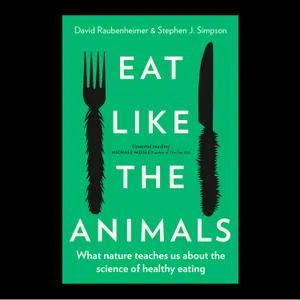
Free Daily Podcast Summary
EAT LIKE THE ANIMALS: Daily Summaries Delivered
by Stephen Simpson, David Raubenheimer, Charlotte Wood
Get key takeaways, quotes, and insights from EAT LIKE THE ANIMALS in a 5-minute read. Delivered straight to your inbox.
Latest Episodes
The most recent episodes — sign up to get AI-powered summaries of each one.
- Aug 2, 202034 min
Ep 7. Stepping back, looking up: the bigger picture, and where to now?
In this final episode, Professors David Raubenheimer and Steve Simpson step back from the details of research to think about the big picture. We hear about how the Charles Perkins Centre's work is modelled on the biology of the human brain, and we learn of the connection between climate change, protein, infectious disease pandemics and our nutrition. Last, we talk about our individual and collective responsibility for creating the systems that harm our health. Hosted by novelist Charlotte Wood, the first writer-in-residence at the Charles Perkins Centre, University of Sydney. More details: EAT LIKE THE ANIMALS THE CHARLES PERKINS CENTRE, UNIVERSITY OF SYDNEY CHARLOTTE WOOD
- Jul 26, 202058 min
Ep 6. Petrol in your ice cream: what ultra-processing has done to our diets
This extended episode we’re learning about the four kinds of food processing and how each has changed our diets. Earlier, we learned of the five appetites driving human food preferences - but now Professors David Raubenheimer and Steve Simpson discuss an even more powerful craving. It's the appetite for profit, and it’s destroying the ability of many of us to keep ourselves healthy. As well, we learn about how and why protein needs change throughout our lives. Hosted by novelist Charlotte Wood, the first writer-in-residence at the Charles Perkins Centre, University of Sydney. More details: EAT LIKE THE ANIMALS THE CHARLES PERKINS CENTRE, UNIVERSITY OF SYDNEY CHARLOTTE WOOD
- Jul 19, 202042 min
Ep 5. From fire to farm to factory: the evolution & industrialisation of human food environments
Last time we looked at how animals' environments provide for their nutritional health. In this episode Professors David Raubenheimer and Steve Simpson step us through key evolutionary developments in human nutrition, from the first use of fire to the start of industrialised food production, and what each big change has meant for our bodies, our societies and our health. Hosted by novelist Charlotte Wood, the first writer-in-residence at the Charles Perkins Centre, University of Sydney. More details: EAT LIKE THE ANIMALS THE CHARLES PERKINS CENTRE, UNIVERSITY OF SYDNEY CHARLOTTE WOOD
- Jul 12, 202038 min
Ep 4. Into the wild: Diet tips from grasshoppers, spider monkeys & the orangutans of Borneo
Moving out of the lab and into the wild, Professors David Raubenheimer and Steve Simpson take a look at how animals' natural environments provide everything they need for a healthy diet. From chasing a single grasshopper through the Arizona desert to measuring the urine of wild Borneo orang-utans, David explains how carefully animals in the wild select what they eat, and why. And we hear about some of the risks taken by passionate scientists living among the animals for their research. Hosted by novelist Charlotte Wood, the first writer-in-residence at the Charles Perkins Centre, University of Sydney. More details: EAT LIKE THE ANIMALS THE CHARLES PERKINS CENTRE, UNIVERSITY OF SYDNEY CHARLOTTE WOOD
- Jul 5, 202038 min
Ep 3: What fruit flies and fat mice can tell us about living healthier for longer
In Episode 3 Professors Steve Simpson and David Raubenheimer take us through further experiments - this time on humans, fruit flies and mice - to discover that there's a difference between 'benign' and unhealthy obesity, and a tradeoff between longevity and reproduction when it comes to the amount of protein we eat. And we discover why when you're craving barbecue-flavoured chips, you should eat an egg instead. Hosted by novelist Charlotte Wood, the first writer-in-residence at the Charles Perkins Centre, University of Sydney. More details: EAT LIKE THE ANIMALS THE CHARLES PERKINS CENTRE, UNIVERSITY OF SYDNEY CHARLOTTE WOOD
- Jun 28, 202039 min
Ep 2: Big discoveries: the 'five appetites' & protein leverage
What drives our food preferences? In Episode 2 Professors Steve Simpson and David Raubenheimer explain their breakthrough discovery about what animals eat and why. They take us through some of their research with insects, spiders, cats, dogs, primates and humans, all leading to the 'protein leverage hypothesis' - the profound change in thinking about what drives our human appetites. Along the way we hear about the challenges of holding your nerve in overturning long-held scientific beliefs. Hosted by novelist Charlotte Wood, the first writer-in-residence at the Charles Perkins Centre, University of Sydney. More details: EAT LIKE THE ANIMALS THE CHARLES PERKINS CENTRE, UNIVERSITY OF SYDNEY CHARLOTTE WOOD
- Jun 15, 202045 min
Ep 1. Curiosity, childhood and the natural world: the making of two scientists
Are scientists born or made? In Episode 1 we hear about the early years of Professors Steve Simpson and David Raubenheimer, and their childhood investigations into the natural world. From Steve's high school reconstructions of a cow skeleton to David's childhood hypothesis about the harmfulness of bees, we see how two schoolboys grew into two world-renowned scientists. We learn of their meeting at Oxford University and the early experiments with locusts that led to their groundbreaking findings about human nutrition. Along the way we discuss how curiosity makes room for the tenacity to go your own way as a scientist and challenge long-held 'truths' about the world. Hosted by novelist Charlotte Wood, the first writer-in-residence at the Charles Perkins Centre, University of Sydney. More details: EAT LIKE THE ANIMALS THE CHARLES PERKINS CENTRE, UNIVERSITY OF SYDNEY CHARLOTTE WOOD
Get EAT LIKE THE ANIMALS summaries in your inbox
Free AI-powered daily recaps. Key takeaways, quotes, and mentions — in a 5-minute read.
Get Free Summaries →Free forever for up to 3 podcasts. No credit card required.
You Might Also Like
Listeners also like.
How To Carnivore
How To Carnivore

the carnivore experience
Coach Stephen BSc Hons

ReWild Yourself
Daniel Vitalis
The Road to Carnivore
Joanne Ozug

The Healthification Podcast
Kate Galli
The Gastronauts Podcast
Gastronauts
The Inner Carnivore Podcast
Carnivore JT

Hunger Hunt Feast | Strategic Fitness
Zane Griggs: Fitness Expert
The Performance Nutrition Podcast
Dr. Marc Bubbs
ZOE Science & Nutrition
ZOE

Food Heals
Allison Melody
Human Atavist Podcast - Human Atavist
Sven Craun: Ancestral Nutrition & Fitness Expert | Traditional & Wild Foods Enthusiast
About EAT LIKE THE ANIMALS
A podcast about food, biology, and the surprising lessons animals have to teach us humans about what and how to eat. In this series, novelist Charlotte Wood talks with renowned University of Sydney biologists David Raubenheimer and Steve Simpson about their 35 years of work and friendship, and the resulting research findings that provocatively challenge long-held beliefs about nutrition and human health. In the process, we take a look at the serendipitous connections that often lie at the heart of good science, and the insights scientists share with artists.
Customized Recaps
AI-powered recaps with compact key takeaways, quotes, and insights.
Straight to Your Inbox
Get key takeaways from EAT LIKE THE ANIMALS in a 5-minute read.
Save Hours Every Week
Stay current on your favorite podcasts without falling behind.
Frequently Asked Questions
What is Podzilla's EAT LIKE THE ANIMALS daily summary?
It's a free AI-powered email that summarizes new episodes of EAT LIKE THE ANIMALS as soon as they're published. You get the key takeaways, notable quotes, and links & mentions — all in a quick read.
How does the EAT LIKE THE ANIMALS podcast summary work?
When a new episode drops, our AI transcribes and analyzes it, then generates a personalized summary tailored to your interests and profession. It's delivered to your inbox every morning.
Is this an official EAT LIKE THE ANIMALS product?
No. Podzilla is an independent service that summarizes publicly available podcast content. We're not affiliated with or endorsed by Stephen Simpson, David Raubenheimer, Charlotte Wood.
Can I get summaries of other podcasts too?
Absolutely! The free plan covers up to 3 podcasts. Upgrade to Pro for 15, or Premium for 50. Browse our full catalog at /podcasts.
What topics does EAT LIKE THE ANIMALS cover?
EAT LIKE THE ANIMALS covers topics including Science, Natural Sciences. Our AI identifies the specific themes in each episode and highlights what matters most to you.
Start getting EAT LIKE THE ANIMALS summaries tomorrow morning.
Free forever for up to 3 podcasts. No credit card required.
Free forever for up to 3 podcasts. No credit card required.