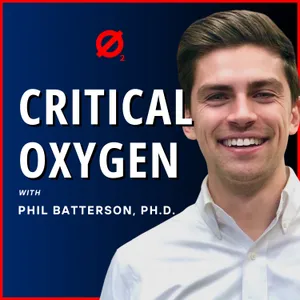
Free Daily Podcast Summary
Critical Oxygen: Daily Summaries Delivered
by Philip Batterson, Ph.D.
Get key takeaways, quotes, and insights from Critical Oxygen in a 5-minute read. Delivered straight to your inbox.
Latest Episodes
The most recent episodes — sign up to get AI-powered summaries of each one.
- Jun 4, 202558 min
How I Used Science to Complete my First Race in 2 Years | #94
In this episode of the Critical Oxygen podcast, we are doing another SOLO podcast where I discuss my journey from chronic injuries to successfully completing two races after six months of consistent training. I emphasize the importance of understanding training volume (mileage and intensity) as a load marker, the role of key individuals in my recovery, and how blood work has been a game changer for performance. The episode includes a detailed recap of my recent race experiences and the adjustments I made to my training regimen to achieve success. In this conversation, I discuss my training journey leading up to my first race in two years. I share insights on physiological testing, performance assessment, nutrition, recovery strategies, and the importance of managing training volume and intensity. And I emphasize the significance of threshold work in race preparation.TAKEAWAYSTraining volume is not just about mileage.Blood work can reveal underlying health issues affecting performance.Cross-training can help prevent overuse injuries.Monitoring physiological markers can guide training intensity.Nutrition plays a crucial role in race preparation.Enjoy!Enjoying these podcasts, subscribe to get notified when new episodes are released. If you have a question or topic you want me to address, leave a comment!Follow Phil on Instagram - https://www.instagram.com/drphilbattersonCheck out Rythm Health - https://rythmhealth.com/?via=criticaloxygenInterested in being coached by me? Book a free consultation here - https://calendly.com/batterson-phil/critical-connectionCHAPTERS00:00 Intro02:48 Overcoming Injuries and Building Consistency06:04 Key Influencers in My Recovery11:45 The Role of Blood Work in Performance15:08 Race Recap: Tiger Claw Ascent26:58 Training Adjustments for Success29:27 Physiological Testing and Performance Assessment32:39 Nutrition and Recovery Strategies35:40 Training Volume and Intensity Management39:55 Threshold Work and Race Preparation49:15 Race Experience and Future GoalsKEYWORDSrunning, training volume, injuries, endurance, physiological testing, race recap, recovery, blood work, performance, consistency, physiological testing, performance assessment, nutrition, recovery strategies, training volume, intensity management, threshold work, race preparation, race experience, future goalsPhoto Credit: Mark Griffith https://markgriffith.smugmug.com/Tiger-Claw-2025
- May 7, 20251h 11m
How to Manage Training Load and Hybrid Training | #93 ft. Dr. Alyssa Olenick
In this episode of the Critical Oxygen Podcast, Dr. Alyssa Olenick and I discuss endurance and hybrid training, focusing how we balance volume and intensity, and the importance of consistency in training. We explore Alyssa's journey from athlete to academic to coach + athlete. Her insights on training load, and the role of cross-training in optimizing performance. We emphasize that more isn't always better and that understanding one's body and training needs is crucial for success in endurance sports. We also discuss the intricacies of hybrid training, discussing what it is, its benefits, the importance of cross-training, and the role of nutrition and sleep in optimizing performance. We clarify the distinction between hybrid and concurrent training, emphasizing the need for a balanced approach to strength and endurance. The discussion also highlights common misconceptions about the interference effect of endurance training on strength gains and the critical role of adequate nutrition and recovery in achieving athletic goals.More info on Dr. Alyssa Olenick:As founder of Doc Lyss Fitness and creator of The Lyss Method, she designs transformative strength, endurance, and hybrid training programs. A certified sports nutritionist, CrossFit Level 2 Trainer, ultra-marathon runner, and strength athlete herself, Alyssa lives the principles she teaches. Her mission: translate complex science into accessible strategies that empower clients to thrive—whether in the gym, on roads, or exploring trails. Dr. Olenick bridges the gap between research and results-driven training.Learn more at www.doclyssfitness.com and www.thelyssmethod.com TAKEAWAYS- Consistency in training leads to better adaptation and performance.- Cross-training can help improve fitness without the risk of overuse injuries.- Hybrid training aims to maximize both strength and endurance simultaneously.- For most people the interference effect of endurance training on strength is minimal.Enjoying these podcasts, subscribe to get notified when new episodes are released. If you have a question or topic you want me to address, leave a comment!Follow Phil on Instagram - https://www.instagram.com/drphilbattersonInterested in learning more about physiology? Check out the Critical Oxygen website for blogs, courses, and coaching - https://www.criticaloxygen.com/CHAPTERS00:00 Introduction to Endurance Training and Optimization03:00 Alyssa Olenick's Journey in Fitness and Academia06:10 The Balance of Training: Volume vs. Intensity08:58 Injury Management and Training Smart11:45 The Importance of Consistency in Training15:10 Understanding Training Load and Adaptation18:08 The Nuances of Training for Different Goals21:03 The Role of Cross-Training in Endurance Training23:56 Final Thoughts on Training Effectiveness36:09 The Benefits of Cross-Training39:37 Understanding Hybrid Training44:47 Defining Hybrid vs. Concurrent Training48:52 The Interference Effect in Training55:07 Nutrition's Role in Hybrid Training01:00:50 Optimizing Sleep for Performance01:06:24 Simplifying Training for Better ResultsKEYWORDS endurance training, hybrid training, injury management, training load, consistency, volume vs intensity, cross-training, fitness optimization, exercise physiology, athlete performance, cross-training, hybrid training, concurrent training, nutrition, sleep optimization, athletic performance, endurance, strength training, recovery, training strategies
- Feb 6, 20251h 43m
How to Breathe Better According to Science | #92 ft. Dr. Eric Harbour
In this episode of the Critical Oxygen Podcast, Dr. Eric Harbour, Ph.D. and I discuss the how to breath better during endurance exercise according to science! In this episode we explore the mechanics of breathing, the physiological implications of different breathing patterns, and how these can be optimized for better endurance and performance. The conversation touches on the limitations athletes face regarding their breathing, the psychological aspects of breathing, and the potential for training to improve breathing efficiency and effectiveness. We also discuss the risks associated with over and under breathing, providing insights into how these factors can impact overall health and exercise performance. Our main topic of focus is Eric's research paper called Breath Tools: A Synthesis of Evidence-Based Breathing Strategies to Enhance Human Running - https://www.frontiersin.org/journals/physiology/articles/10.3389/fphys.2022.813243/fullTAKEAWAYS- Breathing patterns significantly influence athletic performance.- Breath control can enhance both physiological and psychological aspects of exercise.- The lung structure is relatively fixed, but breathing function can be improved.- Nasal breathing offers various benefits, including better airway quality. But has limitations at higher exercise intensities.Enjoy!More about Dr. Eric Harbour:Eric has a Ph.D. in sports biomechanics, with a focus on breathing pattern in sport. He is a broadly experienced practitioner with a sports medicine background and has worked in NCAA athletics, alpine ski racing, and New Zealand rugby. His current role as a postdoctoral research scientist is in collaboration with adidas and other companies developing analytical approaches and wearable feedback interfaces to better understand and improve sports experiences. He is a runner, cyclist, and keen outdoor athlete and currently lives with his wife, child, and dog in Salzburg, Austria.Enjoying these podcasts, subscribe to get notified when new episodes are released. If you have a question or topic you want me to address, leave a comment!Follow Phil on Instagram - https://www.instagram.com/drphilbattersonInterested in learning more about physiology? Check out the Critical Oxygen website for blogs, courses and coaching -https://www.criticaloxygen.com/CHAPTERS00:00 Introduction to Breathing and Performance02:59 The Science of Breathing Patterns05:47 Breathing Mechanics and Physiology09:08 Breathing Limitations in Athletes12:01 The Role of Breathing in Exercise14:55 Breathing Techniques and Their Benefits17:50 Breathing Adaptations and Training20:45 Psychological Aspects of Breathing23:58 Conclusion and Future Directions34:40 Understanding Breathing Mechanics36:55 Exploring Breath Tools and Strategies39:51 The Importance of Diaphragmatic Breathing45:51 Nasal vs. Mouth Breathing: The Debate51:16 Active Exhale Techniques and Their Benefits58:47 Risks of Over and Under Breathing01:09:24 Exploring CO2 Tolerance and Exercise01:12:24 Breath Control in Swimming and Running01:15:50 The Synchronization of Breathing and Movement01:20:08 Breathing Techniques and Their Impact on Performance01:25:49 Measuring Breathing Patterns in Athletes01:30:36 Practical Applications of Breathing Strategies01:35:58 The Role of Sighing in Exercise01:41:18 Conclusion and Future DirectionsKEYWORDSbreathing, sports performance, physiology, endurance, breathing patterns, respiratory training, athletes, breathing mechanics, oxygen transport, psychological effects, breathing mechanics, diaphragmatic breathing, nasal breathing, mouth breathing, breath tools, respiratory training, exercise physiology, breathing techniques, performance, wellness, CO2 tolerance, exercise physiology, breathing techniques, performance, synchronization, swimming, running, sighing, respiratory patterns, athletic training
- Jan 16, 20252h 20m
How I Use Physiology Assessment to Optimize My Training | #91
IF you want to check out rythm health use OPQYFS1L at https://rythmhealth.com for $20 off your first order. In this episode of the Critical Oxygen podcast, it's just me! In the first solo episode where I discuss my recent physiological testing, and the actionable data I got from the tests. I share my current training, goals, and the specific tests conducted over a week, including 2 performance tests, a 5min all-out test, uphill run. AND 2 physiological tests, a 3-1 limiter assessment and an incline treadmill run. The episode highlights the significance of consistency, nutrition, and monitoring health through blood work, ultimately aiming to optimize endurance performance. I also discuss my training strategy as I transition from VO2 max work to threshold training, emphasizing the importance of protein, and carb intake and caloric management for endurance athletes. I explain the significance of resting metabolism tests and how to interpret RMR results. The conversation also covers the balance between carbohydrates and fats in an athlete's diet, the importance of performance metrics like my Hill test, and the use of technology in physiological testing. Finally, I introduce the concept of a limiter assessment to identify the most significant factors limiting endurance performance. I explain how to determine individual training needs based on physiological data, the significance of incremental treadmill testing, and the relevance of fat max testing for endurance athletes and when to use it or not use it. Throughout the discussion, I emphasize the need for personalized training protocols and the practical applications of test results to optimize performance and overall fitness. TAKEAWAYS - Actionable data from physiological tests is crucial for improvement. - Consistency, specificity, and progression are essential for fitness gains. - Physiological testing helps identify training zones and limitations. - Regular physiological assessments can guide training adjustments. Enjoy! Enjoying these podcasts, subscribe to get notified when new episodes are released. If you have a question or topic you want me to address, leave a comment! Follow Phil on Instagram - https://www.instagram.com/criticalo2 Interested in being coached by me? Book a free consultation here - https://calendly.com/batterson-phil/critical-connection CHAPTERS 00:00 Introduction to Physiological Testing 02:02 The Importance of Actionable Data 04:51 Personal Training Context and Goals 08:53 Overview of Testing Week 18:04 Detailed Breakdown of Tests 36:01 Results and Insights from Testing 46:04 Transitioning from VO2 Max to Threshold Work 48:27 Understanding Resting Metabolism and RMR Testing 50:48 The Importance of Protein in Endurance Training 52:43 Carbohydrate vs. Fat: Finding the Right Balance 54:36 Tracking Caloric Intake and Weight Management 55:07 Understanding RMR and CO2 Measurement 58:56 The Hill Test: Measuring Performance 01:01:49 Assessing Max Heart Rate and Performance Metrics 01:04:45 Using Technology for Physiological Testing 01:10:57 Conducting a Limiter Assessment for Endurance Performance 01:33:55 Understanding Limiter Assessments 01:38:05 Determining Training Zones 01:46:36 Incremental Treadmill Testing Protocols 01:55:36 Analyzing VO2 Max and Performance Metrics 02:01:52 Practical Applications of Testing Results 02:10:16 Fat Max Testing and Its Relevance 02:18:31 Reflections on Physiological Testing KEYWORDS physiological testing, VO2 max, endurance training, performance optimization, fitness goals, training consistency, nutrition, injury prevention, blood work, exercise physiology, VO2 Max, Threshold Work, RMR Testing, Endurance Training, Protein Intake, Weight Management, Performance Metrics, Physiological Testing, Limiter Assessment, limiter assessment, training zones, VO2 max, performance metrics, physiological testing, endurance training, incremental treadmill test, fat max testing, exercise physiology, training optimization
- Dec 27, 202442 min
How to Use Muscle Oxygenation (NIRS) for Better Training | #90 - Fast Phys ft. Dave Schell
In this episode of the Critical Oxygen podcast, Dave Schell and I discuss the use of Near Infrared Spectroscopy (NIRS) technology, specifically the Moxy Monitor, to enhance endurance training. We discuss the importance of proper placement of the device, how to interpret SMO2 readings, and the practical applications of NIRS in optimizing warmups and training readiness. The conversation emphasizes the need for athletes to understand their physiological responses to training and how to use this data to inform their workouts effectively. TAKEAWAYS - Proper placement of the Moxy Monitor is crucial for accurate readings. - SMO2 indicates how muscles cope with exercise intensity. - Warmups should be tailored to individual needs for optimal performance. If you have a question or topic you want us to address, leave a comment! Follow Phil on Instagram - https://www.instagram.com/criticalo2 Follow Dave on Instagram - https://www.instagram.com/kaizenendurance/ OR YouTube - https://www.youtube.com/@UCT5Cy95BiLIDQh4KS5bohhQ Interested in Gravel or Mountain Bike Coach? Head to Dave's website - https://www.kaizenendurance.coach/ Want to learn more physiology, check out my blog, and courses - https://www.criticaloxygen.com/ CHAPTERS 00:00 Introduction to Near Infrared Spectroscopy (NIRS) 10:07 Practical Application of Moxy Monitor in Training 20:09 Understanding SMO2 and Its Implications for Performance 30:02 Optimizing Warmups and Training Readiness 40:04 Future Directions and Conclusion KEYWORDS NIRS, Moxy Monitor, SMO2, endurance training, physiological testing, warmup optimization, performance monitoring, exercise physiology, training readiness, athlete development
- Dec 18, 20241h 2m
The BEST Way to Improve Swim Performance | #89 ft. Coach Aaron Geiser
In this episode of the Critical Oxygen podcast, Coach Aaron Geiser and I discuss how to improve swimming performance for triathletes. We emphasize the importance of proper swim form, the role of video analysis in identifying deficiencies, and the need for a focused approach to training. We highlight how small adjustments in technique can lead to significant improvements in efficiency and performance, as well as the importance of consistency and mindset in endurance training. We also discuss effective strategies for swim training, emphasizing the importance of breaking down sets, progression in training, and the significance of swim form and technique. The discussion highlights the need for safety, confidence, and the enjoyment of the swimming process, while also encouraging athletes to utilize video analysis for improving their swim form. TAKEAWAYS - Proper swim form is crucial for efficiency. - Swimming more does not guarantee faster times. - Video analysis helps identify and correct deficiencies. - Focus on one aspect of technique at a time. - Hydrodynamics play a significant role in swimming performance. Enjoy! Enjoying these podcasts, subscribe to get notified when new episodes are released. If you have a question or topic you want us to address, leave a comment! Follow Phil on Instagram - https://www.instagram.com/criticalo2 Follow Aaron on Instagram - https://www.instagram.com/triageiser/ Interested in learning more about physiology? Check out the Critical Oxygen website for blogs, courses, and coaching - https://www.criticaloxygen.com/ CHAPTERS 00:00 Introduction 02:32 The Importance of Swimming Form 04:24 Building Efficient Swim Techniques 11:21 Utilizing Video for Swim Improvement 17:11 Reprogramming Swim Stroke for Efficiency 23:20 Mindset and Consistency in Training 30:32 Progressing Swim Volume and Specificity 31:00 Optimizing Swim Training: Breaking Down Sets 35:55 Progression in Swimming: Building Endurance and Speed 41:08 The Importance of Swim Form and Technique 44:00 Critical Swim Speed: Understanding Pacing and Performance 52:01 Open Water Swimming: Transitioning from Pool to Open Water KEYWORDS endurance, swimming, triathlon, swim form, efficiency, training, coaching, performance, technique, video analysis, swimming, swim training, endurance, swim form, critical swim speed, open water swimming, triathlon, performance, technique, progression
- Dec 11, 20241h 22m
How to Optimize Performance w/ At Home Blood Tracking | #88 ft. Rythm Health CEO Robby Wade
Get $10 off your first at home Rythm Health blood measurement - https://rythmhealth.com/?via=criticaloxygen In this episode of the Critical Oxygen Podcast, Robby Wade, founder and CEO of Rhythm Health and I discuss the importance of tracking physiological data for personal health optimization. We explore how tracking blood markers can provide insights into hormonal health, performance, and overall well-being. In the conversation we discuss Rythm Health, an at home blood tracking program that uses a TASO device for painless blood collection. We discuss the significance of home health testing, and the interplay between hormones and physical performance. We also discuss the role of supplements, the importance of understanding personal health data, and the need for a holistic approach to health monitoring. We also discuss the importance of personalized nutrition and supplementation, particularly for athletes. We emphasize the need to understand individual physiology and the impact of stress on dietary choices. The discussion covers practical recommendations for busy individuals, the relationship between thoughts and hormones, and the nuances of glucose management. The conversation also highlights the significance of mindset in endurance sports and the balance between carbohydrates and fats in training. Ultimately, it underscores the journey from tracking health metrics to developing intuitive understanding of one's body, along with the importance of regular physiological testing. TAKEAWAYS - Tracking your physiology is essential for personal health optimization. - Education through tracking can lead to better health decisions. - Tracking should be viewed as a learning process, not a test. - Supplements should be tailored to individual needs and deficiencies. Enjoy! Enjoying these podcasts, subscribe to get notified when new episodes are released. If you have a question or topic you want us to address, leave a comment! Follow Phil on Instagram - https://www.instagram.com/criticalo2 Follow Robby and Rythm Health on Instagram - https://www.instagram.com/rythmhealth_/ https://www.instagram.com/itsrobertwade/ https://rythmhealth.com/?via=criticaloxygen Interested in learning more about physiology? Check out the Critical Oxygen website for blogs, courses, and coaching - https://www.criticaloxygen.com/ CHAPTERS 00:00 The Importance of Tracking for Individualized Performance 03:14 Introducing Rhythm Health: A New Era in Blood Tracking 06:00 The Genesis of Rhythm Health: Personal Experiences and Innovations 09:06 Understanding the TASO Device: Revolutionizing Blood Collection 12:00 The Future of Home Health Testing: A Shift in Paradigm 14:46 The Interplay of Hormones and Performance 18:01 HRV and Its Correlation with Health and Performance 20:51 Tracking vs. Testing: A New Perspective on Health Monitoring 24:10 The Role of Supplements in Health Optimization 27:01 The Feedback Loop: Using Data for Better Health Decisions 29:50 The Evolution of Health Tracking: A Holistic Approach 41:14 The Importance of Personalization in Nutrition 44:07 Understanding Stress and Its Impact on Diet 49:16 Practical Recommendations for Busy Lives 51:33 The Relationship Between Thoughts and Hormones 56:49 The Nuances of Glucose Management 01:01:06 The Role of Mindset in Endurance Sports 01:06:10 Balancing Carbohydrates and Fats in Endurance Training 01:10:01 The Journey from Tracking to Intuition 01:17:26 The Importance of Regular Physiological Testing KEYWORDS blood tracking, health optimization, Rhythm Health, hormone testing, home health testing, performance monitoring, HRV, supplements, personal health data, physiological testing, nutrition, supplementation, stress, diet, endurance sports, glucose management, hormones, practical recommendations, personal health, blood tracking
- Dec 4, 202427 min
Why Do We Fatigue? | #87 - Fast Phys ft. Dave Schell
In this episode of Fast Physiology on the Critical Oxygen Podcast, Dave Schell and I discuss fatigue. We explore the physiological mechanisms, the role of ATP in muscle contraction, and how specific training can enhance fatigue resistance. We discuss the protective nature of fatigue (i.e. why we fatigue), the importance of understanding metabolic acidosis, and the need for tailored training to prepare for endurance events. The conversation emphasizes the multifactorial aspects of fatigue and the significance of maintaining ATP levels during exercise. TAKEAWAYS - Fatigue is a protective mechanism to prevent catastrophic muscle damage. - Mitochondria help buffer hydrogen ions during exercise. - Factors like heat, and metabolic acidosis contribute to fatigue through different mechanisms. If you have a question or topic you want us to address, leave a comment! Follow Phil on Instagram - https://www.instagram.com/criticalo2 Follow Dave on Instagram - https://www.instagram.com/kaizenendurance/ OR YouTube - https://www.youtube.com/@UCT5Cy95BiLIDQh4KS5bohhQ Interested in Gravel or Mountain Bike Coach? Head to Dave's website - https://www.kaizenendurance.coach/ Want to learn more physiology, check out my blog, and courses - https://www.criticaloxygen.com/ CHAPTERS 00:00 Understanding Fatigue: A Protective Mechanism 07:00 Physiological Mechanisms Behind Fatigue 13:07 The Role of ATP and Muscle Contraction 21:05 Training for Fatigue Resistance 25:01 Key Takeaways and Conclusion KEYWORDS fatigue, exercise physiology, ATP, muscle contraction, endurance training, metabolic acidosis, performance, fatigue resistance, physiological mechanisms, training adaptation
Get Critical Oxygen summaries in your inbox
Free AI-powered daily recaps. Key takeaways, quotes, and mentions — in a 5-minute read.
Get Free Summaries →Free forever for up to 3 podcasts. No credit card required.
You Might Also Like
Listeners also like.
Physiology Secrets
METS Performance
Perform with Dr. Andy Galpin
Scicomm Media

The Physiology of Endurance Running Podcast
Dan Nash and Owain Zerilli
The Performance Nutrition Podcast
Dr. Marc Bubbs

Some Work, All Play
David Roche and Megan Roche
Know Your Physio
Andrés Preschel

Primal Endurance Podcast
Brad Kearns

The O2X Podcast
O2X Human Performance
Flex Diet Podcast
Dr. Mike T Nelson
Endurance Unlimited
TrainingPeaks

Octane Personal Training with Jason Benavides
Jason Benavides: Interviews w/World Record Holders, NBA Champion and Olympi

Simon Ward, Be Battle Ready - The podcast for strength, resilience, and longevity
Simon Ward
About Critical Oxygen
We teach athletes and coaches how to optimize their physiology and maximize their endurance potential! By speaking to experts with backgrounds in research, coaching, nutrition, and physiological testing we bring the science of endurance sport success directly to you in an applied way!
Customized Recaps
AI-powered recaps with compact key takeaways, quotes, and insights.
Straight to Your Inbox
Get key takeaways from Critical Oxygen in a 5-minute read.
Save Hours Every Week
Stay current on your favorite podcasts without falling behind.
Frequently Asked Questions
What is Podzilla's Critical Oxygen daily summary?
It's a free AI-powered email that summarizes new episodes of Critical Oxygen as soon as they're published. You get the key takeaways, notable quotes, and links & mentions — all in a quick read.
How does the Critical Oxygen podcast summary work?
When a new episode drops, our AI transcribes and analyzes it, then generates a personalized summary tailored to your interests and profession. It's delivered to your inbox every morning.
Is this an official Critical Oxygen product?
No. Podzilla is an independent service that summarizes publicly available podcast content. We're not affiliated with or endorsed by Philip Batterson, Ph.D..
Can I get summaries of other podcasts too?
Absolutely! The free plan covers up to 3 podcasts. Upgrade to Pro for 15, or Premium for 50. Browse our full catalog at /podcasts.
How often does Critical Oxygen release new episodes?
Critical Oxygen publishes weekly. Our AI generates a summary within hours of each new episode.
What topics does Critical Oxygen cover?
Critical Oxygen covers topics including Fitness, Health & Fitness. Our AI identifies the specific themes in each episode and highlights what matters most to you.
Start getting Critical Oxygen summaries tomorrow morning.
Free forever for up to 3 podcasts. No credit card required.
Free forever for up to 3 podcasts. No credit card required.