Free Daily Podcast Summary
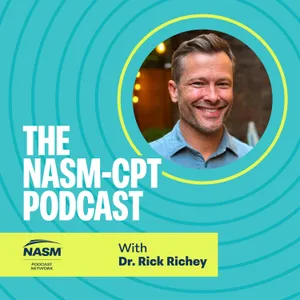
The NASM-CPT Podcast With Rick Richey: Daily Summaries Delivered
by NASM Podcast Network
Are you studying to become a personal trainer or just started your training career? NASM Master Instructor Rick Richey takes listeners on an informative and engaging journey to help establish a solid foundation in your fitness path.
Latest Episodes
The most recent episodes — sign up to get AI-powered summaries of each one.
- Today18 min
Muscles That Extend the Hips, Knees, and Ankles Explained
If you want to know which muscles are responsible for extending your hips, knees, and ankles during movements like running, jumping, or squatting, this episode answers that question in detail. In this “NASM CPT Podcast,” NASM Master Instructor Rick Richey breaks down exactly which muscles perform these key joint actions in the lower body and explains their functions in both everyday activity and athletic performance. Listeners will learn to identify the primary and secondary hip extensors (such as the gluteus maximus, hamstrings, and posterior adductor magnus), understand the role of the quadriceps in knee extension, and discover which muscles drive ankle movement through plantar flexion. The conversation also explores how muscle function changes between open-chain and closed-chain exercises, shedding light on some surprising ways less obvious muscles can contribute to extension in certain movement contexts. By the end of this episode, listeners will better understand lower body biomechanics, muscle functions, and why specific muscle soreness can occur after deep squats or intensive exercise. This monologue presentation will help anyone interested in fitness or personal training clarify the muscle-joint action relationships necessary for programming and understanding movement. Chapters: 00:01:22 What muscles extend the hips, and what else do they do? 00:07:06 What muscles extend the knees, and how does closed-chain movement affect this? 00:13:03 Which muscles are responsible for ankle (plantar) flexion, and how do secondary muscles contribute? 00:16:46 What is the complete list of muscles and their actions for hip, knee, and ankle extension? If you like what you just consumed, leave us a 5-star review, and share this episode with a friend to help grow our NASM health and wellness community! The content shared in this podcast is solely for educational and entertainment purposes. It is not intended to be a substitute for professional advice, diagnosis, or treatment. Always seek out the guidance of your healthcare provider or other qualified professional. Any opinions expressed by guests and hosts are their own and do not necessarily reflect the views of NASM. Introducing NASM One, the membership for trainers and coaches. For just $35/mo., get unlimited access to over 300 continuing education courses, 50% off additional certifications and specializations, EDGE Trainer Pro all-in-one coaching app to grow your business, unlimited exam attempts and select waived fees. Stay on top of your game and ahead of the curve as a fitness professional with NASM One. Click here to learn more. https://bit.ly/4ddsgrm
- 1 weeks ago20 min
How to Avoid the Pitfalls of Fitness Optimization Culture
Trying to optimize every part of your health and fitness can actually become overwhelming and counterproductive, so it is more effective to focus on doing the basics well before worrying about every small biohack. In this “NASM CPT Podcast,” award-winning personal trainer Dr. Rick Richey examines the main pitfalls of today’s optimization culture, sharing real-world stories about the rise of recovery studios, the pressure to constantly add new health and fitness "hacks," and why many people skip the foundational habits that matter most. Listeners will gain an understanding of which health behaviors deliver the greatest benefits, why chasing endless marginal gains can backfire, and how practicing moderation with things like sleep, exercise, nutrition, and stress management leads to better long-term outcomes. The episode outlines simple, actionable steps for balancing ambition to improve with self-compassion, so fitness professionals and clients alike can thrive without burnout. After listening, you will be able to identify when your or your clients’ efforts at optimization cross the line from helpful to harmful, and you'll have a grounded framework for prioritizing what truly matters. Chapters: [00:00:10] What happens when you try to optimize everything in your life? [00:01:15] How did the idea of a recovery studio emerge from the drive to optimize? [00:03:00] Why can optimization culture lead to overwhelm and unsustainable habits? [00:05:03] Are we focusing on minor upgrades while ignoring the basics? [00:06:54] What examples show the hypocrisy in how people approach health optimization? [00:08:27] Do most people actually optimize the basics that really matter? [00:09:06] What fitness and activity guidelines should we actually be targeting? [00:11:40] Are there benefits to being suboptimal or taking breaks from optimization? [00:13:23] What does it look like to make fitness a consistent habit, even imperfectly? [00:15:00] What are the simple, proven ways to support longevity and wellness? [00:17:07] How can you avoid hypocrisy and focus on your own health priorities? [00:18:06] When does optimization itself create more stress than it solves? [00:19:08] How can tracking and self-monitoring become overwhelming, and what should you focus on instead? If you like what you just consumed, leave us a 5-star review, and share this episode with a friend to help grow our NASM health and wellness community! The content shared in this podcast is solely for educational and entertainment purposes. It is not intended to be a substitute for professional advice, diagnosis, or treatment. Always seek out the guidance of your healthcare provider or other qualified professional. Any opinions expressed by guests and hosts are their own and do not necessarily reflect the views of NASM. Introducing NASM One, the membership for trainers and coaches. For just $35/mo., get unlimited access to over 300 continuing education courses, 50% off additional certifications and specializations, EDGE Trainer Pro all-in-one coaching app to grow your business, unlimited exam attempts and select waived fees. Stay on top of your game and ahead of the curve as a fitness professional with NASM One. Click here to learn more. https://bit.ly/4ddsgrm
- 2 weeks ago20 min
Avoiding Common Scams Personal Trainers Face and How to Stay Safe
Personal trainers can protect themselves from some of the most common scams by learning how to identify and avoid credit card overpayment schemes, predatory business coaches, fake client payment tricks, and phishing or imposter sites. In this “NASM CPT Podcast,” host Rick Richey breaks down exactly how these scams work, using specific examples and warning signs that personal trainers encounter in their daily work. Listeners will learn to spot typical red flags—such as overpayment requests, suspicious requests for cash-back via credit card, generic communications from supposed clients, questionable offers from business coaches, and phishing attempts disguised as official brands or discounted certifications. This monologue presentation also highlights the importance of verifying business coaches’ backgrounds, watching for cloned websites, and only using accredited fitness certifications like those provided by NASM. By the end of this episode, personal trainers will be equipped to recognize these scams and take practical steps to avoid becoming victims, keeping their hard-earned money and reputations safe. Chapters: 00:00:30 What are the most common scams targeting personal trainers? 00:02:30 How can personal trainers be targeted for credit card overpayment and third-party scams? 00:06:07 What are key red flags in scam emails and communications? 00:10:14 How does the fake client scam work for trainers? 00:12:01 What should I watch out for with business and marketing coach scams in fitness? 00:14:42 How do check and wire scams target trainers, and what can you do about them? 00:15:59 How do imposter and phishing sites trick trainers, and how can you avoid them? 00:18:28 Why should you stick with legitimate and accredited certification organizations like NASM? 00:19:33 Where can listeners share their own scam experiences or reach out for more advice? If you like what you just consumed, leave us a 5-star review, and share this episode with a friend to help grow our NASM health and wellness community! The content shared in this podcast is solely for educational and entertainment purposes. It is not intended to be a substitute for professional advice, diagnosis, or treatment. Always seek out the guidance of your healthcare provider or other qualified professional. Any opinions expressed by guests and hosts are their own and do not necessarily reflect the views of NASM. Introducing NASM One, the membership for trainers and coaches. For just $35/mo., get unlimited access to over 300 continuing education courses, 50% off additional certifications and specializations, EDGE Trainer Pro all-in-one coaching app to grow your business, unlimited exam attempts and select waived fees. Stay on top of your game and ahead of the curve as a fitness professional with NASM One. Click here to learn more. https://bit.ly/4ddsgrm
- 3 weeks ago30 min
How fitness training transforms esports player confidence and results
Esports athletes need performance coaching just like traditional sports players, and NASM-certified experts are helping meet those demands. In this “NASM CPT Podcast,” you will learn how fitness and performance principles apply to professional gamers, and why professional teams invest in esports coaches for optimal results. Host Rick Richey talks with NASM-certified head coach and performance trainer Ricco Phinisee about his journey into esports, how coaching extends beyond gameplay, and what makes athlete support in gaming so crucial. Ricco shares concrete examples of how structured training, nutrition, and sleep strategies boost gamers' confidence and competitiveness, and how these strategies mirror what works in traditional sports. The discussion covers practical steps for personal trainers interested in new career paths in esports, real client success stories, and the impact of lifelong learning through continued education and NASM credentials. After listening, you will understand both the unique and universal aspects of coaching in esports, the skills needed to support gamers' well-being and performance, and how to pursue similar roles using NASM training. Chapters:· [00:02] What makes esports athletes and why do they need performance coaching? [04:47] How do professional teams build and run esports teams? [06:12] Why is a performance coach important for gamers' health and results? [08:12] How does physical training improve gamers' confidence and performance? [10:19] What does an esports head coach do besides game strategy? [12:35] How does team management in esports work, including handling personalities? [13:44] What are Ricco Phinisee's educational background and ongoing focus in sports performance? [16:19] How did Ricco transition from traditional sports to esports coaching? [19:14] When did Ricco recognize the need for fitness in esports? [20:35] What was the NASM docuseries about Ricco Phinisee's work? [22:47] Will Ricco continue training esports and soccer players after his master's degree? [25:34] What advice does Ricco offer to personal trainers interested in new opportunities? [26:41] What was featured in the NASM docuseries and where can people find it? If you like what you just consumed, leave us a 5-star review, and share this episode with a friend to help grow our NASM health and wellness community! The content shared in this podcast is solely for educational and entertainment purposes. It is not intended to be a substitute for professional advice, diagnosis, or treatment. Always seek out the guidance of your healthcare provider or other qualified professional. Any opinions expressed by guests and hosts are their own and do not necessarily reflect the views of NASM. Introducing NASM One, the membership for trainers and coaches. For just $35/mo., get unlimited access to over 300 continuing education courses, 50% off additional certifications and specializations, EDGE Trainer Pro all-in-one coaching app to grow your business, unlimited exam attempts and select waived fees. Stay on top of your game and ahead of the curve as a fitness professional with NASM One. Click here to learn more. https://bit.ly/4ddsgrm
- 4 weeks ago18 min
Muscles That Extend the Shoulder, Hip, Elbow & Knee Explained
The muscles responsible for extending the shoulder, hip, elbow, and knee are the latissimus dorsi, gluteus maximus, triceps, and quadriceps, along with several assisting muscles in each movement. This “NASM CPT Podcast” episode answers the popular question, "Which muscles extend your shoulder, hip, elbows, and knees?" Host Rick Richey breaks down the primary and secondary muscles involved in these extensions, explains their functions during movement, and clarifies the anatomical meaning of extension and the planes of motion where these joint actions occur. Listeners will learn to distinguish which muscles play a main role and which assist during shoulder and hip extension as well as the more straightforward actions in the elbow and knee. The distinctions between major and minor contributors, such as the teres major alongside the latissimus dorsi for the shoulder or the hamstrings assisting the gluteus maximus at the hip, are clearly described. By the end of this episode, NASM students, trainers, and anyone seeking functional anatomy clarity will be able to confidently identify and articulate which muscles extend the body's major joints and how they work together during exercise. Chapters: [00:00] What is shoulder extension and which muscles are responsible? [08:19] What muscles are involved in hip extension? [12:11] Which muscles extend the elbow? [13:36] Which muscles extend the knee? [16:21] What are the key takeaways for muscles that extend the shoulder, hip, elbow, and knee? If you like what you just consumed, leave us a 5-star review, and share this episode with a friend to help grow our NASM health and wellness community! The content shared in this podcast is solely for educational and entertainment purposes. It is not intended to be a substitute for professional advice, diagnosis, or treatment. Always seek out the guidance of your healthcare provider or other qualified professional. Any opinions expressed by guests and hosts are their own and do not necessarily reflect the views of NASM. Introducing NASM One, the membership for trainers and coaches. For just $35/mo., get unlimited access to over 300 continuing education courses, 50% off additional certifications and specializations, EDGE Trainer Pro all-in-one coaching app to grow your business, unlimited exam attempts and select waived fees. Stay on top of your game and ahead of the curve as a fitness professional with NASM One. Click here to learn more. https://bit.ly/4ddsgrm
- Oct 13, 202625 min
Understanding Which Muscles Flex Your Shoulder, Hip, Knee, and Elbow
Muscles that flex major joints are the key focus of this “NASM Podcast,” where listeners learn exactly which muscles are responsible for flexing the shoulder, hip, elbow, and knee, as well as how to distinguish between primary and secondary movers at each joint.In this clear, anatomy-driven review, host Rick Richey breaks down functional anatomy to answer the question: "What muscles flex the body's major joints and how do they work together during movement?" Early in the episode, Rick identifies the specific muscles that perform flexion at each joint, such as the anterior deltoid and clavicular head of the pectoralis major at the shoulder, the iliacus and psoas major at the hip, and the biceps brachii and brachialis at the elbow. He also explains the importance of synergy among muscles, how tight flexors can impact joint stability and pain, and how secondary and smaller muscles assist the primary movers. Listeners will come away understanding both the anatomical details and practical implications for training and client assessment.Those interested in deeper dives or advanced concepts can learn about the NASM-1 platform, where further content and interactive AMA sessions are available for trainers and coaches. Chapters: [00:01:00] What does it mean for a muscle to flex a joint in anatomy? [00:01:24] Which joints are considered major for flexion? [00:02:26] How do you determine primary versus secondary movers? [00:03:04] Which muscles flex the shoulder and why? [00:05:03] Do both heads of the biceps brachii flex the shoulder? [00:07:09] Does the serratus anterior flex the shoulder or just aid movement overhead? [00:09:41] What are the main muscles that flex the hip? [00:10:18] Does the psoas major connect to the spine or the pelvis? [00:11:49] How can weak stabilizers contribute to low back pain during hip flexion? [00:13:06] Which secondary muscles also flex the hip, and what is their role? [00:14:09] How do muscles like sartorius and TFL contribute to hip flexion and movement? [00:16:44] Which muscles flex the elbow, and what makes some more important than others? [00:18:52] What muscles flex the knee, including both the hamstrings and secondary movers? [00:23:03] What is the pes anserine complex and how does it assist with knee flexion? [00:24:18] How do minor muscles like the popliteus contribute to knee flexion? [00:24:53] Where can listeners go for advanced NASM anatomy content? If you like what you just consumed, leave us a 5-star review, and share this episode with a friend to help grow our NASM health and wellness community! The content shared in this podcast is solely for educational and entertainment purposes. It is not intended to be a substitute for professional advice, diagnosis, or treatment. Always seek out the guidance of your healthcare provider or other qualified professional. Any opinions expressed by guests and hosts are their own and do not necessarily reflect the views of NASM. Introducing NASM One, the membership for trainers and coaches. For just $35/mo., get unlimited access to over 300 continuing education courses, 50% off additional certifications and specializations, EDGE Trainer Pro all-in-one coaching app to grow your business, unlimited exam attempts and select waived fees. Stay on top of your game and ahead of the curve as a fitness professional with NASM One. Click here to learn more. https://bit.ly/4ddsgrm
- Oct 6, 202624 min
How personal trainers can create their own career opportunities
The best way to handle professional opportunities in fitness is to stay open-minded, say yes to potential meetings, and view every opportunity as a chance to learn or connect. In this “NASM CPT Podcast,” listeners will learn practical strategies to recognize, create, and seize opportunities in their careers, whether those chances are offered by others or need to be sought out proactively. Host Rick Richey shares insights drawn from his personal experience with unexpected outreach from a reputable fitness company and discusses universal lessons relevant to the entire NASM community. By the end of the episode, listeners will understand ten actionable ways to approach new opportunities, how to network within the fitness industry, and why it is important to see yourself as someone who great things can happen to. Whether you are just starting in the industry or looking to grow into new roles, you will discover how to use tools like networking, continuous learning, and proactive outreach to advance your career and help more clients with NASM. Chapters: 00:00 What is the main lesson about handling and creating professional opportunities? 01:00 How can saying yes to meetings lead to greater reach and impact?03:21 Why do people talk themselves out of new opportunities in fitness?06:27 Are opportunities always given, or can they be created—and how?08:14 What does it mean to "swing for the fences" with big opportunities?09:47 How can viewing interviews as practice improve your skills? 11:07 How can fitness professionals create their own opportunities? 12:53 What does it take to grow into your desired role or status? 15:01 Why is bringing others with you important for professional growth?16:04 How do successes and failures combine on the path to professional growth? 17:48 How do you handle overwhelming versus slow seasons in your career?19:06 Why does staying in touch with industry friends matter for future opportunities? 20:36 How and why should you reach out to people or causes that interest you? 22:13 Why is it important to see yourself as someone who can achieve great things? 23:05 What are the ten key takeaways on leveraging opportunities in fitness? If you like what you just consumed, leave us a 5-star review, and share this episode with a friend to help grow our NASM health and wellness community! The content shared in this podcast is solely for educational and entertainment purposes. It is not intended to be a substitute for professional advice, diagnosis, or treatment. Always seek out the guidance of your healthcare provider or other qualified professional. Any opinions expressed by guests and hosts are their own and do not necessarily reflect the views of NASM. Introducing NASM One, the membership for trainers and coaches. For just $35/mo., get unlimited access to over 300 continuing education courses, 50% off additional certifications and specializations, EDGE Trainer Pro all-in-one coaching app to grow your business, unlimited exam attempts and select waived fees. Stay on top of your game and ahead of the curve as a fitness professional with NASM One. Click here to learn more. https://bit.ly/4ddsgrm
- Sep 29, 202618 min
Evidence-based exercise strategies for losing visceral fat
The most effective way to reduce visceral fat is a combination of high-intensity interval training (HIIT) and resistance training, though regular moderate-intensity cardio or aerobic exercise also helps, according to current research.In this episode of the “NASM CPT Podcast,” host Rick Richey unpacks the scientific evidence on exercise strategies for reducing visceral fat, addressing frequent confusion over whether HIIT or continuous moderate-intensity exercise is better. Citing several systematic reviews and meta-analyses, Rick explains that while some studies show no clear advantage between HIIT and steady-state cardio, many find that interval training, especially when extended beyond 12 weeks, provides superior reductions in visceral fat, particularly for individuals with overweight or obesity. He also highlights that progressive, combined training—mixing vigorous-intensity cardio with moderate or low-intensity resistance training—can further support visceral fat loss, which is particularly beneficial for at-risk groups such as older adults and postmenopausal women. Listeners will learn how to apply these research-backed exercise protocols for themselves or their clients, how to track progress, and why gradual progression is key, especially for those new to higher intensity workouts. This presentation also offers practical coaching insights on how to encourage clients to embrace challenging new routines. Chapters: 00:00 What is the most effective way to reduce visceral fat? 01:10 What is visceral fat and why does it matter for health? 02:26 How did a client respond to advice about losing visceral fat? 03:20 What exercise strategies can help reduce visceral fat? 05:22 Does high-intensity interval training work better than continuous cardio for visceral fat? 06:52 What does the research say about HIIT versus moderate-intensity exercise? 08:29 Are long-duration HIIT sessions more effective for fat loss? 09:18 Does exercise help reduce visceral fat in teens and young adults? 10:26 How does exercise dose relate to visceral fat loss? 12:29 Does combining resistance and aerobic training give better results for visceral fat? 13:56 How can trainers help hesitant clients start higher intensity workouts? 15:54 What extra benefits come with high-intensity training compared to moderate exercise? 16:41 Should you choose HIIT, resistance training, or regular cardio to help most people reduce visceral fat? Show References:Kramer, A. M., Martins, J. B., de Oliveira, P. C., Lehnen, A. M., & Waclawovsky, G. (2023). High-intensity interval training is not superior to continuous aerobic training in reducing body fat: A systematic review and meta-analysis of randomized clinical trials. Journal of exercise science and fitness, 21(4), 385–394. https://doi.org/10.1016/j.jesf.2023.09.002 Poon, E. T., Li, H. Y., Little, J. P., Wong, S. H., & Ho, R. S. (2024). Efficacy of Interval Training in Improving Body Composition and Adiposity in Apparently Healthy Adults: An Umbrella Review with Meta-Analysis. Sports medicine (Auckland, N.Z.), 54(11), 2817–2840. https://doi.org/10.1007/s40279-024-02070-9 Wang, R., Zhang, X., Ren, H., Zhou, H., Yuan, Y., Chai, Y., & Hou, X. (2022). Effects of different exercise types on visceral fat in young individuals with obesity aged 6-24 years old: A systematic review and meta-analysis. Frontiers in physiology, 13, 987804. https://doi.org/10.3389/fphys.2022.987804 Chang, Y., Wang, L., Wang, H., & Zhan, E. (2026). Unveiling the perfect workout: exercise modalities and dosages to combat visceral adipose tissue in individuals with overweight and obesity - a systematic review with pairwise, network, and dose-response meta-analyses. Nutrition & metabolism, 23(1), 75. https://doi.org/10.1186/s12986-026-01129-w Lin, X., Li, G., Xie, J., & Wang, S. (2026). Effects of concurrent training on fat mass and its distribution in individuals with overweight or obesity: a systematic review, meta-analysis, and exploratory regression analysis. BMC public health, 26(1), 1403. https://doi.org/10.1186/s12889-026-26869-5 If you like what you just consumed, leave us a 5-star review, and share this episode with a friend to help grow our NASM health and wellness community! The content shared in this podcast is solely for educational and entertainment purposes. It is not intended to be a substitute for professional advice, diagnosis, or treatment. Always seek out the guidance of your healthcare provider or other qualified professional. Any opinions expressed by guests and hosts are their own and do not necessarily reflect the views of NASM. Introducing NASM One, the membership for trainers and coaches. For just $35/mo., get unlimited access to over 300 continuing education courses, 50% off additional certifications and specializations, EDGE Trainer Pro all-in-one coaching app to grow your business, unlimited exam attempts and select waived fees. Stay on top of your game and ahead of the c
Get The NASM-CPT Podcast With Rick Richey summaries in your inbox
Free AI-powered daily recaps. Key takeaways, quotes, and mentions — in a 5-minute read.
Get Free Summaries →Free forever for up to 3 podcasts. No credit card required.
You Might Also Like
Listeners also like.
The FastFit Podcast
FastFit
TRAINED
Discusses fitness and wellness through interviews with athletes, scientists, and health experts on mindset, nutrition, movement, recovery, and sleep.

Perform with Dr. Andy Galpin
Explores science-based strategies for optimizing physical and mental performance for all fitness levels.
The Nick Bare Podcast
Nick Bare explores nutrition, human performance, and disciplined habits to help people consistently show up for what matters.
Move Well, Live Well, Perform Well
A sports physiotherapist explores movement, injury recovery, and performance optimization with expert guests.
Muscle for Life with Mike Matthews
Discusses science-based strategies for building muscle, losing fat, and improving overall health and well-being.
Mind Pump: Raw Fitness Truth
Three fitness experts debunk myths and expose science-backed truths about training, nutrition, and health in the fitness industry.

The EMPWR Podcast
A fitness entrepreneur shares workout tips, nutrition advice, and personal stories to support holistic wellness and self-empowerment.
NISCA "Between the Lane Lines" Podcast
Conversations with high school and middle school swimming coaches and experts about the sport of swimming.

JOSPT Insights
JOSPT
Success With Smitte
Success With Smitte

Nutrition Made Simple
Nicole Aucoin
About The NASM-CPT Podcast With Rick Richey
Are you studying to become a personal trainer or just started your training career? NASM Master Instructor Rick Richey takes listeners on an informative and engaging journey to help establish a solid foundation in your fitness path.
Customized Recaps
AI-powered recaps with compact key takeaways, quotes, and insights.
Straight to Your Inbox
Get key takeaways from The NASM-CPT Podcast With Rick Richey in a 5-minute read.
Save Hours Every Week
Stay current on your favorite podcasts without falling behind.
Frequently Asked Questions
What is Podzilla's The NASM-CPT Podcast With Rick Richey daily summary?
It's a free AI-powered email that summarizes new episodes of The NASM-CPT Podcast With Rick Richey as soon as they're published. You get the key takeaways, notable quotes, and links & mentions — all in a quick read.
How does the The NASM-CPT Podcast With Rick Richey podcast summary work?
When a new episode drops, our AI transcribes and analyzes it, then generates a personalized summary tailored to your interests and profession. It's delivered to your inbox every morning.
Is this an official The NASM-CPT Podcast With Rick Richey product?
No. Podzilla is an independent service that summarizes publicly available podcast content. We're not affiliated with or endorsed by NASM Podcast Network.
Can I get summaries of other podcasts too?
Absolutely! The free plan covers up to 3 podcasts, any in the catalog. Basic raises that to 15, Pro to 40 and Max to 100. Browse our full catalog at /podcasts.
How often does The NASM-CPT Podcast With Rick Richey release new episodes?
The NASM-CPT Podcast With Rick Richey publishes weekly. Our AI generates a summary within hours of each new episode.
What topics does The NASM-CPT Podcast With Rick Richey cover?
The NASM-CPT Podcast With Rick Richey covers topics including Fitness, Health & Fitness. Our AI identifies the specific themes in each episode and highlights what matters most to you.
Start getting The NASM-CPT Podcast With Rick Richey summaries tomorrow morning.
Free forever for up to 3 podcasts. No credit card required.
Free forever for up to 3 podcasts. No credit card required.