Free Daily Podcast Summary
The More Sibyl Podcast: Daily Summaries Delivered
by Mo! Sibyl
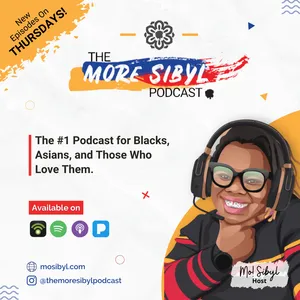
The More Sibyl Podcast is hosted by Mo! Sibyl - a Nigerian-born, US-educated, Korean-speaking, Struggling Intellectual. The More Sibyl Podcast is a podcast about culture and culture nomads designed for Blacks and Asians and those who love them. On The More Sibyl Podcast, Mo! talks mostly with an invited guest, who she is inspired by, on a variety of issues, related to cultural experiences or other lived experiences related to third culture. If your concept of home is fluid, you feel like you are neither here nor there, or you consider yourself a cultural hybrid, then this podcast is for you.
Latest Episodes
The most recent episodes — sign up to get AI-powered summaries of each one.
- 2 weeks ago53 min
The Relationship Room Presents: Episode 6 (2026)| The Room Conversations: Envy, Comparison, and Self-Worth
The Relationship Room Presents: Someone posted that they just bought a house. In the comments you see things like: how dare you be happy. That's where this episode starts, a real online story about a woman who admits she got jealous of her own friend, and cut her off. Ada and Mo! use it to crack open the one thing nobody wants to admit out loud: Envy. Mo! doesn't buy the excuse. If jealousy is reason enough to cut someone off, she says, you'd eventually be alone on an island, because there's always somebody doing better than you. Then Ada makes a confession of her own: she’s not jealous of people’s looks, or their money. What catches her attention is their joy, the visual of it, the persona of a person who just seems happy no matter what. Social media, Mo! says, didn't invent envy. It just multiplied it. Before, comparison meant keeping up with one neighbor. Now it means measuring yourself against thousands of strangers online, most of whom wouldn't say to your face what they'll type in a comment. Then Mo! goes even further back, to childhood, to parents comparing your report cards and IQ scores to those of other kids, to women raised to compete for one seat at the table. Comparison isn't a social media problem at its core. It's a self-worth problem, and social media just gave it more room to grow. By the end, Mo! offers the only comparison she says is actually fair: not to the woman next to you, but to who you used to be. Listen now to hear how it all connects. Read Blog here: https://mosibyl.medium.com/the-room-conversations-envy-comparison-and-self-worth-a658b87f06ed
- 3 weeks ago1h 54m
한국에서 다시 만난 우리| From Haiti to Seoul: Coming Home to Herself - The One with Tajmara Antoine | Episode 7 (2026)
The More Sibyl Podcast Presents: Let me introduce you to the two characters: Mo! the 언니 and Taj the 동생. We met in Seoul as neighbors and fellow Fulbright Scholars, and somewhere between spontaneous hallway conversations, shared meals, trips around Korea, and plenty of laughter, our 언니–동생 bond took shape. In this special episode, part conversation, part time capsule, we reflect on our Nigerian and Haitian-American immigrant experiences, our very different generations, and what happened when Korea took us outside the lives we had always known. We talk about racial burnout, learning to slow down, receiving kindness without keeping score, and realizing that you don’t have to be extraordinary to be worthy of love. Taj also takes us from her childhood in Port-au-Prince to Miami, NYU, global health research, and eventually Fulbright. She shares what happened when she rediscovered an autobiography she wrote in eighth grade, and realized she had already lived many of the dreams her younger self wrote down. And, of course, we investigate Taj’s very questionable understanding of U.S. geography. Is Oklahoma next to Arizona? 😂 This conversation is about Korea, but more than that, it is about coming home to yourself and the Fulbright experience that made that homecoming possible. Read blog here: https://mosibyl.medium.com/from-haiti-to-seoul-coming-home-to-herself-dd1272a9d588
- Aug 13, 202645 min
한국 비자 | The Nigerian Passport Tax — The Stress of Getting a Korean Visa: Episode 6 (2026)
The More Sibyl Podcast Presents: If you've been with me for a while, you know how much I love South Korea. I spent a full year there with my mum and my kids, and that memory is one I'll always cherish. But loving a place doesn't mean staying quiet about the parts of it that aren't lovely at all. In this episode, I sit down with a guest I'm calling Sis. Her real name stays anonymous, because she's not alone in this, and a lot of people going through the same process right now are still afraid that speaking up could cost them their own application. Sis recently applied for a visa to visit Korea, where she now has family. She'd already been through other embassies before this one, so by every reasonable expectation, she assumed the Korean embassy in Lagos would be just as straightforward. It was not. Nine or ten visits. To an embassy that, on any given day, sees a handful of people, nothing close to the queues at the UK, US, Canadian, or Australian embassies. A checklist that changed depending on who was behind the desk, and sometimes even when it was the same person behind the desk. Staff who denied ever giving her instructions they'd given her days before. A two-hour drop-off window that assumes nobody applying has a job to get to. And in the end, her passport didn't land in her hands until the day of her flight, even though she'd booked that flight two months out specifically to give the process room to breathe. I bring my own family into this one too. My mother went through her own version of this: flown back to Nigeria for a TB test the embassy insisted on, even after we offered to have it done and verified locally. Seven trips to the embassy. Her visa finally came through the day before she flew out. Comparing notes with Sis made one thing painfully clear to both of us: this isn't a bad day at one counter. It's a pattern. This episode isn't really about Korea, the country I love. It's about a process that doesn't match the country everyone's currently falling for from a distance, and about the gap between the people running that system and what's actually happening to applicants on the ground. We talk about what we'd each fix if we could, and what we wish someone had told us before we started. This was a hard one for me to sit with, and an even harder one to put out. But if it reaches even one person going through this right now, or one person who can actually do something about it, it's worth it. If you've had a similar experience, at this embassy or any other, I want to hear it. Drop your story in the comments. Let's stop letting this stay in the shadows.
- Jul 25, 20261h 51m
떠난다는 것의 실존적 위협| On Quiet Quitting a Marriage — The One With Sade Curry: Episode 5 (2026)
The More Sibyl Podcast Presents: Sade Curry did marriage "right" by every metric she was handed: virgin, saved, husband who checked every box, right intellect, right ambition. Twenty years later, she was still there and barely present, over-functioning and compartmentalizing to keep the front up. Sade is a life and relationship coach, creator of the DIAL method, and host of the Extraordinary Life and Dating Divorce podcast. In this conversation, she traces the gap between the two facts above. The religious conditioning that sent her looking for a husband before she'd built any real discernment of her own, and how scripture gets cherry-picked and applied to marriage in ways the fuller text never intended, including the verses about divorce nobody preaches. What "quiet quitting" a marriage actually looks like from the inside, and the exact moment she knew staying quiet wasn't protecting her kids anymore. Why she believes 80% of relationships are unhealthy behind beautifully curated fronts. And the boundaries she didn't set until year fifteen, when year one would have changed everything. We didn't agree on everything. I pushed back on whether an unhappy wife looking outside her marriage is a red flag or a woman finally choosing herself, and we sat in that disagreement rather than resolving it. We also talk about faith, honestly. Sade's version isn't the one she was handed, it's built on the belief that women deserve real autonomy in how they hold their own faith, knowing God for yourself instead of borrowing someone else's version of Him. This was a challenging one for me. I don't think we landed in the same place on everything, but it got me thinking, and I hope it does the same for you. I'll be on the other side with my own reflections. Read blog here: https://mosibyl.medium.com/quiet-quitting-a-marriage-83c84886f66d
- Jul 21, 202659 min
The Relationship Room Presents: Episode 5 (2026)| The Room Conversations: Revenge, Shame, and the Oldest Fight in the Book
The Relationship Room Presents: She went to the serpent instead of her husband. Mo! says that's the oldest relationship problem there is. It starts with a TikTok story: a woman, Aleti Crystal, who built a business by confronting and beating up men who've wronged women. The comments are cheering her on. Ada and Mo! dig into what that says about justice and shame. Mo! also makes the case that social media was never built to be honest; it's a stage for people's loudest, most wounded selves. Then Ada asks a simple question: what do married people actually fight about? Mo! takes it somewhere nobody expects. Eve didn't go to the serpent because she was evil. She went because Adam wasn't there. One of them was wired for emotional connection. The other was wired to look outward at work, at building, at everything except her. Mo! calls it the fall of man. Ada takes it straight into marriage today. Listen now to hear how it all connects. Read Blog here: https://mosibyl.medium.com/the-room-conversations-revenge-shame-and-the-oldest-fight-in-the-book-37e13543157b?sharedUserId=mosibyl
- Jul 2, 20261h 43m
계속 선택하는 사랑 |Almost Forty Years, Three Countries, and What It Takes to Stay — The One with the Ibikunles: Episode 4 (2026)
The More Sibyl Podcast Presents: 계속 선택하는 사랑 |Almost Forty Years, Three Countries, and What It Takes to Stay — The One with the Ibikunles: Episode 4 (2026) Love is patient, love is kind. Love hopes all things, and love endures all things (1 Corinthians 13:4-7). We all know this scripture. But the word I keep circling back to is endures. We love to dwell on the soft, beautiful things love brings, and we quietly skip past the harder truth tucked inside that verse. To endure something means there is resistance. It means something is pushing against you, and love is what holds on while it tries to pull you apart. In this episode, I sit down with a couple who have endured, with love, for almost forty years, across three countries, and they are still choosing each other. Dr. Tayo Ibikunle and Dr. (Mrs.) Tokunbo Ibikunle met more than once before they ever said yes (God, it seems, enjoys arranging these things), though she'll tell you plainly he wasn't her type at first. “Surely not you,” she told him. What followed was Nigeria, England, America, a letter written to her father, and a marriage that shaped how their own sons are being prepared for theirs. We get honest about the things that quietly pull marriages apart. The years it can take to learn to say sorry and mean it. What it means for home to feel like a castle instead of a battleground, and what happens to a man when respect is withheld until he shuts down. What it means to trust your husband's place instead of quietly outsourcing it, and we ask the harder question about female friendships: at what point does leaning on your community of women friends start filling a role that should be his? The endless, urgent pull of black tax, and the “tyranny of the urgent” that taught them to protect what was theirs first. What immigration actually reveals about a marriage. The fifteen-minute rule that rescued their worst arguments. And why, in her own words, “the older I get, the more I'm enjoying being married.” If you are newly married, in the thick of it, or quietly wondering how anyone stays connected across decades, this one is for you. Press play. Read blog here: https://mosibyl.medium.com/almost-forty-years-three-countries-and-what-it-takes-to-stay-4cd9d69cf855
- Jun 16, 20261h 51m
침묵의 방 | The Room Nobody Talks About: On Sex, Shame and Christian Marriages — The One with Pastor Temi Areo | Episode 3 (2026)
The More Sibyl Podcast Presents: There is a room in most marriages that nobody talks about. Not the kitchen where the arguments happen. Not the living room where everything looks fine for visitors. The bedroom. The one that started full of something and somewhere along the line went quiet. No dramatic moment. Nobody planned it. It just happened. This episode I walked into that room with Pastor Temi Areo, co-lead pastor of Citizens of Light Church in Lagos, prophet, teacher, founder of a mentoring school, and author of several books including her newest, Undressing Sex. We did not tiptoe. The church has tiptoed for long enough. Here is what we get into: The three trouble spots almost every marriage runs into, and why couples can rarely tell you which one is actually doing the damage. The fire principle: why desire dies when you leave it alone, and what putting wood on the fire actually looks like in a real marriage. Pastor Temi's concept of expensive sex, and why leaving your own house might be exactly what saves it. What every husband should know about when sex actually starts for a woman. Hint: it is neither at night nor in the bedroom. The difference between sex as a binding agent and sex as a cop out. The line between softening a fight and skipping the conversation entirely. What 1 Corinthians 7 actually says about the marriage bed, the word defraud, and what it means to weaponize sex. Why God is not absent from your sex life, and the analogy that made it finally click. The shame so many women inherited from their culture. Why a lot of women in this part of the world do not orgasm, and why that is a cultural wound, not a body problem. The moment Pastor Temi got free of it herself. And the chapter of her own book that shook even her. Then a listener question from a young woman carrying vaginismus alone, with a response I hope reaches every woman who has ever been told her desire was dangerous. For every quiet room, there is a way back. Read blog here: https://mosibyl.medium.com/on-sex-shame-and-christian-marriages-422b36499b12
- Jun 1, 202654 min
The Relationship Room Presents: Episode 4 (2026)| The Room Conversations: Come for the Dancing Pole, Stay for the Testimony
The Relationship Room Presents: We started with pole dancing. I know, I know — just stay with me. Mo! came back to The Relationship Room and mentioned, almost in passing, that she'd just had her first pole dancing class in Korea. And yes, we got into it: the sports bra, the grip, the videos she will absolutely never post on Instagram. We had fun. But then we kept talking. And somewhere in that conversation, Mo started telling the real story. Years of medical appointments that went nowhere. Surgeries that cost her thousands and changed nothing. Being told her case was too complicated, too risky, too much. Until she made a decision that changed everything. And on the other side of that decision, she found herself asking a question she'd never thought to ask before: what has my body actually survived? Not what it looks like. Not what size it is. What has it carried, endured, and come back from? That question is what this episode is really about. We talk about what it means to reconnect with a body you've felt disconnected from. About feeling feminine on your own terms. About the idea that once you're married, your husband's acceptance of your body should be enough for you and why that thinking is worth examining. About whether body appreciation is really about age, or about what you've been through and what meaning you decide to make of it. And yes, we called her husband mid-episode to settle a debate about love languages. That part stays too. Come for the pole dancing. Stay for everything else. Read Blog here: https://mosibyl.medium.com/the-room-conversations-come-for-the-dancing-pole-stay-for-the-testimony-1d329040065d
Get The More Sibyl Podcast summaries in your inbox
Free AI-powered daily recaps. Key takeaways, quotes, and mentions — in a 5-minute read.
Get Free Summaries →Free forever for up to 3 podcasts. No credit card required.
You Might Also Like
Listeners also like.
Cultivating H.E.R. Space: Uplifting Conversations for the Black Woman
Black women discuss healing, empowerment, and resilience through honest weekly talks on health, relationships, and personal growth.

COCKTAILS AND TAKEAWAYS
Two friends drink, gossip, and share candid takes on relationships, pop culture, and current events.
Between Both Cheeks
Four women share candid, unfiltered conversations about beauty, business, and taboo topics with humor and honesty.
The SJW Podcast
A podcast focused on personal growth, healing, and empowerment through honest conversations and stories of overcoming adversity.

The R Spot with Iyanla
A spiritual life coach guides callers through personal relationship challenges in live sessions aimed at healing and growth.

Relatable with Allie Beth Stuckey
A Christian, conservative perspective on current events, culture, and theology with thoughtful, engaging commentary.

Las Culturistas with Matt Rogers and Bowen Yang
Two comedians dissect pop culture moments and personal cultural touchstones with humor and guest insights.

Culture Apothecary with Alex Clark
Experts share holistic remedies to heal cultural wounds through candid conversations on wellness, identity, and systemic change.

The Sabrina Zohar Show
Explores modern dating, anxious attachment, and personal growth through raw conversations on healing and self-discovery.

Barely Famous
A reality TV personality hosts candid conversations with celebrities, friends, and internet personalities about personal and controversial topics.

Finally! A Show
Women share unfiltered, real-life stories from morning to night, offering intimate glimpses into their daily experiences.

Other People's Pockets
A show that explores personal finances by having guests openly discuss their income, spending, and money habits.
About The More Sibyl Podcast
The More Sibyl Podcast is hosted by Mo! Sibyl - a Nigerian-born, US-educated, Korean-speaking, Struggling Intellectual. The More Sibyl Podcast is a podcast about culture and culture nomads designed for Blacks and Asians and those who love them. On The More Sibyl Podcast, Mo! talks mostly with an invited guest, who she is inspired by, on a variety of issues, related to cultural experiences or other lived experiences related to third culture. If your concept of home is fluid, you feel like you are neither here nor there, or you consider yourself a cultural hybrid, then this podcast is for you.
Customized Recaps
AI-powered recaps with compact key takeaways, quotes, and insights.
Straight to Your Inbox
Get key takeaways from The More Sibyl Podcast in a 5-minute read.
Save Hours Every Week
Stay current on your favorite podcasts without falling behind.
Frequently Asked Questions
What is Podzilla's The More Sibyl Podcast daily summary?
It's a free AI-powered email that summarizes new episodes of The More Sibyl Podcast as soon as they're published. You get the key takeaways, notable quotes, and links & mentions — all in a quick read.
How does the The More Sibyl Podcast podcast summary work?
When a new episode drops, our AI transcribes and analyzes it, then generates a personalized summary tailored to your interests and profession. It's delivered to your inbox every morning.
Is this an official The More Sibyl Podcast product?
No. Podzilla is an independent service that summarizes publicly available podcast content. We're not affiliated with or endorsed by Mo! Sibyl.
Can I get summaries of other podcasts too?
Absolutely! The free plan covers up to 3 podcasts. Upgrade to Pro for 15, or Premium for 50. Browse our full catalog at /podcasts.
How often does The More Sibyl Podcast release new episodes?
The More Sibyl Podcast publishes biweekly. Our AI generates a summary within hours of each new episode.
What topics does The More Sibyl Podcast cover?
The More Sibyl Podcast covers topics including Culture, Society & Culture. Our AI identifies the specific themes in each episode and highlights what matters most to you.
Start getting The More Sibyl Podcast summaries tomorrow morning.
Free forever for up to 3 podcasts. No credit card required.
Free forever for up to 3 podcasts. No credit card required.