Free Daily Podcast Summary
Soothing History for Sleep: Daily Summaries Delivered
by Forbidden Knowledge Network
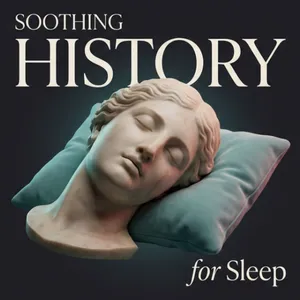
Soothing History for Sleep explores the strange, intimate, uncomfortable, and often surprising realities of everyday life in the past. From ancient sex and marriage to medieval medicine, bizarre hygiene, dangerous beauty, forgotten drugs, disease, survival, work, food, and private customs, each episode reveals what life was really like for ordinary people throughout history. Calm, carefully researched narration turns even history’s strangest subjects into relaxing stories designed for sleep.Bonus content:https://www.patreon.com/theforbiddenknowledgenetwork
Latest Episodes
The most recent episodes — sign up to get AI-powered summaries of each one.
- 4 days ago32 min
What a Night Inside a 1920s Speakeasy Was Really Like
In late-nineteen-twenties Manhattan, an evening drink could involve far more than choosing a bar. This calm historical episode follows a representative, unnamed adult visitor through the practical stages of entering an illicit drinking establishment during Prohibition: learning where to go, approaching an entrance, managing admission, considering the cost, ordering a drink, and eventually returning to the street.The story stays close to the surviving record. Illegal drinking establishments operated widely in New York, but they varied enormously. Some were modest rooms focused on selling alcohol. Others were ambitious entertainment businesses with tables, performers, service staff, cover charges, and carefully managed public reputations. Some screened unfamiliar entrants, while others were well-known destinations despite the legal restrictions around alcohol sales.The episode also follows the labor behind the evening: attendants, bartenders, servers, managers, musicians, performers, and proprietors. It compares Manhattan nightlife with Harlem’s rich and complicated cultural world, where Black artists and entrepreneurs made profound contributions while racial inequality shaped many commercial venues and audiences. Women appear as patrons, workers, proprietors, performers, and enforcement officers.A documented January nineteen twenty-eight police raid at a Greenwich Village speakeasy offers a concrete view of enforcement’s effects. The journey ends with repeal in nineteen thirty-three and a return to the ordinary doorway that separated a changing city street from an improvised world of work, recreation, performance, and commerce.Learn more from the Forbidden Knowledge Network: https://FKNpods.comThis podcast uses artificial intelligence in its research, writing, production, and narration. Episodes are editorially reviewed before publication.#SoothingHistoryForSleep #SoothingHistoryForSleepEverydayLifeAndSocialHist #Topic1920sSpeakeasy #ProhibitionNightlife #JazzAgeYES OR NO: Would you like another quiet episode about everyday life during Prohibition??????
- 1 weeks ago29 min
Daily Life in America in 1776
In seventeen seventy-six, the American Revolution did not stop the work of feeding families, finding shelter, tending animals, making clothing, earning wages, or caring for illness. This episode follows several carefully bounded records from British North America, beginning with Abigail Adams’s July letter from Boston. While her husband was away, Adams brought her children and an extended household to the town for smallpox inoculation. Her practical list included bedding, a cow brought from Braintree, hay, firewood, and a furnished house that lacked beds.From that crowded household, the story moves to a traveler’s June diary, where Thomas Verner noted coffee, whey, salt pork, dried beans, corn, and a companion planting garden seeds. It considers the work behind prominent military households, including the documented employment of Margaret Thomas, a free Black seamstress at Washington’s Cambridge headquarters. It also distinguishes the experience of John Harrower, an indentured Scottish schoolmaster in Virginia, from the far harsher legal system of racial slavery.The episode then turns to records of enslaved people in Virginia who used the disruptions of war to seek freedom, despite immense danger and incomplete surviving evidence. Finally, it widens to Haudenosaunee nations, whose leaders and communities faced British and Patriot pressure while making political decisions concerning their own homelands and futures. The result is not one universal day in seventeen seventy-six, but a quiet history of ordinary needs, unequal power, practical decisions, and the limits of what records can preserve.Learn more from the Forbidden Knowledge Network: https://FKNpods.comThis podcast uses artificial intelligence in its research, writing, production, and narration. Episodes are editorially reviewed before publication.#SoothingHistoryForSleep #SoothingHistoryForSleepEverydayLifeAndSocialHist #DailyLife1776 #AmericanRevolutionHomeFront #ColonialHouseholdYES OR NO: Did this episode change how you think about daily life in seventeen seventy-six? YES OR NO??????
- 2 weeks ago32 min
The Strange Rules Victorian Women Had to Live By
In Victorian Britain, women lived with rules that came from several different places: family custom, conduct books, fashion, work, and the law. This calm historical episode follows the changing position of women in England and Wales during Queen Victoria’s reign, from eighteen thirty-seven to nineteen oh one.It begins in the House of Commons in eighteen fifty-six, where Members of Parliament debated a practical question: should a married woman control the money she earned, or should it belong to her husband? From there, the episode considers coverture, the legal doctrine that could limit a married woman’s control over property and earnings. It also looks at gradual reforms in custody, divorce, and property law, while keeping clear that laws on paper did not always produce the same results in ordinary households.Along the way, the episode pauses with conduct books, surviving corsets and bustles, household duties, paid work, and late Victorian arguments about dress and respectability. It separates middle-class ideals of domestic life from the experiences of women who worked for wages, served in other households, managed family budgets, published, campaigned, or lived outside the expected pattern.The result is not one simple story of restriction or freedom. It is a quiet account of changing rules, unequal choices, and the many limits of the surviving record.Learn more from the Forbidden Knowledge Network: https://FKNpods.comThis podcast uses artificial intelligence in its research, writing, production, and narration. Episodes are editorially reviewed before publication.#SoothingHistoryForSleep #SoothingHistoryForSleepEverydayLifeAndSocialHist #VictorianWomen #VictorianLife #WomenSHistoryYES OR NO: Did Victorian legal reforms give married women meaningful new choices before nineteen oh one???????
- 3 weeks ago28 min
The Most Inbred Women of Medieval Royalty
From about fourteen fifty to seventeen hundred, Habsburg family trees connected courts in Spain, Austria, Portugal, France, England, and Bavaria. This calm historical episode follows the women whose marriages helped create and maintain those connections, including Joanna the First of Castile, Mary of Portugal, Anna of Austria, Margaret of Austria, Mariana of Austria, and Marie Antoinette of Austria.Using royal records, church law, diplomatic history, and modern genealogical research, the episode considers how marriage negotiations worked, why rulers sometimes chose relatives as spouses, and how royal women carried both political responsibilities and heavy expectations to produce heirs. It also separates documented events from later statistical interpretation. A pedigree coefficient can describe patterns in recorded ancestry, but it cannot reveal a woman’s private life, diagnose her health, or identify the single cause of a death.The story ends with the death of Charles the Second in seventeen hundred and a return to the family tree itself: a record of political strategy, family connection, and many experiences that no surviving document can fully recover.Learn more from the Forbidden Knowledge Network: https://FKNpods.comThis podcast uses artificial intelligence in its research, writing, production, and narration. Episodes are editorially reviewed before publication.#SoothingHistoryForSleep #SoothingHistoryForSleepEverydayLifeAndSocialHist #HabsburgWomen #RoyalMarriage #ConsanguinityYES OR NO: Did this episode change how you think about royal family trees???????
- Oct 25, 202632 min
When Humans First Started Using Cannabis
A quiet archaeological history of cannabis begins with a darkened wooden brazier from a cemetery in the eastern Pamirs around five hundred years before the common era. From there, the evidence moves back through early East Asian cultivation, useful seeds and fibers, and the careful limits of genetic models. At Haimenkou in Yunnan, more than eight hundred ancient cannabis grains show how difficult it can be to identify a plant’s exact purpose from seed size alone. In the Turpan region, preserved cannabis material at Yanghai and thirteen near-complete plants placed over a burial at Jiayi reveal deliberate funerary uses without proving smoking or intoxication. Finally, chemical traces inside Jirzankal braziers provide some of the earliest directly dated, scientifically verified evidence that cannabis-bearing material was heated during mortuary rites. Along the way, an account by the Greek writer Herodotus offers a separate written description of hemp and hot stones among peoples he called Scythians. The surviving objects give careful answers, while the first person to use this plant remains unknown.Learn more from the Forbidden Knowledge Network: https://FKNpods.comThis podcast uses artificial intelligence in its research, writing, production, and narration. Episodes are editorially reviewed before publication.#SoothingHistoryForSleep #SoothingHistoryForSleepEverydayLifeAndSocialHist #AncientCannabisHistory #HempDomestication #EarliestCannabisSmokingYES OR NO: Did the archaeological evidence from Jirzankal change how you think about ancient cannabis use? YES or NO???????
- Oct 19, 202635 min
What It Was Like to Be a Saloon Worker in the Wild West
In the mining towns of Virginia City, Nevada, and Tombstone, Arizona Territory, a saloon was not one single kind of workplace. It might offer drinks, meals, games, reading material, music, or a place for business meetings. Its workers and owners could include bartenders, cooks, servers, performers, proprietors, and suppliers, although the surviving records often preserve the business more clearly than the people who kept it running.This episode follows a careful reconstruction of the work needed to maintain these public rooms between the eighteen sixties and early eighteen eighties. It begins with the Boston Saloon in Virginia City, operated by William A. G. Brown, a Black businessman whose establishment served the town’s African American community and was remembered for fine meals. Archaeology, advertisements, directories, licenses, and census records then reveal a wider range of saloon businesses and women’s enterprise in Tombstone.The story also considers what records cannot tell us: most workers’ hours, wages, private thoughts, and complete daily routines. The familiar image of the “saloon girl” proves too simple for the varied jobs, identities, and circumstances preserved in the historical record.Learn more from the Forbidden Knowledge Network: https://FKNpods.comThis podcast uses artificial intelligence in its research, writing, production, and narration. Episodes are editorially reviewed before publication.#SoothingHistoryForSleep #SoothingHistoryForSleepEverydayLifeAndSocialHist #SaloonWork #BarWork #BartendersYES OR NO: Did this episode change how you picture work in western saloons? YES or NO??????
- Oct 12, 202635 min
The Strange History of Bedbugs
In January of seventeen thirty-four, an Admiralty record noted that a state room aboard the Royal Navy yacht Charlotte had been painted green in an effort to discourage bedbugs. The record does not say whether the paint worked, but it preserves a quiet detail from a much longer history of people trying to make sleeping places comfortable again.This episode follows bedbugs from archaeological remains at Tell el-Amarna in ancient Egypt to English recipe books, naval records, a Bristol spinning school, and a public health bulletin from nineteen sixteen. Its main focus is the period between about sixteen eighty and seventeen sixty, when householders, sailors, school communities, and professional exterminators recorded a growing range of attempts to manage these unwanted companions.Some treatments involved plants, hot water, lavender, camphor, turpentine, paint, and substances now known to be hazardous. The surviving evidence tells us that people tried many things, but it rarely tells us which remedies worked, how often they were used, or how individuals felt about the problem. It also shows that bedbugs were not simply a sign of neglect. They moved with furniture, luggage, laundry, ships, and people.This is a history of beds as valuable household objects, of shared rooms and cabins, of domestic knowledge passed through manuscripts and print, and of the limits of what old records can tell us about private sleep.Learn more from the Forbidden Knowledge Network: https://FKNpods.comThis podcast uses artificial intelligence in its research, writing, production, and narration. Episodes are editorially reviewed before publication.#SoothingHistoryForSleep #SoothingHistoryForSleepEverydayLifeAndSocialHist #BedbugHistory #EarlyModernEngland #HouseholdRemediesYES OR NO: Did the history of bedbug control make you see old household recipe books differently? YES OR NO??????
- Oct 5, 202627 min
The Dirty Jobs of Ancient Rome
In first-century Pompeii, clean clothing, fresh bread, and reliable water depended on work that often remains visible only through altered rooms, basins, mills, pipes, inscriptions, and official texts. This calm documentary follows the practical labor behind these ordinary comforts. It begins in the fullery conventionally called that of Stephanus, where a former household basin was adapted for textile treatment. From there, the episode considers Roman fullers, the careful limits of evidence about cleaning materials, and a public dedication made by fullers to the benefactor Eumachia.The story then moves to the newly excavated bakery complex in Regio Nine, Insula Ten, where archaeologists have identified productive spaces and evidence interpreted as restricted labor conditions. Comparisons with Rome, rural estate advice, and later Ostia show that infrastructure and material reuse also required continuing human effort. Throughout, the surviving evidence is kept separate from assumptions about unnamed workers' private lives, wages, health, or feelings.The result is a quiet account of useful tasks, unequal freedom, and the many people required to keep a Roman town functioning.Learn more from the Forbidden Knowledge Network: https://FKNpods.comThis podcast uses artificial intelligence in its research, writing, production, and narration. Episodes are editorially reviewed before publication.#SoothingHistoryForSleep #SoothingHistoryForSleepEverydayLifeAndSocialHist #AncientRomanWorkers #PompeiiFullonica #RomanLaundryYES OR NO: Would you like another calm episode about the everyday workers of an ancient city???????
Get Soothing History for Sleep summaries in your inbox
Free AI-powered daily recaps. Key takeaways, quotes, and mentions — in a 5-minute read.
Get Free Summaries →Free forever for up to 3 podcasts. No credit card required.
You Might Also Like
Podcasts in similar categories.

The Jamie Kern Lima Show
Entrepreneur Jamie Kern Lima interviews experts and celebrities about overcoming self-doubt and building self-belief.

The Rest Is History
Historians Tom Holland and Dominic Sandbrook analyze major historical events and figures with narrative depth and scholarly insight.

The Mel Robbins Podcast
A motivational podcast offering research-backed tools and personal stories to help listeners make positive life changes.

We're Out of Time
Discusses addiction, mental health, and resilience through interviews with recovery experts, celebrities, and influencers.

The Team House
Deep-dive conversations on national security with special operations veterans, intelligence professionals, and frontline reporters.

Something You Should Know
Expert interviews and practical tips to improve your life, career, finances, and relationships.

Tony Mantor: Why Not Me ?
Explores autism, mental health, and human stories to promote understanding, challenge stigma, and support neurodiversity.

Passion Struck with John R. Miles
Explores human flourishing through science-based conversations on resilience, purpose, and intentional living.

Habits and Hustle
Explores the daily habits and personal routines of successful entrepreneurs and thought leaders through candid interviews.

The Dylan Gemelli Podcast
Experts in health, fitness, and biohacking share science-backed strategies to improve well-being and performance.

The Bible in a Year (with Fr. Mike Schmitz)
Fr. Mike Schmitz provides daily commentary and prayer while guiding listeners through the entire Bible in a year.

Huberman Lab
Explores neuroscience and science-based tools for understanding and improving brain function, behavior, and health.
About Soothing History for Sleep
Soothing History for Sleep explores the strange, intimate, uncomfortable, and often surprising realities of everyday life in the past. From ancient sex and marriage to medieval medicine, bizarre hygiene, dangerous beauty, forgotten drugs, disease, survival, work, food, and private customs, each episode reveals what life was really like for ordinary people throughout history. Calm, carefully researched narration turns even history’s strangest subjects into relaxing stories designed for sleep.Bonus content:https://www.patreon.com/theforbiddenknowledgenetwork
Customized Recaps
AI-powered recaps with compact key takeaways, quotes, and insights.
Straight to Your Inbox
Get key takeaways from Soothing History for Sleep in a 5-minute read.
Save Hours Every Week
Stay current on your favorite podcasts without falling behind.
Frequently Asked Questions
What is Podzilla's Soothing History for Sleep daily summary?
It's a free AI-powered email that summarizes new episodes of Soothing History for Sleep as soon as they're published. You get the key takeaways, notable quotes, and links & mentions — all in a quick read.
How does the Soothing History for Sleep podcast summary work?
When a new episode drops, our AI transcribes and analyzes it, then generates a personalized summary tailored to your interests and profession. It's delivered to your inbox every morning.
Is this an official Soothing History for Sleep product?
No. Podzilla is an independent service that summarizes publicly available podcast content. We're not affiliated with or endorsed by Forbidden Knowledge Network.
Can I get summaries of other podcasts too?
Absolutely! The free plan covers up to 3 podcasts, any in the catalog. Basic raises that to 15, Pro to 40 and Max to 100. Browse our full catalog at /podcasts.
How often does Soothing History for Sleep release new episodes?
Soothing History for Sleep publishes weekly. Our AI generates a summary within hours of each new episode.
What topics does Soothing History for Sleep cover?
Soothing History for Sleep covers topics including History, Fitness, Health & Fitness. Our AI identifies the specific themes in each episode and highlights what matters most to you.
Start getting Soothing History for Sleep summaries tomorrow morning.
Free forever for up to 3 podcasts. No credit card required.
Free forever for up to 3 podcasts. No credit card required.