Free Daily Podcast Summary
Huberman Lab: Daily Summaries Delivered
by Scicomm Media
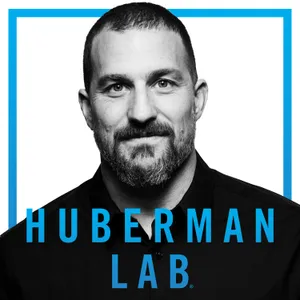
The Huberman Lab podcast is hosted by Andrew Huberman, Ph.D., a neuroscientist and tenured professor in the department of neurobiology, and by courtesy, psychiatry and behavioral sciences at Stanford School of Medicine. The podcast discusses neuroscience and science-based tools, including how our brain and its connections with the organs of our body control our perceptions, our behaviors, and our health, as well as existing and emerging tools for measuring and changing how our nervous system works. Huberman has made numerous significant contributions to the fields of brain development, brain function, and neural plasticity, which is the ability of our nervous system to rewire and learn new behaviors, skills, and cognitive functioning. He is a McKnight Foundation and Pew Foundation Fellow and was awarded the Cogan Award, given to the scientist making the most significant discoveries in the study of vision, in 2017. Work from the Huberman Laboratory at Stanford School of Medicine has been published in top journals, including Nature, Science, and Cell, and has been featured in TIME, BBC, Scientific American, Discover, and other top media outlets. In 2021, Dr. Huberman launched the Huberman Lab podcast.
Latest Episodes
The most recent episodes — sign up to get AI-powered summaries of each one.
- 3 days ago35 min
Essentials: How to Assess & Improve All Aspects of Your Fitness | Dr. Andy Galpin
In this Huberman Lab Essentials episode, my guest is Dr. Andy Galpin, PhD, an exercise physiologist. We revisit the first episode of his Huberman Lab Guest Series to discuss the nine major components of physical fitness and how to assess your abilities. We explain practical tests for movement quality, power, strength, muscle mass and endurance, including grip strength, push-ups and VO2 max. We also discuss how to organize fitness testing, track progress and identify which areas to prioritize in your training to support long-term health and performance. Read the episode show notes at hubermanlab.com. Thank you to our sponsors AG1: https://drinkag1.com/huberman Eight Sleep: https://eightsleep.com/huberman David: https://davidprotein.com/huberman Timestamps Andy Galpin Fitness Goals, Appearance & Performance Nine Components of Physical Fitness Sponsor: Eight Sleep Movement Skill, Tool: Assessing Movement Quality Speed Testing Power, Tool: Standing Broad Jump Grip Strength, Dynamometers & Dead Hangs Sponsor: AG1 Lower Body Strength, Leg Extensions & Squat Holds Safe Testing, Technique & Consistent Warm-Ups Muscle Mass, Body Composition & Fat-Free Mass Index Muscular Endurance, Planks & Push-Ups Anaerobic Capacity, Maximum Effort Tests Maximum Heart Rate & Heart Rate Recovery VO2 Max, Running & Walking Tests Sponsor: David Long-Duration Endurance, Steady-State Exercise & Nasal Breathing Testing Frequency, Test Order & Training Priorities Acknowledgements Disclaimer & Disclosures Learn more about your ad choices. Visit megaphone.fm/adchoices
- 6 days agointerview2h 50m8-min read
The Art of True Happiness | Dr. Arthur Brooks
True happiness is not the absence of suffering but the active pursuit of three core elements: enjoyment, satisfaction, and meaning. The happiest people embrace struggle and discomfort as essential to a fulfilling life, recognizing that pleasure alone leads to emptiness, while moral aspirations—such as love, service, and purpose—lead to lasting fulfillment.
- 1 weeks agonarrative35 min5-min read
Essentials: Genes & the Inheritance of Memories Across Generations | Dr. Oded Rechavi
The episode explores the controversial yet increasingly supported idea that acquired traits—such as responses to environmental stress or viral exposure—can be inherited across generations via RNA, challenging long-held biological dogma. Dr. Oded Rechavi presents compelling evidence from C. elegans worm studies showing that small RNAs can transmit information from parent to offspring, influencing behavior and immunity without altering DNA.
- 1 weeks agonarrative2h 3m8-min read
How Mitochondria Control Your Metabolism | Dr. Jared Rutter
This episode explores the foundational biology of mitochondria and cellular metabolism, revealing that mitochondria are not just cellular powerhouses but central regulators of health, disease, and aging through their role in energy allocation and biosynthesis. The conversation reframes metabolism as a dynamic, cell-specific process and highlights how disruptions in mitochondrial function contribute to cancer, heart failure, and aging.
- 2 weeks agointerview33 min6-min read
Essentials: Use Sleep to Enhance Learning, Memory & Emotional State | Dr. Gina Poe
Sleep is a highly structured, non-redundant biological process essential for memory consolidation, emotional regulation, and brain detoxification. A perfect night's sleep involves cycling through non-REM (stages 1–3) and REM sleep approximately every 90 minutes, with early sleep dominated by slow-wave sleep critical for physical restoration and late sleep rich in REM for creativity and emotional processing.
- 2 weeks agointerview2h 33m9-min read
How to Accelerate Learning & Improve Education | Joe Liemandt
The Huberman Lab podcast features a transformative conversation with Joe Liemandt, principal of Alpha School, a revolutionary educational model that combines AI-driven, mastery-based learning with high standards and emotional support to help every child reach their full potential. By focusing on foundational skills, personalized pacing, and real-world life skills, Alpha School enables students to learn twice as much in two hours a day as traditional schools do in six, while also fostering entrepreneurship, grit, and a love for learning.
- 3 weeks agosolo38 min6-min read
Essentials: Diet & Nutrition for Mental Health | Dr. Chris Palmer
Nutrition, particularly ketogenic and low-carbohydrate diets, may play a causal and therapeutic role in mental health disorders by improving mitochondrial function, reducing inflammation, and modulating neurotransmitter and hormone systems. Dr. Chris Palmer’s clinical work shows dramatic improvements in treatment-resistant depression, bipolar disorder, and schizophrenia when metabolic health is addressed through diet, with some patients experiencing near-complete remission of symptoms after failing decades of conventional treatments.
- 3 weeks agointerview2h 20m7-min read
How to Improve Motivation & Overcome Procrastination | Dr. Masud Husain
Motivation is not simply a matter of willpower but is deeply rooted in brain circuitry, particularly the dopamine-driven mesolimbic pathway that links the basal ganglia to the frontal lobes. Apathy arises when this system fails, while hypermotivation occurs when it's hijacked by drugs or mania. Crucially, motivation can be modulated—both increased and decreased—through behavioral strategies, pharmacological interventions, and environmental design.
Get Huberman Lab summaries in your inbox
Free AI-powered daily recaps. Key takeaways, quotes, and mentions — in a 5-minute read.
Get Free Summaries →Free forever for up to 3 podcasts. No credit card required.
What Huberman Lab Covers
Topics discussed across all episodes.
You Might Also Like
Listeners also like.

Habits and Hustle
Explores the daily habits and personal routines of successful entrepreneurs and thought leaders through candid interviews.
Stanford Psychology Podcast
Students interview psychologists about recent research and its real-world applications in mental health, behavior, and cognition.
The Psychology Podcast
Explores human potential and possibility through conversations with scientists, thinkers, and self-actualized individuals.
The Dr. Hyman Show
Explores root causes of chronic disease and promotes functional medicine, nutrition, and preventive health through expert discussions.

The Genius Life
A science-based wellness podcast exploring nutrition, longevity, and health with a focus on practical, evidence-driven insights.

Health Optimization Medicine Podcast
Experts discuss health optimization, performance, and decision-making with insights from neuroscience, medicine, and consciousness.
Brain Science with Ginger Campbell, MD: Neuroscience for Everyone
Explores neuroscience discoveries and how the brain shapes human identity through interviews and book discussions.
FoundMyFitness
A podcast exploring health, science, nutrition, aging, and fitness.
Hidden Brain
Explores human behavior and the unconscious patterns that shape our decisions, relationships, and society through science and storytelling.
Peak Performance Life Podcast
Covers health, energy, and mental performance optimization through biohacking, nutrition, and lifestyle strategies.
10% Happier with Dan Harris
Practical mindfulness and meditation advice from experts, blending science and ancient wisdom for skeptics.

The Peter Attia Drive
Conversations with experts on health, longevity, performance, and critical thinking led by physician Peter Attia.
Mentions
Most frequently mentioned across all episodes.
People
Companies
Products & Tools
About Huberman Lab
The Huberman Lab podcast is hosted by Andrew Huberman, Ph.D., a neuroscientist and tenured professor in the department of neurobiology, and by courtesy, psychiatry and behavioral sciences at Stanford School of Medicine. The podcast discusses neuroscience and science-based tools, including how our brain and its connections with the organs of our body control our perceptions, our behaviors, and our health, as well as existing and emerging tools for measuring and changing how our nervous system works. Huberman has made numerous significant contributions to the fields of brain development, brain function, and neural plasticity, which is the ability of our nervous system to rewire and learn new behaviors, skills, and cognitive functioning. He is a McKnight Foundation and Pew Foundation Fellow and was awarded the Cogan Award, given to the scientist making the most significant discoveries in the study of vision, in 2017. Work from the Huberman Laboratory at Stanford School of Medicine has been published in top journals, including Nature, Science, and Cell, and has been featured in TIME, BBC, Scientific American, Discover, and other top media outlets. In 2021, Dr. Huberman launched the Huberman Lab podcast.
Customized Recaps
AI-powered recaps with compact key takeaways, quotes, and insights.
Straight to Your Inbox
Get key takeaways from Huberman Lab in a 5-minute read.
Save Hours Every Week
Stay current on your favorite podcasts without falling behind.
Frequently Asked Questions
What is Podzilla's Huberman Lab daily summary?
It's a free AI-powered email that summarizes new episodes of Huberman Lab as soon as they're published. You get the key takeaways, notable quotes, and links & mentions — all in a quick read.
How does the Huberman Lab podcast summary work?
When a new episode drops, our AI transcribes and analyzes it, then generates a personalized summary tailored to your interests and profession. It's delivered to your inbox every morning.
Is this an official Huberman Lab product?
No. Podzilla is an independent service that summarizes publicly available podcast content. We're not affiliated with or endorsed by Scicomm Media.
Can I get summaries of other podcasts too?
Absolutely! The free plan covers up to 3 podcasts. Upgrade to Pro for 15, or Premium for 50. Browse our full catalog at /podcasts.
How often does Huberman Lab release new episodes?
Huberman Lab publishes every few days. Our AI generates a summary within hours of each new episode.
What topics does Huberman Lab cover?
Huberman Lab covers topics including Blood-brain barrier, endurance training, exercise adaptations, hypertrophy, Osmolarity. Our AI identifies the specific themes in each episode and highlights what matters most to you.
Start getting Huberman Lab summaries tomorrow morning.
Free forever for up to 3 podcasts. No credit card required.
Free forever for up to 3 podcasts. No credit card required.