Free Daily Podcast Summary
Mind the Gap: Daily Summaries Delivered
by Michael Comyn
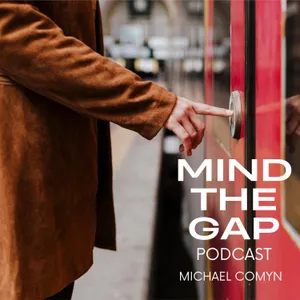
Welcome to “Mind the Gap,” the podcast where ancient wisdom and modern emotional intelligence converge. I’m Michael Comyn, and with nearly 40 years of experience in emotional intelligence, I’m excited to bring you this exploration of how Stoic philosophy can illuminate our contemporary challenges. You might also recognise my voice from a different context—I’ve been the one reminding passengers to “Mind the Gap” on public transport across Ireland for the past 25 years. It’s a phrase that has taken on a new meaning in this podcast, as we explore the gap between our emotions and reality. In each episode, we’ll bridge the gap between the timeless insights of Stoic philosophers and the latest understandings of emotional intelligence. I’ll share practical tools and strategies to help you manage feelings, enhance self-awareness, and build resilience. Join me as we explore how these ancient teachings can provide clarity and guidance for today’s emotional landscape.
Latest Episodes
The most recent episodes — sign up to get AI-powered summaries of each one.
- 2 weeks ago9 min
What I Heard When I Listened Back
Episode 90 of Mind the Gap is a pause rather than a conclusion. Looking back through the archive, Michael listens again to the ideas, questions, certainties and contradictions that have shaped the first ninety episodes. What has changed? What still holds true? And what can we learn from the gap between what we say matters and how we actually behave? This episode is an invitation to revisit the archive, sit with the questions that have stayed with you, and notice what you may hear differently now. Mind the Gap will return later in the year. #MindTheGap #Podcast #PodcastEpisode #SelfReflection #PersonalGrowth #HumanBehaviour #Leadership #Psychology #Mindfulness #Change #Curiosity #ListenBack
- 3 weeks ago7 min
The Effect Nobody Read Properly
You know the Dunning-Kruger effect. "The dumbest people are the most confident." Except that's not what the 1999 study actually found — and the correction most people haven't heard is stranger than the myth itself. Michael Comyn traces the real finding, the statistical critique that's since called the famous graph into question, and — instead of handing you a tidier myth to replace the old one — lands somewhere more honest: we know less about this than either the popular version or its takedown would have you believe. A confession as much as an episode. Keywords/tags: Dunning-Kruger effect, cognitive bias, critical thinking, psychology myths, statistics, epistemic humility, self-assessment
- Aug 22, 20266 min
Not That Kind of Family
"We're a family here." You've heard it, probably from someone who meant it warmly. This week, Michael Comyn takes the phrase more seriously than it usually gets taken — and asks the question nobody stops to ask first: which kind of family, exactly? Because not every family is the good kind. Every office has its golden child, its black sheep, its uncle nobody sits near at Christmas. And even the good kind offers something no employer legally can, or should try to: love that isn't contingent on output. Drawing on years spent moving between organisations rather than living inside one, Michael asks what's really being borrowed when a workplace reaches for the warmest word in the language — and what it usually means when that word shows up loudest. Gentle, a little mischievous, and not aimed at anyone who's ever said it sincerely. Keywords/tags: workplace culture, organisational psychology, leadership language, company culture, employee relations, corporate cliché
- Aug 15, 20267 min
Nobody Noticed the Bend
The Space Shuttle Challenger disaster wasn't a surprise. Engineers had seen the same O-ring damage on earlier, successful flights — reviewed, discussed, waved through. Nobody hid it. Something quieter had happened first: sociologist Diane Vaughan called it normalisation of deviance — the process by which a rule bent once, safely, quietly resets what "normal" looks like, until the next bend doesn't register as a bend at all. Michael Comyn traces the same mechanism into a hospital corridor — how a routine scan becomes "stat" by drift rather than decision, how a diagnosis narrows without anyone deciding to skip a step — and asks the harder question underneath: how do you tell a bend worth making from one that's quietly rewriting your baseline? Not every shortcut is a countdown to disaster. That's what makes this one hard to see coming. Keywords/tags: normalisation of deviance, Diane Vaughan, Challenger disaster, patient safety, diagnostic error, organisational culture, quality improvement, decision-making
- Aug 8, 20268 min
The Shape of the Story You're In
You already know the voice. This week, a different kind of gap — the one between the life you're living and the plot you never actually chose. Michael Comyn draws on psychiatrist Eric Berne's idea of the life script — the unconscious plan for how things are supposed to go, written long before anyone had a vote in it — and lays out six shapes that plot commonly takes. Not a diagnosis. A mirror, held up long enough to notice which shape you flinch at. Five episodes into Season 5, Michael turns from what we say to each other to the older question underneath it: who wrote the story you're currently running, and how far back? For more on the space between intention and impact, Michael's book Mind the Gap is out now on Amazon. https://amzn.eu/d/irNfaHO
- Aug 1, 202612 min
Can't You Take a Joke?
The sentence arrives about a second and a half after the remark, and it is always delivered lightly: I'm only joking. Notice where it sits. It doesn't withdraw what was said — it leaves the remark exactly where it is and changes what you're allowed to do about it. Michael Comyn on deniable aggression: why a thirteenth-century West African institution got the rules right, what a linguist in Harlem discovered about the one thing a ritual insult is never allowed to be, and why the person doing the teasing and the person being teased are not in the same joke.
- Jul 25, 202610 min
The Authority Gradient
Last week, Michael Comyn made the case for silence. This week, the exception — because there's a second kind of silence, the sentence that was formed, weighed, and then never said. Aviation has a name for the conditions that produce it: the authority gradient, the slope of rank and reputation that information has to climb to reach the person in charge. On a first officer who hinted four times instead of shouting once, on the three words a captain said that saved a hundred and eighty-five people, and on why we, in this country, are world-class at not quite saying the thing.
- Jul 18, 20267 min
Dead Air
The voice that tells Ireland to mind the gap spent thirty years being trained never to let silence happen. In radio, they call it dead air — eight seconds of quiet and alarms sound in rooms you'll never see. Then Michael found himself in coaching rooms where the silence after a question turned out to be the only part that mattered. On studio clocks, Irish funerals, the forensic recall of two men avoiding one true sentence, and the answer that only arrives after eleven seconds.
Get Mind the Gap summaries in your inbox
Free AI-powered daily recaps. Key takeaways, quotes, and mentions — in a 5-minute read.
Get Free Summaries →Free forever for up to 3 podcasts. No credit card required.
You Might Also Like
Listeners also like.
A Changed Mind | Mindset That Matters
Explores mindset, personal growth, and global issues through neuroscience, spirituality, and practical strategies for lasting change.

Growth Mindset Psychology: The Science of Self-Improvement
Explores the science behind lasting self-improvement through psychology, neuroscience, and timeless wisdom traditions.

Finding Mastery with Dr. Michael Gervais
Conversations with elite performers across sports, business, and science to explore the psychology of high performance and human potential.
A Bit of Optimism
Conversations with thinkers and doers exploring what drives purpose, growth, and meaning in life.

Passion Struck with John R. Miles
Explores purpose, resilience, and connection through science-backed conversations with experts in psychology, neuroscience, and performance.
The Curiosity Shop with Brené Brown and Adam Grant
Brené Brown and Adam Grant explore boldness amid uncertainty through research, debate, and dialogue in a six-episode series.

Your Thoughts Your Reality
A podcast exploring how veterans can overcome psychological challenges like fear and self-doubt through neuroencoding science.

Podmastery: podcasting insights and advice for indie creators
Practical podcasting advice for independent creators aiming to grow their audience and improve production.
All In The Mind
Explores the psychology behind human behavior, emotions, and mental health through expert interviews and personal stories.

Good Life Project
Explores meaningful living through conversations with experts in science, culture, and the arts.

Makes Sense - with Dr. JC Doornick
Explores everyday mysteries and thought-provoking questions about human behavior and reality.

Where Is My Mind?
Examines the theory that consciousness comes from outside the brain, exploring phenomena like telepathy, near-death experiences, and past-life memories.
About Mind the Gap
Welcome to “Mind the Gap,” the podcast where ancient wisdom and modern emotional intelligence converge. I’m Michael Comyn, and with nearly 40 years of experience in emotional intelligence, I’m excited to bring you this exploration of how Stoic philosophy can illuminate our contemporary challenges. You might also recognise my voice from a different context—I’ve been the one reminding passengers to “Mind the Gap” on public transport across Ireland for the past 25 years. It’s a phrase that has taken on a new meaning in this podcast, as we explore the gap between our emotions and reality. In each episode, we’ll bridge the gap between the timeless insights of Stoic philosophers and the latest understandings of emotional intelligence. I’ll share practical tools and strategies to help you manage feelings, enhance self-awareness, and build resilience. Join me as we explore how these ancient teachings can provide clarity and guidance for today’s emotional landscape.
Customized Recaps
AI-powered recaps with compact key takeaways, quotes, and insights.
Straight to Your Inbox
Get key takeaways from Mind the Gap in a 5-minute read.
Save Hours Every Week
Stay current on your favorite podcasts without falling behind.
Frequently Asked Questions
What is Podzilla's Mind the Gap daily summary?
It's a free AI-powered email that summarizes new episodes of Mind the Gap as soon as they're published. You get the key takeaways, notable quotes, and links & mentions — all in a quick read.
How does the Mind the Gap podcast summary work?
When a new episode drops, our AI transcribes and analyzes it, then generates a personalized summary tailored to your interests and profession. It's delivered to your inbox every morning.
Is this an official Mind the Gap product?
No. Podzilla is an independent service that summarizes publicly available podcast content. We're not affiliated with or endorsed by Michael Comyn.
Can I get summaries of other podcasts too?
Absolutely! The free plan covers up to 3 podcasts. Upgrade to Pro for 15, or Premium for 50. Browse our full catalog at /podcasts.
How often does Mind the Gap release new episodes?
Mind the Gap publishes weekly. Our AI generates a summary within hours of each new episode.
What topics does Mind the Gap cover?
Mind the Gap covers topics including Education, Business, Management, Fitness, Health & Fitness, Mental Health, Self-Improvement. Our AI identifies the specific themes in each episode and highlights what matters most to you.
Start getting Mind the Gap summaries tomorrow morning.
Free forever for up to 3 podcasts. No credit card required.
Free forever for up to 3 podcasts. No credit card required.