Free Daily Podcast Summary
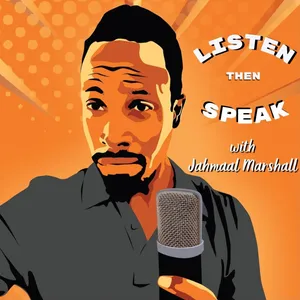
Listen Then Speak: Daily Summaries Delivered
by Jahmaal Marshall
Our desire is to sit and chop it up with anyone from best selling authors to successful entrepreneurs and get a sense of the highs and lows of their journey. We want to delve past the surface to see how their culture, faith, career choices, and mental health have brought them to their current destination and broach topics that will provoke both thought and action in listeners.
Latest Episodes
The most recent episodes — sign up to get AI-powered summaries of each one.
- 3 days ago49 min
From Shaken Faith to Unshakeable Faith: Finding Strength Through Grief w/ Aaron Graham
If you're ready to get measured results for both personally and professionally, schedule an appointment with Jahmaal Pastor Aaron Graham joins me to talk about his new book, Unshakeable Faith, and why writing it required him to confront his own fear of conflict. Aaron is the founder and lead pastor of The District Church, a multicultural congregation in Washington, DC, representing more than 80 nations. He has spent over 15 years pastoring in the nation’s capital and holds a master’s degree in public policy from the Harvard Kennedy School. Our conversation centers on what happens when grief, fear, and disappointment go unprocessed. We talk about the doubts that can emerge after a painful loss, the church’s response to racial injustice, and the pressure to choose a political side rather than remain grounded in your convictions. Aaron also shares why justice requires more than spare change, how online outrage affects our interior lives, and what it looks like to hold onto both conviction and compassion in a deeply divided world. Episode Highlights:0:00 - Meet Pastor Aaron Graham4:02 - Why Aaron wrote Unshakeable Faith8:12 - The deeper emotion underneath fear10:40 - Faith, doubt, and life-changing loss12:34 - How unprocessed grief can become anxiety19:22 - Deconstruction, racial justice, and the church27:19 - Why justice requires more than spare change30:21 - Connecting personal grief with meaningful action38:21 - Cancel culture and divisive online voices40:41 - Maintaining relationships across differences47:36 - The courage to be fully known and loved CONNECT WITH JAHMAAL LinkedIn: https://www.linkedin.com/in/jahmaalmarshall/ Website: https://listenthenspeak.com/ BUY ME A Coffee - with this link: https://buymeacoffee.com/listenthenspeak?new=1 Interested in learning more about Aaron Graham? Book: Unshakable Faith: How to Stand Firm in a Culture of Lies. Personal Website: aarongrahamdc.com Church Website: districtchurch.org instagram.com/DistrictChurch https://www.aarongrahamdc.com/difficultconversations Hosted by Simplecast, an AdsWizz company. See pcm.adswizz.com for information about our collection and use of personal data for advertising.
- 1 weeks ago25 min
Wise as Serpents: How to Deal With the Snakes in Your Life
Why "just cut them off" is the wrong first moveHere's the contrarian part, and it's the part most people skip. Every piece of advice online tells you the same thing: identify the toxic person, go no-contact, block, delete, done. And sometimes distance is exactly right. But cutting someone off doesn't answer the harder question, the one underneath the wound: Who told you that you had to keep the snake fed? If you keep ending up with the same viper in a different body: new job, same manipulator; new relationship, same betrayal; the problem isn't your bad luck. It's a belief you've been carrying that says your worth is measured by how much you'll tolerate. You call it being loyal. You call it being the bigger person. You call it keeping the peace. But high-functioning codependency wears respectable clothes, and it will keep you seated at the table of someone who's already decided you're the meal. You can remove every snake in your yard. If you never ask why the door keeps getting left open, another one is already on the way. How to spot a snake before it strikesDiscernment isn't paranoia. It's paying attention to patterns instead of performances. In the episode, Jahmaal walks through the tells: They're fluent in your weaknesses and forgetful of your worth. A snake studies where you're soft, and files it for later.They move differently in public than in private. Psalm 140:3 talks about tongues sharp as a serpent's. Watch what the tongue does when the audience leaves.Confusion is the residue. You leave conversations doubting your own memory. That fog isn't an accident, it's the venom.They reward your silence and punish your honesty. In a healthy relationship, the truth brings you closer. Around a snake, the truth gets you bitten. If you've been calling this "just a difficult person," this section will cost you your comfortable label. Good. Clarity is the first mercy. The wisdom to deal with toxic people (personally and professionally)Personally, the snake counts on your history. "But we go way back." "But that's my family." "But they were there for me once." Loyalty is a virtue, until it becomes the very thing that keeps you kneeling. Professionally, the snake counts on your ambition. You don't confront it because you need the reference, the promotion, the peace of not "making it a thing." So you swallow it. And swallowed venom doesn't disappear; it becomes burnout, resentment, and a body that starts sending you the bill. The wisdom Jahmaal offers isn't a script for a comeback. It's a shift in posture: stop managing the snake and start leading yourself. You don't need them to change for you to stop bleeding. The 3 moves: how to deal with the snakes in your lifeThis is the heart of the episode: three moves, in order. Skip one and the whole thing collapses.1. Take inventoryYou can't confront what you refuse to count. Get honest about who's actually in your circle and what they cost you. Not who you hoped they'd be; who they've shown you they are, on repeat. Write the names. Notice how your body feels before you see them, not just after. Inventory isn't cruelty; it's stewardship. You can't protect a garden you've never walked.2. Take ownershipHere's where it gets holy and uncomfortable. The snake is responsible for the bite. But you are responsible for the access. Ownership means asking the "Who told you?" questions: Who told you that keeping the peace was your job? Who told you love means unlimited access? Who told you that saying no makes you the villain? You didn't choose the first snake. But somewhere along the way you learned to leave the gate open, and what you learned, you can unlearn.3. Make a planWisdom without a plan is just a nice feeling that fades by Monday. Decide (before the next encounter) what you will and won't allow. What the boundary is. What you'll say. What access gets revoked, what stays, and what the consequence is when it's crossed. A boundary you haven't rehearsed is a boundary you'l
- 2 weeks ago19 min
Why Rejection Is Protection: When God Closes a Door, Stay Out of the Room
The One Line That Changes Everything Sometimes the door didn't close on you. It closed for you. If you're a high-achiever who's been taught that every "no" is just a "not yet" you can grind your way past, this episode is your permission slip to do something your ambition has never allowed: stay excluded. Because the burnout you're carrying? It's rarely the workload. It's the chasing, the emotional overtime you're logging trying to earn your way back into a room God already walked you out of. What You'll Learn in This Episode Why burnout is almost never about doing too much — and what's actually draining you The difference between being rejected and being removed (and why it matters) 4 real-life examples of rejection being protection in disguise What Scripture says about closed doors, betrayal, and repositioning The one question that turns exclusion into freedom instead of exhaustion Rejection Isn't the End of Your Story: It's the Repositioning Here's the pattern most high-performers miss: rejection is often protection wearing a mask you don't recognize yet. You keep knocking. You keep over-explaining. You keep proving yourself to people who already decided. And you call it perseverance, but your body is calling it burnout. The truth is, when you keep trying to re-enter rooms you were excluded from, you don't just waste energy. You override the very protection that exclusion was built to give you. "You weren't rejected. You were removed. And there's a difference, because man looks at the door, but God looks at what's on the other side of it." Ready to Pull the Root Out? If this episode named something you've been living, the exhaustion of trying to break back into a room God locked for your good, don't sit with that revelation alone. That's exactly the work we do inside the Premium Strategy Hour. One hour, just you and me. We go underneath the burnout, find the belief that keeps you chasing closed doors, and pull it out by the root. I only open a handful of these each month. When they're gone, they're gone, so don't wait for the next season of exhaustion to make the decision for you. Book Your Premium Strategy Hour - HERE Hosted by Simplecast, an AdsWizz company. See pcm.adswizz.com for information about our collection and use of personal data for advertising.
- 4 weeks ago16 min
The Blessing Buried in the Betrayal: How to Recover From Burnout That Rest Won't Fix
What You'll Learn in This Episode Why executive burnout is usually a betrayal problem, not a workload problem The difference between betrayal as destruction and betrayal as revelation How high-functioning codependency and over-giving accelerate burnout in high-achievers The origin belief driving your disordered boundaries - and how to find it The six-step L.I.S.T.E.N. Method for moving through betrayal Concrete personal and professional steps to reclaim your energy and worth Burnout Isn't a Workload Problem - It's a Betrayal Problem The exhaustion that sleep doesn't touch and a vacation only reschedules isn't about your calendar. It's about a betrayal you've been staying busy enough to avoid feeling. Somebody crossed you; a partner, a mentor, a company you bled for, a parent. Instead of grieving it, you got useful. You made yourself indispensable so you'd never be discardable again. That isn't ambition. It's a survival strategy in business casual. Key insight: Burnout in leaders is rarely about doing too much. It's about doing too much for people who wouldn't do the same for you, while some part of you knew it the whole time. Betrayal Is Not Destruction - It's Revelation Genesis 50:20 gives the whole framework. Joseph tells the brothers who sold him: "You intended to harm me, but God intended it for good." He doesn't deny the harm. He names the intent, and refuses to let their intent write the final sentence. Betrayal doesn't build the crack. It reveals the crack that was already there - in the relationship, the agreement, or the story you were told about your own worth. Underneath the Scripture is the neuroscience: your nervous system logged the betrayal as a threat and went into protection - over-function, over-give, say yes when you mean no. That pattern is high-functioning codependency, and it's the number one accelerant of burnout in high-achievers. Key Takeaways Burnout that rest won't fix is often unprocessed betrayal. Betrayal reveals a pre-existing crack; it doesn't create it. Over-functioning is a survival response, not a personality trait. Healing is internal — it never requires the other person's apology. The L.I.S.T.E.N. Method works the root belief, not just the symptom Ready to Work the Root? If you can feel the origin belief but can't quite reach it alone, that's exactly the work of the Premium Strategy Hour. One focused hour: we locate the origin, name the belief, and build the boundary you've needed for years, the one that ends the over-functioning at the root. These are deliberately limited, and only a handful open each month. When they're gone, they're gone until the next window. Claim your Premium Strategy Hour → Listen deeply. Speak boldly. Do the work. Connect Subscribe to Listen Then Speak on Apple Podcasts and Spotify or wherever podcast are distributed. If this episode named something you've been carrying, share it with one leader who needs it. Hosted by Simplecast, an AdsWizz company. See pcm.adswizz.com for information about our collection and use of personal data for advertising.
- Aug 13, 202616 min
Why You Can't Accept a Compliment -- And What It's Doing to Your Brain Chemistry
Listen to the Episode Someone praises your work and your hands are up before they finish the sentence. "It was a team thing." "It was nothing." You think you're being humble. In this solo episode, executive coach and certified counselor Jahmaal Marshall takes you underneath the reflex — to the subconscious origin belief that's been writing your brain chemistry, driving your over-functioning, and manufacturing a burnout no vacation ever seems to fix. This is root-cause work, not surface-level advice. If you've ever felt successful on the outside and quietly depleted on the inside, this one's the mirror. What You'll Learn in This Episode Why a compliment can feel like a threat - the nervous-system reason your body braces, squirms, and deflects when you're praised The core belief hiding underneath the deflection: "I'm only worthy when I'm useful" - and where it got installed How high-functioning codependency and people-pleasing keep you running a reward system that can spend but can't receive The chemistry of burnout: why nothing you accomplish is ever allowed to count Emotional neglect of self, masked as empathy - the survival radar you were taught to call a gift Why you can't behavior-modify your way out of a belief-level pattern, and what actually moves it at the root For HR, Founders & Talent Acquisition Leaders The way you frame yourself isn't private, it's a broadcast. Deflect your value and you train the room to value you exactly as little as you value yourself. Fix the belief, and your framing changes on its own; and so does how you're perceived, paid, and promoted. That's not confidence you fake. That's alignment. Take the Next Step If something in your chest went "that's me," that's the invitation. Come do the root-cause work inside 12 Weeks of Transformation and stop leaking your worth into a system that only knows how to take it. [Book a conversation with Jahmaal / Start 12 Weeks of Transformation] → Visit: listenthenspeak.com → Or DM the word CLARITY on Linkedin to check availability This is not a sales call. It is strategic, honest, and built for people who are done with insight without implementation. Hosted by Simplecast, an AdsWizz company. See pcm.adswizz.com for information about our collection and use of personal data for advertising.
- Aug 4, 202625 min
Frozen Grief and the Nervous System: The Nolan Wells Episode | Listen Then Speak
In this solo episode of Listen Then Speak, Jahmaal Marshall takes the national heartbreak surrounding the death of 18-year-old Nolan Well, a young man from Ocean Springs, Mississippi who went missing on the Fourth of July and whose cause of death remains officially undetermined, and uses it to name something most of us are carrying and can't explain: frozen grief. Frozen grief is what happens when a loss arrives with no ending attached. No answers. No closure. No all-clear. And when the mind can't file a loss as finished, the nervous system stays braced, producing the chronic stress and quiet burnout that so many high-achievers have been mislabeling as a personality flaw. This is a conversation about grief and the nervous system, the weight of grieving under a media spotlight, and for the parents (and influencers) listening a direct word about what actually keeps our children safe. Not the ethnicity of the people around them. Their character. And it's a word for every family, of every ethnicity. What You'll Learn in This Episode What frozen grief (ambiguous loss) is, and why unanswered loss won't process How grief affects the nervous system, and why "the unknown" is what burns you out Why grief and burnout are the same nervous-system story, not two different problems How too much media coverage can re-traumatize you, and how to stay informed without being consumed Why character, not ethnicity, is what parents (and influencers) should be teaching their kids to read, referencing both Nolan Wells and Shanquella Robinson How to begin melting a frozen grief without waiting on a closure that may never come Episode Breakdown 1. Cold Open — Grief That Has No Ending Jahmaal opens by naming Nolan Wells with dignity and setting the frame for the whole episode: grief was designed to move through you, but grief without answers doesn't move, it freezes. This isn't a true-crime breakdown. It's a look at what happens inside a body, a family, and a community when a loss shows up with no ending attached. 2. What Frozen Grief Actually Is A plain-language teaching on ambiguous loss (grief without closure) and why the brain literally cannot mark an unresolved loss as "over." When the questions outnumber the answers, you don't get to mourn. You brace. Grief and vigilance run in the same body at the same time. 3. Why the Unknown Burns You Out The nervous-system mechanics: how the body's two protective modes (rev up and shut down) run simultaneously in frozen grief, why a system built to survive a threat was never built to stay activated for weeks, and why burnout is what happens when the body never gets an all-clear. Includes a word on how chronic, race-related stress adds an older grief underneath a fresh one. 4. The Weight of the Coverage Holding two truths at once: public attention can force answers a grieving family deserves - and endless replay of painful details reads to your nervous system as a fresh threat every time. The difference between being informed and being consumed, plus a disciplined way to hold the racial history in the room without letting speculation take over. 5. A Word to the Parents Jahmaal brings in the death of Shanquella Robinson to disarm the wrong lesson. Nolan died among people who didn't look like him; Shanquella died among people who did. Same skin didn't save her; different skin didn't doom him. The takeaway for every parent, of every ethnicity: teach your children to read character, not skin. Anchored in Scripture - "Man looks at the outward appearance, but the Lord looks at the heart." (1 Samuel 16:7) 6. This One Is for All of Us Frozen grief doesn't check a box. This closing movement widens the frame to every family inside this story and every listener carrying a loss that never got its ending, landing on a simple truth: weep with those who weep. Still waiting on a closure that is never coming? The internal narrative keeping you stagnant, the one that has you over-giving to people who can afford to lose you, replaying the betrayal, priced at a discount in your own mind; that story can be rewritten. But it won't rewrite itself. That's the root work Jahmaal Marshall does one-on-one (going beneath the surface to the subconscious beliefs and internal narratives running the show), so you stop waiting on closure and start walking in wholeness. Here's the honest part: this is deep work, and deep work can't be done at scale. Jahmaal keeps his one-on-one coaching roster intentionally small, which means when the spots are full, they're full, and the waitlist waits. 👉 Don't sit on this the way you've been sit
- Jul 26, 202630 min
When People Think They Can Afford to Lose You, They Mishandle You | A Solo Episode on Betrayal & Boundaries
Your betrayal didn't catch God by surprise, it came to reveal, not to destroy. In this solo episode of Listen Then Speak, executive coach and certified counselor Jahmaal Marshall breaks down what betrayal actually is: not the end of your story, but the moment the mask slips. If you're still waiting on closure that's never coming, still replaying the conversation, still mishandled and calling it love; this episode is the root work you've been avoiding. Jahmaal unpacks why when people believe they can afford to lose you, they will mishandle you, how to tell the difference between relationships meant to last and relationships that were only ever lessons, and why character is the great revelation of someone's heart. Then he draws the line most people never connect: how disordered boundaries lead directly to burnout, and the wise, faith-rooted way to guard your heart without walling off the people God is trying to send. Grounded in the Joseph narrative, Proverbs 4:23, and the subconscious-belief work at the core of the Listen Then Speak method, this is an episode about betrayal, boundaries, burnout, and finally closing the account on the closure you'll never receive. This episode is for you if: You're recovering from betrayal, a broken friendship, or the loss of a relationship you thought was permanent You over-give to people who under-value you and can't figure out why you're exhausted You're stuck waiting for an apology, explanation, or closure that isn't coming You keep repeating the same relational patterns and want to do the root work to stop You lead at a high level but feel emotionally depleted behind the scenes Press play. Do the work. CHAPTERS / TIMESTAMPS 00:00 — Cold open: the betrayal that broke your heart didn't break God's plan 02:10 — Intro: why the loudest thing in your life is the story you tell yourself 03:25 — It didn't catch God by surprise: Joseph, Judas & sovereignty over betrayal 06:40 — Betrayal is revelation, not destruction (the X-ray principle) 09:30 — When people think they can afford to lose you, they mishandle you 12:45 — Some relationships last, some are lessons — and how to tell the difference 15:10 — Disordered boundaries & the direct road to burnout 18:20 — Wise ways to guard your heart (Proverbs 4:23 & the gate vs. the wall) 21:30 — Closing the account on closure that never comes 23:15 — Strong CTA + share the episode KEY TAKEAWAYS Betrayal is information, not destruction. It doesn't create the fracture, it reveals the one that was already in the bone. People handle you according to the value they assign you. When someone believes your loss is affordable, they mishandle you. Not every relationship was assigned to be permanent. Some are meant to last; some are meant to teach. Stop forcing lessons into life sentences. Character is the reveal: pattern over potential. How someone behaves when honoring you costs them something tells you everything. Disordered boundaries fuel burnout. Over-functioning for people who under-value you is a slow leak that eventually empties you. Closure is a decision, not a gift. You can close the account yourself instead of waiting on a signature that never comes. Guard your heart with a gate, not a wall. Discernment grants access on evidence, not on hope. Still waiting on a closure that is never coming? The internal narrative keeping you stagnant, the one that has you over-giving to people who can afford to lose you, replaying the betrayal, priced at a discount in your own mind; that story can be rewritten. But it won't rewrite itself. That's the root work Jahmaal Marshall does one-on-one (going beneath the surface to the subconscious beliefs and internal narratives running the show), so you stop waiting on closure and start walking in wholeness. Here's the honest part: this is deep work, and deep work can't be done at scale. Jahmaal keeps his one-on-one coaching roster intentionally small, which means when the spots are full, they're full, and the waitlist waits. 👉 Don't sit on this the way you've been sitting on that closure. Apply / connect before the door closes for this cohort: HERE The people who move on this are the same ones who, six months from now, don't even recognize the version of themselves that was waiting by the phone. And share this episode with a friend who needs it. You already know who came to mind, the one still stuck, still waiting, still mishandled and calling it love. Send it to them right now. Sometime
- Jul 2, 202633 min
How to Increase Impact and Magnify Success with Brandee Brown
If you're ready to get measured results for both personally and professionally, schedule an appointment with Jahmaal Brandee Brown has built her life and work around one clear mission: helping people see, own, and magnify the greatness already inside them. In this episode of Listen Then Speak, Jahmaal sits down with Brandee Brown, founder of Magnify Success, for a conversation about resilience, leadership, loss, purpose, and the power of showing up for others. With over 30 years of experience in leadership, corporate strategy, and personal development, Brandee brings a deep understanding of what it takes to navigate change, overcome professional obstacles, and lead with integrity. She shares how her two decades at Comcast shaped her approach to professionalism, strategy, follow-through, and people-first leadership. She also opens up about the harder parts of her story, including childhood pain, personal loss, and the experiences that once made her feel muted. But this conversation is not just about what Brandee has been through. It is about what she has built from it. From being labeled a “happen maker” early in her career to creating Magnify Success, Brandee explains how her pain became part of her purpose, why connection is one of her greatest gifts, and how she helps leaders, brands, and communities step into rooms they may not have known were possible. This is a conversation about resilience, visibility, faith, community, and the kind of leadership that does more than talk. It makes things happen. Episode Highlights: 0:00 - Intro 2:15 - Brandee’s favorite genre of music 4:02 - The care behind Brandee’s work 5:52 - What her Comcast career taught her 9:02 - Why follow-through matters 10:16 - Becoming a “happen maker” 12:20 - The leader who saw something in Brandee before she saw it herself 13:11 - Brandee opens up about her early life 17:10 - How pain became purpose 21:29 - Navigating loss, transition, and leadership as a whole person 26:38 - What Magnify Success is really about 31:46 - Where to connect with Brandee 32:47 - Closing thoughts CONNECT WITH JAHMAAL LinkedIn: https://www.linkedin.com/in/jahmaalmarshall/ Website: https://listenthenspeak.com/ BUY ME A Coffee - with this link: https://buymeacoffee.com/listenthenspeak?new=1 Interested in learning more about Brandee? https://magnify-success.com/why-magnify-success/ https://www.linkedin.com/in/brandee-brown/ https://www.instagram.com/magnify.success/profilecard/?igsh=MXc2a25uN3BrdHpnaw%3D%3D Hosted by Simplecast, an AdsWizz company. See pcm.adswizz.com for information about our collection and use of personal data for advertising.
About Listen Then Speak
Our desire is to sit and chop it up with anyone from best selling authors to successful entrepreneurs and get a sense of the highs and lows of their journey. We want to delve past the surface to see how their culture, faith, career choices, and mental health have brought them to their current destination and broach topics that will provoke both thought and action in listeners.
Customized Recaps
AI-powered recaps with compact key takeaways, quotes, and insights.
Straight to Your Inbox
Get key takeaways from Listen Then Speak in a 5-minute read.
Save Hours Every Week
Stay current on your favorite podcasts without falling behind.
Frequently Asked Questions
What is Podzilla's Listen Then Speak daily summary?
It's a free AI-powered email that summarizes new episodes of Listen Then Speak as soon as they're published. You get the key takeaways, notable quotes, and links & mentions — all in a quick read.
How does the Listen Then Speak podcast summary work?
When a new episode drops, our AI transcribes and analyzes it, then generates a personalized summary tailored to your interests and profession. It's delivered to your inbox every morning.
Is this an official Listen Then Speak product?
No. Podzilla is an independent service that summarizes publicly available podcast content. We're not affiliated with or endorsed by Jahmaal Marshall.
Can I get summaries of other podcasts too?
Absolutely! The free plan covers up to 3 podcasts. Upgrade to Pro for 15, or Premium for 50. Browse our full catalog at /podcasts.
How often does Listen Then Speak release new episodes?
Listen Then Speak publishes weekly. Our AI generates a summary within hours of each new episode.
What topics does Listen Then Speak cover?
Listen Then Speak covers topics including Education, Business, Careers, Fitness, Health & Fitness, Mental Health, Self-Improvement. Our AI identifies the specific themes in each episode and highlights what matters most to you.
Start getting Listen Then Speak summaries tomorrow morning.
Free forever for up to 3 podcasts. No credit card required.
Free forever for up to 3 podcasts. No credit card required.