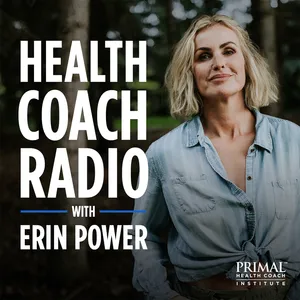
Free Daily Podcast Summary
Health Coach Radio: Daily Summaries Delivered
by Primal Health Coach Institute
Get key takeaways, quotes, and insights from Health Coach Radio in a 5-minute read. Delivered straight to your inbox.
Latest Episodes
The most recent episodes — sign up to get AI-powered summaries of each one.
- Apr 7, 202649 min
Rebuilding Human-Centered Coaching: Simplicity, Connection, and the Future of Wellness with Michelle Leotta
Episode Summary In this wide-ranging and deeply honest conversation, Erin Power welcomes back business and health coach Michelle Leotta to explore how the health coaching industry — and the health consumer — has fundamentally changed since their last conversation in August 2023. Michelle shares why the past year felt like a turning point for online businesses, what she observed in her client data, and how rising overwhelm, automation fatigue, and AI distrust are reshaping buying behavior. Michelle walks listeners through her decision to radically simplify her business model, shift away from heavy automation, and return to more personal, manual, and human-to-human coaching experiences. Together, Erin and Michelle unpack what this means for health coaches at every stage — from brand-new practitioners to seasoned business owners — and why depth, flexibility, and real relationships are outperforming funnels, long sales pages, and over-scaled systems. This episode also dives into powerful messaging shifts, the difference between health and wellness, and how coaches can move from being seen as a "nice-to-have" to a true "must-have" by focusing on what clients actually want their health for. If you've felt burned out by tech, confused by declining engagement, or curious about how to build a simpler, more profitable, and more human coaching business — this episode will feel like a breath of fresh air. Episode Overview 0:00 – Reconnecting With Michelle and What's Changed Since 2023 1:42 – What Erin Saw in Her Client Intake Data 03:11 – Why Automation and AI Are Creating Distrust 03:43– Returning to One-on-One Conversations and Manual Processes 05:34 – The Myth of Scalability and the Cost of Over-Complexity 06:08 – Un-Scaling: Cutting Expenses and Increasing Profitability 06:49 – Group Coaching Containers Explained 08:20 – The Convertible Signature Program Model 10:30- One-on-One, Hybrid 11:33 – Pricing, Capacity, and Avoiding Burnout 14:04 – Why People Want What They Want, When They Want It 16:12 – Personalization, Client Preferences, and Flexible Delivery 19:17 –The mentor LED mastermind 19:50 – Accountability, Mentorship, and Being Truly Seen 20:19- People Do Not Always Complete Online Courses 23:42 – Health vs. Wellness: Expanding the Coaching Conversation 26:00 – Selling Through Conversations Instead of Sales Pages 30:25 – What Health Consumers Really Buy 32:32– Messaging That Moves Coaching From "Nice-to-Have" to "Must-Have" 42:10 – Thinking Bigger Than Health: Real-World Client Examples 47:47 – Final Reflections on the Future of Coaching and Human Connection Key Themes and Takeaways The Health Consumer Has Changed Michelle explains that health coaches are seeing lower returns from the same strategies that once worked — not because coaching is less valuable, but because consumers are overwhelmed, confused, and deeply fatigued by automation, bots, and AI-driven interactions. Simplicity Is the New Advantage By stripping away excess tools, funnels, and tech platforms, Michelle found that both her profitability and quality of life improved. Fewer systems meant fewer problems — and more meaningful work. Manual Does Not Mean Unscalable The episode challenges the belief that one-on-one or manual processes automatically limit growth. Michelle introduces the idea of hybrid and convertible programs that naturally evolve from individual clients into group containers — without sacrificing depth or personalization. People Want Choice and Flexibility Clients don't want rigid structures. Some love groups, others prefer private support. The most effective programs offer multiple touchpoints so clients can engage in ways that fit their lives. Health Is a Gateway — Wellness Is the Destination Rather than selling symptom reduction alone, Michelle encourages coaches to message around what health enables: dating again, starting new hobbies, changing careers, or reclaiming confidence and energy. Conversations Convert Better Than Pages Lo
- Mar 31, 202610 min
Why the Future of Longevity Belongs to Health Coaches
Technology is advancing rapidly in the world of health and longevity — from wearables and peptides to GLP-1 medications and AI-driven diagnostics. But what if the most powerful intervention isn't technology at all? In this episode, Erin Power explores a surprising insight from tech entrepreneur and longevity experimenter Bryan Johnson. Despite spending millions of dollars on cutting-edge health interventions, Johnson publicly shared that the single most impactful factor in improving his health wasn't a supplement, device, or medical procedure — it was behavior change. Erin breaks down why this matters for health coaches and why the future of healthcare will require experts who understand human behavior, motivation, and habit formation. While technology can deliver information and diagnostics, sustainable health outcomes depend on implementation — and that's where coaching becomes indispensable. If you're a health coach wondering where you fit in a rapidly evolving health-tech world, this episode will reframe your role and highlight why your work is more essential than ever. Episode Overview 0:00 – The Longevity Experiment That Changed the Conversation Erin introduces the work of Bryan Johnson and explains why his multimillion-dollar longevity experiment highlights the power of behavior change. 01:57 – The True Role of a Health Coach Health coaches are not simply accountability partners — they are specialists in applied behavior change and implementation. 03:20 – Why the Market Undervalues Behavior Change Behavior change is slow, unflashy, and difficult to monetize, which is why the health industry often prioritizes products and interventions instead. 05:40 – Technology vs. Human Coaching Tools like wearables, GLP-1 medications, and tracking apps still rely on human behavior to produce lasting outcomes. 07:00 – Why Human-to-Human Coaching Still Matters Erin shares how meaningful conversations with clients often drive more progress than tracking endless biometric data. 09:13 – The Future of Health Coaching As healthcare becomes more technologically advanced, the demand for experts in motivation, habit formation, and behavior architecture will only increase. Key Concepts in This Episode Behavior Change Is the Master Lever While supplements, devices, and medical procedures can influence health outcomes, long-term transformation happens through consistent behavioral patterns. Information Is Not the Problem Modern healthcare provides abundant data and knowledge. The real challenge is helping individuals implement and sus
- Mar 24, 20261h 2m
Invisible ADHD, Women, and Directive Coaching with Shanna Pearson
In this guest episode, Erin Power sits down with Shanna, founder of ADHD Coaching and author of Invisible ADHD, to unpack why ADHD in women is often missed, what it feels like to live undiagnosed, and what support can look like when coaching is built specifically for ADHD brains. They talk about the emotional side of ADHD, decision paralysis, misdiagnosis, and why Shanna's coaching model is intentionally high-touch and directive: doing tasks together, practicing skills in real time, and using accountability to create momentum. Episode Overview 0:00 Erin welcomes Shanna (ADHD Coaching) 0:16 Why Shanna was asked to write a book specifically for women 4:08 What it feels like to live with undiagnosed ADHD 6:47 Shanna's book title: Invisible ADHD 8:04 What "Invisible ADHD" means (symptoms + women going unnoticed) 9:28 Why assessments often miss women (male-centric traits) 9:52 Signs of ADHD in women: emotional overwhelm, paralysis, catastrophe thinking 10:19 The core concept: ADHD brains struggle to compartmentalize 13:02 The nuance: lifestyle distraction vs ADHD, and the "entire life" question 17:37 Decision-making struggles and second-guessing 18:54 Why Shanna rejects the "ADHD is a superpower" narrative 22:50 Why traditional client-led coaching models can fail ADHD clients 30:11 Hiring coaches: Shanna's company is always looking for great coaches 31:29 Directive coaching: "Sometimes people need to be told what to do" 38:57 Accountability as a non-negotiable support tool 50:11 To-do lists and overwhelm: "Keep it to 3 and you're free" 53:55 A transformation story: hosting family holidays after years of avoidance 1:01:36 Where to find Shanna + how coaches can apply 1:02:48 Closing (episode ends ~1:02:48) Key Concepts in This Episode Invisible ADHD in Women Shanna explains that many women's ADHD symptoms are internal and emotional, which can keep them under the radar and lead to mislabeling as anxiety or depression. Compartmentalization and Emotional Flooding A key framework in the episode is the inability to compartmentalize, which can make emotions, tasks, and decisions feel like they all hit at once. Decision Paralysis Shanna describes how too many open "paths" in the mind can make it hard to choose, follow through, and feel settled after decisions. Why ADHD Is Not a Superpower Shanna challenges the trend of calling ADHD a superpower, arguing it can make people feel worse or delay them from learning practical management skills. Directive, High-Touch Coaching Instead of only asking insight-based questions, Shanna's coaching model focuses on real-time action: doing tasks together, role-playing conversations, and making plans that are individualized and highly supported. Accountability and Skill Practice Progress is built through repetition and simple weekly practice. Accountability is positioned as essential, not optional. Keep It Simple Tools like short to-do lists and habit "piggybacking" are discussed as practical ways to reduce overwhelm and increase follow-through. Connect with Shanna • Website: adhdcoaching.com • Book: Invisible ADHD (Amazon & Audible) Connect with Erin • Submit your questions: podcast@primalhealthcoach.com • Website: primalhealthcoach.com • Instagram: @primalhealthcoach Ready to turn your passion for health into lasting impact? Health Coach Radio delivers honest conversations, expert insight, and practical guidance to help health coaches support clients ethically, effectively, and with confidence.
- Mar 17, 202622 min
The Death of Wellness Optimism: Why Simplicity May Be the Future of Health
Is the era of endless biohacking, tracking, and hyper-optimization finally coming to an end? In this thought-provoking solo episode, Erin Power explores a cultural shift happening inside the wellness industry. For years, wellness culture promoted the belief that with enough gadgets, supplements, protocols, and data tracking we could essentially engineer our way to perfect health. But something is changing. Many people are now experiencing wellness overwhelm — fatigue from constant self-optimization, conflicting health advice, and the pressure to execute perfect routines. Erin breaks down why this shift matters for health coaches and how it may signal the beginning of a more mature, sustainable era of health. Instead of chasing trends and miracle protocols, people are increasingly seeking simplicity, sustainability, and real behavior change. For health coaches, this moment may represent a powerful opportunity to return to what has always worked: helping people build quiet, consistent habits that support long-term wellbeing. Episode Overview 0:00 The End of the Optimization Era Erin introduces the idea of the "death of wellness optimism," the belief that health can be perfectly engineered through constant optimization, tracking, and technology. 3:52 From Wellness Optimism to Wellness Overwhelm Why people are burning out from endless metrics, gadgets, and conflicting health advice — and why many clients are now craving simpler and more sustainable approaches. 6:27 The Problem with Performative Wellness Cold plunges, biohacking gadgets, and Instagram-ready wellness routines may look impressive, but the most effective health behaviors remain the simplest ones. 13:28 The Rise of "Tragic Optimism" Drawing from Viktor Frankl's philosophy, Erin explains why accepting life's challenges — rather than trying to control everything — may lead to a healthier and more realistic approach to wellness. 17:22 What This Means for Health Coaches As clients move away from extreme optimization, coaches have an opportunity to focus on what truly matters: behavior change, sustainable habits, and long-term health practices. Key Ideas in This Episode Wellness Overwhelm Many consumers are experiencing burnout from: • Tracking every metric • Constant health trends • Complex supplement protocols • Information overload People are increasingly asking a simple question: What if I just lived in my body instead of trying to optimize every variable? Performative Wellness vs. Real Health Many modern wellness trends are visually impressive but not necessarily impactful. Examples include: • Cold plunges • Red light therapy • Vibration plates • Expensive supplement stacks Meanwhile, the foundational habits that truly support health are far less glamorous: • Sleep • Strength training • Whole, unprocessed foods • Sunlight exposure • Movement • Social connection • Stress regulation These "boring basics" remain the most reliable drivers of health outcomes. The Shift Toward Quiet Consistency Instead of intense, unsustainable routines, the next era of wellness may focus on quiet consistency. This includes: • Sustainable daily habits • Moderate effort over extreme protocols • Long-term behavior change • Listening to the body rather than obsessing over data Consistency may not be flashy, but it is durable — and durability wins in the long game of health. Tragic Optimism and Realistic Wellness Borrowing from Viktor Frankl's philosophy of tragic optimism, Erin highlights an important truth: Life inevitably includes struggle, uncertainty, and loss. Trying to "biohack" our way out of life's challenges is unrealistic. A healthier mindset may involve: • Accepting imperfection • Embracing emotional complexity <p class="p5"
- Mar 10, 20261h 11m
Money, Mindset, and Making Data‑Driven Decisions with Lauren
In this episode of Health Coach Radio, Erin Power is joined by Lauren, founder of Active Core Consulting, for a candid conversation about money, numbers, and the emotional relationship many founders have with their finances. Lauren supports boutique fitness, wellness, and recovery studio owners in building profitable, sustainable businesses. Together, Erin and Lauren explore financial shame, money mindset, reading a P&L, and how founders can move from fear and avoidance into clarity, ease, and empowered decision-making. Episode Overview 0:00 Introduction to Lauren and her work 3:30 Shame, fear, and avoidance around money 7:10 Understanding and simplifying a P&L 13:00 Early money stories and mindset 20:00 Nervous system regulation and client communication 26:40 Scarcity vs abundance in business decisions 34:10 The Owner's Pay Roadmap 43:00 Automating finances and building ease 50:30 Brick-and-mortar business costs and surprises 57:40 Payroll structure and protecting cash 1:04:20 Patience, ROI, and long-term thinking 1:11:30 How Lauren works with clients 1:16:00 Where to find Lauren and closing (episode ends ~71:09) Key Concepts in This Episode Financial Shame and Avoidance Many founders avoid their numbers due to fear, overwhelm, or lack of education. This avoidance often blocks clear decision-making and growth. Clean P&L as a Roadmap A simplified profit and loss statement helps founders clearly understand revenue, expenses, payroll, and cash flow. Money Mindset and Programming Early experiences with money shape how founders respond to financial stress, client feedback, and income fluctuation. Regulating the Nervous System Lauren shares strategies for responding to stressful situations from a regulated state rather than reacting from fear. Owner's Pay Roadmap Separating personal and business finances and creating spending buckets helps reduce overwhelm and increase clarity. Payroll and Cash Protection For brick-and-mortar studios, payroll is often the biggest financial risk and must be structured carefully. Patience and Long-Term ROI The episode emphasizes patience, trust, and leading indicators when evaluating business investments. Connect with Lauren • Instagram: @activecoreconsulting • Finance & Flow Program: activecoreconsulting.com/flow Connect with Erin • Submit your questions: podcast@primalhealthcoach.com • Website: primalhealthcoach.com • Instagram: @primalhealthcoach Ready to turn your passion for health into lasting impact? Health Coach Radio is your backstage pass into the world of health and fitness coaching, hosted by Primal Health Coach Institute Coaching Director, Erin Power, and powered by the legacy of founder Mark Sisson. Each episode is packed with real stories, expert strategies, and practical inspiration to help you grow as a coach and make a difference. Curious about what's possible for your own health coaching journey? Visit primalhealthcoach.com to learn how Primal Health Coach Institute can help you transform lives—including your own—through the power of coaching and ancestral health.
- Feb 24, 202652 min
Healthy Swaps, Grocery Store Content, and Building Trust Online with Hunter Stoler
In this episode of Health Coach Radio, Erin Power is joined by health coach and content creator Hunter (Health With Hunter) for a candid conversation about healthy swaps, weight loss, ingredient awareness, and building trust through social media. Hunter shares how he lost 50 pounds sustainably, built a following of over one million people across platforms, and now helps clients simplify healthy eating without restriction or fear. Episode Overview 0:00 Welcome and introduction to Hunter 2:15 Hunter's health journey and coaching background 5:45 Growing a large social media following 8:10 Grocery store content and healthy swaps 12:30 Cost, budgeting, and affordability 16:40 Ingredients, acne, and skin health 20:30 Online criticism and authenticity 24:50 Ingredients vs calories 29:30 How Hunter works with clients 34:10 Calorie awareness and flexibility 39:30 Brand partnerships and integrity 46:00 Content creation and batching 52:50 Where to find Hunter and closing thoughts (episode ends ~52:53) Key Concepts in This Episode Healthy Swaps Over Restriction Hunter teaches that nearly any food has a healthier alternative, focusing on ingredients, portion awareness, and sustainability. Balancing Calories and Food Quality The episode explores why both calorie awareness and ingredient quality matter for sustainable weight loss. Grocery Store Content as Education Hunter explains how in-store videos help people learn to read labels and reduce overwhelm around food choices. Client-Centered Coaching Rather than rigid meal plans, Hunter works with clients using flexibility, bio-individuality, and realistic strategies. Authenticity Builds Trust Hunter shares how consistency and genuine product use help build long-term trust with an audience. Consistency Beats Virality For coaches starting out, the focus should be on serving the current audience, posting consistently, and avoiding comparison. Connect with Hunter • Instagram & TikTok: @healthwithhunter • Facebook: Health With Hunter • YouTube: Health With Hunter Connect with Erin • Submit your questions: podcast@primalhealthcoach.com • Website: primalhealthcoach.com • Instagram: @primalhealthcoach Ready to turn your passion for health into lasting impact? Health Coach Radio is your backstage pass into the world of health and fitness coaching, hosted by Primal Health Coach Institute Coaching Director, Erin Power, and powered by the legacy of founder Mark Sisson. Each episode is packed with real stories, expert strategies, and practical inspiration to help you grow as a coach and make a difference. Curious about what's possible for your own health coaching journey? Visit primalhealthcoach.com to learn how Primal Health Coach Institute can help you transform lives—including your own—through the power of coaching and ancestral health.
- Feb 17, 202653 min
Menopause, Stress, and Cutting Through the Noise with Bree Rudner
Why does the menopause transition feel so overwhelming for modern women — and why are so many clients stuck in information overload? In this episode of Health Coach Radio, Erin Power sits down with Bree Rudner, a health coach specializing in women in their 40s and 50s and a coach on Dr. Mindy Pelz's team. Bree shares her personal journey from an autoimmune diagnosis in her late 30s to building a coaching practice rooted in physical foundations, mental well-being, and simplicity. Together, Erin and Bree explore why confusion has become one of the biggest barriers to progress — and how health coaches can create relief by removing decision fatigue and focusing on what actually works. What This Conversation Covers From autoimmune diagnosis to coaching Bree recounts navigating the low-fat era, developing rheumatoid arthritis, and ultimately reclaiming her health through nutrition and lifestyle changes. When others began asking how she did it, coaching became the natural next step. Quick wins build trust Bree explains why she starts with the physical body, especially blood sugar regulation. Protein is her go-to "quiet win" because it increases satiety, reduces cravings, and gives clients fast, tangible results. Stress is the elephant in the room Many women resist admitting they're stressed, believing they have it handled. Bree breaks down how the "superwoman" mindset, constant rushing, and multiple roles quietly deplete women during midlife. Confusion is the modern barrier Today's clients aren't lacking information — they're drowning in it. Bree shares why health coaches provide massive value by offering a structured, personalized framework that allows clients to tune out the noise. Fasting as decision relief Working with Dr. Mindy Pelz reinforced how fasting can be helpful not just metabolically, but psychologically. Removing constant food decisions creates mental space and lowers stress for many women. Midlife and the culture clash Women in menopause were shaped by the thin ideal of the 1990s, which conflicts with the current need for protein, strength training, and muscle preservation. This disconnect creates frustration and resistance during the transition. Testing as validation Bree discusses how functional testing like the DUTCH test helps clients feel seen and validated when traditional labs look "normal" despite persistent symptoms. Episode Timestamps 0:33 Bree's health journey and autoimmune diagnosis 3:40 Starting with physical foundations for quick wins 5:43 Protein as a powerful first intervention 7:36 Stress as the hidden driver of symptoms 11:47 Chronic rushing and depletion in midlife 13:40 Confusion as a major coaching challenge 14:15 Fasting and decision fatigue 18:13 Menopause as an initiation, not a failure 20:17 Meditation as an anchor 27:06 Gen X diet culture vs midlife needs <h2 data-start="2
- Feb 10, 202621 min
The New Dietary Guidelines: What Changed, What Didn't, and What Health Coaches Need to Know
The 2026 Dietary Guidelines for Americans have sparked intense debate across the health and wellness world. In this solo episode, Erin Power breaks through the noise to offer a grounded, professional, and unbiased perspective on what these updated guidelines actually mean for health coaches and their clients. Rather than celebrating or criticizing the guidelines, Erin walks listeners through what has genuinely shifted, what remains the same, and why this moment matters more philosophically than practically. She explains why population level nutrition guidance rarely changes individual behavior, how the new emphasis on metabolic health and protein reflects a broader cultural inflection point, and why none of this changes the core role of the health coach. This episode is a call for nuance, professionalism, and restraint. If you've felt pulled into polarized online arguments about nutrition policy or unsure how to discuss the new guidelines with clients, this conversation will help you stay grounded, client led, and firmly within scope. Episode Overview 0:00 Why the New Dietary Guidelines Are So Polarizing 01:31 Food Pyramids, MyPlate, and Why These Graphics Rarely Change Behavior 02:08 Why Most People Don't Actually Follow Government Nutrition Guidelines 04:22 Bias, Partisanship, and the Lack of Open Minded Dialogue in Wellness 04:42 What Actually Changed in the 2026 Dietary Guidelines 06:13 Protein, Metabolic Health, and the Subtle Shift Away from Low Fat Thinking 07:07 What the Guidelines Still Are and What They Are Not 08:59 Why Dietary Guidelines Are Not Personalized Nutrition 09:35 The Real Leadership Opportunity for Health Coaches 12:52 Scope of Practice, Professionalism, and Avoiding Extremes 17:42 How to Talk to Clients About the New Guidelines 19:11 DGA´S as an Inflection Point, Not a Finish Line 20:24 Final Thoughts on Coaching, Behavior Change, and Long Term Health Connect With Erin • Submit your questions: podcast@primalhealthcoach.com • Website: primalhealthcoach.com • Instagram: @primalhealthcoach About Health Coach Radio Health Coach Radio is your backstage pass into the world of health and wellness coaching, hosted by Primal Health Coach Institute Coaching Director Erin Power and powered by the legacy of founder Mark Sisson. Each episode offers thoughtful conversations, professional insight, and practical guidance to help health coaches grow their impact while staying grounded in ethics, scope, and sustainable behavior change. Curious about what's possible in your own coaching journey? Visit primalhealthcoach.com to learn how Primal Health Coach Institute can help you transform lives through the power of coaching and ancestral health.
Get Health Coach Radio summaries in your inbox
Free AI-powered daily recaps. Key takeaways, quotes, and mentions — in a 5-minute read.
Get Free Summaries →Free forever for up to 3 podcasts. No credit card required.
You Might Also Like
Listeners also like.
Hey Coach Radio
William Grazione
Hopeful and Wholesome: Wellness, Nutrition, Inner Healing and Self-Improvement for High Achieving Women and Entrepreneurs
Hope Pedraza
She Coaches Coaches
Candy Motzek | Life & Business Coach

HCA Talks Health
Zena Le Roux
Life Coaching with Christine Hassler
Christine Hassler
The Fitness Business Podcast with Erin Dimond and Jordan Dugger
Erin Dimond and Jordan Dugger
Prosperous Coach Podcast
Rhonda Hess, International Business Coach & Niche Strategist
Coach Talk Show
Erica Harper
The Coaches Corner University Podcast
Paul Oneid
The Wellness Witch Podcast
Samantha Gladish
Superhumanistic Health & Wellness
David & Jessica
Conscious Conversations with Hayley Cullen
Hayley Cullen
About Health Coach Radio
Welcome to Health Coach Radio, the podcast that pulls back the curtain on the business and craft of health coaching. Brought to you by Primal Health Coach Institute and hosted by master coach Erin Power, this show is your go-to resource for honest conversations, real-world coaching insights, and inspiration to elevate your practice.Each week, you'll hear from expert guests who are shaping the future of health and wellness, and every Tuesday, Erin takes the mic solo to share what's working, what's not, and how to keep showing up with clarity, confidence, and purpose. With over 15 years of coaching experience and a thriving six-figure business of her own, Erin brings no-fluff wisdom to help you grow, serve, and succeed
Customized Recaps
AI-powered recaps with compact key takeaways, quotes, and insights.
Straight to Your Inbox
Get key takeaways from Health Coach Radio in a 5-minute read.
Save Hours Every Week
Stay current on your favorite podcasts without falling behind.
Frequently Asked Questions
What is Podzilla's Health Coach Radio daily summary?
It's a free AI-powered email that summarizes new episodes of Health Coach Radio as soon as they're published. You get the key takeaways, notable quotes, and links & mentions — all in a quick read.
How does the Health Coach Radio podcast summary work?
When a new episode drops, our AI transcribes and analyzes it, then generates a personalized summary tailored to your interests and profession. It's delivered to your inbox every morning.
Is this an official Health Coach Radio product?
No. Podzilla is an independent service that summarizes publicly available podcast content. We're not affiliated with or endorsed by Primal Health Coach Institute.
Can I get summaries of other podcasts too?
Absolutely! The free plan covers up to 3 podcasts. Upgrade to Pro for 15, or Premium for 50. Browse our full catalog at /podcasts.
How often does Health Coach Radio release new episodes?
Health Coach Radio publishes weekly. Our AI generates a summary within hours of each new episode.
What topics does Health Coach Radio cover?
Health Coach Radio covers topics including Business, Careers, Entrepreneurship. Our AI identifies the specific themes in each episode and highlights what matters most to you.
Start getting Health Coach Radio summaries tomorrow morning.
Free forever for up to 3 podcasts. No credit card required.
Free forever for up to 3 podcasts. No credit card required.