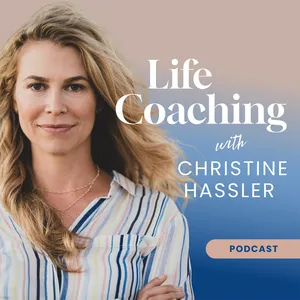
Free Daily Podcast Summary
Life Coaching with Christine Hassler: Daily Summaries Delivered
by Christine Hassler
Christine Hassler provides you with practical tools and spiritual principles to help you overcome whatever obstacles might be holding you back. Each episode, Christine coaches callers live on the air offering them inspiration and guidance to heal their past, change their present and create what they really want. Topics include: relationships, career, health, transitions, finances, life purpose, spirituality and whatever else callers have questions about. Christine coaches "regular people" on problems – and opportunities - we all face. It's a show that reminds you that you are not alone, while also teaching things you can implement in your own life.
Latest Episodes
The most recent episodes — sign up to get AI-powered summaries of each one.
- 5 days ago35 min
EP 555: When You Thought They Changed, but an Old Pattern Comes Back with Haley
What happens when someone you love finally seems to have changed—only for an old, painful pattern to suddenly come back? In this deeply relatable coaching session, Christine works with Haley, who grew up with a verbally and emotionally abusive father. After a period of having no relationship with him, the two spent the last five years rebuilding their connection. Haley began to genuinely enjoy being around her father and finally felt loved and supported by him. Then one painful conflict changed everything. After Haley stood up for her younger sister, she saw a side of her father she hadn't seen in years. Suddenly, she was transported back to the fear, hurt, and confusion she experienced as a child. The relationship she thought had changed no longer felt as safe or stable as she believed. Christine helps Haley explore the painful reality of what happens when someone shows signs of growth but reverts to old behaviors the moment we disagree, set a boundary, or stop behaving the way they want us to. Together, they explore narcissistic traits, emotionally abusive family dynamics, accountability, boundaries, grieving the parent you wanted, and the difference between someone's potential and the reality of what they're actually capable of relationally. For Haley, the deeper work may not be figuring out how to get her father to understand. It may be finding her own voice, trusting her inner authority, protecting her peace, and letting go of the hope that saying something perfectly will finally create the response she's always wanted. If you've ever rebuilt a relationship only to have an old pattern return, this conversation is a powerful reminder that the good moments don't necessarily have to be fake—but they also don't erase what happens when conflict, boundaries, or individuation enter the relationship. Press play to explore how accepting someone's limitations can help you stop fighting for their potential and start choosing your own peace. Consider / Ask Yourself Have you believed someone changed, only to see an old painful behavior suddenly return? Are you still hoping that if you explain yourself clearly enough, someone will finally understand your perspective? Did you learn as a child that staying quiet was the safest way to avoid conflict? Are you investing more energy in someone's potential than in the reality of how they consistently show up? What would choosing your own peace look like if the other person never takes accountability or apologizes? Key Insights and A-Ha's People can have genuinely good periods and still have limited capacity for healthy conflict and repair. One of the clearest tests of a relationship can be what happens when you disagree, say no, set a boundary, or stop organizing yourself around another person's emotional needs. When a child grows up around emotionally abusive or narcissistic traits, speaking up may feel unsafe even in adulthood. Trying harder to make someone understand you can repeat the childhood pattern of fighting for validation and approval. Healthy relational repair requires the capacity for responsibility, accountability, empathy, and apology. Understanding someone's limitations can help you manage your expectations and make more self-honoring choices. The "good" moments don't necessarily mean someone has fundamentally changed—and the painful moments don't necessarily mean every good moment was fake. Sometimes peace comes from accepting what a relationship actually is rather than continuing to fight for what you wish it could become. Potential isn't the same thing as reality. How to Deepen the Work Learn more about narcissistic traits and emotionally unhealthy relationship patterns so you can better understand what may—and may not—be possible in the relationship. Ask yourself whether you're speaking because it's important for your own integrity or because you're hoping to finally make the other person understand. If repair is necessary, consider what you can genuinely take responsibility for without apologizing for something that would feel like self-betrayal. Notice when you're tempted to overexplain, defend yourself, or prove your perspective. Grieve the idealized version of the parent or relationship you hoped you could have. Redirect energy away from trying to ch
- 1 weeks ago36 min
EP 554: When Everything Feels Hard and Nothing Feels Good with Jeni
What do you do when everything feels hard, nothing feels particularly good, and you no longer trust that the things you've always wanted are actually going to happen? In this deeply reflective coaching session, Christine works with Jeni, who has spent the last three years navigating an overwhelming season of loss and change. A relationship ended. A new relationship that made her feel truly seen also ended. The job she loved came to an end. Her beloved cat was diagnosed with cancer. Her friend group disappeared. And at the same time, hormonal changes and perimenopause made it harder to simply push through life the way she always had. But as Christine explores Jeni's story, it becomes clear that this feeling didn't begin three years ago. Underneath the recent losses is a much older belief: that who Jeni naturally is isn't quite good enough. Growing up, Jeni learned that love, approval, and connection often depended on behaving the "right" way. Over time, people-pleasing and self-judgment disconnected her from her own inner compass. When you're continually taught—directly or indirectly—that your preferences, feelings, or choices are wrong, it becomes difficult to trust yourself at all. Christine helps Jeni recognize that what feels like being stuck may actually be an invitation to reclaim herself. Rather than searching for another external solution, this season may be asking her to stop relating to herself the way she was related to as a child. And that doesn't require one enormous breakthrough. Healing can happen through tiny moments of awareness, compassion, self-acceptance, and choosing differently. Sometimes the biggest transformation begins with simply noticing the pattern instead of automatically believing it. If life has felt gray lately, if you've lost faith in what you once wanted, or if you're exhausted from trying to fix yourself, this episode offers a compassionate reminder that you don't have to figure everything out today. Press play to explore how small, consistent acts of self-trust and self-love can begin reconnecting you with the person you've always been underneath the protective patterns. Consider / Ask Yourself Does life feel harder or "grayer" than it used to? Did you grow up believing you needed to behave a certain way to receive love, approval, or acceptance? Do you struggle to trust your own desires, opinions, or decisions? Are you highly critical of yourself because you learned early that who you naturally were wasn't enough? Are you waiting for a massive breakthrough instead of acknowledging the smaller steps you're already taking? Key Insights and A-Ha's Major seasons of loss can reveal patterns and wounds that have been operating underneath the surface for years. People-pleasing can disconnect us from our own inner compass and make it difficult to know or trust what we truly want. When children don't feel fully accepted, they may conclude that something is wrong with them rather than recognizing the limitations of their caregivers. Constant self-judgment can develop from trying to figure out how to become "good enough" to receive love and validation. What feels like depression or emotional grayness can sometimes include years of repressed feelings and suppressed self-expression. Protective patterns may resist healing because familiar discomfort can feel safer than an unknown future. Healing doesn't require a dramatic breakthrough. Small moments of awareness and safety matter. Reparenting means choosing not to continue relating to yourself in the same ways you were related to as a child. Acceptance and forward movement can coexist: you can accept where you are while still committing to the next step. How to Deepen the Work Notice when you're criticizing yourself without immediately trying to stop the criticism. Begin simply with: "I'm criticizing myself right now." Once that awareness becomes easier, try adding: "I forgive myself for criticizing myself." Eventually, ask: "What else could I tell myself right now?" Write your own "parenting manual" for yourself. How do you want to respond when you're scared, triggered, disappointed, or judging yourself? When fear arises during deeper emotional work, consider whether the fear actually means "stop" or whether it's a protective part responding to something unfamiliar. Celebrate small moments when you stay present w
- 2 weeks ago35 min
EP 553: When Being Direct Isn't Getting You the Connection You Want with Gaby
What if you're saying exactly what you mean—but somehow you're still not getting the connection you want? In this insightful coaching session, Christine works with Gaby, a self-described direct communicator who has become increasingly disappointed by the way friends and family respond when she tries to address hurt feelings or problems in their relationships. After becoming a mother, Gaby found herself less willing to tolerate behaviors that didn't feel good to her. She began speaking up more clearly, expecting that honesty would open the door to deeper conversations and stronger relationships. Instead, many of the people closest to her seemed to retreat, become defensive, or avoid the conversation altogether. That leaves Gaby wondering: If I'm the common denominator, am I the problem? Christine offers a different perspective. Gaby's directness isn't necessarily the problem—but the order of her communication may be getting in the way of what she actually wants: connection. Together, they explore emotional validation, vulnerability, defensiveness, motherhood, inner child healing, and the difference between communicating what's true and communicating it in a way another person can actually receive. Christine introduces a simple but powerful framework: connection first. Connect before you correct. Connect before you ask. Connect before you collaborate. If you've ever thought, "But I'm just being honest," only to have someone become defensive or shut down, this conversation will help you understand why—and give you practical language for approaching difficult conversations differently. Press play to learn how adding vulnerability, curiosity, and connection to your directness can help you communicate your needs without abandoning your truth. Consider / Ask Yourself Do you pride yourself on being direct but often find that other people become defensive? When you're hurt, are you communicating because you want connection—or because you want the other person to understand what they did wrong? Did you grow up feeling emotionally validated, seen, and supported when someone hurt you? Are you offering solutions when the person in front of you may simply want to be heard? Are you asking the right people to meet your emotional needs—or going to the proverbial "Chinese restaurant when you want nachos"? Key Insights and A-Ha's Being direct doesn't automatically create connection. Sometimes what we want more than a solution is simply to feel seen. A lifetime of not feeling emotionally validated can make being understood feel especially important in adult relationships. Directness without enough vulnerability or curiosity can unintentionally activate defensiveness. The phrases "The story I'm making up in my head is..." and "What I'm making that mean is..." can help create personal responsibility while lowering another person's defensiveness. Connecting before correcting, asking, or collaborating can completely change the tone of a difficult conversation. Part of inner child healing is learning how to communicate as an adult in ways that make it more likely our needs will be met. Even excellent communication can't guarantee someone will meet you emotionally. Discernment about who is capable of giving you what you need still matters. How to Deepen the Work Before an important conversation, ask yourself: "How can I connect with this person first?" Experiment with replacing accusations or conclusions with curiosity: "The story I'm making up in my head is..." When someone shares a struggle with you, pause before offering a solution and consider whether they may simply need validation. Notice whether anger or hurt is leading your communication. Give those feelings a healthy place to be expressed before entering the conversation. Practice taking responsibility for your side of the communication without taking responsibility for the other person's response. Remember Christine's framework: connection first, connection first, connection first. Resources Mentioned in This Episode One-on-One Coaching with Christine Christine has opened a few additional spots in her private coaching practice for people who want individualized support, validation, and transformational coaching. Learn more and apply at: <p class="isSelectedEnd
- 3 weeks ago52 min
CC: Why Moms Are Chronically Stressed — and How to Stop Overfunctioning with Sarah Tacy
Sarah Tacy Tangredi is a nervous system specialist and somatic guide for moms who are done with burnout and overfunctioning. She helps clients move from urgency to choice, from survival patterns to deep self-trust, and into a more human pace where vitality, clarity, and mystery can coexist. Her work blends neuroscience, somatic healing, and sacred strategy to support women in reclaiming their wholeness. She's the creator of Resourced a 12 Week nervous system repatterning journey, and host of the Threshold Moments podcast, known for her grounded presence and ability to hold space for what's real, raw, and ready to rise. Sarah is an evolving mother, wife, and friend. She believes that the body is always speaking to us, and if we can create space and support on as many dimensions as possible, repair and transformation will unfold. Join her for a free online event on Sept 10th called "Opting Out of Urgency" that will help you move from chronic over-responsibility and rush to choice and ease. Register here: christinehassler.com/workshop
- 3 weeks ago29 min
EP 552: Allowing Yourself to Receive Support Without Feeling Guilty with Maryam
What if receiving love and support feels almost as uncomfortable as the pain you're already carrying? In this deeply compassionate coaching session, Christine works with Maryam, an Iranian woman living in Norway who is struggling with grief, fear, and guilt as she witnesses tremendous suffering in her homeland while her family remains in Iran. At the same time, Maryam has built a beautiful life with a loving husband who consistently shows up for her. He listens, comforts her, walks with her, and gives her space to grieve. Yet instead of simply receiving his support, Maryam often finds herself apologizing for needing it. Underneath that guilt is a powerful question: If people I love are suffering, is it okay for me to feel safe, supported, and loved? Christine helps Maryam explore how trauma can condition the nervous system to expect chaos and suffering—making safety and love feel unfamiliar when they finally arrive. Sometimes, without realizing it, we may even add guilt to positive experiences as a way of recalibrating back toward what feels familiar. Together, they explore collective grief, survivor's guilt, highly sensitive nervous systems, receiving in relationships, and the difference between compassionately witnessing suffering and believing you must suffer alongside someone in order to love them. If you've ever felt guilty for having something another person doesn't, struggled to receive help without apologizing, or believed that your own happiness somehow minimizes someone else's pain, this conversation offers a powerful invitation to choose differently. Press play to discover why your suffering doesn't relieve someone else's—and how allowing yourself to receive love may actually give you greater capacity to offer love in return. Consider / Ask Yourself Do you feel guilty receiving support when other people are struggling? Is it easier for you to care for others than to allow someone to care for you? Do you unconsciously believe that suffering alongside someone proves how much you love them? When something good enters your life, do you find yourself waiting for something bad to happen or creating additional worry? Can you allow yourself to experience safety and love even when suffering exists elsewhere? Key Insights and A-Ha's Compassion for another person's suffering doesn't require adding unnecessary suffering to your own life. Trauma can orient the nervous system toward chaos, making love, safety, and support feel unfamiliar. Guilt can become a way of limiting how much goodness we're willing to receive. Receiving support doesn't make you less compassionate, committed, or connected to the people you care about. Rejecting support can also prevent someone you love from experiencing the gift and purpose of supporting you. Your suffering does not automatically lessen someone else's suffering. Receiving love can expand your capacity to give love. Sometimes healing means allowing your nervous system to recalibrate to safety instead of continually tethering itself to pain. How to Deepen the Work When you notice yourself apologizing for needing support, try replacing "I'm sorry" with "Thank y
- Aug 22, 202648 min
CC: On our Knees with Regena Thomashauer
Regena Thomashauer — better known as Mama Gena — is a bestselling author, teacher, feminist icon, and founder of the School of Womanly Arts, which she started in her living room in 1998 and has since grown into a global movement. For more than three decades, Regena has helped women reconnect to the parts of themselves we've been taught to suppress — our bodies, our desires, our emotions, and our pleasure. At the heart of her work is the belief that pleasure is a form of power, and that when a woman is fully connected to herself and what she wants, it changes how she moves through every area of her life. She is the author of five books, including the New York Times bestseller Pussy: A Reclamation, and her work has reached hundreds of thousands of women around the world. Her teachings are an invitation for women to reclaim their feminine power, raise their standards, and live with more truth, turn-on, and freedom. Today we talk about her newest book: On Our Knees which offers a new map for navigating heartbreak, uncertainty, loss, and reinvention.
- Aug 19, 202635 min
EP 551: The Exhausting Drain of Feeling Responsible for Everyone You Love with Jessica
What happens when loving the people in your life starts to feel like being responsible for keeping everyone okay? In this deeply compassionate coaching session, Christine works with Jessica, who is navigating several major transitions at once: the end of a 10-year relationship with her best friend and business partner, building her own creative career, and watching her mother rapidly decline from Alzheimer's at a young age. As the oldest of four siblings, Jessica has spent much of her life carrying a strong sense of responsibility and loyalty toward the people she loves. When someone is hurting, her instinct is to step in, protect them, fix the problem, or even put her own life on hold to make sure they're okay. But that way of loving has become exhausting. Christine helps Jessica recognize the difference between holding space for someone and trying to protect them from pain. What Jessica has understood as love and compassion is sometimes an old survival pattern—one that tells her she can only feel safe when everyone around her is okay. Together, they explore over-responsibility, codependency, boundaries, grief, nervous system regulation, and the enormous amount of energy we can lose worrying about situations we simply cannot control. If you've ever been the strong one, the caretaker, the oldest daughter, the empath, or the person everyone depends on, this episode will help you recognize where love may have become tangled with worry, guilt, fear, and responsibility. Press play to discover how to love people deeply without carrying their pain—and how reclaiming that energy can help you finally have more capacity for your own life. Consider / Ask Yourself Do you feel responsible for making sure the people you love are okay? When someone you care about is suffering, do you immediately feel compelled to fix or rescue them? Have you confused worrying about someone with loving them? Are you spending so much energy managing other people's feelings that you have little left for your own needs? Can you allow someone you love to experience pain without believing it's your responsibility to make it better? Key Insights and A-Ha's Holding space for someone is not the same as protecting them from pain. Over-responsibility can become an identity and survival pattern, especially when it begins early in life. Love can become unconsciously paired with worry, caretaking, fear, and control. Worry can create the illusion that we're doing something when we're facing a situation we cannot control. Constantly putting yourself in someone else's shoes can cause you to carry suffering that may not actually be yours. When we focus primarily on other people's discomfort, we can lose touch with our own grief and needs. Trying to fix everything may provide short-term relief but can lead to long-term exhaustion and burnout. Healthy boundaries aren't about becoming cold or disconnected—they allow love and truth to exist together. How to Deepen the Work When you feel the urge to rescue someone, pause and notice what is happening in your body before taking action. Remind yourself: "Someone I love is going through something I cannot control." When an old caretaking pattern activates, meet it with compassion instead of criticizing yourself for falling into it again. Practice giving the people you love the dignity of experiencing and moving through their own feelings. Pay attention to the "energy leaks" created by worry, guilt, overthinking, and trying to control what isn't yours to control. Ask yourself what you need emotionally before automatically turning your attention toward everyone else. Resources Mentioned in This Episode One-on-One Coaching with Christine Christine has opened additional space in her calendar for private one-on-one coaching. She shares her continued passion for individualized coaching and supporting people through major transitions, healing, and personal growth. Learn more about Christine's process and apply at: christinehassler.com/coaching Featured Sponsor: Peluva Barefoot Shoes Christine shares more about Peluva, a five-toe minimalist shoe featuring five-toe articulation, allowing each toe to move independently and supporting more natural foot movement while walking or running. <p class
- Aug 12, 202632 min
EP 550: Grieving the Father You Wanted While Caring for the One You Have with Kelli
How do you care for an aging parent who never gave you what you needed as a child? In this deeply relatable coaching session, Christine works with Kelli, whose elderly father is beginning to show signs of aging and short-term memory changes. As the firstborn daughter and the only medical professional in her family, Kelli feels much of the responsibility for preparing for what may come next. But underneath the practical concerns is something much more complicated: grief for the father-daughter relationship she never had. Family members have told Kelli that she can seem "cold" toward her father. Yet Christine offers another perspective—what looks like coldness may actually be protection. After years of disappointment, lack of accountability, and feeling emotionally unseen, Kelli learned that keeping her heart guarded was safer than continuing to hope her father would become the dad she needed. Together, Christine and Kelli explore the father wound, caregiving, boundaries, resentment, grief, and how our relationships with our parents can influence the partners we choose and our ability to receive healthy love. Christine encourages Kelli to find the "both/and": she doesn't have to pretend everything is okay or abandon the boundaries she's worked hard to create. But she can also ask herself how she wants to show up in the relationship now so that, when her father is gone, she can experience grief without guilt. If you've ever struggled with an aging parent, felt guilty about keeping emotional distance from a family member, or wondered how your relationship with your father may be affecting your romantic relationships, this conversation will resonate deeply. Press play to discover how you can honor your hurt, maintain your boundaries, and still choose truth and love in the relationships that matter most. Consider / Ask Yourself Are you grieving the relationship you wish you could have had with one of your parents? Have others interpreted your emotional protection as being "cold" or distant? Are you caring for an aging parent while carrying unresolved hurt from childhood? How might your relationship with your father be influencing the way you relate to men or romantic partners? What would it look like to experience grief without guilt? Key Insights and A-Ha's What looks like emotional coldness may actually be a protective response to years of hurt and disappointment. You can accept who a parent is without pretending they gave you everything you needed. Healthy boundaries and love can coexist. Father wounds can influence worthiness, trust, vulnerability, and our relationships with men. We may unconsciously seek partners who give us what we didn't receive from our parents. Asking for help and delegating family responsibilities can prevent resentment and challenge the belief that everything falls on you. Self-love, truth, and authenticity can ultimately become stronger protection than emotional walls. How to Deepen the Work Ask yourself how you genuinely want to show up with an aging parent—not from guilt or obligation, but from your own values. Notice when hurt or protective patterns are leading your interactions and consider whether there's an authentic middle ground. Practice reminding your younger self that a parent's emotional limitations reflect their capacity, not your worth or lovability. Allow yourself to grieve the parent-child relationship you wanted without forcing the relationship you actually have to become something it isn't. Ask family members for help rather than automatically carrying the emotional and practical responsibility yourself. Resources Mentioned in This Episode Be the Queen Christine and Stef are opening the next live cohort of Be the Queen in October, focused on helping women call in healthy, aligned partnership. Join the waitlist for early access and the early-bird discount at: christinehassler.com/queen One-on-One Coaching with Christine Christine has opened additional spots in her private coaching roster and is focusing more deeply on personalized, one-on-one transformational work. Learn more and apply at: <p class="is
Get Life Coaching with Christine Hassler summaries in your inbox
Free AI-powered daily recaps. Key takeaways, quotes, and mentions — in a 5-minute read.
Get Free Summaries →Free forever for up to 3 podcasts. No credit card required.
You Might Also Like
Listeners also like.

The Rachel Hollis Podcast
A self-help podcast blending personal growth advice, humor, and real-life stories to help listeners build a fulfilling life.

Working Hard with Grace Beverley
Conversations with diverse achievers reveal raw insights on redefining success, balancing ambition, and learning from failure.
The Balanced, Beautiful and Abundant Show - Rebecca Whitman
A coach helps high-achieving women overcome burnout using a framework centered on spiritual, emotional, physical, and financial well-being.

Achievers Therapy
Spiritual wisdom and motivational messages to inspire personal growth and purposeful living through faith.

The Jamie Kern Lima Show
Jamie Kern Lima discusses self-belief, personal growth, and her journey from struggling waitress to entrepreneur.

Everything Happens with Kate Bowler
A professor explores life, suffering, and resilience through conversations with thoughtful and humorous guests.

Being Well with Forrest Hanson and Dr. Rick Hanson
Explores the science of lasting well-being through psychology, neuroscience, and mindfulness with expert guests.

Good Life Project
Explores meaningful living through conversations with experts in science, culture, and the arts.

Therapy and Theology
A Christian therapist, a theologian, and a ministry leader discuss emotional healing and faith through conversational episodes.

The Bossticks
Unfiltered conversations with top leaders, entrepreneurs, and experts offering actionable advice for personal growth.

Passion Struck with John R. Miles
Explores purpose, resilience, and connection through science-backed conversations with experts in psychology, neuroscience, and performance.

Good Inside with Dr. Becky
A clinical psychologist provides practical guidance for handling common parenting challenges and improving parent-child relationships.
About Life Coaching with Christine Hassler
Christine Hassler provides you with practical tools and spiritual principles to help you overcome whatever obstacles might be holding you back. Each episode, Christine coaches callers live on the air offering them inspiration and guidance to heal their past, change their present and create what they really want. Topics include: relationships, career, health, transitions, finances, life purpose, spirituality and whatever else callers have questions about. Christine coaches "regular people" on problems – and opportunities - we all face. It's a show that reminds you that you are not alone, while also teaching things you can implement in your own life.
Customized Recaps
AI-powered recaps with compact key takeaways, quotes, and insights.
Straight to Your Inbox
Get key takeaways from Life Coaching with Christine Hassler in a 5-minute read.
Save Hours Every Week
Stay current on your favorite podcasts without falling behind.
Frequently Asked Questions
What is Podzilla's Life Coaching with Christine Hassler daily summary?
It's a free AI-powered email that summarizes new episodes of Life Coaching with Christine Hassler as soon as they're published. You get the key takeaways, notable quotes, and links & mentions — all in a quick read.
How does the Life Coaching with Christine Hassler podcast summary work?
When a new episode drops, our AI transcribes and analyzes it, then generates a personalized summary tailored to your interests and profession. It's delivered to your inbox every morning.
Is this an official Life Coaching with Christine Hassler product?
No. Podzilla is an independent service that summarizes publicly available podcast content. We're not affiliated with or endorsed by Christine Hassler.
Can I get summaries of other podcasts too?
Absolutely! The free plan covers up to 3 podcasts. Upgrade to Pro for 15, or Premium for 50. Browse our full catalog at /podcasts.
How often does Life Coaching with Christine Hassler release new episodes?
Life Coaching with Christine Hassler publishes weekly. Our AI generates a summary within hours of each new episode.
What topics does Life Coaching with Christine Hassler cover?
Life Coaching with Christine Hassler covers topics including Education, Fitness, Health & Fitness, Mental Health, Self-Improvement. Our AI identifies the specific themes in each episode and highlights what matters most to you.
Start getting Life Coaching with Christine Hassler summaries tomorrow morning.
Free forever for up to 3 podcasts. No credit card required.
Free forever for up to 3 podcasts. No credit card required.