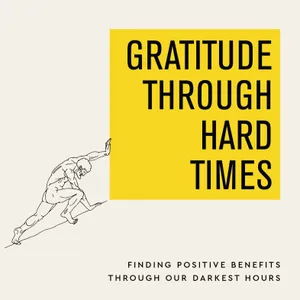
Free Daily Podcast Summary
Gratitude Through Hard Times: Daily Summaries Delivered
by Chris Schembra
Chris Schembra is a dinner host, question asker, and facilitator. He's a columnist at Rolling Stone magazine, USA Today calls him their "Gratitude Guru" and he's spent the last nine years traveling around the world helping people connect in meaningful ways. As the offshoot of his #1 Wall Street Journal Bestselling book, Gratitude Through Hard Times, he uses this podcast to blend ancient stoic philosophy and modern day science to teach how the principles of gratitude can be used to help people get through their hard times. By finding the positive benefits from negative situations, and giving gratitude to them, listeners can develop the resilience and optimism needed to get through further trying times. Having used these principles to spark over 500,000 relationships through his workshops and his experiences, this podcast now aims to educate listeners across the world.
Latest Episodes
The most recent episodes — sign up to get AI-powered summaries of each one.
- 2 days ago49 min
Kevin Jones: High Tech & High Touch
"Living a life of gratitude eliminates entitlement and eliminates so many obstacles to success." — Kevin JonesIn a world obsessed with digital efficiency and quick fixes, the real currency of a meaningful life remains independent thought, presence, and intentional effort.In this special 299th episode of Gratitude Through Hard Times, host Chris Schembra sits down with Kevin Jones, founder and CEO of Celero Commerce. Kevin reflects on building Celero into a top-10 non-bank payments processor, steering through black swan market events, and combining high-tech platform innovation with high-touch human connection. He breaks down why respect and humility are essential cornerstones of leadership, how genuine followership makes better leaders, and why holding low ego allows teams to achieve extraordinary scale together.10 Memorable Quotes:"Living a life of gratitude eliminates entitlement and eliminates so many obstacles to success." — Kevin Jones"You cannot be a good leader if you're not a good follower. Followership is something everybody should spend a little time on." — Kevin Jones"Respect and humility are cornerstones... if you remain respectful and humble, you can solve incredibly difficult problems with people who have different backgrounds and beliefs." — Kevin Jones"Your job as a leader is really to facilitate outcomes, not dictate them." — Kevin Jones"For every five years, expect at least one black swan. As part of being a good leader, you need to hone your skills at managing through it." — Kevin Jones"Real currency in a meaningful life remains independent thought, presence, and intentional effort." — Chris Schembra"When you take on a challenge, you burn your ships and go chase that challenge. You don't have one foot in and one foot out." — Kevin Jones"It's okay for leaders to allow themselves to be vulnerable and have some fun with their teams." — Kevin Jones"Fear and gratitude cannot coexist." — Chris Schembra"Gratitude doesn't change your circumstances; it changes your capacity to carry them." — Chris Schembra 10 Key Takeaways:High-Tech Meets High-Touch: Balancing cutting-edge fintech payment integrations with deep, relationship-driven partner care to build sustainable competitive advantage.The Power of Respect & Humility: Eradicating entitlement in business culture by focusing on merit, continuous learning, and mutual respect across diverse perspectives.Practicing Genuine "Followership": Understanding that effective executives must first know how to align with, support, and execute under other strong leaders.Navigating "Black Swan" Market Events: Developing leadership muscle to maintain composure, protect employee families, and protect investor trust through unexpected macroeconomic downturns.Leading with Love over Machiavellian Fear: Shifting away from rigid top-down authority to collaborative environments built on trust, psychological safety, and productive dissent.Granting Permission to Pause: Recognizing that while M&A transitions and high-growth phases demand intense sprinting, leaders must proactively grant teams permission to rest and recharge.Managing the "Silence Tax": Encouraging open dissent and diverse voices within leadership teams to avoid costly, unexamined strategic missteps.Surrounding Yourself with Superior Talent: Maintaining low ego by hiring specialists who are smarter in their respective operational domains than the CEO.Carrying the Invisible Weight of Responsibility: Acknowledging the heavy, unsaid burden leaders carry to safeguard the livelihoods of employees, families, and pension investors.Anchoring Strength in Personal Relationships: Recognizing how unshakeable support from family and partners builds the confidence required to take bold entrepreneurial risks. About our Guest:Kevin G. Jones is the founder and Chief Executive Officer of Celero Commerce, a top-10 non-bank payment processor and one of the fastest-growing financial services companies headquartered in Tennessee. Founded in late 2018, Celero combines business management software, data analytics, and modern payment solutions to serve over 50,000 small-to-midsized American businesses through financial institution partnerships, software integrations, and direct merchant strategies. Under Kevin’s leadership, Celero executed 12 strategic acquisitions alongside organic growth, culminating in its acquisition by Deluxe Corporation.Leveraging over two decades of fintech experience, Kevin began his car
- 1 weeks ago45 min
James Farrin: Ordinary Heroes
"When you're in need, you realize you need help. And when you're successful, you realize you got help all along." — James FarrinIn a world obsessed with digital efficiency and quick fixes, the real currency of a meaningful life remains independent thought, presence, and intentional effort.In this episode of Gratitude Through Hard Times, host Chris Schembra sits down with James "Jim" Farrin, founder, President, and CEO of the Law Offices of James Scott Farrin. Jim reflects on growing up across 10 countries in 17 years, applying rigorous business principles to plaintiff representation, and taking on one of the largest civil rights litigations in U.S. history. He breaks down why authentic leadership requires intentional culture, why high metrics can distort purpose, and how focusing on service frees leaders from personal despair.10 Memorable Quotes:"When you're in need, you realize you need help. And when you're successful, you realize you got help all along." — James Farrin"In a time of despair, turning attention outwards and focusing on the people you serve sets you free and gets you out of your own head." — James Farrin"Culture is either defined intentionally by leadership or by the strongest personality in the room." — James Farrin"Real currency in a meaningful life remains independent thought, presence, and intentional effort." — Chris Schembra"When a measure becomes a target, it ceases to be a good measure." — Chris Schembra (referencing Goodhart's Law)"No man is an island. We need people, we've always needed people, and we need them more than ever." — James Farrin"Our clients aren't superheroes—they're ordinary people who overcome adversity through faith, perseverance, and getting the right help." — James Farrin"In a world of everlasting change, find the constants and savor the constancy around you." — Chris Schembra"We must step out of the tyranny of the 'or' and into the genius of the 'and'." — Chris Schembra (quoting Jim Collins)"Gratitude doesn't change your circumstances; it changes your capacity to carry them." — Chris Schembra10 Key Takeaways:Navigating Constant Transition: Lessons from living across 10 countries in 17 years on leaning into family constants, building adaptability, and trusting that new chapters always work out.Turning Despair Into Empathy: How refocusing on the suffering of marginalized clients during high-stakes civil rights litigation removed personal worry and provided purpose.Building Culture via "The JSF Way": Translating abstract corporate values into 24 concrete, daily behaviors that are actively practiced, evaluated, and reinforced firm-wide.Establishing a "South Star": Defining explicitly what an organization will not tolerate—such as greed, lack of accountability, self-centeredness, and "being a jerk".Avoiding Goodhart's Law in Business Growth: Recognizing when aggressive numerical growth targets (like 15% annual growth) risk outkicking quality, and shifting focus back to client-centric meaning.The Power of Confident Humility: Drawing inspiration from military leaders and achieving high-level legal success while maintaining unpretentious humility and honoring team contributions.Resisting Digital & AI Isolation: Preserving human-to-human empathy and direct client relationships instead of outsourcing core human care to automated chatbots and scripts.Fire Bullets, Then Cannonballs: Testing small strategic initiatives before making multi-million dollar or firm-wide commitments.Finding Modern Heroism in Ordinary People: Celebrating everyday perseverance, vulnerability, and resilience over performative social media achievements.Sustaining Unsaid Gratitude: Creating regular operational space to acknowledge the mentors, family members, and team members who make collective success possible.About our Guest:James "Jim" Scott Farrin is the founder, President, and CEO of the Law Offices of James Scott Farrin, one of the largest plaintiff's firms in the Carolinas. Since opening his doors in Durham, North Carolina in September 1997, Jim has grown the firm to more than 60 attorneys serving clients across North and South Carolina, recovering over $2 billion in compensation for more than 78,000 injured people. His practice areas include personal injury, workers' compensation, Social Security disability, and civil rights litigation, and he is best known in the legal community for applying rigorous business principles to the practice of law itself, an approach that has been the subject of guest lectur
- 2 weeks ago50 min
Kathryn Jezer-Morton: Backstage Integrity
"We don't really think as much about who we are when no one's watching... that's where a lot of integrity comes from, and it's where we learn to enjoy our lives." — Kathryn Jezer-MortonIn a world obsessed with digital efficiency and quick fixes, the real currency of a meaningful life remains independent thought, presence, and intentional effort.In this episode of Gratitude Through Hard Times, host Chris Schembra sits down with Kathryn Jezer-Morton, sociologist, columnist at The Cut, and author of The Story of Your Life: How Social Media Shapes the Way We Experience Everything. Kathryn breaks down the concept of "friction maxing"—reintroducing positive friction into our lives to counteract frictionless, algorithm-driven efficiency. She explores how social media platforms have transformed everyday experiences into performative brand management and why reclaiming nuanced, "flat" stories can restore authentic human connection.10 Memorable Quotes:"We don't really think as much about who we are when no one's watching... that's where a lot of integrity comes from, and it's where we learn to enjoy our lives." — Kathryn Jezer-Morton"Humanity itself is never going to be simple. It's never going to be linear." — Kathryn Jezer-Morton"The purpose of a flat story is to provide an honest accounting of what real life is like." — Kathryn Jezer-Morton"Real currency in a meaningful life remains independent thought, presence, and intentional effort." — Chris Schembra"When a metric becomes a measure, it ceases to become a good measure." — Chris Schembra (referencing Goodhart's Law)"Friction maxing is about inviting the unknown into your life and having to react to it." — Kathryn Jezer-Morton"To take a photograph of something is to appropriate the thing being photographed." — Chris Schembra (quoting Susan Sontag)"We have come to see ordinary stories as boring because we are so used to crazy up-and-down peaks and valleys." — Kathryn Jezer-Morton"Unjudgmental listening gives people the confidence to become better storytellers." — Kathryn Jezer-Morton"Gratitude doesn't change your circumstances; it changes your capacity to carry them." — Chris Schembra10 Key Takeaways:Understanding "Friction Maxing": Embracing intentional, offline friction to counter hyper-optimized digital culture and restore real meaning to personal relationships.The Strength of Weak Ties on Social Media: How digital platforms leverage loose acquaintances to pass social information, while strong ties remain essential for deep emotional resilience.Moving Beyond the "Man in the Hole" Formula: Rejecting performative, dopamine-driven comeback narratives in favor of "flat stories" that capture the realistic, everyday plateaus of human life.The Rise of "Brand Called You": Examining how ordinary social media users inadvertently communicate like corporate brands, curating a polished, risk-averse front stage.Developing "Backstage Integrity": Cultivating personal experiences, private habits, and self-worth when cameras and social media audiences aren't watching.Escaping "Airspace" and Homogenized Experiences: Resisting standardized, Instagram-curated travel aesthetics in order to invite unpredictable, authentic cultural discovery.The Trap of Dual Experiences: Recognizing how document-first culture forces people to experience life twice—first living the moment, then packaging it for public consumption.Communal Storytelling Roots: Drawing lessons from intentional communities and hippy communes on how shared stories hold groups together without commercial incentives.Building Critical Media Literacy: Developing a "skeleton key" to understand algorithmic behavior and view performative social media posting with greater empathy rather than judgment.Unjudgmental Listening as Mentorship: How safe, non-evaluative spaces provided by mentors and family allow individuals to explore complex personal narratives.About our Guest:Kathryn Jezer-Morton is a journalist and sociologist whose work sits at the intersection of family life, identity, and digital culture. She is the author of "Brooding," the biweekly column at New York Magazine's The Cut, where she reports on modern family life and the invisible ways social platforms shape it. Her debut book, The Story of Your Life: How Social Media Shapes the Way We Experience Everything (Penguin Random House, August 2026), examines how algorithm-driven platforms have quietly rewritten not just how we share our lives, but which lives we
- 3 weeks ago45 min
Nishat Mehta: Confident Humility
"When something becomes a measurement, it stops becoming a good target." In a world obsessed with digital efficiency and quick fixes, the real currency of a meaningful life remains independent thought, presence, and intentional effort. In this episode of Gratitude Through Hard Times, host Chris Schembra sits down with Nishat Mehta, CEO of Lexitas. A Harvard-trained mathematician and computer scientist turned executive, Nishat breaks down how leaders can navigate rapid change by embracing dialectical thinking—holding two seemingly competing truths at the same time. From balancing bottom-line performance with human empathy to shifting parenting styles as children grow, Nishat shares key insights on Goodhart's Law, confident humility, and finding extraordinary meaning in ordinary moments. 10 Memorable Quotes: "The new normal is that it will just keep changing. It really comes down to the ability to accept the change yourself and then lead the change amongst those around you." — Nishat Mehta "Confident humility balances high confidence in one's ability to figure things out with low ego regarding one's own current knowledge." — Chris Schembra "When something becomes a measurement, it stops becoming a good target." — Nishat Mehta "Always find the extraordinary in the ordinary." — Chris Schembra "Everything is on a spectrum... the edges of the spectrum are rarely the right answer." — Nishat Mehta "Efficiency increases consumption if you're not careful." — Chris Schembra "The journey is far more important than the destination... if we are constantly changing, it's because we are succeeding at the things we needed to do before." — Nishat Mehta "We must step out of the tyranny of the 'or' and into the genius of the 'and'." — Chris Schembra "Great work is something you're supposed to do, but recognizing what might seem ordinary is worthy of extraordinary gratitude." — Nishat Mehta "Gratitude doesn't change your circumstances; it changes your capacity to carry them." — Chris Schembra 10 Key Takeaways: Practicing Confident Humility: Balancing low ego regarding current knowledge with high confidence in a team's adaptability to solve complex, unfamiliar problems. Overcoming Goodhart's Law: Why single metrics distort business outcomes, and how pairing competing targets (like quantity vs. quality) maintains operational integrity. The "Genius of the 'And'": Replacing rigid "either/or" tradeoffs with dialectical thinking that unites radical acceptance with proactive change. Navigating Shifts in Family & Parenting: Transitioning from physical, hands-on care for young children to emotional, social mentorship as they grow into independence. Understanding Jevons Paradox in Modern Work: Recognizing how efficiency gains from AI can be swallowed by routine busyness unless leaders intentionally safeguard time for human connection. Harnessing "Collective Effervescence": Leveraging physical experiences, shared sports, and community gatherings to foster genuine human harmony and connection. Lowering Barriers to Access Justice: Applying technology and low-level AI guidance to make legal support more affordable, equitable, and fair. Change Management as a Core Leadership Skill: Shifting focus from day-to-day tactical execution toward building organizational consensus and motivating teams through continuous evolution. Finding Extraordinary Meaning in Ordinary Moments: Cultivating daily awareness to appreciate quiet family routines and ordinary acts of care that are often taken for granted. Embracing the Business Journey Over Destinations: Accepting that strategic goals evolve naturally as progress is made, making the growth process the ultimate measure of success. About our Guest: Nishat Mehta is the Chief Executive Officer of Lexitas, a leading national provider of technology-enabled litigation services and an Apax portfolio company based in Houston, Texas. He stepped into the CEO seat on January 1, 2025, having originally joined the company as President and Chief Operating Officer in March 2024. Under his leadership, Lexitas is launching AI-enabled deposition analysis, expanding its eLaw case-tracking platform, and continuing to serve law firms, insurance companies, and corporations across all 50 states. Nishat brings more than two decades of leadership across data, analytics, and enterprise technology. He most recently served as President of Global Products and Solutions and Chief Product Officer at Circana (formed from the merger of IRI and The NPD Group), where he ran the f
- Aug 19, 202656 min
Ayla Nova: Yoga Nidra
"Work-life balance isn't a thing... it's about work-life harmony." In a world obsessed with digital efficiency and quick fixes, the real currency of a meaningful life remains independent thought, presence, and intentional effort. In this episode of Gratitude Through Hard Times, host Chris Schembra sits down with Ayla Nova, founder of Yoga Nidra & Beyond and creator of The Peace in Rest Program. From navigating life-altering health crises and traumatic brain injuries to guiding listeners worldwide toward restorative sleep and mental clarity, Ayla breaks down the science, psychology, and spiritual practice of non-sleep deep rest (NSDR). She shares key lessons on managing internal tension, unlearning limiting beliefs, and using intentional stillness to unlock human intuition and creative genius. 10 Memorable Quotes: "Surrender to something bigger than yourself, lean into discipline to do positive work for our world, and you'll have the power to make the world a better place tomorrow." — Chris Schembra "Discipline is a ring on the door... when you show up for yourself in that way, then the opportunities start knocking." — Ayla Nova "We get so busy in the doing that we forget that the answer is being." — Ayla Nova "Yoga Nidra is true surrender, but it's also a practice for integrating your reality so that you can bring it out into the world when you're complete." — Ayla Nova "The present moment is flawless." — Ayla Nova "When you're being honest with yourself, where do you feel the tension in your body? And what would be the opposite of that experience?" — Ayla Nova "If AI helps you stand and run fast, and meditation helps you sit with your thoughts, Yoga Nidra is done laying down on the floor." — Chris Schembra "A leader's act of self-care means to be regulated from a capacity standpoint yourself so that then you can pour that capacity positively into others." — Chris Schembra "Learning is not differentiated... the hard thing that requires discipline is the unlearning part that comes from surrender." — Chris Schembra "Gratitude doesn't change your circumstances; it changes your capacity to carry them." — Chris Schembra 10 Key Takeaways: The Healing Power of Non-Sleep Deep Rest (NSDR): How Ayla used Yoga Nidra to heal and rebuild her life through severe health crises, loss of mobility, and a traumatic brain injury. Navigating the Tension of Opposites: Learning to hold space for contrasting internal states—such as uncertainty and trust—to discover a grounded middle path. Unlocking Intuition over Artificial Logic: Accessing Vijnanamaya Kosha (the inner wisdom body) through intentional rest to make creative decisions from intuition rather than forced analytical logic. Shifting from Reactive to Responsive Leadership: Regulating the nervous system to cultivate essential leadership traits: discernment, patience, clarity, and acceptance. Broadening the Cognitive Periphery: Stepping back from narrow, task-oriented focus to view broader data points, connect disparate ideas, and make wiser long-term strategic choices. The Metaphor of the Ground and Surrender: Using Savasana (corpse pose) to quiet the ego, let go of performative busyness, and reconnect with fundamental human truth. Reallocating Time with "Einstein Time": Overcoming the illusion of calendar scarcity by being fully present in current moments, effectively creating expansive time elsewhere. Integrative Mental Health Practices: Moving beyond passive escapism and digital input to engage in conscious rest that processes stored emotional tension. The Power of "Unlearning": Recognizing that modern growth requires unlearning old mental models through stillness before relearning new frameworks. Daily Discipline as Self-Trust: Embracing consistency and structured self-care routines to build deep internal trust and model integrity for others. About our Guest: Ayla Nova is a trauma-informed Yoga Nidra guide, teacher trainer, and the founder of Yoga Nidra & Beyond, a global platform for Non-Sleep Deep Rest (NSDR) that reaches listeners each week through her podcast, YouTube channel, and the Nova Nidra Community. Her work centers on the conviction that awareness is the key to remapping the mind and that deep rest is the doorway to nervous-system regulation, emotional healing, and radical self-acceptance. Through her signature Peace in Rest Program and 2026 Teacher Training, she certifies the next generation of Yoga Nidra guides. Ayla began her yoga journey in 2011 and earned her 200-hour yoga teacher certification in 2015 at Shri
- Aug 13, 202647 min
Nicolas Peluffo : Disconnecting into Awe
In a hyper-connected world filled with constant noise, notifications, and performance, we often travel just to capture the photo rather than live the moment. But what happens when true luxury isn't about being seen—it's about the privilege of disappearing? In this profound episode, Chris Schembra sits down with Nicolas Peluffo, CEO of Awasi Lodges. With over two decades of experience across hospitality, real estate, and finance, Nicolas explores how Awasi’s carbon-neutral, Relais & Châteaux lodges in South America—from Patagonia and the Atacama Desert to Iguazú and Santa Catarina—provide the setting for guests to disconnect, surrender control, and reconnect with intrinsic human awe. Together, they discuss why time and space are the ultimate modern luxuries, how unscripted nature lowers cortisol and restores genius-level creativity, why hiring for attitude over aptitude is the secret to true hospitality, and how surrendering to the present moment unlocks our deepest clarity. 10 Memorable Quotes "You come to experience something unique, right? To be in awe. And that's the reason that makes you get there." — Nicolas Peluffo "A normal hospitality company says, 'We're your home away from home.' The way we approach it is: this is your best friend's home." — Nicolas Peluffo "We're hit by way too many distractions—noise, people, email, text... that makes it increasingly difficult for anyone to be human." — Nicolas Peluffo "We all need that connection with nature. We all need that disconnection from the noise and the things that are unimportant." — Nicolas Peluffo "We're not built to be in a seat, on a sofa, definitely not in a shopping mall." — Nicolas Peluffo "When looking for attitude versus aptitude, attitude always prevails. It's very difficult to teach someone to smile, but it's pretty easy to teach someone to use Excel." — Nicolas Peluffo "Smile, not because you were told to smile. Smile because this is what you were meant to do." — Nicolas Peluffo "Hospitality is unlike any other customer experience. I don't think any other business has the same level of vulnerability and surrender both ways." — Nicolas Peluffo "Surrendering for me is letting go of all those constraints that the world told us—that we need to be better, faster, cheaper." — Nicolas Peluffo "Forcing things into existence is not the best way of going about things... Flow happens when you surrender." — Nicolas Peluffo 10 Key Takeaways The Privilege of Disappearing: In an overstimulated society, true well-being comes from reaching places where you can become unreachable and step away from constant noise. Hyper-Customized Hospitality: Exceptional experiences are built around individual human pacing ("your pace, your space") with dedicated guides and private vehicles rather than rigid group itineraries. Space for Cognitive Genius: Slowing down in nature allows the brain to process internal insights, creating the mental space needed for breakthrough creativity and innovation. The Neurobiology of Awe: Immersing oneself in vast natural landscapes reduces cortisol, lowers inflammation, and shifts focus away from big egos toward prosocial connection. Unstaged and Unscripted Moments: Authentic human experiences cannot be transactional or manufactured; they flourish in unscripted interactions with nature and local cultures. Hiring for Heart and Energy: True hospitality cannot be scripted; organizations must hire people with an innate inclination to serve, prioritize attitude over skills, and cultivate genuine presence. The Power of the Smile: Emotional energy is transmitted instantly—even through a phone call—making authentic warmth and positive energy essential for meaningful human connection. The Vulnerability of Hospitality: Creating transformative experiences requires mutual trust and vulnerability between host and guest as people share meals, stories, and life moments. Surrender Before Power: Letting go of the need to control every outcome opens up flow, presence, and deeper alignment both in leadership and in personal life. Living Intrinsically vs. Extrinsically: Shifting from external validation (like social media approval) to intrinsic presence transforms a brief transaction into a lifelong memory. About Our Guest Nicolas Peluffo is the Chief Executive Officer of Awasi Lodges, a collection of carbon-neutral luxury lodges and Relais & C
- Aug 7, 202653 min
Janet Grondin : Reaching the High Ground
We often think of groundbreaking innovation in terms of technology, spreadsheets, and complex engineering. But what happens when humanity's most ambitious moonshots—literally reaching for the stars and returning to the moon—depend entirely on the subtle, daily interactions of human connection and moral courage? In this powerful episode, Chris Schembra sits down with Janet Grondin, CEO of Stellar Solutions and former U.S. Air Force Colonel. Janet shares her journey from a small town in Iowa to directing teams of top engineers and advisors on humanity’s most critical space and defense missions, including NASA's Artemis program. Together, they explore the tragedy that shaped her childhood, how to lead with moral courage through delayed gratification, why true leadership means helping every employee find their "dream job," and why human vision—not AI—will always be the ultimate driver of high-ground innovation. 10 Memorable Quotes "You won't survive in our business if you don't work hard and have a solid ethical foundation." — Janet Grondin "When you do see someone who could use a hand, reach out and take action. Don't walk by that problem." — Janet Grondin "For you to operate maritime, terrestrial forces, really hold your nation secure, you do need the high ground of space." — Janet Grondin "Processes don't build systems. Paper doesn't build systems... People build systems. People have visions." — Janet Grondin "Very subtle, small human interactions can have outsized impact on the mission." — Janet Grondin "If leadership is lonely, you’re doing it wrong." — Janet Grondin "Mission success is paramount. People are paramount." — Janet Grondin "The connection is through the question, and then you have to be ready for the answer because it's not always the answer you want." — Janet Grondin "AI is not going to put those together and go, 'Hey, we should build a spaceship... to create diamonds and silicon.' Humans do that." — Janet Grondin "The work is done by people. And without people, I don't care what you're building, you're not gonna build much without people." — Janet Grondin 10 Key Takeaways The Ethical Foundation: High-stakes leadership requires an unshakeable ethical foundation and a commitment to leaving every environment better than you found it. Taking Action over Bystander Mindset: Real leadership means taking immediate action when you spot someone in need or identify a flaw in a critical system. The High Ground Advantage: Long-term security, communication, and economic innovation depend on securing and developing the "high ground" of low Earth orbit and lunar bases. Humans Build Systems, Not Spreadsheets: Technology and processes are just tools; the human connection between designers, builders, and leaders is the true "secret sauce" of complex mission success. Psychological Safety in Engineering: High-performing cultures require enough trust and moral courage for team members to raise flags when something isn't right without fear of dismissal. The "Dream Job" Culture: Regularly asking employees "Are you in your dream job?" builds deep alignment and ensures the company evolves in the direction of its people. Combating Productivity Paradoxes: Instead of letting efficiency gains get swallowed by routine administrative busywork, leaders must intentionally protect space for collaboration and connection. Intentional Community Building: Distributed and remote teams require intentional, high-touch connection points, from monthly one-on-ones to biannual retreats and collaborative strategy sessions. Human Vision vs. AI Execution: While AI excels at data sifting and routine tasks, original genius, cross-domain breakthroughs, and visionary courage remain uniquely human. Redefining Impact and Boundaries: True growth comes from recognizing you are a small, vital part of something much bigger than yourself—and expanding your sights beyond terrestrial boundaries. About Our Guest Janet Grondin is the Chief Executive Officer of Stellar Solutions, Inc., a woman-owned aerospace engineering services firm and Malcolm Baldrige Award winner serving intelligence, defense, civil, commercial, and international customers. Janet’s career spans three decades across the U.S. Air Force—where she retired as a Colonel—Fortune 500 defense contractor Northrop Grumman, and now Stellar Solutions. Winner of the 2022 Women in Aerospace Lead
- Aug 4, 202641 min
Human Leadership with Paul Mersino
"Work-life balance isn't a thing... it's about work-life harmony." In a world obsessed with digital efficiency and quick fixes, the real currency of a meaningful life remains independent thought, presence, and intentional effort. In this episode of Gratitude Through Hard Times, Paul Mersino, President and CEO of Butzel, breaks down why true leadership requires excellence, mentorship, and continuous improvement. From starting as a young student guided by a transformative professor to steering a historic law firm as it approaches its 175th anniversary, Paul shares key lessons on leading with heart, embracing work-life harmony, and surrounding yourself with a team that pushes you to aggregate daily marginal gains. 10 Memorable Quotes: "If you could do everything just 1% better... and you aggregate up all of those little marginal gains, think of how much further you're going to be ahead." "You are who you are when nobody is watching. And that's integrity." "Iron sharpens iron, and steel sharpens steel." "If people turned off cable news and social media and looked next door at their neighbors, they'd realize the world is actually a pretty good place." "Work-life balance isn't a thing... it's about work-life harmony." "Moving fast isn't necessarily a threat or too big of a risk—you either get it right fast or find out sooner so you can adjust." "History's innovation is just history repeating itself looking different." "You can be a zealous advocate and a zealous competitor and still do it professionally like a gentleman or a lady." "Inspecting excellence is about focusing less on what's going wrong and elevating more of what's going right." "Gratitude doesn't change your circumstances; it changes your capacity to carry them." 10 Key Takeaways: The Life-Changing Power of Mentorship: How a dedicated professor founding a mock trial team sparked a passion that launched a multi-decade career in law. Inspecting Excellence and Marginal Gains: Focusing on daily 1% improvements across all operations to create compounding, unstoppable progress over time. The "PR Problem" of Human Kindness: Recognizing that real-world kindness hasn't declined—our perception of it has been distorted by negative media cycles. Embracing Work-Life Harmony: Moving past the rigid trade-offs of "work-life balance" to build a synergistic lifestyle where professional passion and personal fulfillment energize each other. Radical Candor and Psychological Safety: Cultivating a team culture so tight and trusting that colleagues can give direct, honest feedback without destroying relationships. Combatting AI Isolation with Connection: Addressing employee anxiety around AI by intentionally using saved time for deeper mentorship, cross-functional collaboration, and human presence. Respectful Dissonance and Tactical Empathy: Setting ego aside in high-stakes negotiations and trial advocacy to find common ground and convert adversaries into friends. Honoring Legacy Through Shared History: Building firm culture by constantly communicating history, values, and traditions across generations and remote offices. The 3 Pillars of Trustworthy Communication: Over-communicating openly, speaking candidly, and actively soliciting feedback to continuously grow. Leading with Integrity: Embracing the mindset that true professional success is defined by how you act when no one is watching. About our Guest: Paul M. Mersino is the President and CEO of Butzel, one of the oldest and most respected law firms in the United States, currently celebrating its 170th anniversary and approaching its 175th. Appointed to the CEO role in March 2023, he sits on the firm's Board of Directors and previously served as Chair of Butzel's Litigation Practice Department, overseeing the firm's commercial litigation attorneys and strategic growth. A commercial litigator by trade with nearly two decades of experience, Paul handles complex commercial litigation and "bet-the-company" matters spanning contract disputes, trade secrets, automotive supplier disputes, construction, and First Amendment litigation. He is admitted to practice before every level of Michigan state court, multiple U.S. District and Circuit Courts, and the Supreme Court of the United States. In addition to advising and sitting on the boards of several startup companies to help them navigate early-stage legal needs, Paul serves as a Trustee of the Butzel Charitable Trust and sits on the Board of Directors of the Detroit Regional Chamber. <
Get Gratitude Through Hard Times summaries in your inbox
Free AI-powered daily recaps. Key takeaways, quotes, and mentions — in a 5-minute read.
Get Free Summaries →Free forever for up to 3 podcasts. No credit card required.
You Might Also Like
Listeners also like.
Working Hard with Grace Beverley
Conversations with diverse achievers reveal raw insights on redefining success, balancing ambition, and learning from failure.

The One You Feed | Personal Growth, Emotional Resilience & Purpose
Insightful conversations with leading thinkers on personal growth, emotional resilience, and living with purpose.
A Bit of Optimism
Conversations with thinkers and doers exploring what drives purpose, growth, and meaning in life.
The Balanced, Beautiful and Abundant Show - Rebecca Whitman
A coach helps high-achieving women overcome burnout using a framework centered on spiritual, emotional, physical, and financial well-being.

The Tim Ferriss Show
Deconstructs world-class performers across diverse fields to uncover practical tools and tactics for self-improvement.
Modern Wisdom
Discussions with experts on psychology, philosophy, and self-improvement to help navigate life’s challenges.

10% Happier with Dan Harris
Practical mindfulness and meditation advice from experts, blending science and ancient wisdom for skeptics.

The Daily Motivation
A daily podcast delivering motivational insights from experts and thought leaders to help listeners stay inspired and driven.

Good Life Project
Explores meaningful living through conversations with experts in science, culture, and the arts.

The Art of Accomplishment
Two hosts explore practical self-exploration tools through coaching sessions and conversations with leaders and performers.

The Art of Accomplishment
Two experts explore practical self-discovery tools through coaching sessions and conversations with leaders and performers.

Passion Struck with John R. Miles
Explores purpose, resilience, and connection through science-backed conversations with experts in psychology, neuroscience, and performance.
About Gratitude Through Hard Times
Chris Schembra is a dinner host, question asker, and facilitator. He's a columnist at Rolling Stone magazine, USA Today calls him their "Gratitude Guru" and he's spent the last nine years traveling around the world helping people connect in meaningful ways. As the offshoot of his #1 Wall Street Journal Bestselling book, Gratitude Through Hard Times, he uses this podcast to blend ancient stoic philosophy and modern day science to teach how the principles of gratitude can be used to help people get through their hard times. By finding the positive benefits from negative situations, and giving gratitude to them, listeners can develop the resilience and optimism needed to get through further trying times. Having used these principles to spark over 500,000 relationships through his workshops and his experiences, this podcast now aims to educate listeners across the world.
Customized Recaps
AI-powered recaps with compact key takeaways, quotes, and insights.
Straight to Your Inbox
Get key takeaways from Gratitude Through Hard Times in a 5-minute read.
Save Hours Every Week
Stay current on your favorite podcasts without falling behind.
Frequently Asked Questions
What is Podzilla's Gratitude Through Hard Times daily summary?
It's a free AI-powered email that summarizes new episodes of Gratitude Through Hard Times as soon as they're published. You get the key takeaways, notable quotes, and links & mentions — all in a quick read.
How does the Gratitude Through Hard Times podcast summary work?
When a new episode drops, our AI transcribes and analyzes it, then generates a personalized summary tailored to your interests and profession. It's delivered to your inbox every morning.
Is this an official Gratitude Through Hard Times product?
No. Podzilla is an independent service that summarizes publicly available podcast content. We're not affiliated with or endorsed by Chris Schembra.
Can I get summaries of other podcasts too?
Absolutely! The free plan covers up to 3 podcasts. Upgrade to Pro for 15, or Premium for 50. Browse our full catalog at /podcasts.
How often does Gratitude Through Hard Times release new episodes?
Gratitude Through Hard Times publishes weekly. Our AI generates a summary within hours of each new episode.
What topics does Gratitude Through Hard Times cover?
Gratitude Through Hard Times covers topics including Education, Business, Entrepreneurship, Relationships, Culture, Society & Culture, Self-Improvement. Our AI identifies the specific themes in each episode and highlights what matters most to you.
Start getting Gratitude Through Hard Times summaries tomorrow morning.
Free forever for up to 3 podcasts. No credit card required.
Free forever for up to 3 podcasts. No credit card required.