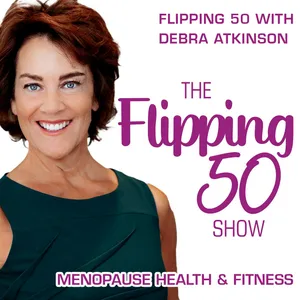
Free Daily Podcast Summary
Flipping 50 the Stronger Way: Daily Summaries Delivered
by Debra Atkinson
The podcast for women in menopause and beyond who want to change the way they age. Fitness, wellness, and health science put into practical tips you can use today. You still got it, girl!
Latest Episodes
The most recent episodes — sign up to get AI-powered summaries of each one.
- 2 days ago39 min
What Actually Is IBS? The Girl's Guide to Guts
This episode is sponsored by AirDoctor. AirDoctor - Head to https://AirDoctorPro.com and use promo code FLIPPING50 and get up to $300 off ANY of their select AirDoctor models, plus you will get a 3-year warranty, absolutely FREE! All AirDoctor air purifiers come with a 30-day money-back guarantee. IBS symptoms in women are often dismissed. Could your gut be telling you something you've been overlooking? What is IBS and how is it unique from IBD? Women experience dramatic gut changes due to hormonal change. How do you know if you’re just tolerating constipation, diarrhea or have something with causation that is treatable? If you're ready to stop guessing and start understanding IBS symptoms in women, today’s guest is here to share her personal experience. A conversation you don’t want to miss. My Guest: Chloe Melas is an award-winning journalist and on-air correspondent who over her 17-year career worked for NBC News, appearing across TODAY, NBC Nightly News, and NBC News Now. Questions We Answer in This Episode: [00:05:00] Are Bloating, Constipation, and Digestive Discomfort Really Normal in Midlife? [00:06:30] How Long Can You Tolerate Digestive Symptoms Before Seeking Help? [00:08:20] What's the Difference Between IBS and IBD? [00:12:11] How Do You Know If It's IBS or Something That Needs Medical Attention? [00:13:25] How Do Food Triggers, Stress, and Everyday Life Affect Gut Symptoms? [00:19:34] Why Might Women Experience More Digestive Issues Than Men? [00:24:51] What Can Stool Testing and Better Self-Advocacy Teach You About Gut Health? Connect with Chloe: Book - The Girl’s Guide to Guts Instagram - @chloemelas LinkedIn - Chloe Melas Connect with Flipping 50: Facebook Group - Flipping50 Insiders Instagram - @Flipping50TV YouTube - @Flipping50TV More Episodes - Flipping 50 The Stronger Way Other Episodes You Might Like: Previous Episode - Does Heavy Outperform Moderate In Building Muscle After 50 Next Episode - Do You Need Extra Leucine To Build Muscle After 50? More Like This - The Menopause Gut: Hidden Reasons Symptoms Happen Exercise Won’t Fix Resources: Work with Debra with an Ultimate Assessment Flipping 50 App on iOS App Store & Google Play Questions / Contact Debra on Instagram or Facebook Group FLIP Menopause program - Join the next live cohort Flipping 50 Master class - Choose your session here Get the full episode Show Notes HERE.
- 6 days ago26 min
Does Heavy Outperform Moderate In Building Muscle After 50
Building muscle after 50 doesn't mean you have to lift heavier every time you walk into the gym. What if moderate weights and higher repetitions could deliver similar results? A 2026 study involving women averaging 68 years old offers an interesting perspective on how we approach resistance training as we age. The findings challenge the idea that heavier is always better and highlight why effort, progression, and individual needs matter more than simply increasing the weight. Discover how to choose the right resistance, build muscle after 50 safely, and make strength training work for your body and your life. Questions We Answer in This Episode [00:01:37] Is lifting heavier really more effective than using moderate weights for building muscle after 50? [00:02:18] What did the study comparing 10-rep and 15-rep resistance training reveal about muscle growth in older women? [00:04:00] How can you tell whether your strength training is building muscle, and are you measuring the right numbers? [00:13:39] What's the difference between increasing muscle size and improving maximal strength? [00:15:33] When should you increase your weights, and why is mastering proper movement more important than rushing to lift heavier? [00:20:14] How can you adjust your resistance training after a break, illness, or time away from exercise? [00:21:38] What other ways can you challenge your muscles and measure progress without constantly increasing the weight? If this episode made you flip your workout routine — share it! 👉 Post to your stories, tag @Flipping50TV in Instagram and share the episode to your best friend. 👉 Meet other women, who are done with outdated fitness advice, at Flipping50 Facebook Group. 👉 Subscribe, share, and leave a review if you’re ready to flip the script on Flipping 50 The Stronger Way. References: Experimental Gerontology. 2026, PMID: 42551773. Other Episodes You Might Like: Previous Episode - The C-Section Hangover that Shows Up as Back Pain or Painful Seggs in Menopause Next Episode - What Actually Is IBS? The Girl's Guide to Guts More Like This - Is 15 Weeks Enough to Build Muscle PostMenopausal? Science Unpacked Resources: Work with Debra with an Ultimate Assessment Flipping 50 App on iOS App Store & Google Play Questions / Contact Debra on Instagram or Facebook Group FLIP Menopause program - Join the next live cohort Flipping 50 Master class - Choose your session here Easy At-Home Self-Assessment Test - Flipping 50 Strong Aging Index Hot Off The Press! The science for staying strong. Get the full episode Show Notes HERE.
- 1 weeks ago44 min
The C-Section Hangover that Shows Up as Back Pain or Painful Seggs in Menopause
C-section scar tissue pain may be connected to more than the scar you see in the mirror. Could an old C-section be influencing your posture, movement, core function, or intimacy decades later? The good news — It's not necessarily too late What happens beneath the surface? Why do scar tissue and fascia deserve a closer look? How is it connected to painful seggs? If you've wondered whether C-section scar tissue pain could still be affecting your body in midlife, this conversation is one you won't want to miss. My Guest: Janette Yee is a Toronto-based C-section Athletic Therapist and internationally recognized advocate for better postpartum rehabilitation. She is also a former 12-year rugby player with the Toronto Scottish RFC, she is also a Rugby Ontario Hall of Fame inductee and a new HYROX competitor. With 20+ years of experience in manual therapy and exercise, she created groundbreaking Cesarean Recovery programs to help women reclaim their strength and recovery after childbirth. Questions We Answer in This Episode: [00:05:51] What exactly is a C-section shelf, and how does it develop? [00:12:00] Is a C-section shelf just an appearance concern, or can it affect health, core function, and stability? [00:17:13] Is it ever too late to address C-section scar tissue, discomfort, or changes in the abdomen? [00:17:53] What's the difference between scar massage and fascial massage, and what can each accomplish? [00:19:49] How much time and effort does it take to see meaningful changes? [00:26:57] What common mistakes keep women from improving their C-section shelf or post-pregnancy abdomen? [00:38:49] Could an old C-section contribute to painful sex years later? Connect with Janette: Website - Janette Yee’s The C-Section Shelf 10-Day Challenge Facebook - Janette Yee Instagram - @askjanette TikTok - @askjanette YouTube - AskJanette Connect with Flipping 50: Facebook Group - Flipping50 Insiders Instagram - @Flipping50TV YouTube - @Flipping50TV More Episodes - Flipping 50 The Stronger Way Other Episodes You Might Like: Previous Episode - Does Cardio After Weights Change Your Results After 40 and Does More Protein Help? Next Episode - Does Heavy Outperform Moderate In Building Muscle After 50 More Like This - Is There Really a Best Time to Strength Train After 50 Resources: Work with Debra with an Ultimate Assessment Flipping 50 App on iOS App Store & Google Play Questions / Contact Debra on Instagram or Facebook Group FLIP Menopause program - Join the next live cohort Flipping 50 Master class - Choose your session here Get the full episode Show Notes HERE.
- 1 weeks ago22 min
Does Cardio After Weights Change Your Results After 40 and Does More Protein Help?
Should you do cardio after strength training? How much protein do you really need to build muscle after 50? If you've ever wondered whether cardio is interfering with your strength gains—or whether you need to eat more protein to see results—this episode will help you look beyond the headlines. Let’s dive into the research on strength training, cardio, and protein intake in women ages 40–77. Make smarter decisions about your workouts based on your individual goals. When it comes to fitness after 50, the goal isn't to follow every new trend. It's to understand what works for you — cardio after strength training, or should you do cardio then lift the weights? Questions We Answer in This Episode What research reveals about doing cardio after strength training. How strength training and cycling affected strength, aerobic fitness, and body composition in one study? Did higher assigned protein targets improve estimated muscle mass? Why should your primary fitness goal determine how you organize your workouts? Why doesn't the study prove that cardio damages muscle or that more protein is always better? How to approach cardio, strength training, and walking without unnecessarily complicating your routine? If this episode made you flip your workout routine — share it! 👉 Post to your stories, tag @Flipping50TV in Instagram and share the episode to your best friend. 👉 Meet other women, who are done with outdated fitness advice, at Flipping50 Facebook Group. 👉 Subscribe, share, and leave a review if you’re ready to flip the script on Flipping 50 The Stronger Way. References: Journal of the International Society of Sports Nutrition. 2026, PMID: 42735207. Other Episodes You Might Like: Previous Episode - Is Your Nervous System Holding You Back? HRV, Stress, and Recovery in Midlife Next Episode - The C-Section Hangover that Shows Up as Back Pain or Painful Seggs in Menopause More Like This: 6 Menopause Fitness Questions From the Community 3 Steps to Gain Lean Muscle in Menopause Building Muscle and Losing Fat in Menopause and Beyond Cortisol and Cardio for Women Over 40: What Your Heart Needs Now Resources: Work with Debra with an Ultimate Assessment Flipping 50 App on iOS App Store & Google Play Questions / Contact Debra on Instagram or Facebook Group FLIP Menopause program - Join the next live cohort Flipping 50 Master class - Choose your session here Easy At-Home Self-Assessment Test - Flipping 50 Strong Aging Index Hot Off The Press! The science for staying strong. Get the full episode Show Notes HERE.
- 2 weeks ago46 min
Is Your Nervous System Holding You Back? HRV, Stress, and Recovery in Midlife
Nervous system recovery in midlife may be the missing piece when your usual workouts, recovery routines, and sheer determination no longer deliver the results you expect. Are you pushing through fatigue or chasing better recovery scores? For women in midlife and beyond, HRV, stress, and the stories you tell yourself can influence the way you respond to everyday demands. Discover why building capacity—not simply pushing harder—may help you approach exercise, recovery, and midlife with greater awareness. If you're ready to rethink stress and discover a more mindful approach to nervous system recovery in midlife, this conversation is for you. My Guest: Cameron Allen is the founder of Neuro Progeny, where he builds capacity training programs for women navigating perimenopause and menopause. He brings 18 years in neuroimaging, more than 8,000 brain scans reviewed, and peer-reviewed research published alongside clinicians and geneticists. His work reframes fatigue as information about a woman's metabolic budget rather than an obstacle to push through, and treats HRV as a mirror on capacity rather than a score to chase. Questions We Answer in This Episode: [00:00:00] How did your career journey lead you to the work you do today? [00:00:00] What is HRV, and what can it tell us about nervous system resilience and recovery? [00:00:00] What is a “metabolic budget,” and how does the body allocate its available energy? [00:00:00] How can we increase our metabolic budget instead of continually pushing harder? [00:00:00] How can we reconnect with the version of ourselves who feels most alive and capable? [00:00:00] How can breathing practices support HRV and nervous system regulation? [00:00:00] Do we really need more grit, or do we need to build greater capacity? Connect with Cameron: Website - Neuro Progeny Facebook - Neuro Progeny Instagram - @neuro.progeny LinkedIn - Cameron Allen Connect with Flipping 50: Facebook Group - Flipping50 Insiders Instagram - @Flipping50TV YouTube - @Flipping50TV More Episodes - Flipping 50 The Stronger Way Resources: Work with Debra with an Ultimate Assessment Flipping 50 App on iOS App Store & Google Play Questions / Contact Debra on Instagram or Facebook Group FLIP Menopause program - Join the next live cohort Flipping 50 Master class - Choose your session here Get the full episode Show Notes HERE.
- 2 weeks ago32 min
Is 15 Weeks Enough to Build Muscle PostMenopausal? Science Unpacked
This episode is sponsored by BEAM Minerals. BEAM Minerals - Get 20% off your first order at https://beamminerals.com/FLIPPING50 with code FLIPPING50. Is 15 weeks enough to build muscle postmenopausal? If you're wondering whether your muscles can still grow stronger in postmenopause, the science is here. You'll learn how to approach strength training, find the right balance between workouts and recovery, and measure progress beyond the number on the scale. Discover what the research actually tells us about whether 15 weeks is enough to build muscle postmenopausal — and how to put those findings to work in your own strength-training routine. Questions We Answer in This Episode [00:01:48] The study: 15 weeks being enough to build muscle postmenopausal. [00:12:10] Why isn't the scale telling the whole story? [00:16:52] Do you really need to lift three days a week? [00:18:23] Can you get stronger without changing everything? [00:20:54] How do you build strength safely after 50? [00:26:04] How do you know your strength training is working? If this episode made you flip your workout routine — share it! 👉 Post to your stories, tag @Flipping50TV in Instagram and share the episode to your best friend. 👉 Meet other women, who are done with outdated fitness advice, at Flipping50 Facebook Group. 👉 Subscribe, share, and leave a review if you’re ready to flip the script on Flipping 50 The Stronger Way. References: Maturitas. 2026, PMID: 41687563. Other Episodes You Might Like: Previous Episode - Perimenopause's Long Game: How It Shapes Your Health for Years to Come More Like This: 3 Steps to Gain Lean Muscle in Menopause 6 Menopause Fitness Questions From the Community Resources: Work with Debra with an Ultimate Assessment Flipping 50 App on iOS App Store & Google Play Questions / Contact Debra on Instagram or Facebook Group FLIP Menopause program - Join the next live cohort Flipping 50 Master class - Choose your session here Measure what matters using the Flipping 50 Strong Aging Index Hot Off The Press! The science for staying strong. Get the full episode Show Notes HERE.
- 3 weeks ago58 min
Perimenopause Long Term Health To Build a Stronger Future
This episode is sponsored by BEAM Minerals and AquaTru. BEAM Minerals - Get 20% off your first order at https://beamminerals.com/FLIPPING50 with code FLIPPING50. AquaTru - Go to https://AquaTru.com/ now for 20% off (your purifier) using promo code FLIPPING50. AquaTru even comes with a 30-day best-tasting water guarantee. Perimenopause long term health is about more than managing symptoms or accepting that getting older means slowing down. What if this stage of life is your opportunity to change how you age, protect your future health, and stay strong and independent for decades to come? Dr. Jennifer Rollins joins us to explore menopause care, hormone therapy, bone and muscle health, and why your long-term health deserves more attention than symptoms alone. Learn how the perimenopause long term game can become a turning point for building a stronger, healthier future. My Guest: Dr. Jennifer Roelands, MD is a double board-certified OB-GYN and Integrative Medicine physician specializing in perimenopause, hormone optimization, and women's longevity health. She earned her medical degree at UC San Diego, completed her OB-GYN residency at Duke University, and a fellowship at the Andrew Weil Center for Integrative Medicine. She is the founder of Precision Health MD and creator of the Midlife Upgrade Academy, reaching over 35,000 subscribers through evidence-based education on hormones and midlife health. Questions We Answer in This Episode: [00:09:09] Why are so many women left without answers in perimenopause? [00:12:41] If you feel great, do you really need to consider HRT? [00:14:36] Is menopause care about more than symptom relief? [00:20:17] Why should midlife women train for strength, not skinny? [00:29:26] Why is perimenopause still dismissed or misunderstood? [00:34:25] Is bone and muscle loss inevitable as you age? [00:36:47] What should you measure now for a healthier future? Connect with Dr. Jen: Website - Dr. Jennifer Roelands Instagram - @dr.jenniferroelands YouTube - Dr. Jennifer Roelands, MD Connect with Flipping 50: Facebook Group - Flipping50 Insiders Instagram - @Flipping50TV YouTube - @Flipping50TV More Episodes - Flipping 50 The Stronger Way Other Episodes You Might Like: Previous Episode - Hidden Toxins in Everyday Life: The Risks of Cancer and Accelerated Aging Next Episode - Is 15 Weeks Enough to Build Muscle PostMenopausal? Science Unpacked More Like This - The Perimenopause Rules Nobody Told You About Resistance Training Resources: Work with Debra with an Ultimate Assessment Flipping 50 App on iOS App Store & Google Play Questions / Contact Debra on Instagram or Facebook Group FLIP Menopause program - Join the next live cohort Flipping 50 Master class - Choose your session here
- 3 weeks ago27 min
Hidden Toxins in Everyday Life: The Risks of Cancer and Accelerated Aging
Toxins in everyday life may be hiding in places you’d never think to look. What if the exposures affecting your health aren't coming from your diet or workouts, but from the water you drink, the products you use, and the places where you exercise? Let’s explore everyday environmental exposures, potential effects on hormones, and why women in midlife may want to take a closer look at their cumulative exposure. This episode offers practical ways to become more aware of hidden toxins in everyday life without giving up the activities that support a stronger, healthier life. My Guest: Dr. Stephanie Gray, DNP, MS, ARNP, AGNP-C, ABAAHP, FAARFM, is a functional medicine provider who helps women and men build sustainable, optimal health and longevity. She specializes in helping midlife women restore optimal hormone levels so they can improve sleep, mood, body composition, and how they feel in their bodies. Stephanie is the Amazon best-selling author of Your Longevity Blueprint and Your Fertility Blueprint, with Your Hormone Blueprint soon to launch. She is also the host of the Your Longevity Blueprint podcast and co-founder of Your Longevity Blueprint Nutraceuticals and the Integrative Health and Hormone Clinic in Hiawatha, Iowa. Questions We Answer in This Episode: [00:04:02] Could everyday exposures be adding up? [00:05:15] What do agricultural chemicals have to do with health? [00:07:15] Is your drinking water as clean as you think? [00:10:28] Could your water bottle affect your hormones? [00:11:18] Should you think twice about swimming in pools or lakes? [00:14:54] Are outdoor activities exposing you to more than you realize? Connect with Dr. Stephanie: Book - Your Hormone Blueprint Facebook - Dr. Stephanie Gray and Integrative Health and Hormone Clinic Instagram - @stephaniegraydnp Youtube - @YourLongevityBlueprint Connect with Flipping 50: Facebook Group - Flipping50 Insiders Instagram - @Flipping50TV YouTube - @Flipping50TV More Episodes - Flipping 50 The Stronger Way Full Episode with Dr. Stephanie: Are Your Hormones Aging You Faster? Midlife Lab Tests & Toxins You Need to Know Resources: Work with Debra with an Ultimate Assessment Flipping 50 App on iOS App Store & Google Play Questions / Contact Debra on Instagram or Facebook Group FLIP Menopause program - Join the next live cohort Flipping 50 Master class - Choose your session here 🎧 Want to take this conversation further? Get the full story from this episode HERE.
Get Flipping 50 the Stronger Way summaries in your inbox
Free AI-powered daily recaps. Key takeaways, quotes, and mentions — in a 5-minute read.
Get Free Summaries →Free forever for up to 3 podcasts. No credit card required.
You Might Also Like
Listeners also like.

BETTER! with Dr. Stephanie Estima | Women's Strength, Body Composition and Hormones
Women in perimenopause and menopause learn science-based strategies for strength, hormones, and body composition from expert interviews.
Everyday Wellness: Midlife Hormones, Menopause, and Science for Women 35+
A nurse practitioner shares science-based strategies for managing midlife hormones, menopause, and women's health.

Proof of Practice Podcast
Experts in health, performance, and science discuss evidence-based practices for longevity, hormones, nutrition, and mental resilience.

The Dr Vonda Show
An orthopedic surgeon discusses aging, movement, bone health, and resilience with experts and women athletes.
FoundMyFitness
A podcast exploring health, science, nutrition, aging, and fitness.

Afterpause
Evidence-based guidance on menopause, hormone health, sleep, and metabolism from a certified wellness coach and women's health experts.

The EMPWR Podcast
A fitness entrepreneur shares workout tips, nutrition advice, and personal stories to support holistic wellness and self-empowerment.
Unfinished Business
Audrey Adams and Mason Mahoney

Live Like a Girl with Dr. Mindy Pelz
Dr. Mindy Pelz explores women's health through hormone science and wellness conversations to help women live in rhythm with their bodies.

Senior Fitness With Meredith
Discusses physical and mental wellness, nutrition, and motivation for seniors and professionals in the healthcare and fitness industries.
The Health Continuum
High-performing professionals learn science-based health strategies to sustain energy, focus, and resilience in demanding careers.

The Dr. Tyna Show
Discusses health truths and medical empowerment, offering practical wellness insights to foster personal and community resilience.
About Flipping 50 the Stronger Way
The podcast for women in menopause and beyond who want to change the way they age. Fitness, wellness, and health science put into practical tips you can use today. You still got it, girl!
Customized Recaps
AI-powered recaps with compact key takeaways, quotes, and insights.
Straight to Your Inbox
Get key takeaways from Flipping 50 the Stronger Way in a 5-minute read.
Save Hours Every Week
Stay current on your favorite podcasts without falling behind.
Frequently Asked Questions
What is Podzilla's Flipping 50 the Stronger Way daily summary?
It's a free AI-powered email that summarizes new episodes of Flipping 50 the Stronger Way as soon as they're published. You get the key takeaways, notable quotes, and links & mentions — all in a quick read.
How does the Flipping 50 the Stronger Way podcast summary work?
When a new episode drops, our AI transcribes and analyzes it, then generates a personalized summary tailored to your interests and profession. It's delivered to your inbox every morning.
Is this an official Flipping 50 the Stronger Way product?
No. Podzilla is an independent service that summarizes publicly available podcast content. We're not affiliated with or endorsed by Debra Atkinson.
Can I get summaries of other podcasts too?
Absolutely! The free plan covers up to 3 podcasts, any in the catalog. Basic raises that to 15, Pro to 40 and Max to 100. Browse our full catalog at /podcasts.
How often does Flipping 50 the Stronger Way release new episodes?
Flipping 50 the Stronger Way publishes every few days. Our AI generates a summary within hours of each new episode.
What topics does Flipping 50 the Stronger Way cover?
Flipping 50 the Stronger Way covers topics including Fitness, Health & Fitness. Our AI identifies the specific themes in each episode and highlights what matters most to you.
Start getting Flipping 50 the Stronger Way summaries tomorrow morning.
Free forever for up to 3 podcasts. No credit card required.
Free forever for up to 3 podcasts. No credit card required.