Free Daily Podcast Summary
Earthlings 2.0 Podcast: Daily Summaries Delivered
by Lisa Ann Pinkerton
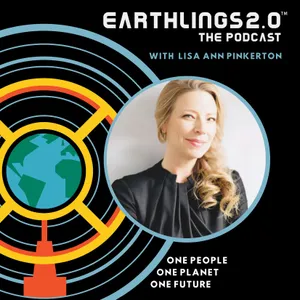
The Earthlings Podcast takes a look at the big issues facing humanity in the early 21st century and our relationship to our environment, technology, and each other. Each episode, award-winning journalist, and former NPR reporter Lisa Ann Pinkerton hosts experts, scientists, and leaders working to solve the world’s biggest challenges. Together, they cover wide-ranging topics including environmental solutions, emerging technologies, what the future might look like, and more. Support us on Patreon and receive exclusive content and benefits.
Latest Episodes
The most recent episodes — sign up to get AI-powered summaries of each one.
- 6 days ago22 min
#178: Unlocking Natural Gas Energy Waste with Sapphire Technologies
On this episode of Earthlings 2.0, we speak with Jeff Earl, Vice President of Business Development and Marketing at Sapphire Technologies, about an overlooked source of clean energy. Every day, pressure is intentionally reduced throughout natural gas pipeline networks to safely deliver gas to homes, businesses, and industrial facilities. That pressure contains usable energy, but in most systems it is simply dissipated as heat. Jeff explains how Sapphire Technologies' turbo expander technology captures and converts the wasted pressure into clean electricity, improving the efficiency of existing infrastructure without requiring additional fuel. The conversation explores pressure energy recovery, natural gas pipelines, hydrogen infrastructure, industrial energy efficiency, and how waste energy recovery could become standard practice in the future.Key Points:Pipelines contain an overlooked source of clean electricity – Every pressure reduction station along a natural gas pipeline releases stored energy that is typically wasted. Sapphire Technologies uses turbo expander generators to recover that pressure energy and convert it directly into electricity.Recovery improves existing infrastructure – Rather than replacing natural gas infrastructure, the technology increases its efficiency by generating electricity from a process already occurring inside pipeline systems. The electricity can power on-site equipment or be sold back to the electric grid through power purchase agreements.Pressure recovery has applications beyond natural gas – As hydrogen pipelines, carbon dioxide transport networks, and other industrial gas systems expand, similar pressure reduction opportunities could create new sources of distributed clean electricity across multiple industries.Jeff Earl, Vice President of Business Development and Marketing at Sapphire Technologies, LinkedInLisa Ann Pinkerton, Earthlings 2.0 Host, CEO of Technica Communications, CEO of PRVIEW, Founder of Women in Cleantech and Sustainability, LinkedIn 🚀 Calling all Earthlings… Visit our website for more episodes!Sign up to our newsletter for the latest news on the most exciting technology and research shaping our futures! We want to learn more about you! It’ll take just a few moments to complete our survey. Thank you for helping us make your listening experience the best it can be!Are you new to Earthlings 2.0 and don’t know where to get started? Check out our Life at 3C episode on our websiteThanks for tuning in! If you like what we’re doing over at Earthlings 2.0, you can support us by heading over to our Patreon Page.Let’s stay connected! Follow Earthlings 2.0 Socials for the latest updates and news: Follow us on LinkedInFollow us on Instagram Follow us on our Facebook PageFollow us on X Thanks to Resource Labs for having us on the network!
- 1 weeks ago29 min
#177: The EV Industry Now Has Adult Problems with ChargerHelp
In this episode of Earthlings 2.0, we speak with Kameale Terry, CEO of ChargerHelp, about what it takes to keep EV charging infrastructure reliable after deployment. As the industry matures, attention is shifting toward uptime, maintenance, diagnostics, and how quickly operators can resolve failures when they occur. Kameale explains why modern EV chargers behave more like connected computers than traditional fueling equipment, how field data can reveal complex software and interoperability problems, and why improving mean time to repair is becoming an important measure of charging reliability. The conversation also explores fleet charging, remote diagnostics, AI and big data, charger lifecycle performance, and what the industry could look like in the future.Key Points:EV charging reliability is becoming more complex as the industry matures – Early charging problems often reflect the young market, but as those issues are resolved, operators are confronting more complicated software, firmware, interoperability, and communications failures.Field data is essential for diagnosing EV charger failures – Remote diagnostics alone cannot explain every charging problem. Kameale emphasizes the importance of combining operational data with lessons from real-world charger repairs to identify patterns, test assumptions, and understand how equipment actually behaves after deployment.Mean time to repair could become a more meaningful measure of charger reliability – Rather than focusing only on uptime percentages, Kameale explains that the industry also needs to understand how quickly problems can be identified and resolved when charging stations fail.Kameale Terry, CEO and founder of ChargerHelp, LinkedInSarah Malpeli, Earthlings 2.0 Guest Host, Vice President of Client Services and Growth at Technica Communications, LinkedIn🚀 Calling all Earthlings… Visit our website for more episodes!Sign up to our newsletter for the latest news on the most exciting technology and research shaping our futures! We want to learn more about you! It’ll take just a few moments to complete our survey. Thank you for helping us make your listening experience the best it can be!Are you new to Earthlings 2.0 and don’t know where to get started? Check out our Life at 3C episode on our websiteThanks for tuning in! If you like what we’re doing over at Earthlings 2.0, you can support us by heading over to our Patreon Page.Let’s stay connected! Follow Earthlings 2.0 Socials for the latest updates and news: Follow us on LinkedInFollow us on Instagram Follow us on our Facebook PageFollow us on X Thanks to Resource Labs for having us on the network!
- 2 weeks ago33 min
#176: Turning a Can of Fuel Into a Fusion Star with Pacific Fusion
In this episode of Earthlings 2.0, we speak with Will Regan, Founder and Chief Scientist of Pacific Fusion, about how the company is developing pulser-driven inertial fusion for eventual commercial deployment. Will breaks down how the system works, the scientific breakthroughs that have changed the outlook for commercial fusion, and why Pacific Fusion believes modularity and mass manufacturing could provide a path toward reliable fusion power plants. He also discusses the company's recent prototype milestones, plans to demonstrate net energy gain by 2030, fusion's regulatory and safety advantages, and what the next decade could hold for fusion energy on Earth and potentially in space.Check out our previous episodes on fusion:#115 - Fusion’s Magnetic Mirror Magic for a Low-Carbon Energy Future with Realta Fusion#26 - The Forever Fuel in Nuclear FusionKey Points:Pacific Fusion is using pulsed power to create star-like conditions from a tiny can of fuel – The company's pulser-driven inertial fusion system uses a powerful pulse of electricity to compress a tiny amount of fuel, creating the conditions needed for fusion.Modularity could be key to making fusion power reliable and scalable – Pacific Fusion recently demonstrated a one-third-scale version of its pulser module and is now developing a full-scale unit.Pacific Fusion is targeting net energy gain by 2030 and commercial power plants in the 2030s – The company plans to break ground on a facility for its demonstration system and is targeting system-level net energy gain by 2030, followed by a first power plant in the mid-2030s.Will Regan, Founder and Chief Scientist of Pacific FusionLinkedInPacific Fusion LinkedInPacific Fusion’s technologyLisa Ann Pinkerton, Earthlings 2.0 Host, CEO of Technica Communications, CEO of PRVIEW, and Founder of Women in Cleantech and Sustainability, LinkedIn 🚀 Calling all Earthlings… Visit our website for more episodes!Sign up to our newsletter for the latest news on the most exciting technology and research shaping our futures! We want to learn more about you! It’ll take just a few moments to complete our survey. Thank you for helping us make your listening experience the best it can be!Are you new to Earthlings 2.0 and don’t know where to get started? Check out our Life at 3C episode on our websiteThanks for tuning in! If you like what we’re doing over at Earthlings 2.0, you can support us by heading over to our Patreon Page.Let’s stay connected! Follow Earthlings 2.0 Socials for the latest updates and news: Follow us on LinkedInFollow us on Instagram Follow us on our Facebook PageFollow
- 3 weeks ago44 min
#175: Investing in the Energy Behind the AI Boom with NosTerra Venture Capital
In this episode of Earthlings 2.0, we speak with Theo Ludwick, Co-Founder and Managing Partner at NosTerra Venture Capital, about the infrastructure behind AI's rapid growth. Theo explains why electricity has become one of the biggest bottlenecks facing AI data centers, how operators are balancing power and water use, and why energy efficiency could help unlock additional data center capacity in the near term. The conversation also explores emerging energy and cooling technologies, the shift from AI training to inference, data centers as critical infrastructure, and where investors are finding opportunities across the next generation of AI infrastructure.Check out a few of our previous episodes on data centers:#173 - Active Diesel Particulate Filters: Unlocking Cleaner Growth for Data Centers With Rypos#164 - How the Grid Could Survive the AI Boom with Solid State Transformers With DG MatrixKey Points:Electricity is becoming a major bottleneck for AI data centers – The rapid growth of AI compute is driving greater demand for power. Theo explains that addressing this challenge will require a combination of energy efficiency, grid flexibility, new generation, storage, and other technologies rather than a single energy solution.Data center efficiency could unlock more capacity in the near term – While new power generation can take years to deploy, technologies that improve efficiency and flexibility can be implemented sooner. Better chips, cooling, system orchestration, batteries, and flexible loads could help data centers use existing grid capacity more effectively as AI demand grows.The shift from AI training to inference could reshape data center infrastructure – AI training has favored large, centralized data centers, but inference can operate across a wider range of computing environments. As inference grows, Theo expects opportunities for smaller data centers located closer to population centers, potentially changing how facilities are designed, powered, and distributed.Theo Ludwick, Co-Founder and Managing Partner at NosTerra Venture Capital, LinkedInLisa Ann Pinkerton, Earthlings 2.0 Host, CEO of Technica Communications, CEO of PRVIEW, and Founder of Women in Cleantech and Sustainability, LinkedIn🚀 Calling all Earthlings… Visit our website for more episodes!Sign up to our newsletter for the latest news on the most exciting technology and research shaping our futures! We want to learn more about you! It’ll take just a few moments to complete our survey. Thank you for helping us make your listening experience the best it can be!Are you new to Earthlings 2.0 and don’t know where to get started? Check out our Life at 3C episode on our websiteThanks for tuning in! If you like what we’re doing over at Earthlings 2.0, you can support us by heading over to our Patreon Page.Let’s stay connected! Follow Earthlings 2.0 Socials for the latest updates and news: Follow us on LinkedInFollow us on Instagram Follow us on our<a href="https://www.facebook.com/profile.php?id
- Aug 18, 202624 min
#174: Rethinking What It Takes to Electrify Fleets with NCSU
In this episode of Earthlings 2.0, we speak with John Bonitz, Clean Transportation Project Manager at the North Carolina Clean Energy Technology Center and one of the organizers behind the Sustainable Fleet Technology Conference & Expo. The conversation explores how commercial fleet electrification is moving beyond pilot projects and into real-world deployment. As fleet operators face rising fuel costs, evolving regulations, new charging technologies, and growing amounts of operational data, the conversation is shifting from whether to electrify to how to build fleets that are reliable, resilient, and cost-effective. John discusses fleet electrification, EV charging infrastructure, telematics, AI-powered fleet management, smart charging, alternative fuels, and why understanding each fleet's unique duty cycle is essential for making sustainable transportation work in practice.Key Points:Fleet electrification is entering a new phase of practical deployment – Operators are focused on proven technologies that reduce operating costs, improve reliability, and increase resilience rather than simply testing new concepts. The conversation has shifted from pilot projects to implementing solutions that deliver measurable results.Charging strategy is just as important as vehicle selection – Smart charging, telematics, and even Level 1 overnight charging can significantly reduce costs while making fleet electrification more accessible for municipalities, small businesses, and commercial operators.No single technology can meet every fleet's needs – John emphasizes that successful fleet electrification starts with understanding each fleet's duty cycle and operational requirements. Whether the best solution is battery electric vehicles, biodiesel, propane, compressed natural gas, ethanol, or another alternative fuel depends on the specific application, making a technology-neutral approach essential for long-term success.John Bonitz, Clean Transportation Project Manager at the North Carolina Clean Energy Technology Center, LinkedInSarah Malpeli, Earthlings 2.0 Guest Host, Vice President of Client Services and Growth at Technica Communications, LinkedIn🚀 Calling all Earthlings… Visit our website for more episodes!Sign up to our newsletter for the latest news on the most exciting technology and research shaping our futures! We want to learn more about you! It’ll take just a few moments to complete our survey. Thank you for helping us make your listening experience the best it can be!Are you new to Earthlings 2.0 and don’t know where to get started? Check out our Life at 3C episode on our websiteThanks for tuning in! If you like what we’re doing over at Earthlings 2.0, you can support us by heading over to our Patreon Page.Let’s stay connected! Follow Earthlings 2.0 Socials for the latest updates and news: Follow us on LinkedInFollow us on Instagram Follow us on our Facebook PageFollow us on X Thanks to Resource Labs for having us on the network!
- Aug 11, 202636 min
#173: Active Diesel Particulate Filters: Unlocking Cleaner Growth for Data Centers With Rypos
In this episode of Earthlings 2.0, we speak with Thomas Babineau, Senior Emissions and Technology Advisor at Rypos, about one of the least discussed environmental challenges surrounding AI data centers: diesel backup generators. As data centers expand to support artificial intelligence, cloud computing, and digital infrastructure, most continue to rely on diesel generators to provide emergency backup power during grid outages. Thomas explains why diesel remains the most reliable option for mission-critical facilities such as data centers and hospitals, and explores how advanced diesel particulate filter technology can reduce harmful particulate emissions by up to 95%. The conversation examines diesel emissions, public health, backup power, data center sustainability, emissions regulations, and practical pathways to reducing air pollution while maintaining grid resilience.Check out our previous episodes on the AI build-out:#170 - Turning Grid Transformers into Intelligent Infrastructure with Ionate Energy#168 - Cracking the Code on Building Energy Costs With Edgecom Energy#164 – How the Grid Could Survive the AI Boom with Solid State Transformers With DG Matrix Key Points:Diesel backup generators remain essential for critical infrastructure – Data centers, hospitals, ports, and other mission-critical facilities rely on diesel generators because they can start within seconds, operate for extended periods, and provide reliable backup power when electricity is unavailable.Particulate matter from diesel engines is an overlooked environmental challenge – Diesel generators produce fine particulate matter linked to respiratory illness and other health risks. Advanced diesel particulate filters can significantly reduce these emissions without replacing existing backup power systems.Cleaning existing diesel infrastructure can support more sustainable data center growth – As AI drives rapid expansion of data centers, emissions-control technologies offer a practical way to improve local air quality while maintaining the reliability required for critical digital infrastructure.Thomas Babineau, Senior Emissions and Technology Advisor at Rypos, LinkedInLuis de Leon, Earthlings 2.0 Guest Host
- Aug 4, 202639 min
172: Why Stopping Climate Change Means Fixing Democracy First With the Sunrise Movement
On this episode of Earthlings 2.0, we speak with Sunrise Movement Executive Director Aru Shiney-Ajay about the future of youth climate organizing and why action depends on building a more representative democracy. Aru explains how the climate movement is connecting emissions reduction with green jobs, healthcare, public transit, economic security, and fossil fuel accountability. The conversation also explores the Make Polluters Pay campaign, the climate impact of AI data centers, corporate control of social media, and how young organizers can turn protest into lasting political power. At the center of the discussion is a more hopeful vision of climate action. A vision that focuses not only on stopping environmental harm but also on building a healthier, fairer, and more livable future.Also, check out our episode on navigating the polycrisis mentioned in the show: https://earthlingspodcast.com/episodes/103-navigating-polycrisis/Key Points:Climate action can improve everyday quality of life – The transition away from fossil fuels can support well-paying green jobs, stronger public transit, healthier food systems, better economic mobility, and more affordable communities.Youth climate organizing requires both public pressure and political power – Sunrise combines protest, grassroots organizing, electoral engagement, and leadership development to help young people influence institutions and shape public policy.AI is creating a new challenge for the climate movement – Data center growth could increase fossil fuel demand, but public policy could also require AI companies to invest in clean energy, improve energy and water efficiency, and support green job creation.Aru Shiney-Ajay, Executive Director of the Sunrise Movement, LinkedInLisa Ann Pinkerton, Earthlings 2.0 Host, CEO of Technica Communications, and Founder of Women in Cleantech and Sustainability, LinkedIn 🚀 Calling all Earthlings… Visit our website for more episodes!Sign up to our newsletter for the latest news on the most exciting technology and research shaping our futures! We want to learn more about you! It’ll take just a few moments to complete our survey. Thank you for helping us make your listening experience the best it can be!Are you new to Earthlings 2.0 and don’t know where to get started? Check out our Life at 3C episode on our websiteThanks for tuning in! If you like what we’re doing over at Earthlings 2.0, you can support us by heading over to our Patreon Page.Let’s stay connected! Follow Earthlings 2.0 Socials for the latest updates and news: Follow us on LinkedInFollow us on Instagram Follow us on our Facebook PageFollow us on X Thanks to Resource Labs for having us on the network!
- Jul 28, 202637 min
#171: Turning Ports Into Power Stations for Clean Shipping with Climate Edge
In this episode of Earthlings 2.0, we speak with Hendrik Tiesinga, founder and CEO of Climate Edge. Maritime shipping is one of the world's biggest decarbonization challenges and is responsible for moving roughly 80% of global trade. The shipping industry is under increasing pressure to reduce emissions while continuing to power the global economy. Hendrik explains why scaling clean shipping requires more than new fuels; it also depends on financing, improved energy efficiency, and faster deployment of proven technologies. The conversation explores maritime decarbonization, alternative marine fuels, electric ships, battery technology, port electrification, and how innovation can help move the industry beyond pilot projects toward large-scale adoption.Check out a few of our previous maritime episodes, including:#46 – Sailing the Silent, Solar-Powered Seas#52 – Zeroing in on Hydrogen for Marine TransportationKey Points:Decarbonizing shipping requires more than replacing fossil fuels – Clean fuels such as green methanol, ammonia, and biofuels all have tradeoffs, making energy efficiency, electrification, and new financing models critical alongside fuel innovation.Many of today's clean shipping technologies are ready to deploy – Hull-cleaning robots, wind-assisted propulsion, AI route optimization, battery-electric vessels, and port electrification can reduce fuel consumption and emissions today while the industry prepares for longer-term fuel transitions.Getting beyond pilot projects will require new investment models – Maritime decarbonization depends on connecting climate technology startups, infrastructure investors, ports, and shipping companies so proven technologies can scale across the global shipping industry.Hendrik Tiesinga, founder and CEO of Climate Edge, LinkedInLisa Ann Pinkerton, Earthlings 2.0 Host, CEO of Technica Communications, CEO and Founder of PRVIEW, and Founder of Women in Cleantech and Sustainability, LinkedIn🚀 Calling all Earthlings… Visit our website for more episodes!Sign up to our newsletter for the latest news on the most exciting technology and research shaping our futures! We want to learn more about you! It’ll take just a few moments to complete our survey. Thank you for helping us make your listening experience the best it can be!Are you new to Earthlings 2.0 and don’t know where to get started? Check out our Life at 3C episode on our websiteThanks for tuning in! If you like what we’re doing over at Earthlings 2.0, you can support us by heading over to our Patreon Page.Let’s stay connected! Follow Earthlings 2.0 Socials for the latest updates and news: Follow us on LinkedInFollow us on Instagram Follow us on our Facebook PageFollow us on X Thanks to <a href="https://resourcelabs.co/" rel="noopener no
About Earthlings 2.0 Podcast
The Earthlings Podcast takes a look at the big issues facing humanity in the early 21st century and our relationship to our environment, technology, and each other. Each episode, award-winning journalist, and former NPR reporter Lisa Ann Pinkerton hosts experts, scientists, and leaders working to solve the world’s biggest challenges. Together, they cover wide-ranging topics including environmental solutions, emerging technologies, what the future might look like, and more. Support us on Patreon and receive exclusive content and benefits.
Customized Recaps
AI-powered recaps with compact key takeaways, quotes, and insights.
Straight to Your Inbox
Get key takeaways from Earthlings 2.0 Podcast in a 5-minute read.
Save Hours Every Week
Stay current on your favorite podcasts without falling behind.
Frequently Asked Questions
What is Podzilla's Earthlings 2.0 Podcast daily summary?
It's a free AI-powered email that summarizes new episodes of Earthlings 2.0 Podcast as soon as they're published. You get the key takeaways, notable quotes, and links & mentions — all in a quick read.
How does the Earthlings 2.0 Podcast podcast summary work?
When a new episode drops, our AI transcribes and analyzes it, then generates a personalized summary tailored to your interests and profession. It's delivered to your inbox every morning.
Is this an official Earthlings 2.0 Podcast product?
No. Podzilla is an independent service that summarizes publicly available podcast content. We're not affiliated with or endorsed by Lisa Ann Pinkerton.
Can I get summaries of other podcasts too?
Absolutely! The free plan covers up to 3 podcasts. Upgrade to Pro for 15, or Premium for 50. Browse our full catalog at /podcasts.
How often does Earthlings 2.0 Podcast release new episodes?
Earthlings 2.0 Podcast publishes weekly. Our AI generates a summary within hours of each new episode.
What topics does Earthlings 2.0 Podcast cover?
Earthlings 2.0 Podcast covers topics including Science, Technology, Business. Our AI identifies the specific themes in each episode and highlights what matters most to you.
Start getting Earthlings 2.0 Podcast summaries tomorrow morning.
Free forever for up to 3 podcasts. No credit card required.
Free forever for up to 3 podcasts. No credit card required.