Free Daily Podcast Summary
The Startup Ideas Podcast: Daily Summaries Delivered
by Greg Isenberg
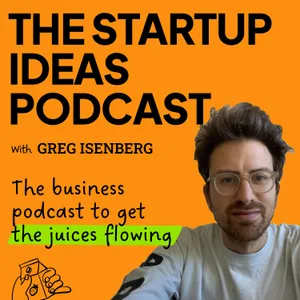
Get your creative juices flowing with The Startup Ideas Podcast. Published twice a week, we bring you free startup ideas to inspire your next venture. Hosted by Greg Isenberg, CEO of Late Checkout and former advisor to Reddit and TikTok.
Latest Episodes
The most recent episodes — sign up to get AI-powered summaries of each one.
- 2 days agoconversational28 min4-min read
Jev is HERE. How to use it
Jev is a new type of AI model developed by Diogo Almeida, the researcher behind ChatGPT, that functions as a high-speed, low-cost classifier rather than a traditional language model. Unlike LLMs that generate text and reason step-by-step, Jev makes probabilistic decisions based on structured input and predefined output schemas, returning type-safe JSON responses in milliseconds.
- 5 days agoconversational27 min4-min read
Instinct AI: The AI Assistant for normal people
Instinct AI is a new, invite-only personal agent app that feels like a human assistant, seamlessly handling real-world tasks like booking haircuts, securing restaurant reservations, and even obtaining a visa for Bali with minimal user input. It excels at simplicity, proactivity, and leveraging native iMessage features, making it accessible to non-technical users — potentially the first truly mass-market personal AI agent.
- 6 days agosolo31 min5-min read
Building a Software Factory that actually works (Full Course)
A software factory is a structured, repeatable workflow that uses AI agents to build high-quality software quickly and reliably by isolating work, enforcing clean code practices, proving results with visual or quantitative evidence, and incorporating automated code review. It’s not a product or model but a system any developer can implement using simple tools like markdown files and existing AI. The reason this concept is going viral is because it democratizes scalable software development—enabling even non-technical founders to ship polished, maintainable apps through systematic agent orchestration.
- 1 weeks agoconversational22 min5-min read
You're using GPT-6 Astra WRONG
GPT-6 Astra is not just another AI model — it's a transformative tool for building real businesses, accelerating development, and prototyping hardware with unprecedented ease. In this episode, Ras Mic and Greg Brockman explore how Astra goes beyond flashy demos to deliver tangible value in productivity, automation, and entrepreneurship.
- 1 weeks agosolo38 min6-min read
Local AI Clearly Explained
Local AI, where models run on user-controlled hardware like laptops or phones, unlocks a wave of new business opportunities by enabling private, fast, and repeatable workflows without relying on cloud APIs. Over the next 24 months, founders who understand how to deploy open models locally—using tools like Gemma, LM Studio, Ollama, and Google AI Edge—will build niche, cash-flowing products that solve real-world problems in healthcare, field services, and professional services.
- 2 weeks agonarrative24 min4-min read
These 5 Github Repos are a goldmine
This episode explores six cutting-edge, open-source GitHub repositories that offer practical tools for leveraging AI in content creation, customer relationship management, video editing, security, and mobile automation. The host emphasizes that GitHub is becoming a critical early signal for the next wave of AI-driven products and workflows.
- 2 weeks agosolo35 min6-min read
Making $$$ as a Marketing Engineer
One of the most valuable roles in tech over the next 18–24 months will be the marketing engineer—a hybrid professional who uses AI agents to build intelligent, self-improving marketing systems that turn customer signals into pipeline. This role combines deep market understanding with technical execution, enabling companies to learn faster, test smarter, and outpace competitors. The marketing engineer doesn’t just run campaigns—they architect systems that compound insight over time, making them indispensable in the agentic AI era.
- 3 weeks agosolo28 min4-min read
WebMCP clearly explained (and how to make $$)
WebMCP is an experimental but powerful new feature from Google and Microsoft that makes websites agent-readable and agent-actionable, enabling AI agents to interact with web pages efficiently through defined tools rather than scraping the DOM. This creates a first-mover opportunity for founders to build agent-native websites and services, where billions of dollars in commerce could shift toward platforms optimized for autonomous AI visitors.
Get The Startup Ideas Podcast summaries in your inbox
Free AI-powered daily recaps. Key takeaways, quotes, and mentions — in a 5-minute read.
Get Free Summaries →Free forever for up to 3 podcasts. No credit card required.
You Might Also Like
Listeners also like.

How I AI
A practical guide to using AI tools in work and life, featuring guests who share specific, actionable techniques and workflows.

Lenny's Podcast: Product | Career | Growth
Conversations with top product and growth leaders offering practical strategies for building, launching, and scaling successful products.

Young and Profiting (YAP) with Hala Taha: Entrepreneurship and Self-Improvement Podcast
Hala Taha interviews business leaders and experts to share practical advice on entrepreneurship, productivity, and personal growth.

The Koerner Office - Business Ideas and Deep Dives with Chris Koerner
A serial entrepreneur shares actionable business ideas, growth strategies, and side hustle tips from decades of real-world experience.

The Twenty Minute VC (20VC): Venture Capital | Startup Funding | The Pitch
Interviews with top venture capitalists and successful founders about startup funding, investing, and building technology companies.

AI and I
Interviews with professionals who use AI tools in their work, exploring how AI affects creativity, thinking, and daily life through live demonstrations.

Everyday AI Podcast – An AI and ChatGPT Podcast
Practical AI and ChatGPT tips for professionals to improve productivity and grow their careers.

21st Century Entrepreneurship
Founders, CEOs, and business leaders share real-world lessons on building and scaling companies through candid interviews.

Hacks and Hobbies with Junaid Ahmed
Creators and entrepreneurs discuss turning hobbies into income through podcasting, content, and personal branding.

My First Million
Two entrepreneurs analyze market trends and generate business ideas, often with guest collaborators.

Y Combinator Startup Podcast
Founders and Y Combinator partners discuss building startups, from idea to scale, sharing real-world lessons and strategies.

Growth Triggers: Content Marketing & AI
A marketing expert shares proven podcasting strategies for growing audience reach, generating leads, and building authority in any niche.
Mentions
Most frequently mentioned across all episodes.
People
Companies
Products & Tools
About The Startup Ideas Podcast
Get your creative juices flowing with The Startup Ideas Podcast. Published twice a week, we bring you free startup ideas to inspire your next venture. Hosted by Greg Isenberg, CEO of Late Checkout and former advisor to Reddit and TikTok.
Customized Recaps
AI-powered recaps with compact key takeaways, quotes, and insights.
Straight to Your Inbox
Get key takeaways from The Startup Ideas Podcast in a 5-minute read.
Save Hours Every Week
Stay current on your favorite podcasts without falling behind.
Frequently Asked Questions
What is Podzilla's The Startup Ideas Podcast daily summary?
It's a free AI-powered email that summarizes new episodes of The Startup Ideas Podcast as soon as they're published. You get the key takeaways, notable quotes, and links & mentions — all in a quick read.
How does the The Startup Ideas Podcast podcast summary work?
When a new episode drops, our AI transcribes and analyzes it, then generates a personalized summary tailored to your interests and profession. It's delivered to your inbox every morning.
Is this an official The Startup Ideas Podcast product?
No. Podzilla is an independent service that summarizes publicly available podcast content. We're not affiliated with or endorsed by Greg Isenberg.
Can I get summaries of other podcasts too?
Absolutely! The free plan covers up to 3 podcasts. Upgrade to Pro for 15, or Premium for 50. Browse our full catalog at /podcasts.
How often does The Startup Ideas Podcast release new episodes?
The Startup Ideas Podcast publishes 2x weekly. Our AI generates a summary within hours of each new episode.
What topics does The Startup Ideas Podcast cover?
The Startup Ideas Podcast covers topics including Business, Entrepreneurship. Our AI identifies the specific themes in each episode and highlights what matters most to you.
Start getting The Startup Ideas Podcast summaries tomorrow morning.
Free forever for up to 3 podcasts. No credit card required.
Free forever for up to 3 podcasts. No credit card required.