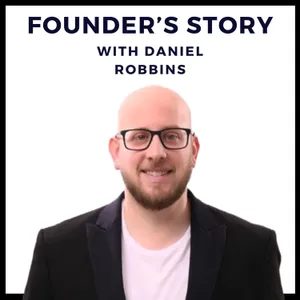
Free Daily Podcast Summary
Founder's Story: Daily Summaries Delivered
by IBH Media
Founder’s Story” by IBH Media isn’t just a show—it’s a mission. We spotlight extraordinary, iconic, and undiscovered entrepreneurs who’ve built, scaled, and led with purpose. From tech titans to tenacious underdogs, every episode dives deep into the resilience, creativity, and grit that define true leadership. You’ll hear from household names like Gary V, Codie Sanchez, Rob Dyrdek, and Tom Bilyeu—but just as often, you’ll meet the unheard founders doing remarkable things the world needs to know. This is where raw conversations meet real impact. This is Founder’s Story—where the heart of entrepreneurship beats.
Latest Episodes
The most recent episodes — sign up to get AI-powered summaries of each one.
- 2 days ago19 min
Estate Attorney Of 30 Years: "I'm Giving Away What My Industry Charges Thousands For" | Ep. 445 with Atty. William Funk
Daniel opens the episode by asking Bill why it is so important for someone to create a will. Bill explains that without one, the court can end up deciding how a person’s assets are distributed, often in ways that may not match what the person actually wanted. He says that taking just a few hours to draft a simple will can help protect a lifetime of accumulated assets and make the distribution process clearer for loved ones.Bill then shares examples of high-profile estates, including Prince and Howard Hughes, where the absence of proper planning led to years of litigation. He emphasizes that people often avoid wills because they do not want to think about death, but avoiding the topic can create far more pain, cost, and confusion for the people left behind.The conversation also dives into the practical details of writing a will, including choosing an executor, signing the document correctly, getting the right witnesses, and understanding that rules vary by state. Bill explains that a will can distribute assets, but a trust is needed if someone wants to control how money is managed or distributed over time.Key Discussion PointsBill explains why dying without a will can leave the court in control of how assets are distributed, which may not reflect the person’s actual wishes. He shares why estate planning matters for entrepreneurs and business owners, especially when partnerships, business interests, property, and family members are involved. Bill breaks down the role of the executor, saying this person must be trusted completely because they may have access to money, property, and major decisions after someone passes away. The episode covers common will mistakes, including failing to sign the document, not having required witnesses, or using witnesses who are also beneficiaries. Bill explains the difference between a will and a trust, especially for people who want to spread out distributions or protect wealth across generations. The conversation also explores family fairness, including why explaining certain gifts or decisions inside a will can help reduce confusion, resentment, or conflict among heirs. TakeawaysA will is not just for wealthy people. Bill’s message is that anyone who has assets, family, children, property, or business interests should think about how those things should be handled after they pass away.The executor may be the most important decision in the will. This person needs to be trustworthy, responsible, and able to handle the estate without abusing access to the assets.A will has to be executed correctly. If it is not signed or witnessed properly, it can become worthless or create major problems for the family later.A will distributes assets, but a trust can control assets over time. Bill explains that people who want to protect wealth for children, grandchildren, or future generations may need a trust instead of relying only on a will.Business owners should plan before there is a crisis. If someone owns part of a business, they should clearly document what happens to that ownership interest if they pass away.Estate planning can prevent emotional damage, not just legal problems. Bill explains that writing down why certain people receive certain items can help family members feel seen, understood, and treated with care.Closing ThoughtsWilliam Funk’s Founder’s Story episode turns an uncomfortable topic into a practical conversation every founder, parent, business owner, and family member should hear. Bill makes the case that writing a will does not have to be mysterious, expensive, or overwhelming, but waiting too long can leave loved ones with confusion, legal fees, court involvement, and years of unnecessary conflict. His message is simple: take a few hours, make your wishes clear, choose the right executor, sign it properly, and protect the people and assets you have spent your life building.Today's Sponsor: Turn live shopping into a real business with Whatnot, where sellers build relationships, move inventory in real time, and reach buyers across collectibles, electronics, luxury, beauty, and more. Search Whatnot in the App Store and start selling today.Start with Upwork, the platform to find, hire, and pay expert freelancers across marketing, design, development, and operations. Visit https://www.upwork.com to post your job for free and get matched with top talent.Support longevity in business and life with CocoaVia, a daily cocoa flavanol supplement designed to support healthy blood flow, heart health, and brain function. Go to https://www.cocoavia.com/ and use code FOUNDERS for an extra 20% off, or find it at your local Sprouts.Stop losing deals in spreadsheets and switch to Pipedrive, the AI-powered sales CRM built by salespeople
- 4 days ago37 min
The Burnout Expert: "I Became A Millionaire At 23 And Felt Nothing" | Ep. 444 with Brent Freeman
Daniel opens the episode by asking Brent about a defining moment at 23, when he closed a $10 million commodities deal after years of work and expected to feel fulfilled. Instead, Brent says he woke up not just hungover, but “emotionally hungover,” realizing that the money and celebration did not create the joy he thought success would bring.From there, Brent explains the trap many founders fall into: deferring joy for a future milestone. He says money matters because it buys freedom, safety, food, shelter, and opportunity, but it becomes dangerous when people treat it as the final answer to happiness. His message is not that founders should stop building or making money, but that they should stop sacrificing health, relationships, presence, and meaning for an imagined “one day.”The conversation then moves into Brent’s burnout, his mother’s death when he was seven, the trauma and core narrative that shaped him, and the moment in San Francisco when he considered taking his life despite looking successful from the outside. Watching the fog cover the sun, Brent realized his dark thoughts were temporary, went to the beach, watched his first sunset in years, and wrote his first “list of joy.” That moment became the foundation for the work he now calls The Alchemy of Joy.Key Discussion PointsBrent shares how closing a $10 million deal at 23 made him a millionaire on paper, but left him feeling empty instead of fulfilled. He explains why money is important, but dangerous when founders put it on a pedestal and defer their joy, health, family, and fulfillment for a future exit or milestone. Brent breaks down burnout through the lens of neuroscience, explaining how high cortisol, fight-or-flight, constant pressure, and modern technology keep high performers stuck in overdrive. He introduces practical tools from The Alchemy of Joy, including the reset breath, the one-minute window, and the “stop, see, soften” practice to calm the nervous system and return to the present moment. The conversation explores Brent’s darkest chapter in San Francisco, when his business, relationship, and identity were falling apart while his social media made it look like he was “crushing it.” Brent explains why the biggest lie in entrepreneurship is that happiness is waiting at the exit, and why founders must learn to experience joy along the way instead of chasing the pot of gold at the end. TakeawaysMoney can create freedom, but it cannot carry the full weight of happiness. Brent says money is important, but it is not the only element of a meaningful life.Founders often confuse hustle with nervous system dysregulation. Brent explains that constant stress, urgency, and overdrive can feel like ambition, but eventually the body pays the price.Joy is not a luxury. Brent frames joy as a skill, a practice, and an investment that compounds when someone intentionally returns to what makes them feel present and alive.The nervous system needs safety before it can perform at its best. Brent’s reset breath uses a longer exhale to calm the body and create more space between stimulus and response.Success can hide deep loneliness. Brent says he had the external signs of achievement, but inside he felt empty, disconnected, and alone until he began doing the deeper work.The work is never “done.” Brent says healing, joy, meditation, and emotional regulation are part of a continuing upward spiral, not a finish line someone reaches once and never revisits.Closing ThoughtsBrent Freeman’s Founder’s Story episode is a powerful reminder that building a successful business and building a joyful life are not the same thing. His story moves from a $10 million deal in Dubai to severe burnout, a dark night in San Francisco, and a free sunset that helped him remember what joy felt like. Through The Alchemy of Joy, Brent is challenging founders to stop treating happiness as something that arrives after the exit and start building presence, nervous system regulation, relationships, and meaning into the journey itself. His message is simple: money matters, ambition matters, but there is no dress rehearsal for life, and joy cannot wait for “one day.”Today's Sponsor: Support longevity in business and life with CocoaVia, a daily cocoa flavanol supplement designed to support healthy blood flow, heart health, and brain function. Go to https://www.cocoavia.com/ and use code FOUNDERS for an extra 20% off, or find it at your local Sprouts.Turn live shopping into a real business with Whatnot, where sellers build relationships, move inventory in real time, and reach buyers across collectibles, electronics, luxury, beauty, and more. Search Whatnot in the App Store and start selling today.Stop losing deals in spreadsheet
- 6 days agoconversational54 min6-min read
Bitcoin's First Felon: I Was Paid 100 Bitcoin An Hour When It Was $10 | Ep. 443 with Charlie Shrem and Courtney Shrem CEO of Stealth Startup
Charlie Shrem, once dubbed the 'Bitcoin prince' and founder of the Bitcoin Foundation, reflects on his meteoric rise and fall — from throwing money on the cover of Bloomberg to being arrested by the DEA at JFK — and how his relationship with Courtney Shrem helped him rebuild. Their story is one of love, resilience, and reinvention, framed by the wild early days of Bitcoin, prison, and personal transformation.
- 1 weeks agosolo29 min5-min read
The Tax Strategy Billionaires Use That Almost Nobody Talks About | Ep. 442 with George Dimov, CPA and President of Dimov Tax
The ultra-wealthy avoid taxes not by earning income but by holding appreciating assets like stock, borrowing against them, and using strategic structures to defer or eliminate tax liability. Ordinary individuals and business owners can adopt similar principles—such as maximizing retirement contributions, leveraging cost segregation, and auditing their expenses—to significantly reduce their tax burden. The episode also reveals how generational shifts, AI overreach, and emotional client dynamics shape industries like accounting, and why trust, responsiveness, and peer networks are critical for long-term entrepreneurial success.
- 2 weeks agoconversational39 min6-min read
One Airbnb Condo Turned Into $1 Billion In Real Estate | Ep. 441 with Sky Mitchell Founder and CEO of Everwild Nordic Spa & Hotels
Skye Mitchell, founder and CEO of Everwild Nordic Spa and Hotels, shares her journey from being fired 30 days into a six-figure corporate job to building nearly a billion dollars in real estate through unconventional funding, relentless hustle, and a vision for experiential hospitality. With no institutional backing at first, she leveraged creative financing—like returning a $38,000 BMW for cash—and eventually raised over $100 million from retail investors via Instagram, proving that trust, track record, and tangible experiences drive investment.
- 2 weeks agointerview15 min5-min read
Gurudev Sri Sri Ravi Shankar: "Money Cannot Buy A Quiet Mind" | Ep. 440 with Gurudev Sri Sri Ravi Shankar Founder of Art of Living Foundation
True fulfillment and leadership resilience come not from external success or technology, but from inner peace, emotional self-mastery, and the ability to quiet the mind through meditation. The greatest crisis today is not AI or war, but humanity’s disconnection from its own consciousness.
- 2 weeks agoconversational52 min6-min read
Franchise Expert: 85% Of Businesses Never Sell Because Owners Do This | Ep. 439 with Cliff Nonnenmacher CEO of Franocity
Cliff Nonnenmacher, a self-made entrepreneur who skipped college and built wealth by acquiring failing businesses, shares his journey from raking golf balls at age eight to pioneering food delivery in the 1990s—decades before Uber Eats. He emphasizes execution over perfection, opportunistic growth, and the importance of overcoming fear in entrepreneurship. His strategy of buying failing franchises, turning them around, and selling them has generated significant returns, and he now sees massive opportunity in AI, senior care, pet care, and asset-based acquisitions rather than full business purchases.
- 3 weeks agosolo28 min5-min read
He Made the Rich Richer for 20 Years. Then He Walked Away | Ep. 438 with Christopher Mackin WELLTH Advisor
True wealth is not about money in the bank, but a holistic experience of life defined by joy, purpose, balance, and contribution. The biggest misconception about money is that it’s a limited resource—when in reality, it’s an ever-expanding system of energy, access, and belief that responds to our internal state and intentions.
Get Founder's Story summaries in your inbox
Free AI-powered daily recaps. Key takeaways, quotes, and mentions — in a 5-minute read.
Get Free Summaries →Free forever for up to 3 podcasts. No credit card required.
You Might Also Like
Listeners also like.

The Vault Unlocked
Founders share hard-earned lessons on what they wish they’d known earlier to avoid costly mistakes and grow their companies faster.
Mick Unplugged
A leadership podcast exploring the deep personal motivations behind high achievers’ success by asking what drives them at their core.

The Money Mondays
Discusses investments, side hustles, and charity through interviews with entrepreneurs and celebrities in their homes and studios.

Right About Now - Legendary Business Advice
Real talk from business founders and entrepreneurs about building companies, lessons learned, and what actually works in real-world ventures.
Proven Podcast
Charles Schwartz

The Diary Of A CEO with Steven Bartlett
Conversations with CEOs, experts, and leaders exploring personal growth, mindset, and the realities of building successful businesses.

My First Million
Two entrepreneurs analyze market trends and generate business ideas, often with guest collaborators.

Young and Profiting (YAP) with Hala Taha: Entrepreneurship and Self-Improvement Podcast
Hala Taha interviews business leaders and experts to share practical advice on entrepreneurship, productivity, and personal growth.

The Home Service Expert Podcast
Home service business strategies from industry entrepreneurs and experts on growth, marketing, and scaling.

21st Century Entrepreneurship
Founders, CEOs, and business leaders share real-world lessons on building and scaling companies through candid interviews.

The Entrepreneur DNA
Entrepreneurs share lessons on building businesses and personal growth through real experiences and mistakes.

The Investor's Podcast (We Study Billionaires) - The Investor’s Podcast Network
Analyzes the investment strategies of billionaire investors and explores lessons from legendary financiers on wealth, wisdom, and life.
Mentions
Most frequently mentioned across all episodes.
People
Companies
About Founder's Story
Founder’s Story” by IBH Media isn’t just a show—it’s a mission. We spotlight extraordinary, iconic, and undiscovered entrepreneurs who’ve built, scaled, and led with purpose. From tech titans to tenacious underdogs, every episode dives deep into the resilience, creativity, and grit that define true leadership. You’ll hear from household names like Gary V, Codie Sanchez, Rob Dyrdek, and Tom Bilyeu—but just as often, you’ll meet the unheard founders doing remarkable things the world needs to know. This is where raw conversations meet real impact. This is Founder’s Story—where the heart of entrepreneurship beats.
Customized Recaps
AI-powered recaps with compact key takeaways, quotes, and insights.
Straight to Your Inbox
Get key takeaways from Founder's Story in a 5-minute read.
Save Hours Every Week
Stay current on your favorite podcasts without falling behind.
Frequently Asked Questions
What is Podzilla's Founder's Story daily summary?
It's a free AI-powered email that summarizes new episodes of Founder's Story as soon as they're published. You get the key takeaways, notable quotes, and links & mentions — all in a quick read.
How does the Founder's Story podcast summary work?
When a new episode drops, our AI transcribes and analyzes it, then generates a personalized summary tailored to your interests and profession. It's delivered to your inbox every morning.
Is this an official Founder's Story product?
No. Podzilla is an independent service that summarizes publicly available podcast content. We're not affiliated with or endorsed by IBH Media.
Can I get summaries of other podcasts too?
Absolutely! The free plan covers up to 3 podcasts. Upgrade to Pro for 15, or Premium for 50. Browse our full catalog at /podcasts.
How often does Founder's Story release new episodes?
Founder's Story publishes every few days. Our AI generates a summary within hours of each new episode.
What topics does Founder's Story cover?
Founder's Story covers topics including Business, Entrepreneurship. Our AI identifies the specific themes in each episode and highlights what matters most to you.
Start getting Founder's Story summaries tomorrow morning.
Free forever for up to 3 podcasts. No credit card required.
Free forever for up to 3 podcasts. No credit card required.