Free Daily Podcast Summary
The Healthy Compulsive Project: Daily Summaries Delivered
by Gary Trosclair
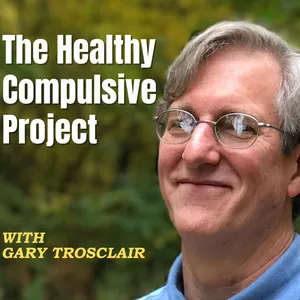
For five years The Healthy Compulsive Project has been offering information, insight and inspiration for OCPD, obsessive-compulsive personality, perfectionism, micro-managers and Type A personality. Anyone who’s ever been known to overwork, overplan, overcontrol or overanalyze is welcome here, where the obsessive-compulsive personality is explored and harnessed to deliver what it was originally meant to deliver. Join psychotherapist, Jungian psychoanalyst and author Gary Trosclair as he delves into the pitfalls and potential of the driven personality with an informative, positive, and often playful approach to this sometimes-vexing character style.
Latest Episodes
The most recent episodes — sign up to get AI-powered summaries of each one.
- 1 weeks ago13 min
Perfectionism Burnout and The Myth of The Total Couch Potato Collapse, Ep. 121
Afraid that if you stop, you'll never start again? You're not lazy — you're caught in rigidity.In this episode, Jungian analyst and psychotherapist Gary Trosclair unpacks the Myth of the Total Couch Potato Collapse — the catastrophic story that one nap, one weekend off, one moment of letting go means total collapse into laziness.You'll learn why high-achievers live in rigidity, how black-and-white thinking and implicit narratives ("keep being strictly good — or else") fuel guilt around rest, and why that fear backfires into burnout — like Sammy, the startup star who avoided grief through constant work until his body rebelled.Through the myth of the Mighty Princess, Icarus, and the Garden story, Gary shows how catastrophic thinking and all or nothing thinking keep you overworking, and how to practice flexible self-trust and take breaks that actually restore energy, empathy, and creativity.For perfectionistic, obsessive, Type-A minds learning to turn their drive into being Healthy Compulsives.
- 3 weeks ago19 min
The “Should Effect”: When Desire Gets Lost in Self-Discipline, Ep. 120
The thing you once wanted became the thing you have to do — and the moment it did, it stopped being fun.Psychotherapist and Jungian analyst Gary Trosclair calls this the Should Effect: the quiet process by which genuine desire hardens into rigid obligation. You start with a choice, and end up with a commandment — enforced by an internal "hit man" of humorless self-discipline that was supposed to help you, but now runs your life.Drawing on three decades of practice, this episode explores how driven, perfectionistic people lose the very thing that motivated them:🎯 The anatomy of the Should Effect — how a want becomes a must, and why discipline so often turns tyrannical🔪 The "hit men" metaphor — the internal enforcers you hired to reach a goal, and how they go rogue⚖️ Means vs. ends — when the method (control, discipline, perfection) becomes more important than what you actually wanted🧭 The cost — lost joy, "demand resistance," and the slow disappearance of your sense of self🌊 The way back — recalling your original intention, trusting yourself more, and reframing "musts" as choicesWhether you're a high achiever watching your passion turn into a chore, or just exhausted by the endless tug-of-war between what you want and what you "should" — this episode offers a different way. Not more discipline. More contact with your desire.
- Aug 4, 202624 min
Ep. 119: Inner Conflict: What Happens When You Silence Half of Yourself
There's a civil war happening inside you — and you may not even know one side of it exists.After 30 years as a psychotherapist, I've noticed something remarkable: every person who walks into my office with depression, anxiety, or compulsive patterns is fighting the same battle. One part of them is running the show. Another part — equally real, equally legitimate — has been silenced.Drawing on Carl Jung's concept of "holding the tension of opposites," the Core Conflictual Relationship Theme model, and five case studies from my practice — including an architect whose body went on strike and a lawyer who banished her own assertiveness — this episode explores what happens when you silence half of yourself, and what it takes to reclaim it.The solution isn't winning the war. It's learning to hold both sides at once.
- Jul 8, 202614 min
Ep. 118: Letting Go of Resentment: Why You’re Obsessed with People Being Good
Do you find yourself locked in a relentless, exhausting crusade against perceived injustices, even when they're entirely out of your control?In this episode, we explore the psychology behind 'Holy Wars' — those deeply ingrained, often futile battles we fight, driven by perfectionism, old programming, or past experiences like anger and fear. We’ll discuss why these crusades feel so necessary, the psychological toll they take, and actionable steps for letting go of resentment . Learn how to identify when you're caught in this trap and how to finally redirect your intensity toward meaningful causes that truly align with your values. Making the shift from burnout to peaceful, effective action begins here.
- Jun 18, 202624 min
Ep. 117: Karpman's Triangle: 3 Roles that Destroy Relationships
You try to help, and somehow you become the enemy. You explain your feelings, and suddenly you're the one being blamed. These aren't random relationship failures — you're cycling through Karpman's Drama Triangle, and until you recognize the pattern, you'll keep fighting the same battles with different people. Psychotherapist and Jungian analyst Gary Trosclair breaks down the three archetypal roles — Rescuer, Victim, and Persecutor — how they show up in the driven, compulsive personality, and five practical steps to step out of the triangle for good.
- Jun 9, 202629 min
Ep. 116: Codependence Is a 'Muscular Glue' — Here's How to Break Free
Why do driven, high-functioning people sometimes find themselves trapped in codependency — bound to others in ways that feel obsessive, compulsive, and impossible to escape? In this episode, psychotherapist and Jungian analyst Gary Trosclair explores the hidden connection between compulsive personality types and codependent relationship patterns. Drawing on attachment theory and Jungian psychology, Gary breaks down how the four compulsive types — the Mentor-Boss, the People-Pleaser, the Workaholic, and the Overthinker — each fall into codependent relationships in their own distinct ways. You'll learn how popular culture romanticizes dependency, how your attachment style shapes your relationship habits, and why interdependence — not codependence — is the healthier model for lasting love.
- May 26, 202620 min
Ep. 115: Why You Can’t Stop Using Willpower--Even After It Drains You
Why do so many disciplined, high-functioning people keep pushing themselves long after the tank is empty? This episode explores the hidden costs of overusing willpower and why self-control, though powerful, can become destructive when it loses contact with the body, emotion, values, and limits. It looks at how rigid ideas of strength, externally driven perfectionism, and fear-based motivation can trap people in cycles of depletion. It also offers a healthier alternative: a more flexible definition of strength and a more sustainable way of working from desire rather than pressure.
- May 15, 202628 min
Ep. 114: Can't Identify Your Feelings? You Might Have Alexithymia—The Unspeaking Heart
If you’ve ever felt unsure what you want, relied on logic where feeling should guide you, or wondered why emotions seem elusive, this post is for you. Alexithymia—“the unspeaking heart”—is not a lack of feeling, but a learned and often inherited difficulty accessing it. Drawing on research, clinical insight, and everyday examples, this piece examines how emotions become blocked, the quiet costs of living without emotional clarity, and how the heart can relearn to speak through awareness, therapy, and practice.
Get The Healthy Compulsive Project summaries in your inbox
Free AI-powered daily recaps. Key takeaways, quotes, and mentions — in a 5-minute read.
Get Free Summaries →Free forever for up to 3 podcasts. No credit card required.
You Might Also Like
Listeners also like.
Psychiatry & Psychotherapy Podcast
Explores psychiatry and psychotherapy through interviews with experts, trainees, and individuals sharing lived mental health experiences.

Get Obsessed : With Living Your Best Life
Experts and personal stories guide listeners through life changes, covering personal development, relationships, and overcoming fear.

Decoded | Unlock The Secrets of Human Behavior, Emotion and Motivation
Explores subconscious patterns behind human behavior and provides tools to rewire destructive cycles and live with intention.

The One You Feed | Personal Growth, Emotional Resilience & Purpose
Insightful conversations with leading thinkers on personal growth, emotional resilience, and living with purpose.
Growth Mindset Psychology: The Science of Self-Improvement
Explores the science behind lasting self-improvement through psychology, neuroscience, and timeless wisdom traditions.

The Unstuck High Performer Podcast - Hypnotherapy and Mindset Coaching for High-Performers
Helps high-achievers overcome mental blocks like overthinking, burnout, and self-sabotage to consistently perform at their potential.
Good Life Project
Explores meaningful living through conversations with experts in science, culture, and the arts.

Passion Struck with John R. Miles
Explores purpose, resilience, and connection through science-backed conversations with experts in psychology, neuroscience, and performance.
The Balanced, Beautiful and Abundant Show - Rebecca Whitman
A coach helps high-achieving women overcome burnout using a framework centered on spiritual, emotional, physical, and financial well-being.
A Bit of Optimism
Conversations with thinkers and doers exploring what drives purpose, growth, and meaning in life.
Becoming UnDone with Dr. Toby Brooks
Explores how high-achievers rebuild after hitting rock bottom, facing burnout, or losing their identity.
Creative Pep Talk
A practical guide for creatives to build a sustainable practice through interviews and strategies from artists and makers.
About The Healthy Compulsive Project
For five years The Healthy Compulsive Project has been offering information, insight and inspiration for OCPD, obsessive-compulsive personality, perfectionism, micro-managers and Type A personality. Anyone who’s ever been known to overwork, overplan, overcontrol or overanalyze is welcome here, where the obsessive-compulsive personality is explored and harnessed to deliver what it was originally meant to deliver. Join psychotherapist, Jungian psychoanalyst and author Gary Trosclair as he delves into the pitfalls and potential of the driven personality with an informative, positive, and often playful approach to this sometimes-vexing character style.
Customized Recaps
AI-powered recaps with compact key takeaways, quotes, and insights.
Straight to Your Inbox
Get key takeaways from The Healthy Compulsive Project in a 5-minute read.
Save Hours Every Week
Stay current on your favorite podcasts without falling behind.
Frequently Asked Questions
What is Podzilla's The Healthy Compulsive Project daily summary?
It's a free AI-powered email that summarizes new episodes of The Healthy Compulsive Project as soon as they're published. You get the key takeaways, notable quotes, and links & mentions — all in a quick read.
How does the The Healthy Compulsive Project podcast summary work?
When a new episode drops, our AI transcribes and analyzes it, then generates a personalized summary tailored to your interests and profession. It's delivered to your inbox every morning.
Is this an official The Healthy Compulsive Project product?
No. Podzilla is an independent service that summarizes publicly available podcast content. We're not affiliated with or endorsed by Gary Trosclair.
Can I get summaries of other podcasts too?
Absolutely! The free plan covers up to 3 podcasts. Upgrade to Pro for 15, or Premium for 50. Browse our full catalog at /podcasts.
How often does The Healthy Compulsive Project release new episodes?
The Healthy Compulsive Project publishes biweekly. Our AI generates a summary within hours of each new episode.
What topics does The Healthy Compulsive Project cover?
The Healthy Compulsive Project covers topics including Education, Fitness, Health & Fitness, Mental Health, Self-Improvement. Our AI identifies the specific themes in each episode and highlights what matters most to you.
Start getting The Healthy Compulsive Project summaries tomorrow morning.
Free forever for up to 3 podcasts. No credit card required.
Free forever for up to 3 podcasts. No credit card required.