Free Daily Podcast Summary
The Flourish After Cancer Podcast: Daily Summaries Delivered
by Flourish After Cancer
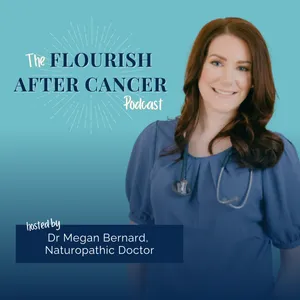
Join me, Dr Megan Bernard, Naturopathic Doctor, and guest experts as we teach you how to not just survive, but to thrive past cancer. Using research-backed information with a holistic spin, I’ll dive deep into the best nutrition, supplements, lifestyle changes, and testing to help you to feel better faster after treatment and to reduce your risk of cancer coming back.
Latest Episodes
The most recent episodes — sign up to get AI-powered summaries of each one.
- 4 days ago14 min
68: 7 Things I’d Prioritize If I Finished Cancer Treatment Today
Treatment is over, and now it feels like keeping cancer from coming back is all on you. So you clean up your diet, add another supplement, save every anticancer food list, and try to follow all the advice you've been given. And underneath all that effort, a quiet worry keeps showing up: "Am I working on the right things for my body, or am I just doing more?" 😮💨 In this episode of The Flourish After Cancer Podcast, I share the seven things I'd prioritize if I finished cancer treatment today, and why taking more supplements wouldn't be at the top of my list. This episode is designed to help you: Trade guesswork for real data about your body Put your time, money, and energy where they count most Build a stronger body while getting back to enjoying your life 💛 ⚠️ This is a must-listen if: You just finished treatment and feel unsure what to focus on now You're eating better and taking supplements but can't tell if any of it is working You've started accepting fatigue, brain fog, or poor sleep as your new normal You miss the structure you had during treatment and want a clear plan You want to lower your recurrence risk without it taking over your life ✨ In this episode, you'll learn: Which blood markers to look at beyond a standard CBC, including fasting insulin, HbA1c, inflammation markers, vitamin D, and iron How epigenetic testing can help personalize your nutrition and supplement choices Why strength training two to three times a week matters for blood sugar, metabolic health, and bone strength What lingering symptoms like fatigue and brain fog may be telling you How to look after your bone density, heart health, and metabolism alongside recurrence prevention 💡 You'll leave this episode with: Seven clear priorities in place of an endless to-do list A simple way to set goals, pick your markers, and reassess in three to six months Permission to stop adding more and focus on what matters for your body More confidence that your effort is moving you forward 🔗 Episode Relevant Resources • The Cancer Recurrence Prevention Blueprint: https://flourishaftercancer.com/blueprint I'm Dr. Megan, a licensed naturopathic doctor. My team and I have worked with hundreds of women globally to rebuild their health after cancer and reduce recurrence risk using science-backed nutrition, lifestyle, and targeted supplement strategies — so they can feel confident, strong, and free to enjoy life again. ✨ Let's Connect! Book a free Roadmap Call and let's chat about how we can help: https://flourishaftercancer.com/nextsteps Follow me: Instagram: @MeganBernardND Facebook: @MeganBernardND Website: https://flourishaftercancer.com/ Medical Disclaimer: The information provided in these videos and podcasts is for educational purposes only and is not intended to diagnose, treat, cure, or prevent any disease. Consult with a qualified healthcare provider before making any changes to your diet, medications, or lifestyle. Content is not a substitute for professional medical advice or care.
- 1 weeks ago6 min
67: Worried Sugar Is Feeding Cancer? Do These 4 Things Instead
You've seen the posts saying sugar feeds cancer, and now every piece of fruit and every slice of birthday cake comes with a little side of guilt 😮💨 Blood sugar does matter after cancer, and it's one of the connections most women never hear about once treatment ends. Steadier blood sugar supports your immune system, calms the inflammatory signals that can help cancer start and grow, and limits access to a fuel source cancer cells use. The good news is that getting there doesn't take a restrictive eating plan or a cabinet full of supplements. In this episode, I walk you through four simple, research-backed tools to manage your blood sugar and support a lower recurrence risk, and you can start using every one of them at your very next meal. ⚠️ This is a must-listen if: You've heard that sugar feeds cancer and now feel unsure about eating fruit or dessert You want to lower your recurrence risk without following a strict diet You notice energy crashes or cravings after meals and want to understand why You want small changes you can start today that fit your real life ✨ In this episode, you'll learn: What PHFF (protein, healthy fat, and fiber) is, and why that combination slows the rise in blood sugar How the order you eat your food changes your blood sugar response, even when the meal stays exactly the same Why a 10 to 20 minute walk right after eating helps your muscles pull glucose out of your bloodstream What the research shows about one tablespoon of apple cider vinegar before a carb-heavy meal How steady blood sugar connects to immune support, inflammation, and recurrence risk 💡 You'll leave this episode with: Four tools you can put to work at your very next meal Easy snack ideas, like an apple with almond butter or a handful of nuts with raspberries Permission to aim for balanced most of the time, not perfect all the time A clearer sense of where blood sugar fits in your bigger recurrence prevention picture 🔗 Episode Relevant Resources The First 4 Steps To Staying Cancer Free After Cancer (free training): https://flourishaftercancer.com/presentation Episode blog post: https://flourishaftercancer.com/blog/e67 I'm Dr. Megan, a licensed naturopathic doctor. My team and I have worked with hundreds of women globally to rebuild their health after cancer and reduce recurrence risk using science-backed nutrition, lifestyle, and targeted supplement strategies — so they can feel confident, strong, and free to enjoy life again. ✨ Let's Connect! Book a free Roadmap Call and let's chat about how we can help: https://flourishaftercancer.com/nextsteps Follow me: Instagram: @MeganBernardND Facebook: @MeganBernardND Website: https://flourishaftercancer.com/ Medical Disclaimer: The information provided in these videos and podcasts is for educational purposes only and is not intended to diagnose, treat, cure, or prevent any disease. Consult with a qualified healthcare provider before making any changes to your diet, medications, or lifestyle. Content is not a substitute for professional medical advice or care.
- 2 weeks ago28 min
66: Why “Boosting Your Immune System” Is the Wrong Goal After Cancer
Your treatment is over… but your white blood cells are still the headline of every lab report. Somewhere along the way, you heard that your immune system is supposed to catch cancer cells before they become a problem. So now a quiet question follows you around: "Did my immune system fail me?" "What can I take to boost it, naturally?" "Is this mushroom powder enough?" 😮💨 It makes complete sense to want to turn your immune system "up." But your immune system isn't a muscle where stronger is always better — and an immune system that's overactive, or active in the wrong way, can create its own problems. In this episode of The Flourish After Cancer Podcast, I talk about why "boosting your immune system" is the wrong goal after cancer, and what a well-regulated, responsive immune system actually looks like. ⚠️ This is a must-listen if: You've been searching for the best supplement to "boost" your immunity You worry your immune system let you down Your WBC count or neutrophil-to-lymphocyte ratio (NLR) keeps you up at night You're curious about mushrooms or mistletoe but unsure what the evidence says You want to support your immune system without chasing the next product ✨ In this episode, you'll learn: Why cancer doesn't necessarily mean your immune system was weak How the same immune cells can either fight or support cancer depending on their environment What your neutrophil-to-lymphocyte ratio (NLR) can and can't tell you The difference between "immune stimulating" and "immunomodulating" — and what research shows on mushrooms and mistletoe How sleep, movement, stress, and nutrition shape the terrain your immune system works in 💡 You'll leave this episode with: Less blame and more understanding about why cancer happened A clearer question to ask: how do I create the conditions for my immune system to do its job? A calmer way to read your blood work without fixating on one number Practical, everyday places to focus instead of searching for a magic supplement 🔗 Episode Relevant Resources The First 4 Steps To Staying Cancer Free After Cancer: https://flourishaftercancer.com/watchmasterclass • Start with the Cancer Recurrence Prevention Blueprint: https://flourishaftercancer.com/blueprint • E22 How To Block Cancer Recurrence by Changing The Tumor Neighbourhood: https://youtu.be/x9nQeqEPYzw I'm Dr. Megan, a licensed naturopathic doctor. My team and I have worked with hundreds of women globally to rebuild their health after cancer and reduce recurrence risk using science-backed nutrition, lifestyle, and targeted supplement strategies — so they can feel confident, strong, and free to enjoy life again. ✨ Let's Connect! Book a free Roadmap Call and let's chat about how we can help: https://flourishaftercancer.com/nextsteps Follow me: Instagram: @MeganBernardND Facebook: @MeganBernardND Website: https://flourishaftercancer.com/ Medical Disclaimer: The information provided in these videos and podcasts is for educational purposes only and is not intended to diagnose, treat, cure, or prevent any disease. Consult with a qualified healthcare provider before making any changes to your diet, medications, or lifestyle. Content is not a substitute for professional medical advice or care.
- 3 weeks ago18 min
65: Ozone Therapy After Cancer: What We Know and What Still Needs Research
If you’ve spent any time on social media since your diagnosis, you’ve probably seen ozone therapy. Maybe it was someone sitting with two IVs while their blood ran through a filter, and a caption that made it sound like it fixes everything. When you’re in treatment or just finished, it’s hard to know whether that’s worth a closer look or just one more expensive thing to add to the pile. In this episode of The Flourish After Cancer Podcast, I talk with Joanie Jackson, a board-certified family nurse practitioner. She’s the founder of Freedom Integrative Wellness Clinic and Freedom Integrative Cancer Center in Fort Mill, South Carolina. Joanie is certified in ozone and mistletoe therapy, and she works with patients before, during, and after cancer treatment. We walk through what ozone is and the different ways it’s given, from EBOO, a two-IV procedure, to rectal ozone, which uses no needles at all. We also cover how she times it around chemo and radiation, which blood markers she tracks, and where the research still has gaps. ⚠️ This is a must-listen if: You’ve seen ozone or EBOO on social media and want to know what it involves You’re curious about integrative options but feel stuck between your oncologist and everything you read online Chemo has made IVs hard for you, and you’re wondering what other options exist You want to know which blood markers an integrative provider might track You want a clear picture of what’s known and what still needs research ✨ In this episode, you’ll learn: What ozone (O3) is and how it differs from the oxygen we breathe How EBOO, IV ozone, and rectal ozone differ in intensity, time, and cost Why Joanie individualizes every dose and schedules ozone just before the next chemo session Which markers she tracks, including LDH, inflammatory markers, fibrinogen, and VEGF Why ozone is considered off-label in the US, and which studies she’d like to see 💡 You’ll leave this episode with: A realistic picture of what ozone therapy involves Questions to bring to your oncologist and to any integrative provider An understanding of why timing and individualized dosing matter More confidence advocating for yourself without feeling torn 🔗 Episode Relevant Resources: Learn more about Joanie Jackson and Freedom Integrative Wellness: https://www.freedomintegrativewellness.com Follow Freedom Integrative Wellness on Instagram: https://www.instagram.com/freedomintegrativewellness I’m Dr. Megan, a licensed naturopathic doctor. My team and I have worked with hundreds of women globally to rebuild their health after cancer and reduce recurrence risk using science-backed nutrition, lifestyle, and targeted supplement strategies — so they can feel confident, strong, and free to enjoy life again. ✨ Let’s Connect! Book a free Roadmap Call and let’s chat about how we can help: https://flourishaftercancer.com/nextsteps Follow me: Instagram: @MeganBernardND Facebook: @MeganBernardND Website: https://flourishaftercancer.com/ Medical Disclaimer: The information provided in these videos and podcasts is for educational purposes only and is not intended to diagnose, treat, cure, or prevent any disease. Consult with a qualified healthcare provider before making any changes to your diet, medications, or lifestyle. Content is not a substitute for professional medical advice or care.
- Oct 21, 202627 min
64: Cancer Is A Metabolic Disease, Here’s Why That’s Great
You’ve been told to lower your stress after cancer, and you’ve probably felt the quiet pressure of that advice every time life refused to cooperate. A scan date, a lab result, a hard conversation at home, and suddenly managing stress becomes one more thing you feel like you’re failing at. 😮💨 In this episode, I sit down with Dr. Donese Worden, a naturopathic medical doctor and researcher who has spent more than two decades studying metabolic oncology. We talk about the metabolic side of cancer and the tiny organelles at the center of it, your mitochondria. We cover why she calls mitochondria the motherboard of your body and why the goal is stress resilience rather than a stress-free life. We also get into how your muscles help your body handle glucose, and why a bag full of supplements with no plan behind it can create more problems than it solves. ⚠️ This is a must-listen if: You’ve heard cancer described as metabolic and want to understand what that means for you You feel like you’re failing at “reducing stress” because life keeps happening You have a cabinet full of supplements and no clear sense of how they work together You’re short on time and energy and want movement that fits where you are You want two doctors talking openly about what the science supports today and what’s still being studied ✨ In this episode, you’ll learn: What mitochondria do beyond making energy, including helping regulate detox pathways and whether a damaged cell repairs itself or self-destructs Why active muscle works as a glucose sink, and what emerging research says about short bursts of movement Why short, acute stress can be protective while chronic stress is the one to work on Why stacking supplements without a plan can burden your liver and kidneys and interact with treatment How Dr. Worden thinks about hope, data, and the reality that you’re more than a statistic 💡 You’ll leave this episode with: A clear picture of the basics that support metabolic health: food, movement, sleep, and stress resilience Permission to stop chasing a stress-free life A realistic way to move your body on low-energy days More confidence asking what the evidence supports before adding something new 🔗 Episode Relevant Resources Learn more about Dr. Donese Worden: https://drworden.com Dr Donese Worden on Instagram: @DrDoneseWorden I’m Dr. Megan, a licensed naturopathic doctor. My team and I have worked with hundreds of women globally to rebuild their health after cancer and reduce recurrence risk using science-backed nutrition, lifestyle, and targeted supplement strategies — so they can feel confident, strong, and free to enjoy life again. ✨ Let’s Connect! Book a free Roadmap Call and let’s chat about how we can help: https://flourishaftercancer.com/nextsteps Follow me: Instagram: @MeganBernardND Facebook: @MeganBernardND Website: https://flourishaftercancer.com/ Medical Disclaimer: The information provided in these videos and podcasts is for educational purposes only and is not intended to diagnose, treat, cure, or prevent any disease. Consult with a qualified healthcare provider before making any changes to your diet, medications, or lifestyle. Content is not a substitute for professional medical advice or care.
- Oct 14, 202630 min
63: The Mistake Most Cancer Survivors Make Trying to Block Cancer
Whether you were just diagnosed or finished treatment years ago, the instinct is usually the same: find the thing that fights the cancer. "What's the best cancer-killing supplement for my type of cancer?" "Am I doing enough?" "What if I'm missing the one thing that matters?" 😮💨 But timing matters as much as the tool you choose. The same supplement or nutrition change can help in one phase of care, do very little in another, and sometimes even get in the way. In this episode, I walk you through the two phases of cancer care using the picture of a boat in a storm, so you can figure out where you are right now and what your body needs from you in this season. ⚠️ This is a must-listen if: You're newly diagnosed or in chemo and searching for the "best" cancer-killing supplement You're in radiation, recovering from surgery, on hormone-blocking medication, or in immunotherapy and wondering what to do now Your care team told you you're done, and you're left wondering who is helping you prevent a recurrence You finished treatment months or even years ago and still don't feel like yourself You want to stop guessing and know what to focus on, and when ✨ In this episode, you'll learn: How to tell whether you're in phase one (the storm) or phase two (dry dock) Why protecting your healthy "bystander" cells and organ systems comes first during harsh treatment The 90/10 principle, and why cancer-killing supplements are only a small part of the job What repairing, strengthening, and optimizing your body looks like once treatment stabilizes Why it's easier to resolve inflammation now than to wait years down the road 💡 You'll leave this episode with: A clear picture of which phase you're in right now A better sense of where to put your energy and what can wait Relief from the pressure to find the one perfect supplement Reassurance that there's still so much you can do, even if treatment ended a decade ago More confidence in your body's ability to handle whatever comes next I'm Dr. Megan, a licensed naturopathic doctor. My team and I have worked with hundreds of women globally to rebuild their health after cancer and reduce recurrence risk using science-backed nutrition, lifestyle, and targeted supplement strategies — so they can feel confident, strong, and free to enjoy life again. ✨ Let's Connect! Book a free Roadmap Call and let's chat about how we can help: https://flourishaftercancer.com/nextsteps Follow me: Instagram: @MeganBernardND Facebook: @MeganBernardND Website: https://flourishaftercancer.com/ Medical Disclaimer: The information provided in these videos and podcasts is for educational purposes only and is not intended to diagnose, treat, cure, or prevent any disease. Consult with a qualified healthcare provider before making any changes to your diet, medications, or lifestyle. Content is not a substitute for professional medical advice or care.
- Oct 7, 202633 min
62: Fearing Estrogen To Stop Breast Cancer...Or Missing The Real Drivers Of Recurrence?
If you've had ER+ breast cancer, estrogen probably feels like the enemy, and every food label, lotion, and supplement bottle comes with the same question: "Is this raising my estrogen?" 😮💨 Here's the hopeful part. Lowering recurrence risk was never about chasing estrogen to zero. It's about what your body does with the estrogen it already has. In this episode, I walk you through where your estrogen comes from, which forms are more harmful or more protective, and how your body clears it, plus the four areas you can support to keep that system working in your favor. 💛 🔗 Episode Relevant Resources • The Breast Cancer Freedom Workshop: https://flourishaftercancer.com/freedom • E60 Can You Take Estrogen To Treat Menopause After Breast Cancer?: https://flourishaftercancer.com/post/e60 ⚠️ This is a must-listen if: • Estrogen has felt like something to fear since your ER+ diagnosis. • You've cut foods or products to avoid estrogen and don't know if it's helping. • You want to know where DIM, sulforaphane, and estrogen testing fit. ✨ In this episode, you'll learn: • Why "more estrogen means more risk" is too simple. • How your liver turns estrogen into more protective (2-OH) or more harmful (4-OH and 16-OH) forms. • How fiber and gut health decide whether estrogen leaves your body or gets recirculated. • What urine, saliva, and GI testing can show you. 💡 You'll leave this episode with: • Relief from the idea that your estrogen has to go to zero. • A clear picture of the four areas that shape your estrogen: exposure, liver, epigenetics, and elimination. • Simple starting points like cruciferous vegetables, more fiber, and less alcohol. I’m Dr. Megan, a licensed naturopathic doctor. My team and I have worked with hundreds of women around the world to rebuild their health after cancer and reduce their risk of recurrence through science-backed nutrition, lifestyle, and targeted supplement strategies—so they can feel confident, strong, and free to enjoy life again. ✨ Let’s Connect! Book a free Roadmap Call to discuss how we can help: https://flourishaftercancer.com/nextsteps Follow me: Instagram: @MeganBernardND Facebook: @MeganBernardND Website: https://flourishaftercancer.com/ Medical Disclaimer: The information provided in these videos and podcasts is for educational purposes only and is not intended to diagnose, treat, cure, or prevent any disease. Consult a qualified healthcare provider before making changes to your diet, medications, or lifestyle. This content is not a substitute for professional medical advice or care.
- Sep 30, 202636 min
61: Is A Mammogram Your Best Screening Option For Recurrence Risk?
A viral claim swept across social media a few months ago: a prominent breast surgeon said that mammograms cause breast cancer. The fear spread quickly, and so did the confusion. If you’re a woman navigating life after breast cancer, that kind of claim isn’t just noise. It’s the kind of thing that can keep you up at night, wondering whether the test meant to protect you might actually be putting you at risk. In this episode of The Flourish After Cancer Podcast, I break down what the research actually says about mammograms, the real math behind radiation exposure, how mammograms compare with ultrasounds, MRIs, QT scans, and thermography, and why breast density might be the part of your screening picture that no one has explained to you yet. ✨ This episode is designed to help you: Understand the actual radiation numbers instead of relying on scary headlines Learn what your BI-RADS category and breast density mean for your screening plan Choose your next screening step with clarity instead of fear 💛 ⚠️ This is a must-listen if: You’ve seen headlines about mammograms and radiation and don’t know what to believe You’ve been told you have dense breasts but don’t know what that actually means for you You want to make screening decisions with clarity instead of fear You’ve wondered whether there’s a “better” option than a standard mammogram You want to understand the real trade-offs among mammograms, ultrasounds, MRIs, and other tests—not just opinions ✨ In this episode, you’ll learn: How much radiation exposure comes from a mammogram compared with everyday life Why overdiagnosis is one of the most valid concerns surrounding mammograms—and what it actually means How mammograms compare with ultrasounds, QT scans, MRIs, and thermography Why breast density affects the accuracy of your results What your BI-RADS category indicates and whether you may need additional imaging 💡 You’ll leave this episode with: A clearer, less fear-driven understanding of what a mammogram actually does Specific questions to ask your provider about breast density and BI-RADS categories A simple framework for weighing the benefits and limitations of each screening option More confidence in advocating for the imaging that’s right for your body 🔗 Episode Resources: Join me live for the Breast Cancer Freedom Workshop, October 13–15: https://flourishaftercancer.com/freedom E32: Is It Really Gone? How to Check for Recurrence Without a Scan: https://youtu.be/z2hi-cpbQK0 I’m Dr. Megan, a licensed naturopathic doctor. My team and I have worked with hundreds of women around the world to rebuild their health after cancer and reduce their risk of recurrence through science-backed nutrition, lifestyle, and targeted supplement strategies—so they can feel confident, strong, and free to enjoy life again. ✨ Let’s Connect! Book a free Roadmap Call to discuss how we can help: https://flourishaftercancer.com/nextsteps Follow me: Instagram: @MeganBernardND Facebook: @MeganBernardND Website: https://flourishaftercancer.com/ Medical Disclaimer: The information provided in these videos and podcasts is for educational purposes only and is not intended to diagnose, treat, cure, or prevent any disease. Consult a qualified healthcare provider before making changes to your diet, medications, or lifestyle. This content is not a substitute for professional medical advice or care.
Get The Flourish After Cancer Podcast summaries in your inbox
Free AI-powered daily recaps. Key takeaways, quotes, and mentions — in a 5-minute read.
Get Free Summaries →Free forever for up to 3 podcasts. No credit card required.
You Might Also Like
Listeners also like.

Thrive Through and Beyond Cancer
Season Johnson

INTERLUDE: Cancer Stories with Dr. Teplinsky
Eleonora Teplinsky
Treated with Dr. Sara Szal
Dr. Sara Szal explores holistic health solutions through conversations with experts and patients seeking mind, body, and soul healing.

Well Beyond 40
Women in midlife and beyond explore nutrition, fitness, and mindfulness to support healthy aging.

Red Pill Your Healthcast
Two healthcare providers discuss overlooked health issues and empower listeners to make informed decisions for their families.
The Dr. Hyman Show
Explores root causes of chronic disease and promotes functional medicine, nutrition, and preventive health through expert discussions.

The EMPWR Podcast
A fitness entrepreneur shares workout tips, nutrition advice, and personal stories to support holistic wellness and self-empowerment.

FoundMyFitness
A podcast exploring health, science, nutrition, aging, and fitness.
The NANP Nourishing You Podcast
National Association of Nutrition Professionals (NANP)

Everyday Wellness: Midlife Hormones, Menopause, and Science for Women 35+
A nurse practitioner shares science-based strategies for managing midlife hormones, menopause, and women's health.

Feel Better, Live More with Dr Rangan Chatterjee
A doctor-hosted podcast offering practical health advice on eating, sleeping, moving, and relaxing from medical experts and real-life stories.
DR. GUNDRY PODCAST: GUT HEALTH, WEIGHT LOSS, AND NUTRITION
Explores gut health, nutrition, and chronic illness through the lens of plant-based diets, lectin avoidance, and microbiome science.
About The Flourish After Cancer Podcast
Join me, Dr Megan Bernard, Naturopathic Doctor, and guest experts as we teach you how to not just survive, but to thrive past cancer. Using research-backed information with a holistic spin, I’ll dive deep into the best nutrition, supplements, lifestyle changes, and testing to help you to feel better faster after treatment and to reduce your risk of cancer coming back.
Customized Recaps
AI-powered recaps with compact key takeaways, quotes, and insights.
Straight to Your Inbox
Get key takeaways from The Flourish After Cancer Podcast in a 5-minute read.
Save Hours Every Week
Stay current on your favorite podcasts without falling behind.
Frequently Asked Questions
What is Podzilla's The Flourish After Cancer Podcast daily summary?
It's a free AI-powered email that summarizes new episodes of The Flourish After Cancer Podcast as soon as they're published. You get the key takeaways, notable quotes, and links & mentions — all in a quick read.
How does the The Flourish After Cancer Podcast podcast summary work?
When a new episode drops, our AI transcribes and analyzes it, then generates a personalized summary tailored to your interests and profession. It's delivered to your inbox every morning.
Is this an official The Flourish After Cancer Podcast product?
No. Podzilla is an independent service that summarizes publicly available podcast content. We're not affiliated with or endorsed by Flourish After Cancer.
Can I get summaries of other podcasts too?
Absolutely! The free plan covers up to 3 podcasts, any in the catalog. Basic raises that to 15, Pro to 40 and Max to 100. Browse our full catalog at /podcasts.
How often does The Flourish After Cancer Podcast release new episodes?
The Flourish After Cancer Podcast publishes weekly. Our AI generates a summary within hours of each new episode.
What topics does The Flourish After Cancer Podcast cover?
The Flourish After Cancer Podcast covers topics including Fitness, Health & Fitness. Our AI identifies the specific themes in each episode and highlights what matters most to you.
Start getting The Flourish After Cancer Podcast summaries tomorrow morning.
Free forever for up to 3 podcasts. No credit card required.
Free forever for up to 3 podcasts. No credit card required.