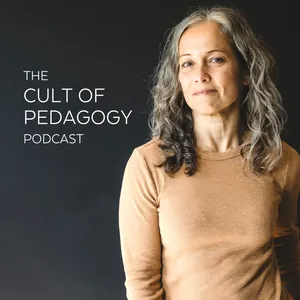
Free Daily Podcast Summary
The Cult of Pedagogy Podcast: Daily Summaries Delivered
by Jennifer Gonzalez
Teaching strategies, classroom management, education reform, educational technology -- if it has something to do with teaching, we're talking about it. Jennifer Gonzalez interviews educators, students, administrators and parents about the psychological and social dynamics of school, trade secrets, and other juicy things you'll never learn in a textbook.
Latest Episodes
The most recent episodes — sign up to get AI-powered summaries of each one.
- 1 weeks ago33 min
280: A Realistic Approach to Differentiation
In Part 4 of our Back to Basics series on unit planning, we're taking our sample unit and building in more differentiation. I'm putting out this series as an introduction to my new online course, Mastering the Lesson Plan. These four episodes will give you the big picture, but the course takes a much deeper dive into each step of the process and gives you practical tools you can use to plan stronger instruction. To learn more about the course, visit cultofpedagogy.com/teaching101. ___________________________ Thanks to Brilliant and Notability for sponsoring the episode. To read a written version of this podcast, visit cultofpedagogy.com/realistic-differentiation.
- 3 weeks ago34 min
279: How to Write a Lesson Plan
We've reached part 3 of our Back to Basics series on unit planning! Last episode, we built the assessment plan for our sample unit that included diagnostic, formative, and summative assessments. Now it's time to choose the learning activities that will move students toward success on those assessments: the daily lesson plans. I'm putting out this series as an introduction to my new online course, Mastering the Lesson Plan. These four episodes will give you the big picture, but the course takes a much deeper dive into each step of the process and gives you practical tools you can use to plan stronger instruction. To learn more about the course, visit cultofpedagogy.com/teaching101. ___________________________ Thanks to Brilliant and Notability for sponsoring the episode. To read a written version of this podcast, visit cultofpedagogy.com/how-to-write-a-lesson-plan.
- Aug 16, 202626 min
278: How to Create an Assessment Plan
It's part 2 of our Back to Basics series on unit planning! Last episode, we looked at the overall process and started by setting measurable objectives for a sample unit. Now we're going to design a unit assessment plan that includes diagnostic, formative, and summative assessments. I'm putting out this series as an introduction to my new online course, Mastering the Lesson Plan. These four episodes will give you the big picture, but the course takes a much deeper dive into each step of the process and gives you practical tools you can use to plan stronger instruction. To learn more about the course, visit cultofpedagogy.com/teaching101. ___________________________ Thanks to Brilliant and Notability for sponsoring the episode. To read a written version of this podcast, visit cultofpedagogy.com/how-to-create-an-assessment-plan/.
- Aug 9, 202621 min
277: How to Plan a Unit of Instruction
I'm kicking off a four-episode Back to Basics series that will offer a practical overview of how to effectivley plan a unit of instruction. This week we'll start with the big picture, an overview of the process I use for planning a unit, starting with setting measurable objectives and getting a sense for how you will assess them at the end of the unit. In the next episode, we'll zoom in on that process of designing the assessment plan. I'm putting out this series as an introduction to my new online course, Mastering the Lesson Plan. These four episodes will give you the big picture, but the course takes a much deeper dive into each step of the process and gives you practical tools you can use to plan stronger instruction. To learn more about the course, visit cultofpedagogy.com/teaching101. ___________________________ Thanks to Alpaca and iCivics for sponsoring the episode. To read a written version of this podcast, visit cultofpedagogy.com/how-to-plan-a-unit-of-instruction.
- Aug 2, 202652 min
276: A Classroom Ritual for Peer Affirmations
Character education often gets lip service in schools — we say it matters, but rarely build a real system to make it happen. What if students could regularly practice noticing and naming character strengths like self-efficacy, depth, and generosity in each other through anonymous nominations? On the podcast this week, high school English teacher Marcus Luther returns to share a system he created that does exactly that. ___________________________ Thanks to Alpaca and Notability for sponsoring the episode. To read a written version of this podcast, visit cultofpedagogy.com/peer-affirmations. To learn more about my upcoming course, Mastering the Lesson Plan, visit cultofpedagogy.com/teaching101.
- Jun 21, 202653 min
275: Three Fresh Ideas for Structuring Professional Development
What often sets the best PD experiences apart are a few intentional choices in how that learning is designed. In this episode, I talk with Jenn White and Josh Kurzweil of Berkeley LTC about three simple but powerful practices they use when designing professional learning for adults: Pre-During-Post, Curated Q&A, and Poster Sessions. All of these strategies create more opportunities for participants to discuss, reflect on, and apply what they're learning, and they can make your next PD a lot better. ___________________________ Thanks to Alpaca and Notability for sponsoring the episode. To read a written version of this podcast, visit cultofpedagogy.com/3-fresh-pd-structures. To learn more about my upcoming course, Mastering the Lesson Plan, visit cultofpedagogy.com/teaching101.
- Jun 7, 20261h 51m
274: Why School in Denmark is Better, and What We Can Learn from Them
When Pernille Ripp moved from the U.S., where she had taught for over a decade, to her native country of Denmark, she was immediately struck by how different school was. In this episode, we'll explore why Danish schools are so good for teachers and students, and which practices we might be able to adopt in the U.S. ___________________________ Thanks to Alpaca and iCivics for sponsoring the episode. To read a written version of this podcast, visit cultofpedagogy.com/danish-school.
- Apr 27, 202626 min
273: The Art of Classroom Timing: 10 Ways to Fit it All In
It can ruin even the most carefully designed lessons: An activity you had planned takes way longer than you thought it would. Or worse, it takes way less time. And sometimes it can be both, with some students finishing a task in five minutes while others need half an hour. Getting classroom pacing just right is an art that takes practice and technique. In this episode, I'll share 10 habits you can build into your classroom routine that can prevent many of these problems from happening, or help you deal with them much more effectively when they do. ___________________________ Thanks to Renaissance and Erikson Institute for sponsoring the episode. To read a written version of this podcast, visit cultofpedagogy.com/classroom-timing. To learn more about my upcoming course, Mastering the Lesson Plan, visit cultofpedagogy.com/teaching101.
Get The Cult of Pedagogy Podcast summaries in your inbox
Free AI-powered daily recaps. Key takeaways, quotes, and mentions — in a 5-minute read.
Get Free Summaries →Free forever for up to 3 podcasts. No credit card required.
You Might Also Like
Listeners also like.
Habits and Hustle
Explores the daily habits and personal routines of successful entrepreneurs and thought leaders through candid interviews.
Play Therapy Podcast: A Master-Class in Child-Centered Play Therapy
Teaches child-centered play therapy techniques through expert training for therapists.
De Facto Leaders
Pediatric therapist Dr. Karen Dudek-Brannan shares evidence-based strategies for educators and clinicians to support student growth and leadership.
Good Inside with Dr. Becky
A clinical psychologist provides practical guidance for handling common parenting challenges and improving parent-child relationships.

Education Research Reading Room
Conversations with global education experts exploring how learning works, from classroom practices to academic research.
Culture Apothecary with Alex Clark
Experts share holistic remedies to heal cultural wounds through candid conversations on wellness, identity, and systemic change.
Education America Podcast
Explores K–12 education choices and how to align school curriculum with family values.

The Lazy Genius Podcast
A practical guide to simplifying life by focusing energy on what matters and letting go of the rest.

The Rachel Hollis Podcast
A self-help podcast blending personal growth advice, humor, and real-life stories to help listeners build a fulfilling life.
Stanford Psychology Podcast
Students interview psychologists about recent research and its real-world applications in mental health, behavior, and cognition.

The Middle School Mary Poppins Podcast
Practical parenting strategies and brain science to help caregivers understand and support tweens through middle school challenges.
Psychiatry & Psychotherapy Podcast
Explores psychiatry and psychotherapy through interviews with experts, trainees, and individuals sharing lived mental health experiences.
About The Cult of Pedagogy Podcast
Teaching strategies, classroom management, education reform, educational technology -- if it has something to do with teaching, we're talking about it. Jennifer Gonzalez interviews educators, students, administrators and parents about the psychological and social dynamics of school, trade secrets, and other juicy things you'll never learn in a textbook.
Customized Recaps
AI-powered recaps with compact key takeaways, quotes, and insights.
Straight to Your Inbox
Get key takeaways from The Cult of Pedagogy Podcast in a 5-minute read.
Save Hours Every Week
Stay current on your favorite podcasts without falling behind.
Frequently Asked Questions
What is Podzilla's The Cult of Pedagogy Podcast daily summary?
It's a free AI-powered email that summarizes new episodes of The Cult of Pedagogy Podcast as soon as they're published. You get the key takeaways, notable quotes, and links & mentions — all in a quick read.
How does the The Cult of Pedagogy Podcast podcast summary work?
When a new episode drops, our AI transcribes and analyzes it, then generates a personalized summary tailored to your interests and profession. It's delivered to your inbox every morning.
Is this an official The Cult of Pedagogy Podcast product?
No. Podzilla is an independent service that summarizes publicly available podcast content. We're not affiliated with or endorsed by Jennifer Gonzalez.
Can I get summaries of other podcasts too?
Absolutely! The free plan covers up to 3 podcasts. Upgrade to Pro for 15, or Premium for 50. Browse our full catalog at /podcasts.
How often does The Cult of Pedagogy Podcast release new episodes?
The Cult of Pedagogy Podcast publishes biweekly. Our AI generates a summary within hours of each new episode.
What topics does The Cult of Pedagogy Podcast cover?
The Cult of Pedagogy Podcast covers topics including Education. Our AI identifies the specific themes in each episode and highlights what matters most to you.
Start getting The Cult of Pedagogy Podcast summaries tomorrow morning.
Free forever for up to 3 podcasts. No credit card required.
Free forever for up to 3 podcasts. No credit card required.