Free Daily Podcast Summary
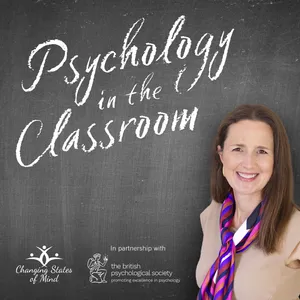
Psychology in the Classroom: Daily Summaries Delivered
by Lucinda Powell
Get key takeaways, quotes, and insights from Psychology in the Classroom in a 5-minute read. Delivered straight to your inbox.
Latest Episodes
The most recent episodes — sign up to get AI-powered summaries of each one.
- 1 weeks ago30 min
How Do Habits Shape Students' Use of Effective Learning Strategies?
...with Ann-Kathrin Krause In this episode, Ann-Katrin Krause, a PhD student in educational psychology at the Leibniz Institute for Research and Information in Education in Frankfurt, discusses her research on the role of habits in students' learning strategy use, exploring why students often default to ineffective strategies like rereading despite knowing better alternatives exist. The conversation covers how environmental cues trigger habitual behaviours, the distinction between automaticity and effectiveness, and practical strategies like habit stacking and if-then planning. Ann-Katrin also highlights how teachers can foster effective study habits by embedding strategies into classroom routines. Ann-Kathrin Research can be found here: https://link.springer.com/article/10.1007/s10648-025-10087-3 Futher reading is available here: Gardner, B., & Rebar, A. L. (2019). Habit formation and behavior change. Oxford Research Encyclopedia of Psychology. Oxford University Press. https://doi.org/10.1093/acrefore/9780190236557.013.129 Gardner, B., Rebar, A. L., De Wit, S., & Lally, P. (2024). What is habit and how can it be used to change real-world behaviour? Narrowing the theory–reality gap. Social and Personality Psychology Compass, 18(6), 1–17. https://doi.org/10.1111/spc3.12975 Podcast bullet points: Research on students' self-regulated learning skills The role of habits in learning and strategy use The gap between knowledge of effective strategies and actual behavior Environmental cues and their influence on habit formation The distinction between automaticity and effectiveness in study habits The impact of motivation and self-discipline on study behaviors The importance of teacher support in developing effective study habits Strategies for habit formation, including "habit stacking" and implementation intentions The role of rewards in reinforcing study habits The need for self-awareness and reflection in changing study behaviours
- 3 weeks ago38 min
How Can Positive Psychology Transform Wellbeing in Secondary Schools?
...with Hannah Brownhill To kick off the summer term, Hannah Brownhill, a positive psychology practitioner and former secondary teacher shares her insights into embedding wellbeing in to schools through positive psychology. Following her Churchill Fellowship research in Australia, Hannah shares how schools can move beyond "wellbeing as an add-on" to create a culture of genuine flourishing. This episode explores the PERMA framework, the power of character strengths, and the systemic shifts needed in UK education. Hannah also offers practical, classroom-ready strategies for teachers, alongside honest reflections on the systemic challenges facing UK schools and encouragement to start small, prioritising your own wellbeing first. Key Discussion Points The Australian Model: Insights from schools successfully embedding positive education into their DNA. The PERMA Framework: Breaking down the five pillars of wellbeing: Positive Emotion, Engagement, Relationships, Meaning, and Accomplishment. Strengths-Based Teaching: How shifting our language from deficits to strengths transforms classroom dynamics. Staff First: Why teacher wellbeing is the essential foundation for student flourishing. Resources The PERMA Framework: https://ppc.sas.upenn.edu/learn-more/perma-theory-well-being-and-perma-workshops Character Strengths Guide: https://www.viacharacter.org/character-strengths-and-virtues Churchill Fellowship Research: https://www.churchillfellowship.org/ideas-experts/fellows-directory/hannah-brownhill/ Hannah Brownhill Linkedin: https://www.linkedin.com/in/hannah-brownhill-53a78919a/ Bullet point summary: Transition from secondary school teaching to positive psychology practice Definition and principles of positive psychology Application of positive psychology in education through positive education Overview of the PERMA framework (Positive Emotion, Engagement, Relationships, Meaning, Accomplishment) Importance of embedding wellbeing into the school culture rather than as an add-on Challenges and strategies for implementing positive education in secondary schools The concept of wellbeing literacy and its role in creating coherence among staff Use of character strengths in the classroom and their impact on student interactions Quick wins for teachers to incorporate positive education in their practice Measuring the impact of positive education initiatives and the complexities involved in assessing wellbeing
- Apr 14, 202614 min
Spring Takeover: Exploring the Multi-Store Model of Memory and the Rise of AI in Psychotherapy
Kicking off the summer term, this episode features two brilliant sixth-form students sharing their passion for psychology. Estelle, a year 13 student unpacks the multi-store model of memory, offering teachers genuinely practical strategies around attention, rehearsal, and retrieval practice to support student learning. Then Charlie, a Year 12 student, explores the exciting and thought-provoking role of AI in psychotherapy, examining how technology is making mental health support more accessible and affordable. Together, they demonstrate just how dynamic and relevant psychology is today — a timely reminder of the incredible thinking happening in our classrooms. A bullet point summary: Discussion of the multi-store model of memory (modal model) by Atkinson and Shiffrin. Explanation of sensory registers, short-term memory, and long-term memory. Importance of capturing student attention in the classroom for effective learning. Techniques for enhancing short-term memory retention, including rehearsal and elaborative rehearsal. Strategies for connecting new information to prior knowledge to strengthen long-term memory. Overview of the role of artificial intelligence (AI) in psychotherapy. Benefits of AI in mental health support, including accessibility, affordability, and reduced stigma. Limitations of AI therapy, such as lack of genuine empathy and privacy concerns. Potential for AI to complement human therapists in mental health care. Exploration of future possibilities for personalized therapy and improved access to mental health resources through AI.
- Mar 4, 202647 min
Dilemmas in the Classroom: How to Balance Inclusion and Individual Needs
...with Dr Tracy Edwards In this episode, Tracy Edwards, senior lecturer at Leeds Beckett University and author of Severe and Profound and Multiple Learning Difficulties in Schools, explores the ethical and practical dilemmas teachers face when supporting learners with complex needs. Drawing on her experience in both mainstream and special education, Tracy discusses inclusion, differentiation, and the importance of reflective, learner-centred practice. She highlights the value of embracing difference, fostering choice, and maintaining high aspirations for all pupils. This insightful conversation offers practical guidance and reassurance for secondary teachers navigating the challenges of inclusive education in UK schools. Useful Links: Severe, profound and multiple learning difficulties in school: considering ethical and dilemma-based perspectives by Tracy Edwards: https://www.routledge.com/Severe-Profound-and-Multiple-Learning-Difficulties-in-School-Considering-Ethical-and-Dilemma-Based-Perspectives/Edwards/p/book/9781032888750 Beyond the 'Dilemma of difference': an analysis of stories from expereinced teachers about their inclusive practice: https://bera-journals.onlinelibrary.wiley.com/doi/10.1002/berj.4129 Simmons, B. (2021) 'How special are mainstream schools? Reflections on social spaces for children with profound and multiple learning difficulties.' : https://researchspace.bathspa.ac.uk/14531/ BBC Articles on the topics mentioned in the podcast: https://www.bbc.co.uk/news/articles/cpr0xwx9e7jo https://www.bbc.co.uk/news/articles/cx2r8y0v6l7o https://www.bbc.co.uk/news/articles/cjw0e3zjx2lo Bullet point summary: Special and inclusive education challenges for teachers. Dilemmas faced by educators working with learners with complex special educational needs. Inclusion versus exclusion in educational settings. Ethical considerations in teaching and decision-making. The role of special schools compared to mainstream schools. Importance of "craft knowledge" in navigating educational dilemmas. The impact of systemic failures on students with special needs. The significance of choice and flexible differentiation in pedagogy. The relationship between classroom practices and student engagement. The need for ongoing reflection and ethical engagement in inclusive education.
- Feb 11, 202639 min
Mental Health Research: Practical Tips for Teachers and Practitioners to Navigate the Evidence
...with Andre Tomlin In this episode, Andre from The Mental Elf discusses how we can make mental health research accessible and useful for teachers and practitioners. The conversation tackles the challenges of jargon, paywalls, and misleading headlines, sharing practical tips for spotting reliable studies and avoiding common pitfalls. Andre highlights the power of co-producing interventions with young people, the importance of prevention, and the value of focusing on emotions and relationships in schools. *Trigger Warning* - the discussion is focussed on mental health and there is brief discussion of suicide. Links to the resources mentioned are below: The Mental Elf: nationalelfservice.net/mental-health André Tomlin - LinkedIn https://www.linkedin.com/in/andretomlin/ The ReSET Podcast Series https://resetproject.co.uk/the-reset-podcast/ Schools in Mind — free, evidence-based resources specifically for schools: https://www.annafreud.org/resources/schools-and-colleges/schools-in-mind/ Mentally Healthy Schools website — helps schools navigate what actually works https://www.mentallyhealthyschools.org.uk/ Children and Young People's Mental Health Coalition https://cypmhc.org.uk/ Kiva Podcast with Julia Badger: https://changingstatesofmind.libsyn.com/unpacking-the-complexities-of-bullying-from-counter-connecting-to-whole-school-solutions Kiva Podcast with Lucy Bowes: https://changingstatesofmind.libsyn.com/bullying-its-everybodys-problem More Mental Health podcasts from Psychology in the Classroom: https://changingstatesofmind.com/mental-health-%26-wellbeing Bullet point outline: Challenges in making mental health research accessible to non-researchers, particularly educators and practitioners. The gap between published research and its practical application in real-world settings. Issues with paywalls, academic jargon, and the complexity of research language. Importance of critically evaluating research headlines and studies, including understanding correlation versus causation. Key factors for assessing research quality, such as peer review, study design, and effect size. The role of mixed methods research in providing a comprehensive understanding of mental health interventions. The significance of co-production with y
- Jan 28, 202630 min
The Power of Voice in the Classroom
...With Professor Silke Paulmann In this episode I am joined by Professor Silke Paulmann to discuss why how we sound matters just as much as what we say - the irony, as you will hear, being that my voice this week is far from fine! We often focus on the words we use to support student autonomy—offering choice and avoiding pressure—but Professor Paulmann's research reveals that our vocal tone is a primary carrier of psychological information. Whether you are teaching Early Years or Secondary, the way you modulate your voice can directly impact a student's sense of autonomy, competence, and relatedness. From reducing classroom anxiety to helping students feel truly "heard," your voice is one of the most powerful psychological tools in your teaching toolkit. Learn some easy to implement strategies to help your vocal tone. You can find out more here: https://www.tone4you.co.uk/ Key Moments: Introduction to Professor Silke Paulmann: A look at her background in cognitive science and her research on voice as a biomarker. The "Why" Behind the Voice: Why tone carries as much weight as our actual words in autonomy-supportive teaching. Needs-Based Learning: How voice influences the three basic psychological needs: autonomy, competence, and relatedness. Controlling vs. Supportive Voices: The difference between a "rushed" voice and a "grounded" voice. Breathing Awareness: An exercise to find your breath and use it to reduce anxiety. Tension Release: Using the "Sigh of Relief" and "Motorboat" sounds to loosen the vocal apparatus. The Siren & Range: Stretching the voice to ensure it remains flexible rather than rigid. Finding Your "Centered" Voice: A trick to stop speaking at an unnaturally high pitch. The Practice Round:<span class="citatio
- Jan 14, 202641 min
How Can We Combat Cyber Aggression in Schools Today
...With Protyasha Bhattacharyya Kicking off 2026 this episode dives into the latest research on cyber aggression and its effects on young people. We explore new findings about how different parenting styles can influence online behaviour, and why fostering psychological safety in schools is more crucial than ever. Listeners will discover practical, up-to-date strategies for teachers to help students navigate digital spaces safely and kindly. The episode concludes with a curated list of fresh resources for continued learning, setting a positive tone for the year ahead and empowering everyone to create kinder, safer online communities. Background and qualifications of Protyasha Bhattacharya in psychology and criminology. Definition and implications of cyber aggression, including its distinction from traditional bullying. Impact of cyber aggression on young people's mental health, motivation, and academic performance. Influence of parenting styles on adolescents' experiences with cyber aggression. Overview of the four parenting styles and their potential relationship with cyber aggression. Challenges in researching cyber aggression, including data collection and sample size limitations. Demographic factors that may predict cyber aggression, such as educational attainment. Recommendations for educators to address and reduce cyber aggression in schools. Importance of ongoing research into cyber aggression, including cultural factors and digital environment influences. Resources: Childnet International: https://www.childnet.com/ UK Safer Internet Centre: https://saferinternet.org.uk/ UK Department for Education - Preventing Bullying: https://www.gov.uk/government/publications/preventing-and-tackling-bullying DfE Online Safety Guidance: https://www.gov.uk/government/publications/teaching-online-safety-in-schools/teaching-online-safety-in-schools Journals: Computers in Human Behavior: https://www.sciencedirect.com/journal/computers-in-human-behavior Journal of Adolescent Health: https://www.jahonline.org/ Cyberpsychology, Behavior, and Social Networking: https://journals.sagepub.com/home/cyba
- Dec 10, 202529 min
How Teacher Emotions and Motivation Shape Student Success
With Prof. Rebecca Lazarides In this motivational end-of-term episode, Professor Rebecca Lazarides (Professor for Empirical Research on Instruction and Schools at the University of Potsdam, Germany) discusses what keeps teachers motivated - even when energy is running low. Rebecca shares insights from her work on teacher motivation, explaining how self-reflection, supportive colleagues, and celebrating small wins can help teachers stay positive. The conversation explores practical strategies for managing emotions, the importance of authentic enthusiasm, and how school environments shape motivation. Listeners are encouraged to reflect on their successes and try new ideas, leaving them with a boost of encouragement as they head into a well-deserved break. The podcast in bullet points: Teacher motivation and its impact on teaching quality. The distinction between enthusiasm for the subject and enthusiasm for teaching. The role of teacher emotions in classroom dynamics and student motivation. External factors affecting teacher motivation, such as school environment and job demands. Strategies for teachers to manage emotions and maintain motivation. The importance of strong student-teacher relationships in fostering motivation. Emotional regulation as a critical skill for teachers. The influence of self-efficacy on teacher motivation and performance. The significance of reflective practices in enhancing teacher motivation. The situational nature of teacher motivation and its variability across different teaching contexts. The British Journal of Educational Psychology Special Edition is available on this link: https://bpspsychub.onlinelibrary.wiley.com/toc/20448279/2025/95/4
Get Psychology in the Classroom summaries in your inbox
Free AI-powered daily recaps. Key takeaways, quotes, and mentions — in a 5-minute read.
Get Free Summaries →Free forever for up to 3 podcasts. No credit card required.
You Might Also Like
Listeners also like.

Speaking of Psychology
American Psychological Association

Psychologists Off the Clock
Debbie Sorensen, Jill Stoddard, Yael Schonbrun, Michael Herold & Emily Edlynn

The Cult of Pedagogy Podcast
Jennifer Gonzalez

The Learning Scientists Podcast
Learning Scientists

Psychologie fürs Klassenzimmer
Dr. Benedikt Wisniewski

Mindshift: Transforming Perspectives on Parenting & Education
Dr. Christopher Villarreal & Dr. Deb Anderson | PLCS Empowerment Collective

The Unteachables Podcast
Claire English

Psychology Life Lessons
Dr. Dan Lannin

Knowledge for Teachers
Brendan Lee

The Psychology Podcast
iHeartPodcasts
The Conscious Classroom
Amy Edelstein

Stanford Psychology Podcast
Stanford Psychology
About Psychology in the Classroom
The show that takes psychological research and translates it for classroom teachers so they can effectively apply it to their teaching practice to help improve outcomes for their students. Interviews with leading psychologists and other experts in the field of education, as well as deep dives into educational theory and a little bit of neuromyth busting.
Customized Recaps
AI-powered recaps with compact key takeaways, quotes, and insights.
Straight to Your Inbox
Get key takeaways from Psychology in the Classroom in a 5-minute read.
Save Hours Every Week
Stay current on your favorite podcasts without falling behind.
Frequently Asked Questions
What is Podzilla's Psychology in the Classroom daily summary?
It's a free AI-powered email that summarizes new episodes of Psychology in the Classroom as soon as they're published. You get the key takeaways, notable quotes, and links & mentions — all in a quick read.
How does the Psychology in the Classroom podcast summary work?
When a new episode drops, our AI transcribes and analyzes it, then generates a personalized summary tailored to your interests and profession. It's delivered to your inbox every morning.
Is this an official Psychology in the Classroom product?
No. Podzilla is an independent service that summarizes publicly available podcast content. We're not affiliated with or endorsed by Lucinda Powell.
Can I get summaries of other podcasts too?
Absolutely! The free plan covers up to 3 podcasts. Upgrade to Pro for 15, or Premium for 50. Browse our full catalog at /podcasts.
What topics does Psychology in the Classroom cover?
Psychology in the Classroom covers topics including Science, Education, Social Sciences. Our AI identifies the specific themes in each episode and highlights what matters most to you.
Start getting Psychology in the Classroom summaries tomorrow morning.
Free forever for up to 3 podcasts. No credit card required.
Free forever for up to 3 podcasts. No credit card required.