Free Daily Podcast Summary
Project Joyful: Daily Summaries Delivered
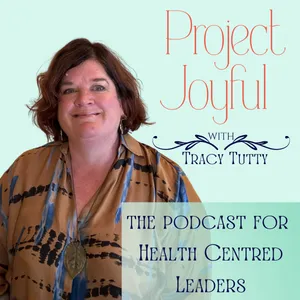
by Tracy Tutty
Get key takeaways, quotes, and insights from Project Joyful in a 5-minute read. Delivered straight to your inbox.
Latest Episodes
The most recent episodes — sign up to get AI-powered summaries of each one.
- 5 days ago22 min
Why High-Achieving Women Stop Responding to “Self-Care”
Sometimes high-achieving women become incredibly good at doing restorative things… without actually feeling restored by them.The yoga classes.The supplements.The meditation apps.The herbal teas.The massages squeezed into lunch breaks while mentally rehearsing tomorrow.And somewhere underneath all of it, the shoulders are still tight. The jaw still aches. The mind keeps moving even in moments that are supposed to feel restorative.In this episode of Project Joyful, Tracy explores why self-care can quietly stop working when the nervous system experiences it as another performance metric. This is a sophisticated conversation about anticipation physiology, optimisation culture, leadership capacity, adaptogens, and the difference between forcing restoration versus allowing responsiveness.You’ll learn:• Why many high-achieving women unconsciously approach rest with achievement energy• The difference between optimisation and nervous system responsiveness• Why pressure and performance can become unconsciously linked• How anticipation physiology affects restoration, creativity, and decision making• Why adaptogens work differently from force-based wellness strategies• The subtle signs your system may be asking for responsiveness rather than more discipline• How coherent leadership begins changing in tiny everyday momentsThis episode is for the woman who is highly capable, deeply responsible, and quietly wondering why all the “right” self-care practices no longer seem to create the restoration they once did.Because sometimes the issue is not a lack of discipline.Sometimes the nervous system no longer responds well to being treated like another productivity project.And sometimes the smallest moments change everything.Connect with Tracy:Instagram: @tracyctuttyPodcast: Project JoyfulWebsite: projectjoyful.com#ProjectJoyfulPodcast#NervousSystemRegulation#HighAchievingWomen#LeadershipPhysiology#BiologicalCongruence
- 1 weeks ago14 min
Why You Can’t Switch Off Anymore
There’s a point where the day is done… but your mind isn’t.Everything has been handled. Conversations have landed, decisions have been made, and on the surface there’s nothing left that requires your attention. And yet, something in you is still moving. Still replaying. Still stepping ahead into what’s coming next.In this episode, we explore why that happens.Not from the perspective of workload, time management, or needing to “switch off better”… but from the way your system has learned to operate beneath all of that.You’ll start to recognise:• Why your mind continues to loop, even when everything is complete• The anticipatory pattern running beneath your thinking and decision-making• The difference between your capability… and the constant background state that supports it• Why switching off isn’t the absence of work• What it actually feels like when that internal state begins to shiftThis isn’t about doing less, or managing your thoughts more effectively.It’s about understanding what’s happening at a biological level… and what becomes available when your system no longer needs to stay in that constant state of readiness.If you recognise yourself in this, you’ll understand why this work matters.Biology of Leadership26–28 MayYou can register here: https://www.tracytutty.co.nz/LeadershipBiology#BiologyOfLeadership #ExecutiveWomen #WomenInLeadership #NeuroLeadership #LeadershipDevelopment
- 2 weeks ago10 min
The Cost of Holding It All Together
Have you ever had a moment where you stop and think, I’ve created this incredible life… but do I actually want to keep doing what it takes to maintain it?This episode explores a quieter layer of leadership that often goes unnoticed. Not the level you operate at, but what it requires of you to sustain it day after day.Inside this conversation, we look at:The subtle ways high-performing leaders stay ahead of everything without realising itWhy some days feel harder than others, even when nothing externally has changedThe difference between the level you operate at and the way you’ve learned to hold itWhat actually creates your edge, and what simply sits around itThere’s a version of leadership that is built on anticipation.Thinking ahead. Staying prepared. Holding multiple moving parts at once and ensuring nothing drops.From the outside, it looks like competence. Professionalism. Reliability. The kind of leadership people trust.And it is.But there’s another layer underneath that isn’t always visible.The constant engagement required to stay ahead of everything. The subtle bracing before moments that matter. The way your mind continues to run even when the day is technically finished.Not because something is wrong.But because of how your system has learned to operate at this level.Over time, that way of operating can start to feel different depending on the day. Some days it flows. Other days, the same level asks for more.And that’s where a quieter question begins to surface.Not about the life itself.But about what it takes to keep sustaining it.This episode sits inside that question.Not to evaluate what you’ve built, but to look more closely at the relationship between how you lead… and what it requires of you to keep doing so.Biology of Leadership (3 Sessions)If you want to explore this work more deeply:https://www.tracytutty.co.nz/LeadershipBiology#LeadershipDevelopment #ExecutiveLeadership #WomenInLeadership #HighPerformance #NervousSystem
- 3 weeks ago19 min
The Leadership Stand Down Signal
Episode InsightThere’s a version of responsibility that most high-performing women never question, because it has worked for so long.It becomes how you lead.And then, quietly, it becomes something your body carries.This episode explores the pattern beneath high-functioning leadership. The one that keeps you slightly on, even when nothing is required. The one that looks like capability, but is actually your biology maintaining safety through control.Not as a flaw.As an adaptation that worked.Until it no longer needs to.Key Moments from This Episode:“Responsibility doesn’t start as something you carry. It becomes something your body learns to hold.”“What you’ve been doing has worked. But it’s not the reason you’re effective.”“Responsibility was never meant to live in your body, only to move through it.”What You’ll Hear In This EpisodeIn this episode, Tracy takes you into the subtle pattern that sits beneath high-performing leadership and why it often goes unnoticed for so long.You’ll hear:How responsibility shifts from something you do into something your body carriesThe everyday moments where this pattern shows up, including overexplaining, stepping in, and staying mentally engaged after workWhy this pattern has been reinforced throughout your career and how it became linked to your successThe impact this has not only on you, but on your team, your leadership environment, and your personal lifeWhat regulation actually looks like in practice, beyond conceptThe distinction between your true leadership capability and the strategy your body has been usingWhat becomes available when your body is no longer holding leadership in this wayFull Transcript[insert transcript here]Ready to Go Deeper?If this episode has you seeing yourself more clearly, not as something to change, but as something you can no longer unsee, there is a space to explore this further.Inside The Biology of Leadership, you’ll begin to experience what shifts when responsibility is no longer held in your body in the same way.This is a free 3-day experience where you’ll start to understand how your biology shapes the way you lead, and what becomes available when that changes.If you find yourself curious about this, you can explore more inside The Biology of Leadership:https://www.tracytutty.co.nz/LeadershipBiologyBottom of Form
- Apr 18, 202619 min
When Responsibility Lives in Your Body
here’s a version of responsibility that most high-performing women never question.It looks like leadership. It feels like capability. It’s the reason you’re trusted, relied on, and known as the one who holds everything together.But underneath that, there’s a pattern.One that lives in your body.In this episode, Tracy takes you into the subtle, often invisible way responsibility becomes a constant internal state. The background tracking. The overexplaining. The inability to fully switch off, even when everything is handled.You’ll begin to recognise how this pattern has supported your success… and where it’s now quietly limiting your clarity, your capacity, and your leadership edge.This isn’t about doing less.It’s about understanding what your body has been carrying, and what becomes available when it no longer has to.In This Episode, You’ll Recognise:The subtle ways responsibility shows up in your body, not just your roleWhy overexplaining, stepping in, and staying “on” feel so naturalHow this pattern shapes your team, your environment, and your personal lifeThe difference between your actual leadership capability and the strategy your body has been usingWhat shifts when responsibility stops living in your bodyThis Episode Is For You If:You’re known as the reliable one in your work or leadershipYou find it hard to fully switch off, even when nothing is urgentYou notice yourself stepping in, tightening, or holding more than is requiredYou’ve reached a high level of success, but something still feels constantly engaged beneath itExplore Further: The Biology of Leadership (Free 3-Day Experience)If this episode resonates, you can explore this work more deeply inside The Biology of Leadership.A 3-day experience where you’ll begin to understand how your biology shapes the way you lead, and what becomes available when that changes.https://www.tracytutty.co.nz/LeadershipBiologyConnect with Tracy TuttyFor more thought leadership on Neuro-Identity Coaching, leadership, and the biology of performance, connect with Tracy:Instagram: @tracytuttyLinkedIn: Tracy TuttyPodcast Series: The Biology of LeadershipThis episode is part of an ongoing body of work exploring how leadership evolves when biology, identity, and nervous system coherence are brought into alignment.YouTube Hashtags:#BiologyOfLeadership#WomenInLeadership#HighPerformanceLeadership#NervousSystemRegulation#LeadershipDevelopment
- Apr 11, 202614 min
The Vigilance Pattern
Episode Insight“Vigilance often looks like excellence, but there comes a point where it stops being something you use and starts being something that is always running.”“You might notice that part of you is always thinking ahead, anticipating, calibrating, even in moments where nothing is actually required of you.”“The question isn’t whether vigilance works. It’s whether it’s still the way you want to lead.”What You’ll Hear In This EpisodeIn this episode of Project Joyful, Tracy unpacks the Vigilance Pattern and how it quietly shapes the internal experience of leadership for high-performing women.You’ll hear how vigilance forms as an intelligent biological strategy, why it becomes automatic through habit and reinforcement, and how it can begin to create subtle constraints in the way you think, communicate, and lead.This conversation explores the difference between anticipation and presence, and why leadership at higher levels is no longer about staying ahead, but about being fully with what is in front of you.You’ll also begin to see how what often gets labelled as overthinking is a natural byproduct of how your nervous system has been organised, and what shifts when your system is no longer oriented around preparing for what might happen.This episode opens a different way of understanding leadership, one where your biology and your brilliance are no longer working against each other, but are aligned in how you lead.Full Transcript[insert transcript here]Ready to Go Deeper?Understanding the Vigilance Pattern is one thing. Experiencing what shifts when your nervous system is no longer organised around it is something else entirely.Biology of Leadership is a three-day experience running on 26, 27 and 28 May. Inside this work, you’ll explore the physiology behind patterns like vigilance, how they become wired into the way you lead, and what it takes to shift them at the level they were created.Not by removing your edge, and not by asking you to lead differently for the sake of it, but by refining how your system is organised so that your leadership becomes cleaner, more direct, and significantly less effort to sustain.If you can recognise yourself in this episode, this is where you get to explore what leadership feels like when your biology and your brilliance are actually working together.You can find all the details and secure your place here:https://www.tracytutty.co.nz/LeadershipBiology
- Apr 4, 202620 min
Herbal Ally Series - Valerian Root - More than a Sleep Herb
In this episode of Project Joyful, we explore Valerian root (Valeriana officinalis) as more than a natural sleep aid.Yes, valerian is a powerful herb for supporting sleep. But its real value lies in how it helps your body transition out of a state of activation. It supports your nervous system, your physical body, and your ability to truly let go at the end of the day.If your sleep feels disrupted, light, or unrefreshing, or if your mind continues to stay active long after your day has ended, this episode will give you a deeper understanding of what may be happening beneath the surface.We explore how valerian works physiologically, how it supports both mental and physical relaxation, and why it can be such a valuable ally for those who feel wired but tired.You’ll also learn why valerian doesn’t feel the same for everyone, how preparation, dosage, and even plant species can influence its effects, and how to work with it in a way that feels aligned with your body.This conversation also extends beyond sleep into leadership and daily performance. Because the way your body rests directly shapes how you think, regulate emotion, and lead.In this episode, we cover:How valerian supports sleep, nervous system regulation, and physical relaxationThe difference between sedation and nervous system recalibrationWhy consistent use can create lasting shifts in your sleep patternsWhat “deep sleep” actually means and why it mattersWhy valerian can feel calming for some and stimulating for othersHow to take valerian as a tea, capsule, or tinctureThe distinctive taste and sensory experience of valerian rootHow sleep quality influences clarity, emotional steadiness, and leadershipHerbs for Health SeriesIf you’re ready to explore herbal medicine in a way that feels simple, grounded, and precise, you’re invited to join my Herbs for Health series.Each month, we focus on one herb and explore how it can support your sleep, stress, mood, or immunity, without the overwhelm of the supplement aisle.Explore here:https://www.tracytutty.co.nz/Herbs4HealthSubscribe & Follow Project JoyfulIf you enjoyed this episode, make sure to subscribe and share it with someone who would benefit from a more grounded approach to sleep and nervous system support.#ValerianRoot #HerbalMedicine #SleepSupport #NervousSystemHealth #HerbalAllySeries
- Mar 28, 202626 min
When Sleep Stops Working
Sleep is one of the most common concerns women bring into clinic. For some, sleep has always been fragile. For others, sleep worked reliably for years and then gradually began to change. Falling asleep becomes harder, waking during the night becomes more common, or mornings arrive without the sense of restoration sleep once provided.When this happens, the instinct is usually to search for the strategy that will fix it. Evening routines are refined, supplements are trialled, and sleep environments are optimised in the hope that sleep will return to the way it once was.But disrupted sleep is rarely just about sleep.Your ability to sleep well is influenced by several systems working together. Your nervous system, hormonal rhythms, metabolism, circadian biology, and the cognitive demands placed on your brain all play a role. When one of these systems shifts, sleep is often the first place your body signals that something needs attention.In this episode of Project Joyful, Tracy explores what is actually happening in your body when sleep stops working in the way it once did. Drawing on her clinical experience as a Medical Herbalist and Neuro-Identity Coach, she explains the biological drivers behind disrupted sleep and why these patterns are so common in capable, high-performing women.You’ll learn why your mind can become alert at night even when your body is tired, how hormones and metabolism influence sleep stability, and how circadian rhythms shape the quality of your rest. Tracy also shares practical, science-informed strategies you can begin using to support your physiology and help your body return to deeper restorative sleep.This conversation reframes sleep from something you need to force or fix, to something your body can do naturally when the underlying systems are supported.In this episode you’ll discover:Why sleep problems are often signals from deeper physiological systemsHow your nervous system influences whether your brain can power down at nightThe role hormones play in sleep changes during perimenopause and menopauseWhy blood sugar stability matters for staying asleep through the nightHow circadian rhythms influence melatonin, cortisol, and sleep timingPractical strategies to support your nervous system and improve sleep qualityPractical strategies discussed:Creating a structured wind-down routine before bedSupporting blood sugar stability with balanced evening nutritionThe role of liver function in hormone metabolismUsing morning light exposure to anchor circadian rhythmCreating an optimal sleep environment (including the ideal bedroom temperature of 16–19°C)If your sleep has changed…If you recognise yourself in this conversation and sense your body asking for a deeper level of restoration, Tracy’s Revitalise programme supports women in recalibrating the physiological foundations of sleep, energy, and nervous system resilience.Learn more here:https://www.tracytutty.co.nz/RevitaliseAbout Project JoyfulProject Joyful is a podcast exploring the intersection of health, physiology, identity, and leadership for women who carry significant responsibility in their work and lives. Each episode blends clinical insight with practical strategies to help you support your body while continuing to lead and live well.
Get Project Joyful summaries in your inbox
Free AI-powered daily recaps. Key takeaways, quotes, and mentions — in a 5-minute read.
Get Free Summaries →Free forever for up to 3 podcasts. No credit card required.
You Might Also Like
Listeners also like.
Project Joyful
Tracy Tutty

Journey To Joy Live
Dr. NJoy

Choosing Joy with Jodi Lynn Turpin
Jodi Lynn Turpin

Motivation and Inspiration with Joy Packard
Joy Packard

Joy Lab | navigate depression, anxiety, & stress with the science of joy
Henry Emmons, MD and Aimee Prasek, PhD

Finding Joy in the Hard
Suzanne Andora Barron

The You World Order Showcase Podcast
Jill
The Authentic Creative: expanding our capacity to feel good
Siri Baruc Thornton

Better Than Happy
Jody Moore

The Leading With Love Podcast
Shauna Arthurs

Living Wellness Muse Podcast
Leanne Elliott

Practically on Purpose
Allie Canton
About Project Joyful
This podcast is dedicated to the art of joyful living. More than being happy, rediscover that soul filled joy moment by moment.Fall back in love with your work or find work that feeds your soul.
Customized Recaps
AI-powered recaps with compact key takeaways, quotes, and insights.
Straight to Your Inbox
Get key takeaways from Project Joyful in a 5-minute read.
Save Hours Every Week
Stay current on your favorite podcasts without falling behind.
Frequently Asked Questions
What is Podzilla's Project Joyful daily summary?
It's a free AI-powered email that summarizes new episodes of Project Joyful as soon as they're published. You get the key takeaways, notable quotes, and links & mentions — all in a quick read.
How does the Project Joyful podcast summary work?
When a new episode drops, our AI transcribes and analyzes it, then generates a personalized summary tailored to your interests and profession. It's delivered to your inbox every morning.
Is this an official Project Joyful product?
No. Podzilla is an independent service that summarizes publicly available podcast content. We're not affiliated with or endorsed by Tracy Tutty.
Can I get summaries of other podcasts too?
Absolutely! The free plan covers up to 3 podcasts. Upgrade to Pro for 15, or Premium for 50. Browse our full catalog at /podcasts.
How often does Project Joyful release new episodes?
Project Joyful publishes weekly. Our AI generates a summary within hours of each new episode.
What topics does Project Joyful cover?
Project Joyful covers topics including Education, Business, Careers, Self-Improvement. Our AI identifies the specific themes in each episode and highlights what matters most to you.
Start getting Project Joyful summaries tomorrow morning.
Free forever for up to 3 podcasts. No credit card required.
Free forever for up to 3 podcasts. No credit card required.