Free Daily Podcast Summary
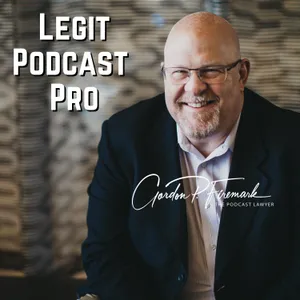
Legit Podcast Pro: Daily Summaries Delivered
by Gordon Firemark
Join The Podcast Lawyer™ Gordon Firemark for tips, strategies, advice and Q&A with top podcasters. Learn how to grow and profit from your podcast like a pro.
Latest Episodes
The most recent episodes — sign up to get AI-powered summaries of each one.
- 3 days ago12 min
WHAT PODCAST CREATORS CAN LEARN FROM HOLLYWOOD
The way podcasters operate would never fly in mainstream media production — and podcasting now is mainstream media, whether the paperwork has caught up or not. In this episode, Gordon Firemark, The Podcast Lawyer™, walks through six standard practices Hollywood built over a century of expensive lessons, and why most podcasters skip every one of them.Written agreements with every contributor, before work begins. Film and TV productions don't start without signed paper from cast, crew, and writers. Podcasting routinely starts work first and backfills agreements later, if at all.Releases and clearances obtained before recording. Every person on camera, every clip, every piece of music gets cleared in advance in Hollywood — not chased down after the fact once content is already published.A real content-clearance review before publishing. Hollywood checks for copyright issues, trademark conflicts, privacy concerns, defamation risk, and FTC disclosure compliance before release. Most podcasters publish first and find out about a problem only when someone complains.Clear credit and compensation terms, documented upfront. Hollywood's credit and residual systems exist because undefined "who gets what" questions used to blow up productions. Podcasting hasn't had that reckoning yet.Chain of title. The ability to trace and prove ownership of every element of a show is what determines whether it could ever become a real, transferable asset — licensed, sold, or monetized seriously — rather than staying capped as a project that only exists because you personally run it.E&O insurance, and the honest reality around it. Coverage built for podcasting can be hard to find and isn't always cheap, so many podcasters go without it. That reality is exactly why the other five practices on this list matter even more — without a policy absorbing the cost of a mistake, the paperwork is often the only protection a podcaster actually has.Resources mentioned:Creator Business Protection Blueprint: https://gordonfiremark.com/blueprintLegit Podcast Pro is hosted by Gordon Firemark, an entertainment and media attorney known as The Podcast Lawyer™, helping podcasters protect their shows with simple business and legal strategies they can put to use right now.
- 1 weeks ago15 min
THE CREATOR EXIT STRATEGY NOBODY TALKS ABOUT
Your podcast could be an asset, or a job, or some combination of both. An asset has value on its own — value a network could acquire, license, or invest in, while you stay right behind the mic. A job only exists because you personally keep showing up, with nothing underneath it for anyone else to take hold of.In this episode, Gordon Firemark, The Podcast Lawyer™, breaks down what separates the two, and why it matters whether or not you're currently planning to sell, bring in a network partner, or change anything at all.Topics covered:Network acquisition and licensing while staying involved. One of the most common real versions of a podcast "acquisition" doesn't involve the host leaving at all — a network acquires or licenses the show while the creator stays on as talent.What buyers and partners actually check. Clean intellectual property ownership, documented contributor and guest agreements, contractually documented revenue, financials separated from personal accounts, and clear ownership of platforms and audience.How these deals get structured. Entity sales, asset purchases, and licensing or distribution deals each work differently, and each depends on the same underlying documentation.Succession planning. A real, current example — a podcast producer and host five years into a successful but entirely unpapered co-production, now working through what happens if either of them leaves, becomes disabled, or faces a personal crisis that could affect the show.The episode closes with a five-step starting checklist for building toward a show that has real, transferable value, independent of any specific plan to sell.Resources mentioned:Easy Legal for Podcasters — https://easylegalforpodcasters.comLegit Podcast Pro is hosted by Gordon Firemark, an entertainment and media attorney known as The Podcast Lawyer™, helping podcasters protect their shows with simple business and legal strategies they can put to use right now.
- 2 weeks ago15 min
Before You Sign That Sponsorship Deal
A good number on a sponsorship offer can make almost anyone stop reading closely. That's exactly when the risky clauses get signed without a second look. In this episode, Gordon Firemark, The Podcast Lawyer™, walks through five red flags worth stopping and reading twice before signing any sponsorship contract:Broad or lopsided exclusivity. Exclusivity itself is normal, but the scope — how long it lasts and how wide it reaches — is often broader than it first appears, especially when the real definition is buried outside the sentence most people actually read.Perpetual or open-ended usage rights. Without a defined end date, a brand's right to use your name, voice, or content in their marketing can outlive the campaign, the relationship, and even the payment, indefinitely.Vague or unfavorable payment terms. Missing due dates, Net-60 or Net-90 terms, or payment tied to conditions outside your control are among the most common sources of the "I did the work and I'm still waiting to get paid" problem.One-sided termination rights. A fair contract lets both sides walk away reasonably. A one-sided one gives the brand an easy exit while you remain bound to exclusivity and other obligations regardless of what they deliver.Overbroad indemnification. This clause decides who's financially responsible when something goes wrong. Overbroad language can shift responsibility for the brand's own mistakes onto you.The episode closes with practical guidance on which of these are usually worth a quick negotiation email, and which are worth a second legal opinion before signing anything.Find a model podcast advertiser agreement at on PodcastLawForms.comLegit Podcast Pro is hosted by Gordon Firemark, an entertainment and media attorney known as The Podcast Lawyer™, helping podcasters protect their shows with simple business and legal strategies they can put to use right now.
- 3 weeks ago10 min
The Best Way To License Your Content
Most podcasters treat a published episode as finished business. But your back catalog can keep generating revenue long after it airs — if you know how to license it, and if you've got the rights in place to do so.In this episode, The Podcast Lawyer™ Gordon Firemark shares a real scenario that came through his forms library: a producer looking for a contract to let a guest reuse clips of their own appearance for the guest's own marketing. That request opens up a broader look at how podcasters can monetize existing content, including:Granting limited-scope licenses when a guest wants to reuse a clipTurning guest cutdown clips into a standing paid serviceSyndicating full episodes to other platforms or networksLicensing excerpts to brands or media companiesRepackaging catalog content into new products like compilations or paid newslettersGordon also explains why none of this is available to you without clean underlying rights — guest releases, contributor agreements, and music licensing — connecting back to earlier episodes on contracts and team agreements.Resources mentioned:Creator Business Protection Blueprint: gordonfiremark.com/blueprintContract templates, including a limited-use clip license: https://podcastlawforms.comLegit Podcast Pro is hosted by Gordon Firemark, an entertainment and media attorney known as The Podcast Lawyer™, helping podcasters protect their shows with simple business and legal strategies they can put to use right now.
- Aug 20, 202616 min
Why Your Team Could Be Your Biggest Threat
A co-host tells the founder of a podcast and its network, "I think I'm owed a piece of this" — after two years of co-hosting with no contract and no conversation about ownership. What follows is a real case from my law practice: a co-host asserting control over the show's direction and attempting to move it to a different network, right as the show approached real sponsorship revenue. The resulting dispute took a over year to resolve and left the show dark the entire time, meaning neither side ever collected the revenue they were fighting over.In this episode, I'm breakind down two sides of the legal risk podcasters face as they build a team:People you hire. Paying a contractor doesn't automatically mean you own what they create. "Work made for hire" is a narrow legal category that rarely applies to independent contractors by default — ownership of templates, graphics, edited audio, and other work product generally has to be assigned to you in writing.People who join organically. Co-hosts, recurring collaborators, and others who become a consistent part of a show — without ever being formally hired — can support a real legal claim to profits, decision-making authority, or even the show's name, based on their conduct and contribution alone.The episode closes with a practical prompt: an audit of everyone with a recurring role in your show, and what — if anything — is actually documented for each of them.FREE Resources mentioned:Creator Business Protection Blueprint — gordonfiremark.com/blueprint Legit Podcast Pro is hosted by Gordon Firemark, an entertainment and media attorney known as The Podcast Lawyer™, helping podcasters and creator businesses build audience, brand, and revenue into lasting, protected assets.
- Aug 13, 202616 min
When the Podcast becomes a real business (alongside your core business)
For coaches, course creators, consultants, and service-business owners, the podcast often isn't the business — it's the marketing channel that brings people in the door. This episode makes the case that producing, publishing, and distributing that content still puts you inside a second industry — media — with its own legal terrain, separate from whatever's already in place for your core business.Gordon Firemark, The Podcast Lawyer™, walks through four blind spots podcasters in this position consistently overlook:Content ownership and brand protection. If editors, producers, or agencies touch your show with no written agreement assigning rights, ownership of finished episodes can be murkier than assumed. Beyond the content itself, the show's title, tagline, and recurring segments are brand assets worth trademark protection — the same way a business name and logo already are.Guest and participant consent. A release that covers publishing an episode doesn't automatically cover repurposing a clip into paid advertising months or years later. Different use, different consent required.Team and production agreements. Editors, producers, and virtual assistants who handle raw footage and guest information need confidentiality and IP-assignment terms that client-facing contracts typically don't include.Media-specific insurance. General business liability or E&O coverage built around coaching or consulting services often doesn't extend to defamation, right-of-publicity, or IP claims tied to published content.The episode closes with a broader question for podcasters whose show has become a real part of their business: does your current legal relationship, likely built before the podcast existed, actually cover both halves of what you're running now?Legit Podcast Pro is hosted by Gordon Firemark, an entertainment and media attorney known as The Podcast Lawyer™, helping podcasters and creator businesses build audience, brand, and revenue into lasting, protected assets.
- Aug 6, 202616 min
The Contracts Every Podcaster Needs
Most advice about landing brand deals focuses on the pitch — the media kit, the numbers, the outreach email. What it leaves out is what happens after a sponsor says yes and expects the podcaster to show up like a business that does this regularly — including, increasingly, being the one to send over the contract.In this episode, Gordon Firemark, The Podcast Lawyer™, walks through the three agreements podcasters should have in place before they start pitching sponsors, not after:An agreement with anyone else who has a stake in the show. If you have a co-host, business partner, or producer, sponsorship revenue raises questions that a simple, informal understanding usually can't answer under pressure: who decides whether to accept a sponsor, how the money gets split, and who's responsible for delivering what was promised.Your own sponsorship agreement, drafted and ready to send. Rather than waiting to react to whatever a brand proposes, podcasters who show up with their own contract set the exclusivity window, usage rights, payment terms, and deliverables from a position of strength — and look like a business worth working with again.Basic paperwork for guests and collaborators. Once an episode is valuable enough for a sponsor to want to attach their name to it, simple release language protecting the use of a guest's name, story, or contribution becomes part of what makes that episode sponsor-ready.The episode also covers what actually happens when podcasters aren't prepared — usually not a lawsuit, but a stalled deal, lost momentum, or a strained partner relationship — along with guidance on when a DIY template is enough and when it's time to bring in legal help.Resources mentioned:Creator Business Protection Blueprint — https://gordonfiremark.com/blueprintEasy Legal for Podcasters — https://easylegalforpodcasters.comLegit Podcast Pro is hosted by Gordon Firemark, an entertainment and media attorney known as The Podcast Lawyer™, helping podcasters and creator businesses build audience, brand, and revenue into lasting, protected assets.
- Jul 30, 20268 min
Your Next Revenue Stream Already Exists!
Your content isn't your business — so what is? In this episode, Gordon Firemark breaks down the five things that actually make up a creator business: audience ownership, intellectual property, brand, key relationships, and revenue protection. If you stopped publishing tomorrow, would you still have a business — or just a content library and a lot of hope? Gordon walks through a real scenario of what happens when a podcast partnership falls apart without a written agreement, and explains why so much of the advice creators give each other about LLCs and trademarks is incomplete — or just wrong. This episode sets up the roadmap for several upcoming episodes, each tackling one of these five pillars in depth: contracts, team structure, sponsorship deals, and more. Whether you're a podcaster, YouTuber, or building any kind of content-driven business, this episode will help you identify exactly where your business is exposed — and what to prioritize first. Get the Creator Business Protection Blueprint: gordonfiremark.com/blueprint Gordon Firemark is The Podcast Lawyer™, an entertainment and media attorney who has represented podcasters, creators, and media companies since 1992. #CreatorBusiness #PodcastLawyer #ContentCreator #CreatorEconomy #PodcastLegal #YouTuberBusiness #IntellectualProperty #CreatorEntrepreneur
Get Legit Podcast Pro summaries in your inbox
Free AI-powered daily recaps. Key takeaways, quotes, and mentions — in a 5-minute read.
Get Free Summaries →Free forever for up to 3 podcasts. No credit card required.
You Might Also Like
Listeners also like.
Podmastery: podcasting insights and advice for indie creators
Practical podcasting advice for independent creators aiming to grow their audience and improve production.
Proven Podcast
Charles Schwartz
BiggerPockets Business Podcast
Real entrepreneurs share practical advice on starting, growing, and selling businesses, covering hiring, marketing, and raising capital.
The Amy Porterfield Show
Online business strategies and marketing tips from an experienced entrepreneur and industry experts to help grow sustainable digital businesses.
Right About Now - Legendary Business Advice
Real talk from business founders and entrepreneurs about building companies, lessons learned, and what actually works in real-world ventures.
Growth Triggers: Content Marketing & AI
A marketing expert shares proven podcasting strategies for growing audience reach, generating leads, and building authority in any niche.
The Paul Morris Podcast
Entrepreneurs and investors share strategies for building wealth, scaling businesses, and leading high-performance teams.

Everyone Hates Marketers | No-BS Marketing & Brand Strategy Podcast
A marketing podcast offering practical insights on branding, strategy, and customer research from industry professionals.

Total Disruption Podcast
Entrepreneurs discuss mindset, business growth, and operational frameworks to move beyond hustle culture and build scalable companies.
BigDeal
Conversations with driven entrepreneurs and investors reveal raw, practical lessons on building wealth and living intentionally.

The Level Up Podcast w/ Paul Alex
Real stories and strategies from an ex-detective turned entrepreneur to help build passive income, mindset, and financial freedom.
Creative Pep Talk
A practical guide for creatives to build a sustainable practice through interviews and strategies from artists and makers.
About Legit Podcast Pro
Join The Podcast Lawyer™ Gordon Firemark for tips, strategies, advice and Q&A with top podcasters. Learn how to grow and profit from your podcast like a pro.
Customized Recaps
AI-powered recaps with compact key takeaways, quotes, and insights.
Straight to Your Inbox
Get key takeaways from Legit Podcast Pro in a 5-minute read.
Save Hours Every Week
Stay current on your favorite podcasts without falling behind.
Frequently Asked Questions
What is Podzilla's Legit Podcast Pro daily summary?
It's a free AI-powered email that summarizes new episodes of Legit Podcast Pro as soon as they're published. You get the key takeaways, notable quotes, and links & mentions — all in a quick read.
How does the Legit Podcast Pro podcast summary work?
When a new episode drops, our AI transcribes and analyzes it, then generates a personalized summary tailored to your interests and profession. It's delivered to your inbox every morning.
Is this an official Legit Podcast Pro product?
No. Podzilla is an independent service that summarizes publicly available podcast content. We're not affiliated with or endorsed by Gordon Firemark.
Can I get summaries of other podcasts too?
Absolutely! The free plan covers up to 3 podcasts. Upgrade to Pro for 15, or Premium for 50. Browse our full catalog at /podcasts.
How often does Legit Podcast Pro release new episodes?
Legit Podcast Pro publishes weekly. Our AI generates a summary within hours of each new episode.
What topics does Legit Podcast Pro cover?
Legit Podcast Pro covers topics including Technology, Education, Business, How To. Our AI identifies the specific themes in each episode and highlights what matters most to you.
Start getting Legit Podcast Pro summaries tomorrow morning.
Free forever for up to 3 podcasts. No credit card required.
Free forever for up to 3 podcasts. No credit card required.