Free Daily Podcast Summary
How to PhD - your academic survival guide: Daily Summaries Delivered
by Dr Arun Ulahannan & Dr Julia Gauly
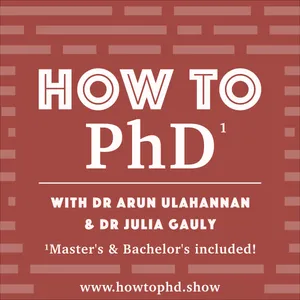
This is How to PhD, the show dedicated to sharing those key, practical skills for PhD success. Perhaps you‘ve just decided to embark on a PhD, or maybe you‘re a seasoned doctoral veteran about to face your viva. Whatever stage you‘re at, the PhD can be a huge challenge. But it can also be one of the most rewarding things you‘ll ever do and there are a few things we learned along the way that can help you. Join myself, Dr Arun Ulahannan and my co-host, Dr Julia Gauly, as we share everything we wish we had known before starting our PhDs!
Latest Episodes
The most recent episodes — sign up to get AI-powered summaries of each one.
- 4 days ago22 min
Does it feel like everyone's ahead of you? Here's how you escape the comparison trap!
Does it feel like everyone else is publishing more, writing faster and getting further ahead in their PhD? In this episode, we explore why we compare ourselves with others- and how we can end up measuring ourselves against an imaginary researcher made from everyone else’s best bits! Drawing on psychological research and our own experiences, we discuss how to take inspiration from others, recognise your own progress and respond kindly when comparisons sting. From changing what counts as success to reducing social media triggers, we share practical ways to escape the comparison spiral, plus a simple reset to help you focus on your next step.
- 2 weeks ago23 min
Master the secret art of asking for help
Asking for help sounds simple, but why do so many PhD students find it so difficult? Whether it's struggling with statistical methods, getting stuck on a research problem, or feeling like you should already know the answer, it's easy to spend days or even weeks trying to figure everything out alone. But what if knowing when and how to ask for help is actually a sign of a good researcher? In this episode of How to PhD, Arun and Julia explore the psychology behind asking for help and share a practical three-step approach to getting the support you need: Recognise when you need help: Understand why asking questions can feel like admitting weakness, and how to overcome that mindset. Find the right person: Discover why your supervisor isn't always the best person to ask, and how to identify people with the expertise you need. Make an effective request: Learn how to ask clear, specific questions that help you develop your own skills rather than simply getting someone else to solve the problem. Drawing on research into psychological safety, self-regulated learning and adaptive help-seeking, we explore how to make asking for help a strength rather than a source of anxiety.
- Oct 5, 202619 min
Too Many Papers? How to Read Critically and Get Organised
Ever downloaded a paper, highlighted half of it, then forgotten why you saved it? In this episode of How to PhD, Arun and Julia share practical ways to read critically, organise your literature and make your reading useful when it’s time to write. We explore how to question a paper’s methods and conclusions, recognise its limitations and identify what it contributes to your own research. From reading papers in three passes to writing meaningful notes and creating a simple tagging system, we discuss techniques to help you understand, remember and find what matters. We also explain how connecting papers can help you spot disagreements, emerging themes and potential research gaps. Whether you’re starting your PhD or already facing an overflowing PDF collection, this episode will help you take control of your literature.
- Sep 21, 202626 min
How to know when you have enough for your PhD?
How do you know when you’ve done enough for your PhD? Research rarely feels truly finished- every answer seems to uncover another question. In this episode, we explore how to recognise when your thesis contains enough evidence, makes a clear contribution and tells a coherent story. We’ll share three practical tests for judging whether your research is complete, explain how to agree a realistic finish line with your supervisors, and help you separate what is essential before submission from what can wait for future research. We also tackle the perfection trap and why doing more work does not always produce a stronger thesis. If you’re struggling to stop researching, start writing or finally submit, this episode will help you decide when enough really is enough.
- Sep 7, 202638 min
How to PhD and start a family!
Is it possible to thrive, not just survive, as a PhD parent? Julia speaks with Phil Gordon about balancing doctoral research, professional work and teaching while becoming a dad. Phil shares honest reflections on how life changed when his son arrived, the pressures he encountered and the support that made a difference. Packed with practical tips on managing time, sharing responsibilities, adjusting expectations and protecting your energy, this episode is for anyone starting, or considering starting, a family during their PhD.
- Nov 25, 202427 min
How to get your PhD work into the media!
Ever wondered how groundbreaking research grabs headlines? If you think it’s all about luck or fame, think again! This episode dives into the strategic side of getting your PhD research out of academic journals and into the wider world. With practical insights and tips, we’ll guide you through the process of working with the media to amplify your work’s impact. First, we discuss the growing importance of media engagement for academics, especially with the increasing emphasis on reach and societal impact. From understanding what makes a compelling press release to crafting one that catches a journalist’s eye, we break down the essentials. We’ll share why press releases are your gateway to media attention, how to structure them effectively, and the key phrases that make your findings stand out—all while avoiding overblown claims. And once the media bites? We’ve got you covered. Whether it’s a live interview, radio spot, or a TV appearance, we’ll walk you through how to prepare, handle questions, and keep your nerves in check. Tune in for actionable advice that ensures you’re ready to shine when your research meets the spotlight.
- Nov 11, 202419 min
What is IMPACT and why it's essential for your future career!
In this episode, we dive into the concept of impact in research—what it is, why it’s crucial, and how you can plan for it even at the PhD stage. We explore how impact goes beyond simple dissemination or public engagement, aiming for real change in society, the economy, culture, policy, health, and beyond. Our conversation covers practical ways to identify beneficiaries and stakeholders, the significance of short-, medium-, and long-term impact planning, and the essential components of reach and significance in assessing impact. We discuss how early planning for impact can enhance both your academic career and industry prospects, guiding you to align your research with meaningful, measurable goals. Finally, we offer tips on preparing project bids with impact in mind and building valuable relationships that can help carry your research into the real world. Don’t miss this episode if you’re ready to take your research impact to the next level!
- Oct 28, 202422 min
How to craft your PhD's story
In this episode, we explore why a strong narrative is the backbone of a successful PhD. It’s not just about compiling studies or chapters; it’s about weaving them into a story that’s engaging and easy to follow. We discuss how to build a compelling pitch that answers essential questions and captivates your audience. You’ll also hear tips for refining your PhD story, from visualising your work with simple tools to structuring your thesis in a way that flows naturally. Finally, we share advice on embracing storytelling to enhance your research’s impact, making it memorable and meaningful. Tune in to discover how to transform your PhD journey into a narrative that resonates!
Get How to PhD - your academic survival guide summaries in your inbox
Free AI-powered daily recaps. Key takeaways, quotes, and mentions — in a 5-minute read.
Get Free Summaries →Free forever for up to 3 podcasts. No credit card required.
You Might Also Like
Listeners also like.
Working Hard with Grace Beverley
Real people share hard-won lessons on success, resilience, and life balance across diverse fields, from activism to business and beyond.
The Doctor's Kitchen Podcast
A doctor explores how food and lifestyle choices impact health and well-being, with expert guests offering practical advice.
What's Up Docs?
Doctors Chris and Xand van Tulleken examine health science and medical advice to help listeners navigate conflicting wellness claims.
Not Your Doctor
Three doctors answer listener questions on health, wellness, and life with evidence, nuance, and candid conversation.
Pathways Podcast - Warwick Chemistry
Warwick Chemistry
Seeking A Scientist
A chemist hosts conversations with scientists to explore futuristic scientific possibilities and their real-world implications.
A Question of Science
Experts answer public questions on pressing scientific issues, from cancer and nutrition to AI and climate change.

Weight Loss for Busy Physicians | Helping Women Physicians Lose Weight for the Last Time
Helps women physicians lose weight by addressing stress eating, exhaustion, and time constraints in their demanding careers.

Thrive Through and Beyond Cancer
Season Johnson
The Dr. Hyman Show
Explores root causes of chronic disease and promotes functional medicine, nutrition, and preventive health through expert discussions.

Dhru Purohit Show
Explores health, medicine, and mindset through in-depth interviews with leading experts and actionable protocols.
Qualitative Research Methods for Everyone Podcast
Policy Press
About How to PhD - your academic survival guide
This is How to PhD, the show dedicated to sharing those key, practical skills for PhD success. Perhaps you‘ve just decided to embark on a PhD, or maybe you‘re a seasoned doctoral veteran about to face your viva. Whatever stage you‘re at, the PhD can be a huge challenge. But it can also be one of the most rewarding things you‘ll ever do and there are a few things we learned along the way that can help you. Join myself, Dr Arun Ulahannan and my co-host, Dr Julia Gauly, as we share everything we wish we had known before starting our PhDs!
Customized Recaps
AI-powered recaps with compact key takeaways, quotes, and insights.
Straight to Your Inbox
Get key takeaways from How to PhD - your academic survival guide in a 5-minute read.
Save Hours Every Week
Stay current on your favorite podcasts without falling behind.
Frequently Asked Questions
What is Podzilla's How to PhD - your academic survival guide daily summary?
It's a free AI-powered email that summarizes new episodes of How to PhD - your academic survival guide as soon as they're published. You get the key takeaways, notable quotes, and links & mentions — all in a quick read.
How does the How to PhD - your academic survival guide podcast summary work?
When a new episode drops, our AI transcribes and analyzes it, then generates a personalized summary tailored to your interests and profession. It's delivered to your inbox every morning.
Is this an official How to PhD - your academic survival guide product?
No. Podzilla is an independent service that summarizes publicly available podcast content. We're not affiliated with or endorsed by Dr Arun Ulahannan & Dr Julia Gauly.
Can I get summaries of other podcasts too?
Absolutely! The free plan covers up to 3 podcasts, any in the catalog. Basic raises that to 15, Pro to 40 and Max to 100. Browse our full catalog at /podcasts.
What topics does How to PhD - your academic survival guide cover?
How to PhD - your academic survival guide covers topics including Science, Education, How To. Our AI identifies the specific themes in each episode and highlights what matters most to you.
Start getting How to PhD - your academic survival guide summaries tomorrow morning.
Free forever for up to 3 podcasts. No credit card required.
Free forever for up to 3 podcasts. No credit card required.