Free Daily Podcast Summary
A Question of Science: Daily Summaries Delivered
by The Francis Crick Institute
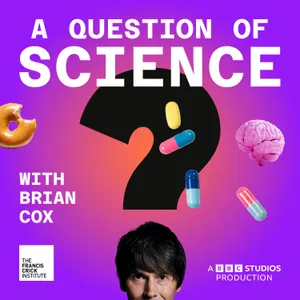
Science you can trust. Questions that matter. Join Professor Brian Cox and a panel of the world's top scientists and experts as they tackle your questions about some of the biggest science challenges facing society today. Can we cure cancer? How do you separate nutrition fact from fiction? What do climate change and the march of AI mean for our future? Could we live forever? Each episode is recorded in front of a live audience and it's their questions that drive the debate. Hear from the experts who actually know what they're talking about, including Adam Rutherford, Helen Sharman, George Monbiot, Giles Yeo, Jeanette Winterson, Rory Cellan-Jones, Paul Nurse, Kevin Fong and You, Me and the Big C's Lauren Mahon. With a focus on accuracy, openness, and debate, A Question of Science brings you the latest on what we know, what we don't, and where science might take us next.
Latest Episodes
The most recent episodes — sign up to get AI-powered summaries of each one.
- 3 days ago46 min
Are we ruled by our guts?
How important is our gut microbiome and could it hold the key to new treatments for a range of different diseases? How does the gut-brain axis influence our behaviour and will poo transplants become a regular procedure on the NHS? Join our panel of experts as they discuss the secrets of our ‘second brain’ – the gut. From major advances in research to the difference between prebiotics andprobiotics. Panel: Prof Glenn Gibson: Emeritus Professor of Food Microbiology at the University of Reading Prof Lindsay Hall: Chair of Microbiome Research at the University of Birmingham’s Institute of Microbiology and Infection Prof Jatin Nagpal: Researcher at University College Cork’s APC Microbiome Ireland Centre Prof Sheena Cruickshank: Immunologist and Professor in Public Engagement and Biomedical Sciences at the University of ManchesterSee omnystudio.com/listener for privacy information.
- 1 weeks ago42 min
How does biological sex affect health?
Our biological sex affects every cell in our body, so how does it influence our health - from embryo development through to the risk of disease and diagnosis? How and why do some conditions affect females and males differently? And what can we do to ensure medicine is safe and effective for everyone, after decades of male biology bias? Across autoimmune disorders, cancer, dementia, heart disease and even responses to everyday medications, sex‑based biological differences can shape who becomes ill, how symptoms appear and what treatments work. Join our expert panel as they explore sex differences in biology, hormones and gene regulation. Panel: Prof Edith Heard, CEO of the Francis Crick Institute Natasha Karp, Biostatistician at Astra Zeneca Prof Petter Brodin, Garfield Weston chair of Neonatology and Professor of Paediatric Immunology, Imperial College, London Caroline Criado Perez, Author of Invisible Women See omnystudio.com/listener for privacy information.
- 2 weeks ago42 min
Can we cure addiction?
Why do people become addicted? When does a habit turn into self harm and what makes recovery so hard? From drugs and alcohol to gambling and social media, join our panel of experts as they explore the causes of addiction, what it looks like in the brain and potential new treatments, including psychedelic therapies. Panel: Prof Sally Marlow: Professor of Public Understanding of Mental Health at KCL Matt Willis: Musician/actor and podcaster in recovery from addictions Dr Nicky Kalk: Psychiatrist and addiction specialist at Maudsley NHS Trust Prof David Nutt: Director of the Neuropsychopharmacology Unit, Imperial College, LondonSee omnystudio.com/listener for privacy information.
- 3 weeks ago42 min
How is AI transforming medicine?
How is AI revolutionising medicine and drug discovery and could it really improve diagnosis and treatment for everyone? Could the role of doctors and nurses change forever, with AI taking care of admin and analysis at the touch of a button? Can we trust it to safeguard our health and our personal data – and who gets to control it? Join a panel of experts as they answer your questions and explore how AI is rapidly changing medicine and healthcare, now and in the future. Panel: Prof Mihaela van der Schaar: Chief AI Scientist, The Francis Crick Institute Dr Indra Joshi: Chief Product Officer, Optum UK Lord Patrick Vallance: Former Minister of State for Science Prof Samra Turajlic: Group Leader, Cancer Dynamics Laboratory, The Francis Crick Institute and Director, Cancer Research UK Manchester Institute See omnystudio.com/listener for privacy information.
- May 6, 20260 min
A Question of Science Series 2 - Coming Soon...
A Question of Science is back - with free tickets to live recordings available now! Join Professor Brian Cox in person and put your questions to a panel of leading scientists and experts on a huge range of topics. We’ll be exploring how A.I. is changing medicine, what’s really happening inside the teenage brain, how can science help save our oceans, beat superbugs, tackle addiction, and what elite sport science can teach us about human strength and endurance. The series is being recorded in June and July at the Francis Crick Institute in London, one of the world’s leading centres for biomedical research. To book your tickets visit: crick.ac.uk/tickets See omnystudio.com/listener for privacy information.
- Apr 1, 202625 min
Ancient Egyptian DNA, Cheddar Man and wolves as pets
Professor Brian Cox takes a deeper dive into the science of ancient DNA, with two experts returning to answer more of your questions. How far can we go back in time using DNA? How accurate is ancient DNA when it comes to understanding our past? Why was diversity in DNA vital for the survival of early humans? Do we really share 60% of our genetic code with bananas?See omnystudio.com/listener for privacy information.
- Mar 25, 202626 min
Rethinking sex, artificial wombs and how to up your sperm count
Professor Brian Cox takes a deeper dive into the science of fertility, with a panel of returning experts answering more of your questions. Should we sequence the DNA of embryos and use A.I. to choose which to implant? Are ultra-processed foods and microplastics really effecting fertility? And will new technologies mean humans could one day reproduce like squid?See omnystudio.com/listener for privacy information.
- Mar 18, 202626 min
Decarbonising flying, cleaning up A.I. and the personal cost of climate change
Professor Brian Cox takes a deeper dive into the science of global warming and how society should adapt, with two experts returning to answer more of your questions. Will new green technologies really help us reach net zero? What is solar forcing? Which regions of the planet will become uninhabitable and when?See omnystudio.com/listener for privacy information.
Get A Question of Science summaries in your inbox
Free AI-powered daily recaps. Key takeaways, quotes, and mentions — in a 5-minute read.
Get Free Summaries →Free forever for up to 3 podcasts. No credit card required.
You Might Also Like
Listeners also like.

CrowdScience
Explores listener-submitted questions about life, Earth, and the universe with scientists at the forefront of research.
The Life Scientific
A scientist discusses their research, inspirations, and career with physicist Jim Al-Khalili.
The World, the Universe and Us
Explores big scientific questions about life, consciousness, climate, and the cosmos with expert scientists and New Scientist journalists.
BBC Inside Science
Explores the latest scientific discoveries and debates shaping our understanding of the world.

Inquiring Minds
Explores the intersection of science and society through critical thinking and in-depth analysis.
What's Up Docs?
Doctors Chris and Xand van Tulleken examine health science and medical advice to help listeners navigate conflicting wellness claims.
Science Vs
A show that investigates popular topics and myths by analyzing scientific evidence to determine what’s fact, fiction, or uncertain.
Science In Action
The BBC covers the latest weekly developments and news in science.
Unbiased Science
Dr. Jess Steier and guests analyze viral health claims using scientific evidence and explain key findings for everyday conversations.
5 Live Science Podcast
Dr Chris and the Naked Scientists present the latest science news and analysis.
Science Quickly
A bite-sized science podcast exploring discoveries with journalists and experts.
Seeking A Scientist
A chemist hosts conversations with scientists to explore futuristic scientific possibilities and their real-world implications.
About A Question of Science
Science you can trust. Questions that matter. Join Professor Brian Cox and a panel of the world's top scientists and experts as they tackle your questions about some of the biggest science challenges facing society today. Can we cure cancer? How do you separate nutrition fact from fiction? What do climate change and the march of AI mean for our future? Could we live forever? Each episode is recorded in front of a live audience and it's their questions that drive the debate. Hear from the experts who actually know what they're talking about, including Adam Rutherford, Helen Sharman, George Monbiot, Giles Yeo, Jeanette Winterson, Rory Cellan-Jones, Paul Nurse, Kevin Fong and You, Me and the Big C's Lauren Mahon. With a focus on accuracy, openness, and debate, A Question of Science brings you the latest on what we know, what we don't, and where science might take us next.
Customized Recaps
AI-powered recaps with compact key takeaways, quotes, and insights.
Straight to Your Inbox
Get key takeaways from A Question of Science in a 5-minute read.
Save Hours Every Week
Stay current on your favorite podcasts without falling behind.
Frequently Asked Questions
What is Podzilla's A Question of Science daily summary?
It's a free AI-powered email that summarizes new episodes of A Question of Science as soon as they're published. You get the key takeaways, notable quotes, and links & mentions — all in a quick read.
How does the A Question of Science podcast summary work?
When a new episode drops, our AI transcribes and analyzes it, then generates a personalized summary tailored to your interests and profession. It's delivered to your inbox every morning.
Is this an official A Question of Science product?
No. Podzilla is an independent service that summarizes publicly available podcast content. We're not affiliated with or endorsed by The Francis Crick Institute.
Can I get summaries of other podcasts too?
Absolutely! The free plan covers up to 3 podcasts. Upgrade to Pro for 15, or Premium for 50. Browse our full catalog at /podcasts.
How often does A Question of Science release new episodes?
A Question of Science publishes weekly. Our AI generates a summary within hours of each new episode.
What topics does A Question of Science cover?
A Question of Science covers topics including Science, Technology, Medicine, Fitness, Health & Fitness. Our AI identifies the specific themes in each episode and highlights what matters most to you.
Start getting A Question of Science summaries tomorrow morning.
Free forever for up to 3 podcasts. No credit card required.
Free forever for up to 3 podcasts. No credit card required.