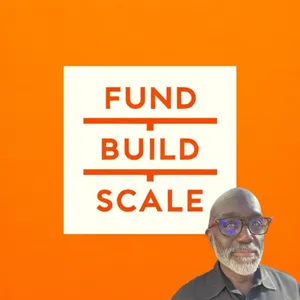
Free Daily Podcast Summary
Fund/Build/Scale: Daily Summaries Delivered
by Walter Thompson
After working for years in early-stage startups and as a journalist, here are three hard truths I’ve learned: 1. Success in Silicon Valley hinges on connections, hard work and luck. 2. Startups often fail because founders lack fundamental business knowledge. 3. Real, actionable advice comes from those who’ve actually done it. There’s no such thing as “founder DNA.” If you’re willing to take on risk and invest years of your life in something that has maybe a 10% chance of paying off — less if you’re a woman or person of color — you can be a startup founder. Here’s why I founded Fund/Build/Scale: 1. To help founders make fewer mistakes. 2. To share successful strategies that can accelerate your go-to-market journey. 3. To inspire more people to see themselves as potential founders. There’s a lot of overlooked talent out there, and we are missing out. This podcast is for anyone who’s interested in learning the basic skills required to launch a startup, secure initial funding and transform
Latest Episodes
The most recent episodes — sign up to get AI-powered summaries of each one.
- 2 days ago18 min
15 Questions With Mercury Co-founder and CEO Immad Akhund
Before Immad Akhund raised money for Mercury, he spent months talking to lawyers, investors, fintech founders and potential banking partners. He’d already experienced the problem he wanted to solve. The harder question was whether he could build the company to solve it. Recorded at One Way Summit in San Francisco, this Fund/Build/Scale conversation puts 15 questions to Mercury’s co-founder and CEO about building the company, backing early-stage founders and finding opportunities others take for granted. We discuss: Why Mercury took roughly 18 months to launch (and what had to work before it could). How he reduced the biggest risks before approaching investors. The startups he’d like to see founders build. How an immigrant’s outsider perspective helped him recognize an opportunity in US banking. Why he thinks founders should move to Silicon Valley and participate in its culture. How repeated encounters become relationships, and why transactional networking falls short. His advice for someone facing an H-1B layoff Watch on YouTube: https://youtu.be/9mDAsf1STvU RUNTIME 18:29 EPISODE BREAKDOWN Are You Building Something That's Hard to Explain? Meet Immad Akhund: Founder and Investor The Startups He Wants to Back Why Mercury Took 18 Months to Launch Before fundraising, "I basically spent all that time de-risking." Who He Backs The Benefits of Being an Immigrant Founder Build Relationships, Not Just a Network An H-1B Layoff: What Comes Next? His Advice for Taking the Leap: Just Quit LINKS Immad Akhund Mercury One Way Summit One Way Ventures Are you building something that’s hard to explain? If so, that’s often a sign you’re working on something interesting, but it raises the risk that you’re missing out on fundraising, sales, hiring, and media opportunities. I help early-stage founders sharpen the narrative: what matters, why now, who needs to care, and why they’re the right team to make it happen. If you’re preparing for a raise, launch, important customer meeting, panel, or hiring push, I can help you pressure-test the story before the stakes get higher. 👉🏾 Visit the Fund/Build/Scale website to learn more, or email fundbuildscale@gmaii.com SUBSCRIBE 📥 Get the Fund/Build/Scale newsletter on Beehiiv: https://fundbuildscale.beehiiv.com/ ↔️Follow F/B/S on LinkedIn: https://www.linkedin.com/newsletters/7249143254363856897/ 📺 Watch Fund/Build/Scale on YouTube: https://www.youtube.com/channel/UCFFH4cs2B1BKatPGs8SFRJw
- 1 weeks ago44 min
Do the Work Before You Start the Clock
Before you raise money, hire a team or start building, how much should you already know? Vineet Edupuganti, co-founder and CEO of Cogent Security, joins Fund/Build/Scale to break down the work his team did before committing to the company: talking with roughly 100 potential customers, studying previous attempts to solve the problem, mapping buyer pain and budgets, and identifying the assumptions that could derail the business. We also talk how Cogent recruited its first employees, landed early design partners, decided when customer interest was strong enough to move forward, and learned to distinguish real demand from polite enthusiasm. If you’re not sure how to recognize when it’s time to stop researching and start building, listen to this episode. 📺 Watch on YouTube: https://youtu.be/xVOcBgsuU2U RUNTIME 44:19 Pick a Problem That Survives an 80% Budget Cut Build Conviction Before You Build the Company How to Recognize When You’ve Learned Enough to Start Why Early Customers Take the Risk The Signals That Demand Is Real Would You Invest $1 Million in Yourself? LINKS Vineet Edupuganti Cogent Security Are you building something that’s hard to explain? If so, that’s often a sign you’re working on something interesting, but it raises the risk that you’re missing out on fundraising, sales, hiring, and media opportunities. I help early-stage founders sharpen the narrative: what matters, why now, who needs to care, and why they’re the right team to make it happen. If you’re preparing for a raise, launch, important customer meeting, panel, or hiring push, I can help you pressure-test the story before the stakes get higher. 👉🏾 Visit the Fund/Build/Scale website to learn more, or email fundbuildscale@gmaii.com SUBSCRIBE 📥 Get the Fund/Build/Scale newsletter on Beehiiv: https://fundbuildscale.beehiiv.com/ ↔️Follow F/B/S on LinkedIn: https://www.linkedin.com/newsletters/7249143254363856897/ 📸 Follow Fund/Build/Scale on Instagram: https://www.instagram.com/fundbuildscale/ 📺 Watch Fund/Build/Scale on YouTube: https://www.youtube.com/channel/UCFFH4cs2B1BKatPGs8SFRJw
- 2 weeks ago35 min
Why Some Startups Get Taken Seriously and Others Don't
Why do some startups get taken seriously while others struggle to earn attention, even when they're solving similar problems? Beck Bamberger, founder and CEO of startup communications agency BAM, joins Fund/Build/Scale to discuss how early-stage founders establish credibility before they have much traction. We explore why conviction matters but can't substitute for evidence, what investors look for when customers and revenue are scarce, and why founders who've raised millions sometimes struggle to explain what their companies actually do. Beck also explains the concept of narrative capital, how investors, customers and journalists evaluate startups differently, and what founders can do to earn trust and media attention without an established track record. A practical conversation about confidence, customer validation, clear communication and giving people real reasons to believe in your business. WATCH ON YOUTUBE https://youtu.be/yqdmd7S7jR4 RUNTIME 35:29 EPISODE BREAKDOWN Meet Beck Bamberger, Founder and CEO of BAM Why Some Founders Earn Belief Before Proof What Makes an Early-Stage Startup Credible? Your Startup Story Shouldn’t Take 17 Minutes Who Needs to Believe in Your Startup First? How to Get Journalists to Take You Seriously Practical Advice for Building Startup Credibility LINKS Beck Bamberger, PhD BAM Are you building something that’s hard to explain? If so, that’s often a sign you’re working on something interesting, but it raises the risk that you’re missing out on fundraising, sales, hiring, and media opportunities. I help early-stage founders sharpen the narrative: what matters, why now, who needs to care, and why they’re the right team to make it happen. If you’re preparing for a raise, launch, important customer meeting, panel, or hiring push, I can help you pressure-test the story before the stakes get higher. Visit the Fund/Build/Scale website to learn more, or email fundbuildscale@gmaii.com 👉🏾 Learn more SUBSCRIBE 📥 Get the Fund/Build/Scale newsletter on Beehiiv: https://fundbuildscale.beehiiv.com/ 📺 Watch Fund/Build/Scale on YouTube: https://www.youtube.com/channel/UCFFH4cs2B1BKatPGs8SFRJw 📸 Follow Fund/Build/Scale on Instagram: https://www.instagram.com/fundbuildscale/
- Oct 6, 202637 min
How Much Proof Does a Consumer Startup Need to Raise Money?
“Follow your dreams and quit your day job” is terrible advice. That’s not me saying it. That’s Jon Keidan, founder and managing partner of Torch Capital, where he’s backed companies including Sweetgreen, Acorns and Zocdoc. He has a better suggestion: before you blow up your life for a startup idea, find some proof that people actually want what you’re planning to build. The bar may be lower than you think. In this conversation, we break down how Jon evaluates consumer startups from the pain point up, what makes founders credible before there’s much traction, why he initially passed (twice!) on Sweetgreen, and how to tell the difference between focus and distraction. We end with a 30-day experiment you can run while you still have a paycheck to find out whether strangers care about your idea before you go all in. 📺 WATCH ON YOUTUBE https://youtu.be/1VvBiLhvd_g RUNTIME 37:14 EPISODE BREAKDOWN Is the problem painful enough to build a company around? Start with a niche, but think bigger Don't quit your day job just yet The deli test: How to tell if your consumer product is venture-scale How much proof does a pre-seed investor need? AI is not a business model Where are the opportunities AI hasn't swallowed? Jon's 30-day experiment for consumer/CPG founders LINKS Jon Keidan Torch Capital Sweetgreen Acorns Zocdoc DigitalOcean Ro Are you building something that’s hard to explain? If so, that’s often a sign you’re working on something interesting, but it raises the risk that you’re missing out on fundraising, sales, hiring, and media opportunities. I help early-stage founders sharpen the narrative: what matters, why now, who needs to care, and why they’re the right team to make it happen. If you’re preparing for a raise, launch, important customer meeting, panel, or hiring push, I can help you pressure-test the story before the stakes get higher. 👉🏾 Visit the Fund/Build/Scale website to learn more, or email fundbuildscale@gmaii.com SUBSCRIBE 📥 Get the Fund/Build/Scale newsletter on Beehiiv: https://fundbuildscale.beehiiv.com/ ↔️Follow F/B/S on LinkedIn: https://www.linkedin.com/newsletters/7249143254363856897/ 📸 Follow Fund/Build/Scale on Instagram: https://www.instagram.com/fundbuildscale/ 📺 Watch Fund/Build/Scale on YouTube: https://www.youtube.com/channel/UCFFH4cs2B1BKatPGs8SFRJw
- Oct 2, 202649 min
What You Permit Is What Gets Produced
Most of us learn culture by adapting to one that already exists. We join a company, figure out what gets rewarded, who has power, what people say in meetings, and what they say after the meeting ends. Founders don’t have that luxury. They’re not fitting into a culture. They’re creating one, whether they mean to or not. SnapLogic President Molly Matthews has a more practical way to think about it: culture is what gets repeated. It shows up in who you hire, what you build, and how you treat customers. “For me, it’s the ethos,” she said. “It’s the energy in which you exchange details with colleagues. It’s how you show up to work.” We get into the first five hires, why “culture fit” is often the wrong frame, what to do with the talented-but-toxic employee, and we’ll end with a self-diagnostic you can run to see if your company is becoming the kind of place you meant to build. 📺 Watch this episode on YouTube RUNTIME 49:56 EPISODE BREAKDOWN Molly Matthews on scaling through people What company culture actually means Why waiting for the perfect hire backfires When grit turns into burnout The Captain America problem: when talent hurts the team Morale and culture are different problems Choosing advisors and investors What to look for in your first five hires LINKS Molly Matthews SnapLogic Grit: The Power of Passion and Perseverance, Angela Duckworth Radical Candor, Kim Scott Extreme Ownership, Jocko Willink and Leif Babin Are you building something that’s hard to explain? If so, that’s often a sign you’re working on something interesting, but it raises the risk that you’re missing out on fundraising, sales, hiring, and media opportunities. I help early-stage founders sharpen the narrative: what matters, why now, who needs to care, and why they’re the right team to make it happen. If you’re preparing for a raise, launch, important customer meeting, panel, or hiring push, I can help you pressure-test the story before the stakes get higher. 👉🏾 Visit the Fund/Build/Scale website to learn more, or email fundbuildscale@gmaii.com SUBSCRIBE 📥 Get the Fund/Build/Scale newsletter on Beehiiv: https://fundbuildscale.beehiiv.com/ ↔️Follow F/B/S on LinkedIn: https://www.linkedin.com/newsletters/7249143254363856897/ 📸 Follow Fund/Build/Scale on Instagram: https://www.instagram.com/fundbuildscale/ 📺 Watch Fund/Build/Scale on YouTube: https://www.youtube.com/channel/UCFFH4cs2B1BKatPGs8SFRJw
- Oct 1, 202639 min
How VCs Judge Founders With No Track Record
What makes a startup worth backing if it has no product, revenue or meaningful traction to evaluate? Paige Craig, founder and managing partner of Outlander VC, invests at the idea stage, which means much of his job involves assessing founders before the usual signals exist. In this episode, Paige explains what he looks for instead: obsession with the problem, time spent with prospective customers, learning velocity, judgment, character and the ability to execute under uncertainty. We also get tactical about what founders can do before they have a product. Paige explains how to distinguish polite customer interest from an actual commitment, what early execution should look like, how to tell whether an idea has venture-scale potential, and how co-founders can pressure-test whether they’re actually working well together. If you’re still figuring out whether you have a startup, a venture-backable business, or just an interesting idea, this conversation offers some self-diagnostics you can run before you start worrying about a pitch deck. RUNTIME 39:40 EPISODE BREAKDOWN "We aim to be the very first check into a founder, as early as possible." Real problem versus interesting idea Intelligence as learning speed Knowing when to course-correct "Character is the hardest thing for us to get right." What execution looks like when there's no product, customers or revenue Customer discovery: " What you want is someone who will commit clearly in the short term." How to test how well your founder team is performing LINKS Paige Craig Outlander VC How Learning Velocity Can Make or Break a Startup Are you’re building something that’s hard to explain? If so, that’s often a sign you’re working on something interesting, but it raises the risk that you’re missing out on fundraising, sales, hiring, and media opportunities. I help early-stage founders sharpen the narrative: what matters, why now, who needs to care, and why they’re the right team to make it happen. If you’re preparing for a raise, launch, important customer meeting, panel, or hiring push, I can help you pressure-test the story before the stakes get higher. 👉🏾 Visit my info page to learn more or email fundbuildscale@gmaii.com SUBSCRIBE 📥 Get the Fund/Build/Scale newsletter on Beehiiv: https://fundbuildscale.beehiiv.com/ ↔️ Follow F/B/S on LinkedIn: https://www.linkedin.com/newsletters/7249143254363856897/ 📺 Watch Fund/Build/Scale on YouTube: https://www.youtube.com/channel/UCFFH4cs2B1BKatPGs8SFRJw
- Sep 30, 202646 min
What Investors Learn When They Watch You Talk To Customers
Selling your pitch to an investor is one thing. Showing that you understand how to sell your product to customers is another. Amy Cheetham, partner at Costanoa Ventures, sometimes watches founders talk to prospective customers as part of her diligence. Those conversations can reveal how well they understand the problem they’re solving, whether they can absorb feedback and how effectively they communicate with the people they hope will buy what they’re building. In this episode, Amy explains what she looks for in those conversations, why learning to sell matters for founders, and how distribution can become a moat for AI startups. We also discuss what makes a strong early-stage narrative, how founders without an existing VC network can start building investor relationships, and a simple seven-day experiment for testing an idea with prospective customers. Watch on YouTube: https://youtu.be/GkTaPQ02NG8 RUNTIME 46:20 EPISODE BREAKDOWN Costanoa "will invest really as early as you can imagine." ”It's not just fundraising as a skill. We're understanding how founders sell to customers.” If you can't explain it, you can't sell it In the application layer, distribution is the moat "My founder archetype has always been domain experts." Start cultivating relationships with investors before you raise Validate your startup's right to exist with this 7-day experiment LINKS Amy Cheetham Costanoa Ventures How to Run Efficient and Effective Early Stage Board Meetings, TechCrunch Ivo Marble Health Are you building something that’s hard to explain? If you’re building something that’s hard to explain, that’s often a sign you’re working on something interesting, but it raises the risk that you’re missing out on fundraising, sales, hiring, and media opportunities. I help early-stage founders sharpen the narrative: what matters, why now, who needs to care, and why they’re the right team to make it happen. If you’re preparing for a raise, launch, important customer meeting, panel, or hiring push, I can help you pressure-test the story before the stakes get higher. Visit the Fund/Build/Scale website to learn more, or email fundbuildscale@gmaii.com 👉🏾 Learn more SUBSCRIBE 📥 Get the Fund/Build/Scale newsletter on Beehiiv: https://fundbuildscale.beehiiv.com/ ↔️Follow FBS on LinkedIn: https://www.linkedin.com/newsletters/7249143254363856897/ 📺 Watch FBS on YouTube: https://www.youtube.com/channel/UCFFH4cs2B1BKatPGs8SFRJw
- Aug 26, 202648 min
How to Get Through a Tech Layoff Without Losing Yourself
If you work in tech long enough, there’s a good chance you’ll go through a layoff. Either your own, or one that leaves you wondering whether you’re next. Shanon Olsen, COO of Henley Leadership, works with executives and organizations navigating growth, disruption, and change. In this episode, we talk about why layoffs should be understood as a cultural breakdown rather than a one-day event, what happens when founders build companies they aren’t prepared to lead, and why CEOs can delegate just about everything — except culture. I’ve been on both sides of this equation, so I asked Shanon about how to stay committed to your work without making your employer your identity, why it’s important to maintain relationships outside your company, how to assess whether a workplace is recovering after layoffs, and why staying in a job and exploring other possibilities don’t have to be mutually exclusive. RUNTIME 48:52 EPISODE BREAKDOWN When does a startup stop being a startup? If you're not ready to let someone go, you shouldn't be the CEO Why layoffs are a "cultural breakdown" How should the CEO behave after layoffs? Building a culture that's resilient enough to weather layoffs How to tell an employee WHY you're laying them off " Identify what's your purpose outside of your position." How to tell if your company is recovering after layoffs Should you stay or leave after layoffs? 📺 Watch this episode on YouTube: https://youtu.be/vbunRx4FZIQ LINKS Shanon Olsen Henley Leadership Group Navigating Layoffs: Understanding the Impact on You and Your Team, Henley Leadership Group Who Do We Choose To Be, Margaret Wheatley Dunbar’s Number Johari Window Are you building something that’s hard to explain? That’s often a sign you’re working on something interesting, but it raises the risk that you’re missing out on fundraising, sales, hiring, and media opportunities. I help early-stage founders sharpen the narrative: what matters, why now, who needs to care, and why they’re the right team to make it happen. If you’re preparing for a raise, launch, important customer meeting, panel, or hiring push, I can help you pressure-test the story before the stakes get higher. Visit the Fund/Build/Scale website to learn more, or email fundbuildscale@gmaii.com 👉🏾 Learn more 📥 Get the Fund/Build/Scale newsletter on Beehiiv: https://fundbuildscale.beehiiv.com/ 📺 Watch Fund/Build/Scale on YouTube: https://www.youtube.com/channel/UCFFH4cs2B1BKatPGs8SFRJw
Get Fund/Build/Scale summaries in your inbox
Free AI-powered daily recaps. Key takeaways, quotes, and mentions — in a 5-minute read.
Get Free Summaries →Free forever for up to 3 podcasts. No credit card required.
You Might Also Like
Listeners also like.

Founder's Story
Raw conversations with entrepreneurs about the struggles, doubts, and pivotal moments behind their ventures.

The Vault Unlocked
Founders share hard-earned lessons on what actually worked, what failed, and the pivotal decisions behind growing successful companies.
The Entrepreneur DNA
Entrepreneurs share lessons on building businesses and personal growth through real experiences and mistakes.
Do Small Business Like a Big Boss Podcast
A lawyer offers practical legal and business strategies for small business owners to scale and compete effectively.

David Senra
David Senra hosts conversations with the greatest living founders.

The Twenty Minute VC (20VC): Venture Capital | Startup Funding | The Pitch
Interviews with top venture capitalists and successful founders about startup funding and building tech companies.
Founders
Draws lessons from biographies of history’s most successful entrepreneurs to apply their proven strategies to modern business challenges.

Liftoff Journeys with Jeanniey Walden
Conversations with leaders reveal the real decisions, doubts, and turning points that shaped their careers and personal growth.

Living Your Legacy
Entrepreneurs share their journeys building businesses and movements, discussing challenges, leadership, and lessons learned.

Y Combinator Startup Podcast
Founders and Y Combinator partners discuss building startups, from idea to scale, sharing real-world lessons and strategies.
A Bit of Optimism
Conversations with thinkers and doers exploring what drives purpose, growth, and meaning in life.
Wantrepreneur to Entrepreneur | Start and Grow Your Own Business
Teaches aspiring entrepreneurs how to start and grow customer-focused businesses using proven marketing strategies and systems.
About Fund/Build/Scale
After working for years in early-stage startups and as a journalist, here are three hard truths I’ve learned: 1. Success in Silicon Valley hinges on connections, hard work and luck. 2. Startups often fail because founders lack fundamental business knowledge. 3. Real, actionable advice comes from those who’ve actually done it. There’s no such thing as “founder DNA.” If you’re willing to take on risk and invest years of your life in something that has maybe a 10% chance of paying off — less if you’re a woman or person of color — you can be a startup founder. Here’s why I founded Fund/Build/Scale: 1. To help founders make fewer mistakes. 2. To share successful strategies that can accelerate your go-to-market journey. 3. To inspire more people to see themselves as potential founders. There’s a lot of overlooked talent out there, and we are missing out. This podcast is for anyone who’s interested in learning the basic skills required to launch a startup, secure initial funding and transform
Customized Recaps
AI-powered recaps with compact key takeaways, quotes, and insights.
Straight to Your Inbox
Get key takeaways from Fund/Build/Scale in a 5-minute read.
Save Hours Every Week
Stay current on your favorite podcasts without falling behind.
Frequently Asked Questions
What is Podzilla's Fund/Build/Scale daily summary?
It's a free AI-powered email that summarizes new episodes of Fund/Build/Scale as soon as they're published. You get the key takeaways, notable quotes, and links & mentions — all in a quick read.
How does the Fund/Build/Scale podcast summary work?
When a new episode drops, our AI transcribes and analyzes it, then generates a personalized summary tailored to your interests and profession. It's delivered to your inbox every morning.
Is this an official Fund/Build/Scale product?
No. Podzilla is an independent service that summarizes publicly available podcast content. We're not affiliated with or endorsed by Walter Thompson.
Can I get summaries of other podcasts too?
Absolutely! The free plan covers up to 3 podcasts, any in the catalog. Basic raises that to 15, Pro to 40 and Max to 100. Browse our full catalog at /podcasts.
How often does Fund/Build/Scale release new episodes?
Fund/Build/Scale publishes weekly. Our AI generates a summary within hours of each new episode.
What topics does Fund/Build/Scale cover?
Fund/Build/Scale covers topics including News, Technology. Our AI identifies the specific themes in each episode and highlights what matters most to you.
Start getting Fund/Build/Scale summaries tomorrow morning.
Free forever for up to 3 podcasts. No credit card required.
Free forever for up to 3 podcasts. No credit card required.