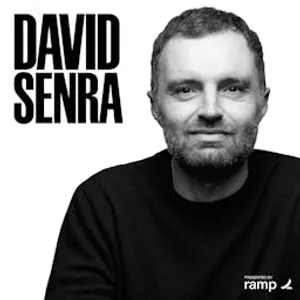
Free Daily Podcast Summary
David Senra: Daily Summaries Delivered
by Scicomm Media
Conversations with the greatest living founders.
Latest Episodes
The most recent episodes — sign up to get AI-powered summaries of each one.
- Today1h 20m
Building One of the Fastest Growing CPG Company in History | Peter Rahal of David Protein, Medici Brands & RXBAR
Peter Rahal is the co-founder of RXBAR, David Protein, and Medici Brands. After selling RXBAR for $600 million, he tried investing and quickly discovered he was miserable watching other people run companies. He explains why he returned to protein bars, why founders must deeply understand their products and how he plans to build the most important food company of the 21st century. Peter describes the intelligence, beauty and discipline behind David's brand, how growing up with dyslexia shaped his competitive drive and why he channels anger and resentment into company building. He also details his approach to hiring former founders, building a culture of truth seeking and humility and treating the organization itself as a product. Peter walks through the acquisition of his critical ingredient supplier, Epogee, the supply agreements that protected his business and what he would change about communicating the decision to other entrepreneurs. He shares why he chose Greenoaks as an investor, why speed matters more than maximizing a fundraising valuation and how he is building a decentralized organization where leaders master their products, confront problems and earn their autonomy. Made possible by Ramp: https://ramp.com AppLovin: https://applovin.com/senra Deel: https://deel.com/senra Chapters Life after selling RXBAR for $600 million Going all in and burning the boats Building the most important food company of the 21st century How a brand is like a human being Why Peter always chooses the hard path From zero to $300 million in two years Why Peter started selling frozen cod The organization is the product Why he recruits former founders Buying his supplier and victimizing his competitors How Neil Mehta and Greenoaks earned a spot on the cap table How Peter fundraises Running a business is like a river Why the company is named Medici Bureaucracy is not inevitable Why Peter has 25 direct reports Peter's principle of reactionary leadership support On divine discontent and loving the fight Learn more about your ad choices. Visit megaphone.fm/adchoices
- 1 weeks ago2h 1m
Luca Ferrari on Building Bending Spoons: Extreme Ownership, Talent Science & Relentless Simplification
Luca Ferrari is a co-founder of Bending Spoons, the technology company he built with his partners by rethinking how software businesses should hire, operate and allocate capital. He explains why Bending Spoons aspires to build “the best company there ever was,” why it favors raw talent and drive over experience and how a centralized talent team uses testing and more than 100 signals to identify exceptional people early. Luca describes the company’s culture of extreme ownership and relentless simplification, including why employees are given more work than they can possibly complete, why teams rotate across businesses and why Bending Spoons eliminated traditional job titles. He also details the proprietary operating system and AI tools that allow small teams to run acquired products such as Evernote, why Bending Spoons buys businesses to hold and transform rather than sell and how operational excellence gives it an advantage in acquisitions. Luca closes by discussing going public, his approach to negotiation and capital allocation and why he believes logic and rationality are more reliable than blindly following data. Show notes: https://davidsenra.com/episode/luca-ferrari Made possible by Ramp: https://ramp.com Deel: https://deel.com/senra AppLovin: https://applovin.com/senra Chapters Fanatical founders building enduring companies Luca on building the best company there ever was The origins of Bending Spoons Talent and why experience is overrated Turning hiring into a science Why Bending Spoons doesn't use bonuses Why everyone in the company has the same job On finding great potential and saturating their capacity Insisting on a culture of extreme ownership Luca's principle of relentless simplification Why Bending Spoons doesn't use job titles The proprietary operating system behind Bending Spoons Why Bending Spoons isn't private equity How Bending Spoons acquired & transformed Evernote How Bending Spoons uses AI How Bending Spoons thinks about capital allocation Why procrastination without laziness is good Operational excellence is not optional How Bending Spoons negotiates acquisitions Logic over numbers Learn more about your ad choices. Visit megaphone.fm/adchoices
- 1 weeks ago1h 11m
Mati Staniszewski on ElevenLabs, Voice AI & Building the Communication Layer for AI
Mati Staniszewski is the co-founder of ElevenLabs, an AI audio company he started in 2022 with his longtime friend Piotr Dąbkowski. He explains how a frustration with poorly dubbed content in Poland led them to build frontier speech technology, why ElevenLabs combines audio research with product deployment and how its focus on voice shapes where the company chooses to compete. Mati also describes the Palantir-inspired operating model behind ElevenLabs: small autonomous teams, a flat organization and forward deployed engineers who work directly with customers and feed what they learn back into the product. He discusses using AI to amplify human potential, helping people who have lost their voices speak again, why imperfections can make AI voices feel more human and his belief that voice will become one of the primary ways people interact with AI. After turning down multiple acquisition offers, Mati says he and Piotr are committed to building ElevenLabs independently and pursuing what they see as a rare opportunity to reshape how humans communicate with technology. Show notes: https://www.davidenra.com/mati-staniszewski Made possible by Ramp: https://ramp.com Deel: https://deel.com/senra AppLovin: https://applovin.com/senra Chapters Building an AI-Native Company Before ChatGPT Why ElevenLabs Started With Audio & Dubbing Research + Product Deployment: How ElevenLabs Is Built Focus as a Competitive Advantage Building an Ecosystem Around Voice The Communication Platform & Deutsche Telekom Forward Deployed Engineers & Lessons From Palantir Flat Organizations, Transparency & AI-Native Management Small Teams & Putting Engineers Everywhere Where ElevenLabs Is Growing Fastest Taste, Art & Science in AI Using AI to Amplify Human Potential Becoming an Entrepreneur & Building With Piotr Why Mati Won't Sell ElevenLabs Voice as the Interface for AI Turning Conferences Into a Business Tool Learn more about your ad choices. Visit megaphone.fm/adchoices
- 2 weeks ago1h 16m
Zach Dell on Base Power, Energy Abundance & Building a Company for Life
Zach Dell is the co-founder of Base Power, an energy company on a mission to make electricity more affordable and reliable. His starting insight was that home batteries had the wrong business model. Companies sold expensive backup systems that sat idle most of the time. Base installs batteries at homes, retains ownership and operates them as a fleet: charging when electricity is cheap, discharging when it is expensive and providing backup when the grid goes down. The homeowner gets lower electricity bills and backup power. Base gets an asset it can put to work every day. Dell explains why batteries can make the existing grid more efficient, why installing them where people consume electricity helps overcome infrastructure bottlenecks and how Base serves both homeowners and utilities. His strategy is to build a compounding cost advantage through vertical integration and technology. That now includes Base Core, a battery designed and manufactured by the company, and a longer-term ambition to help meet the growing power demands of AI. Dell grew up watching his father, Michael Dell, build a company and knew from childhood that he wanted to become an entrepreneur. After several early ventures failed, he went into investing to study what makes a great business. He describes the “Dad Terminal”—ongoing conversations with his father about strategy, operations and the problems in front of them—and the lessons Base has adopted from former SpaceX employees. Engineers and manufacturing teams work close together, and the entire company organizes around a few clearly defined goals. He also explains the operating habits behind Base: monthly written updates, visible performance dashboards and a physical turtle placed on the desk of the person responsible for resolving a critical bottleneck. He keeps separate notebooks for working in the business and working on it, setting aside time each night to think on paper without distractions. He discusses building a beloved brand in energy, why his co-founder conversations focus on what is going wrong and why Base is his last company. His ambition is a lifelong effort to make, move, store and sell electricity more affordably and reliably. Show notes: https://www.davidsenra.com/zach-dell Made possible by Ramp: https://ramp.com AppLovin: https://applovin.com/senra Deel: https://deel.com/senra Chapters Energy Abundance & the Power Demands of AI How Batteries Make the Grid More Efficient Early Ventures & the Insight Behind Base We Don't Sell Batteries. We Sell Electricity. How Base Works With Utilities & Competes for Customers Learning From Michael Dell: The "Dad Terminal" Vertical Integration & Lessons From SpaceX Writing Clearly & Making Time to Think North Stars, Turtles & Relentless Execution Learning From Great Founders & Building a Beloved Brand What's Your Constraint? Base Core & Taking Control of Manufacturing A Lifelong Mission & the Last Company He'll Build Learn more about your ad choices. Visit megaphone.fm/adchoices
- 3 weeks ago1h 22m
Doug Leone on Sequoia, Fear, Great Founders & Starting Over at 69
Doug Leone spent 26 years helping lead Sequoia Capital through successive eras of technological change. Born in Italy, he came to the United States without speaking English and carried the insecurity of an outsider into his career. That fear became fuel: whenever he felt himself falling behind, he forced himself to start over. After stepping down from Sequoia at 65 to make room for the next generation, he returned four years later. Now he considers himself a low-level analyst again, racing to understand an AI revolution that he believes is rewriting business more radically than anything he has seen before. Leone explains the three questions he asks before making an investment: Would he put his children's money into it? If he could make only 20 investments in his life, would this be one of them? Could it return the entire fund? He is interested only in extreme outliers—companies capable of returning 100 times the original investment—and says the biggest mistake venture investors make is selling their winners too early. Sequoia once owned enormous stakes in Apple, Cisco, Google and NVIDIA, but even the greatest investors failed to anticipate how long exceptional companies could continue compounding. His role as an investor is not to shape a founder's technology. It is to help turn a product into a business: recruiting the first team, building sales and marketing, navigating crucible moments and preserving the founder as the soul of the company. He describes backing David Vélez before Nubank existed, what Fred Luddy's unusual ServiceNow pitch revealed about him and why Sequoia looks for the same qualities in founders and its own partners: a hypercompetitive person with a heart of gold. Leone also discusses trust as the accelerant that makes business move quickly. Trust requires both competence and good intentions, and it is earned by helping founders when they are most vulnerable. He explains why founders should architect their boards as carefully as their products, why productive disagreement is different from argument and how to deliver difficult feedback so it can actually be heard. He closes with lessons from his longtime partner Michael Moritz: listen to the exact words people choose, put the other person first and always ask what a company could become if everything goes right. Show notes: https://www.davidsenra.com/episode/doug-leone Made possible by Ramp: https://ramp.com AppLovin: https://applovin.com/senra Deel: https://deel.com/senra Chapters How to Dominate for Decades Turning Fear Into a Tailwind Immigrant Drive, Hard Work & the Beach Club Simplifying Life & Choosing Discomfort The Homeless Sequoia Partner With No Plan B Stepping Down, Coming Back & Starting Over Why AI Is Different From Every Previous Technology Shift Doug's Three Investment Heuristics The Cost of Selling Great Companies Too Early Helping Founders Turn Products Into Businesses David Vélez, Nubank & the Psychology of Founder Support Why Founders Must Remain the Soul of the Company Torturing Yourself Into Greatness Don Valentine, Succession & the Sequoia School of Hard Knocks Staying Grounded & Developing a Sniffer for People Hypercompetitive With a Heart of Gold Fred Luddy, Israeli Founders & Radical Directness Trust Is the Accelerant of Business Starting From Zero & Hunting for the Next Great Founder Architect Your Board Like Your Product Truth, Disagreement & the Art of Difficult Feedback Humanity, Introversion & the Value of Relationships What Doug Learned From Michael Moritz Learn more about your ad choices. Visit megaphone.fm/adchoices
- 3 weeks ago1h 23m
Building Defense Technologies to Protect Democracies | Torsten Reil, Helsing
Torsten Reil has spent his career working at the intersection of artificial intelligence, simulation and entrepreneurship. He began as a biologist studying neural networks and complex systems before founding NaturalMotion, whose technology was used in films including Lord of the Rings, Troy and Harry Potter and later in games including Grand Theft Auto and Red Dead Redemption. After building and selling NaturalMotion, he eventually returned to entrepreneurship to co-found Helsing, a European defense technology company focused on artificial intelligence and autonomous systems. Reil believes warfare is undergoing a fundamental shift from humans operating expensive weapons systems toward what he calls autonomous mass: large numbers of AI-controlled machines operating together. He explains why drones are making tanks, artillery and eventually crewed fighter jets increasingly vulnerable; how AI can navigate without GPS in jammed environments; and why Helsing developed Centaur, an AI fighter pilot that has controlled a real Saab Gripen in air combat against a human-operated aircraft. That work led Helsing to begin building its own autonomous fighter jet, the CA1 Europa. The underlying strategy is to combine simpler, mass-manufacturable hardware with increasingly capable software. Reil argues that future conflicts will become battles of materiel, making manufacturing capacity as important as technological sophistication. Helsing's HX-2 strike drone was redesigned to scale from dozens of units per month to a baseline of 1,000, with the ability to surge to 3,000. He also explains Helsing's concept of distributed “resilience factories,” which allow countries to manufacture systems domestically while reducing their dependence on vulnerable centralized production facilities. Reil also describes how he runs Helsing and why he considers talent density the most important ingredient in company performance and culture. The company closely monitors recruiting, conducts quarterly performance calibration and makes an unusually large investment in finding and retaining exceptional people. He discusses Helsing's values of “whatever it takes” and “the truth is in the field,” why founders should pursue ambitions large enough to matter, and why he believes commentary has little value compared with actually building something that changes the world. Show notes: https://www.davidsenra.com/episode/torsten-reil Made possible by Ramp: https://ramp.com AppLovin: https://applovin.com Deel: https://deel.com/senra Chapters Drones, Tanks & the Future of Warfare Why Torsten Founded Helsing Founder Conviction & Betting on European Defense Helsing's Mission: Protecting Democracies Programs of Record & Winning the Eurofighter Contract Building a Superhuman AI Fighter Pilot Deterrence, Autonomous Weapons & the Morality of Defense Mass Manufacturing, Software & the Future of Materiel Airbase Vulnerability, Procurement & Scaling Strike Drones Talent Density, Hiring & Performance Management How Torsten Hires Exceptional People Helsing's Culture: Whatever It Takes & Truth Is in the Field Deploying in Ukraine & the Weight of Defense Technology NaturalMotion, Gaming & Torsten's Path Into AI Outsiders, First Principles & Ambitious North Stars Why Commentary Is Worthless & Founders Should Build Learn more about your ad choices. Visit megaphone.fm/adchoices
- 4 weeks ago1h 18m
Sam Altman on Building OpenAI & Betting on the Impossible
Sam Altman has spent his career at the intersection of startups, investing and artificial intelligence. He says he was fascinated by AI as a child in St. Louis, studied it in college and eventually helped start OpenAI in 2015 after concluding that the most important opportunities often begin as non-consensus bets. His experience investing in startups taught him to look for power laws, back unconventional talent and recognize the decisions that can change a company’s trajectory. At OpenAI, Altman says most of his effort goes toward research and compute. Scaling compute requires coordinating chips, fabrication plants, data centers, power systems, finance, policy, supply chains and logistics—what he describes as potentially the most expensive infrastructure project in history. He argues OpenAI should function primarily as a platform: one direct interface to powerful AI and one application programming interface that lets people build on top of it. That strategy requires killing good ideas to preserve resources for the great ones. Altman expects AI capabilities to advance faster than society and the economy can absorb them. Human habits and institutional inertia will slow the transition, which he believes may make it smoother. He also expects human connection to become more valuable and AI to enable a major increase in small-business formation. His central concern is that AI should expand human agency rather than concentrate power in a small number of companies, people or models. He also explains how Y Combinator shaped OpenAI’s operating philosophy: make non-consensus bets, put technical people in charge, ship early, learn from reality and iterate. Yet OpenAI required breaking the classic startup playbook. The organization spent four and a half years without launching a product and had to invent ways to measure research progress without customer feedback. On its first day, roughly a dozen people gathered in Greg Brockman’s apartment and quickly realized they did not know what to do next. Years of what Altman calls “chaotic stumbling” eventually produced the research path that led to GPT. Show notes: https://www.davidsenra.com/episode/sam-altman Made possible by Ramp: https://ramp.com AppLovin: https://applovin.com/senra Deel: https://deel.com/senra Chapters Tobi Lütke, AI-Native Companies & Why Adoption Moves Slowly Sam's Own Resistance to AI & the Missing iPhone Moment Models, Compute, Power Laws & Non-Consensus Talent From AI-Obsessed Kid to Founder, Investor & Back Again Impossible Problems, Scientific Discovery & Human Connection AI's Two Biggest Risks: Loss of Control & Centralized Power Iterative Deployment, AI Safety & Learning From Reality Why People Fear AI & the Coming Small-Business Boom Context, Memory & the Next Way We Will Work With AI OpenAI's Platform Strategy & Killing Good Ideas Peter Thiel, Paul Graham & the Value of Nonlinear Thinkers How Y Combinator Changed Startups & Shaped OpenAI Learning More From Success & the Power of Repetition Building OpenAI Without Customers, a Product or a Playbook Letters to His Son & Preserving the Story Learn more about your ad choices. Visit megaphone.fm/adchoices
- Aug 16, 20261h 48m
Travis Kalanick, Founder of Uber & Atoms
Travis Kalanick is best known for co-founding Uber and building it into one of the world’s largest transportation platforms. Before Uber, he spent years building Red Swoosh under extreme financial pressure. He says he took no salary for its first four years, repeatedly ran out of money and lost much of his social life to the company before eventually selling it. He later invested much of the proceeds in friends’ startups, becoming the first investor in Expensify. Kalanick started Uber at 33 and carried the intensity of those earlier years into the company. He describes operating with “precision, perfection and obsession” and continued running Uber with the mentality of someone worried about making the next grocery bill even after the company had reached a valuation of roughly $70 billion. Under his leadership, Uber expanded rapidly across cities and countries, creating a new category of app-based transportation and challenging the entrenched taxi systems that controlled many local markets. Uber’s growth depended on empowering young operators to build markets from scratch while maintaining tight control over the decisions that mattered most. Kalanick personally participated in the pricing process for the company’s first 20 to 30 cities, using each launch to refine a playbook that could eventually operate without him. He describes this management philosophy as finding the line between order and chaos: using the fewest possible rules while preserving the structure required to move quickly at scale. After leaving Uber, he returned to company building within months. His current company, Atoms, is developing artificial intelligence and specialized robotics for industries including food, mining and transportation. Kalanick describes his role as “problem solver in chief,” focusing on the most consequential problems that are not already being solved and pursuing what he considers his broader calling: digitizing the physical world. Show notes: https://www.davidsenra.com/episode/travis-kalanick Made possible by Ramp: https://ramp.com AppLovin: https://applovin.com/senra Deel: https://deel.com/senra Chapters Building Atoms & the Meta Problem of Management The Appeal of Impossible Problems: Starting Over in China Uber vs. Didi: Copycats, Hypergrowth & China's Rules How Network Effects Become an Efficiency Fortress Capitalism vs. the Taxi Cartel The China War Goes Global & the Entrepreneur's Capacity for Pain Life After Uber: Lawfare, Media Narratives & Reputation What Founders Get Wrong About Venture Capital The Fundraising Playbook: QED Storytelling & a Five-Room Auction The Uber Coup, Radical Accountability & Outgrowing Fear Why Specialized Robots Beat Humanoids at Industrial Scale Finding Your Sport: Food, Mining & the Physical AI Stack How to Build Many Companies Inside One Company Entropy, Civilization & the Meaning of Progress Learn more about your ad choices. Visit megaphone.fm/adchoices
Get David Senra summaries in your inbox
Free AI-powered daily recaps. Key takeaways, quotes, and mentions — in a 5-minute read.
Get Free Summaries →Free forever for up to 3 podcasts. No credit card required.
You Might Also Like
Listeners also like.

Founder's Story
Real founders share raw stories of building, scaling, and leading companies, revealing the grit and purpose behind entrepreneurial success.
Invest Like the Best with Patrick O'Shaughnessy
Interviews with top investors and business leaders reveal strategies and insights for smarter investing and decision-making.

Moonshots with Peter Diamandis
Explores emerging technologies and their potential to transform humanity's future.
The Knowledge Project
Conversations exploring mental models, decision-making, and the foundational principles behind success in business and life.
21st Century Entrepreneurship
Founders, CEOs, and business leaders share real-world lessons on building and scaling companies through candid interviews.

The Digital Executive
A daily tech podcast exploring emerging technologies through interviews with Silicon Valley CEOs, influencers, and celebrities.

The Kevin Rose Show
Conversations with experts in tech, science, and performance to uncover unconventional wisdom for personal and professional growth.

Proven Podcast
Charles Schwartz
The Entrepreneur DNA
Entrepreneurs share lessons on building businesses and personal growth through real experiences and mistakes.

Lenny's Podcast: Product | Career | Growth
Conversations with top product and growth leaders offering practical strategies for building, launching, and scaling successful products.

The Twenty Minute VC (20VC): Venture Capital | Startup Funding | The Pitch
Interviews with top venture capitalists and successful founders about startup funding, investing, and building technology companies.

Right About Now - Legendary Business Advice
Real talk from business founders and entrepreneurs about building companies, lessons learned, and what actually works in real-world ventures.
Customized Recaps
AI-powered recaps with compact key takeaways, quotes, and insights.
Straight to Your Inbox
Get key takeaways from David Senra in a 5-minute read.
Save Hours Every Week
Stay current on your favorite podcasts without falling behind.
Frequently Asked Questions
What is Podzilla's David Senra daily summary?
It's a free AI-powered email that summarizes new episodes of David Senra as soon as they're published. You get the key takeaways, notable quotes, and links & mentions — all in a quick read.
How does the David Senra podcast summary work?
When a new episode drops, our AI transcribes and analyzes it, then generates a personalized summary tailored to your interests and profession. It's delivered to your inbox every morning.
Is this an official David Senra product?
No. Podzilla is an independent service that summarizes publicly available podcast content. We're not affiliated with or endorsed by Scicomm Media.
Can I get summaries of other podcasts too?
Absolutely! The free plan covers up to 3 podcasts. Upgrade to Pro for 15, or Premium for 50. Browse our full catalog at /podcasts.
How often does David Senra release new episodes?
David Senra publishes weekly. Our AI generates a summary within hours of each new episode.
What topics does David Senra cover?
David Senra covers topics including Business. Our AI identifies the specific themes in each episode and highlights what matters most to you.
Start getting David Senra summaries tomorrow morning.
Free forever for up to 3 podcasts. No credit card required.
Free forever for up to 3 podcasts. No credit card required.