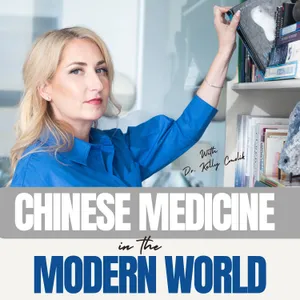
Free Daily Podcast Summary
Chinese Medicine in the Modern World: Daily Summaries Delivered
by Dr. Kelly Cmolik
Join Dr. Kelly Cmolik, Doctor of Traditional Chinese Medicine, as she explores how Traditional Chinese Medicine (TCM) address today’s toughest health challenges—including chronic inflammation, autoimmune disease, gut dysfunction (IBS, SIBO, leaky gut), hormonal imbalance, and skin conditions like eczema, psoriasis, rosacea, and acne. With 20+ years of clinical experience, Dr. Cmolik blends ancient wisdom with integrative, evidence-informed medicine to reveal root-cause patterns, microbiome and immune health, mind-body connections, and natural treatment strategies that work when conventional medicine falls short. Smart, modern, and deeply practical—this is holistic, whole-body healing through the lens of TCM.
Latest Episodes
The most recent episodes — sign up to get AI-powered summaries of each one.
- 2 weeks ago31 min
Cold & Flu Season with Asthma or Eczema: A Chinese Medicine Guide
Every fall, the internet tells you to "boost your immunity." But if you live with asthma, allergies, eczema, psoriasis, or an autoimmune condition, your immune system may not be weak at all. It may be reactive, misdirected, or already running hot. In Episode 12 of Chinese Medicine in the Modern World, Dr. Kelly Cmolik explains why the goal during cold and flu season is immune regulation and resilience, not endless boosting. She explains why a well-intentioned supplement stack or qi tonic can backfire for people with complicated health pictures.Kelly covers why respiratory infections rise in late fall and why cold, dry air and viruses are a hard combination for sensitive airways. She also explains how Chinese medicine connects the lungs, skin, and large intestine during the metal season. At the centre of the episode is one of Chinese medicine's most useful ideas: the difference between a disease diagnosis and a pattern diagnosis. Two people can both have asthma, one dry and irritated, the other congested and phlegmy, and need completely different treatment.She closes with a practical, layered action plan for the season. It covers limiting exposure, hydrating, eating warm cooked foods, and working with a fever rather than against it. She also names classic Chinese herbal formulas like Yin Qiao San and Ban Lan Gen, explains when a respiratory flare needs urgent medical care, and says why a temporary skin flare after a cold is common.In This EpisodeWhy "boosting your immune system" is the wrong frame, especially with asthma, allergies, or autoimmunityWhy colds and flu rise in fall, and why getting sick isn't a personal failureInnate vs. adaptive immunity, and immune regulation vs. immune boostingThe metal season in Chinese medicine: the lung, skin, large intestine, and drynessDisease diagnosis vs. pattern diagnosis: why two asthma patients need two different treatmentsClear, harmonize, then tonify: how Kelly sequences treatment, and why heavy tonics can worsen congestionSeasonal self-care: warm foods, broths, teas, hydration, sweating, and feverClassic Chinese herbal formulas for colds and sore throats, and inhaler safety for asthmaKey TakeawaysThe immune system isn't a volume knob. Too little response is a problem, and so is excessive, poorly regulated inflammation. The goal is to recognize a threat, respond, resolve, and return to balance.Self-prescribing immune support can backfire. Qi tonics and supplement stacks that "supercharge" immunity may not suit someone whose immune system is already redlining, as in autoimmune or strongly inflammatory conditions.Same diagnosis, different patterns. Chinese medicine asks how a condition is presenting in this person right now: dry or phlegmy, hot or cold, with or without digestive involvement. Treatment follows the pattern.Sequence matters. Kelly typically clears what's congested or hot first, then harmonizes, and tonifies only when needed. Tonifying too early can worsen congestion, and draining a depleted person can knock them flat.Your skin may flare when you're sick. When the immune system is fighting a new pathogen, eczema and psoriasis can worsen temporarily.Keep your rescue inhaler close. Chinese medicine is a strong option for chronic respiratory conditions, but it isn't emergency care. Worsening breathlessness, trouble speaking, blue-grey lips, confusion, or chest pain need urgent medical attention.Questions AnsweredWhy do colds and flu spike in the fall?Should I try to boost my immune system if I have asthma, allergies, or an autoimmune disease?Why does my eczema or psoriasis get worse when I get a cold?How does Chinese medicine treat asthma differently from conventional medicine?What is the lung, skin, and large intestine connection in Chinese medicine?What should I do at the first sign of a cold?What Chinese herbs are used for colds, sore throats, and viral infections?When is an asthma flare an emergency?Resources MentionedEpisode 11 of Chinese Medicine in the Modern World, on peptides and regenerative medicineJohns Hopkins University research on seasonal flu vaccines, as referenced by Dr. CmolikFullscript. Dr. Cmolik's dispensary still lists her recommended cold and flu formulas by name, though some are no longer available through Fullscript in Canada. https://ca.fullscript.com/loginGolden Flower Chinese Herbs, mentioned
- Oct 5, 202650 min
Peptides & GLP-1s After 40: What Women Need to Know
In this special guest episode of Chinese Medicine in the Modern World, Dr. Kelly Cmolik sits down with her friend and first-ever podcast guest, Dr. Mary Pines — a PhD biomedical scientist with 25+ years of research experience and founder of Better Beyond 40, a program helping women navigate perimenopause, menopause, and healthy aging.Together they break down the rapidly growing world of peptide therapy for women over 40: what peptides actually are, how they differ from hormones and nutritional proteins, why GLP-1 medications (like Ozempic and Mounjaro) have reshaped the conversation around weight and metabolism, and how Dr. Kelly integrates peptides into a Chinese medicine framework built around clearing inflammation, rebalancing the body, and tonifying what's deficient.The conversation covers commonly discussed compounds — KPV, BPC-157, TB-500, GHK-Cu, Thymosin alpha-1, growth hormone secretagogues (tesamorelin, sermorelin, CJC-1295, ipamorelin), and epitalon — along with candid discussion of safety concerns, sourcing, dosing philosophy, and the historical origins of peptide science with Russian scientist Vladimir Khavinson.In this episode, you'll learn:What a peptide is, and how it differs from a hormone or a nutritional protein like collagenWhy peptides are considered more "homeostatic" than blunt-force hormone replacementHow GLP-1 medications work, and why irresponsible dosing (not the drug class itself) drove many side effectsWhy weight loss without addressing muscle, bone density, and detox pathways can backfireHow Dr. Kelly integrates peptides into a three-phase Chinese medicine protocol (clear, rebalance, tonify)The difference between FDA-approved GLP-1 drugs and "gray market" investigational peptidesCommon concerns around BPC-157, angiogenesis, and cancer risk — and the current thinking on that topicThe history of peptide science, from Cold War Russia to modern longevity medicineThree questions to ask yourself before starting any peptide protocolLinks & Resources📅 Book a consultation with Dr. Kelly: https://drcmolik.janeapp.com/🌿 Learn about Dr. Kelly's clinic & services: https://www.drcmolik.com/services🔗 Follow Dr. Kelly on Instagram: @drkellycmolik👩⚕️ Visit Dr. Mary Pines' website: https://drmarypines.com🎧 Check out Dr. Mary Pines' podcast: Better Beyond 40📱 Follow Dr. Mary Pines: YouTube, Instagram, and Facebook — search "Dr. Mary Pines" or Better Beyond 40Meet the Guest: Dr. Mary Pines, PhDDr. Mary Pines holds a PhD in biomedical sciences from the University of Cambridge, with expertise spanning genetics, biochemistry, and molecular biology. She has worked as a biomedical scientist for 25 years, published peer-reviewed research in Cell and Nature Cell Biology, and was named Postdoctoral Researcher of the Year by UBC's Department of Cell and Physiological Sciences. She has more than a decade of experience helping women with health and longevity and is the founder of Better Beyond 40, a program supporting women through perimenopause, menopause, and healthy aging using a lens of hormones, metabolism, and longevity.Find her at drmarypines.com, on YouTube, Instagram, and Facebook, and via her own podcast, Better Beyond 40.Key TakeawaysPeptides are short chains of amino acids (roughly 2–50), distinct from large structural proteins (like collagen) and from hormones. The episode focuses on "signaling" peptides — molecules the body naturally produces that decline with age.Peptides act more like a targeted signal than
- Sep 7, 202624 min
Late Summer: Why September Is the Best Time to Bolster Your Digestion (Before Cold & Flu Season)
Episode SummarySeptember isn't just "back to school" season — in Chinese medicine, it's its own distinct season entirely. In this episode of Chinese Medicine in the Modern World, Dr. Kelly Cmolik explains Late Summer, the fifth season in Chinese medicine theory, and why it's the ideal window to strengthen digestion, calm the nervous system, and build immune resilience before heading into fall and winter.Dr. Kelly breaks down the spleen and stomach's role as the body's "central pivot," explains how chronic stress and the vagus nerve directly sabotage digestion, and makes the case for treating September as a foundational reset month — not through detoxing, but through nourishing food, seasonal eating, and a structured gut-reset protocol. She also unpacks the Chinese medicine concept of Wei Qi (the body's immune "force field") and why never getting sick isn't always the flex people think it is.In this episode, you'll learn:Why Chinese medicine recognizes five seasons instead of four — and what "Late Summer" meansHow the spleen and stomach act as the body's "central pivot" for chi, blood, hormones, and immunityThe real reason stress wrecks digestion (hello, vagus nerve and fight-or-flight)Why "the gut is the root of everything" isn't the whole story, according to Dr. KellyWhat Wei Qi is, and why never getting sick isn't necessarily a sign of strengthThe seasonal foods (squash, pumpkin, soups, stews) that support digestion this time of yearWhat a twice-yearly "Gut Reset" actually involves, and who it's designed forWhy building your health foundation matters more than chasing individual symptomsKey TakeawaysChinese medicine recognizes five seasons, not four. Late Summer is a distinct fifth season tied to the Earth element and the organs of the spleen and stomach — the body's digestive and nutrient-absorption center.September is a "deposit" month. Nourishing and strengthening digestion now sets you up for a more resilient fall and winter, when active and latent pathogens tend to be more of a challenge.The spleen and stomach form the "central pivot" of the body. When digestion is strong, the body produces adequate chi, blood, hormones, and immune cells. When it's weak, the result can be fatigue, bloating, inflammation, food sensitivities, brain fog, and a "damp," heavy feeling.Chronic stress directly impairs digestion. The vagus nerve (Latin for "wandering") connects the brain to the gut. In fight-or-flight mode, the body shunts blood away from digestion, reduces stomach acid and enzyme production, and changes gut motility — meaning stressed eating, quite literally, is poorly digested eating."Rest and digest" vs. "fight or flight" is a real either/or. You cannot optimally absorb nutrients from food while your sympathetic nervous system is activated — which is why eating on the go, at your desk, or while rushed undermines nutrition even when the food itself is healthy.The gut matters — but it's not the root of everything. Dr. Kelly pushes back on the popular functional-medicine idea that "fixing the gut fixes everything," while still affirming that gut-associated lymphoid tissue, the microbiome, and serotonin production in the small intestine meaningfully affect mood, skin, sleep, and immunity.Antibiotics can disrupt gut immunity fast. Even a few rounds of antibiotics can damage the microbiome and gut-associated lymphoid tissue (GALT), which plays a role in whole-body immune function.Wei Qi is the Chinese medicine concept of immune resilience — described as an "invisible force field." A robust constitution helps pathogens "bounce off," while weak Wei Qi means you catch everything that comes your way.Never getting sick isn't automatically a good sign. If you have an allergic or autoimmune pattern, rarely getting sick can sometimes mean your immune system isn't mounting an adequate response — not that it's exceptionally strong.Seasonal eating supports biorhythms. Late-summer foods rich in carotenoids — squash, pumpkin, soups, and stews — are traditionally associated with nourishing the spleen and stomach as the seasons shift.A twice-yearly Gut Reset can help "recalibrate the terrain." Dr. Kelly recommends a six-week, two-phase program (recalibration, then microbiome/GALT strengthening) in spring and fall to support digestion, reduce pathogenic yeast/fungus/mold ("dampness"), and bolster Wei Qi.This isn't a detox. Dr. Kelly is clear that the Gut Reset is not about extreme restriction —
- Aug 3, 202621 min
Heart Fire: Why August Makes You Feel Hot, Wired & Exhausted (And What To Do About It)
Episode SummaryIf late summer has you feeling anxious, wired, sleepless, and flushed — you're not imagining it. In this episode of Chinese Medicine in the Modern World, Dr. Kelly Cmolik breaks down Heart Fire, a classical Chinese medicine pattern that explains why symptoms like insomnia, heart palpitations, skin flares, irritability, and "wired but exhausted" energy tend to spike during the height of summer.Dr. Kelly connects this ancient framework to modern physiology — sympathetic nervous system activation, inflammatory cytokines, and cortisol dysregulation — and explains why Chinese medicine identified these mind-body patterns thousands of years before Western science had the language for them. She also unpacks the surprising relationship between the heart and small intestine, shares a self-assessment "burnout audit" for August, and gives practical, food-based strategies for cooling the body down before symptoms boil over.In this episode, you'll learn:What "Heart Fire" is in Chinese medicine and why it worsens in summerThe classical symptoms of Heart Fire: anxiety, insomnia, palpitations, skin flares, and moreHow chronic strep infections can quietly contribute to heart-related inflammationThe modern physiological correlates of Heart Fire (nervous system, cortisol, cytokines)Why the heart and small intestine are considered paired organs in Chinese medicineA simple August "burnout audit" to check if you're heading toward imbalanceWhich cooling foods and lifestyle habits help calm Heart Fire naturallyA preview of what's coming next: the Late Summer season and digestive healthKey TakeawaysHeart Fire is a recognized Chinese medicine pattern, not a vague or mystical idea — it describes a state of internal heat and overstimulation affecting the heart's role in sleep, emotional regulation, and mental clarity.Classic symptoms include: anxiety, racing thoughts, insomnia, vivid dreams, heart palpitations, facial flushing, a red tongue tip, mouth ulcers, irritability, restlessness, and emotional overwhelm.Chronic inflammation and latent pathogens matter. Dr. Kelly notes that certain strep infections can lodge in tissue around the heart, which is part of why strep throat is treated aggressively with antibiotics — left unchecked, it can contribute to complications like subacute endocarditis.Summer intensifies existing imbalances. Heat, dehydration, alcohol, late nights, travel, and social overstimulation don't create Heart Fire out of nowhere — they exacerbate a pattern that may already be present.Chinese medicine mapped mind-body inflammation millennia ago. What we now call sympathetic nervous system activation, cortisol dysregulation, and inflammatory cytokines maps closely onto the classical description of Heart Fire.The heart and small intestine are "paired organs." In Chinese medicine theory, the small intestine (linked to nutrient absorption, the microbiome, serotonin production, and the gut-brain axis) shares an intimate relationship with the heart — hence classical formulas that "guide heat out of the heart via the small intestine."Cooling foods can help mitigate Heart Fire: cucumber, watermelon, celery (and celery juice), pears, mint, cilantro, romaine, sprouts, steamed greens, tofu, and mung beans.Lifestyle matters as much as diet: sleeping before midnight, swimming, meditating, breathwork, and avoiding overstimulation (yes, even too much joy or excitement) all support the nervous system during the hottest months.Dr. Kelly's rule of thumb: "Eat like you have a fever." The more heat/inflammation in the system, the more you should lean into cooling, hydrating, nourishing foods — not spicy, fried, sugary, or alcoholic ones.Anti-inflammatory supplements aren't a substitute for root-cause care. Constantly taking something like turmeric without understanding why you're inflamed can mean suppressing a healing response rather than supporting it.Late summer (late August–early September) is its own season in Chinese medicine, associated with the spleen and stomach — the focus shifts toward digestion. (Teased for a future episode.)"I tell people to eat like they have a fever... if you see somebody that's got a fever, you're probably not going to go, 'Hey, do you want a shot of whiskey and a steak?'" — Dr. Kelly CmolikTopics & Approximate Timestamps(Timestamps reflect the recorded transcript; actual published episode timing may shift slightly after editing.)00:28 — Welcome &
- Jul 1, 202632 min
The Vibrant Summer Plate — How to Eat for Skin, Gut, and Energy
If you feel weirdly worse in the summer while doing everything "right," your food might be missing its clinical context.In this episode of Chinese Medicine in the Modern World, Dr. Kelly Cmolik dismantles the mainstream "wellness culture" obsession with icy smoothies, raw green juices, and massive cold salads. While these choices are celebrated as the ultimate health foods, they can act like throwing wet logs onto a struggling digestive fire for a burdened system.Dr. Kelly bridges the gap between ancient Traditional Chinese Medicine (TCM) energetics and modern gastrointestinal science. She explains exactly why "healthy" produce causes severe gas, bloating, and fatigue in certain bodies, and how chronic skin flares—like eczema, acne, rosacea, and psoriasis—are intimately tied to the internal terrain of your gut.Whether you are dealing with SIBO, Candida overgrowth, or standard digestive fatigue, this episode provides a clinical roadmap to building a vibrant, plant-based summer plate that honors your unique constitution without triggering a digestive crisis.Because healthy eating isn't just about macronutrients—it's about digestive capacity.In This Episode, You’ll Learn:The Great Raw Food Debate: Why the TCM rule of thumb "all raw/cold food is bad" is a massive oversimplification that leads people down blind alleys.The Mechanics of Spleen Qi: How the spleen-pancreas system acts as the main hub of metabolism, and why icy foods constrict gastric circulation and drain your cellular battery.Why "Healthy" Foods Cause Bloating: The clinical reality behind why garlic, onions, and raw fibrous vegetables cause pain, die-off reactions, or severe gas.The Proliferative Pathogen Trap: How opportunistic bacteria (SIBO), yeast, fungus, and mold create a "damp and sticky" gut environment that acts like flypaper for systemic inflammation.The Carnivore Diet Illusion: Why people experience short-term symptom relief on an all-meat diet, and why confusing a lack of aggravation with actual root-cause healing is a mistake.The "Wet Blanket" Effect: How clearing internal dampness can immediately lift chronic fatigue, brain fog, lethargy, and localized skin conditions like inverse psoriasis.The 80/20 Rule for Food Abundance: How to move away from walking a stressful "dietary tightrope" so you can eat 80% for health and 20% for sport (including ice cream!).Key TakeawaysInternal Terrain Trumps External Climate: Your internal state always dictates your diet. If your system is on fire with head-to-toe inflammation, cold celery juice can be an effective strategy—even in the winter. But if you have a pale, swollen tongue with a thick coating, cold raw foods will worsen your symptoms even in the dead of summer.Food is Medicine, Not a Restriction: True health isn't about eliminating food groups out of fear (like the nightshade myth for autoimmune conditions). It is about treating underlying imbalances so your body can handle a diverse, vibrant rainbow of plant compounds.Listen to the Feedback Loop: If you feel worse after consuming foods that wellness influencers tell you to eat, your body is giving you vital clinical data. Stop forcing the routine and assess the root cause.Who Should Listen?This episode is essential for anyone who:Suffers from regular bloating, gas, loose stools, IBS, or inflammatory bowel conditions (IBD/Crohn's/Colitis).Notices their eczema, psoriasis, acne, or rosacea flaring alongside digestive distress.Feels completely wiped out, heavy, or lethargic after drinking cold smoothies or iced coffees.Wants to follow a long-term, longevity-focused plant-based diet but finds raw vegetables difficult to tolerate.Is tired of restrictive food rules and wants a practical, balanced approach to eating with the seasons.Recommended & Referenced ResourcesSome links may be affiliate links. These resources are shared for educational purposes and do not constitute individualized medical advice.Digestive Support by Tao Labs (Modern Bao He Wan) A highly effective, TCM-approved formula that acts like a natural digestive enzyme to counteract food stagnation, heartburn, and occasional indigestion. https://mydaolabs.com/products/digestive-harmony?srsltid=AfmBOooZsJpSAoVzpju1Emz7QVqE6GC4CM_Lh02kj5ldKIey9wEj-5W
- Jun 1, 202621 min
The Summer Glow Paradox: Why Clearer Skin Doesn’t Mean You’re Healing
The ultimate clear skin trap: symptom suppression is not the same as root-cause resolution.In this episode of Chinese Medicine in the Modern World, Dr. Kelly Cmolik kicks off the summer series by diving deep into the "Summer Glow Paradox." She breaks down the exact environmental, lifestyle, and physiological reasons why chronic inflammatory skin conditions—like eczema, psoriasis, and acne—seemingly clear up during the warmer months, only to return with a vengeance in the fall.Instead of treating the skin as an isolated organ, Traditional Chinese Medicine (TCM) recognizes that skin health is a dynamic mirror of your internal terrain. Dr. Kelly exposes why temporary environmental relief can mask ongoing internal imbalances in your gut, immune system, and liver, leaving a quiet storm brewing right beneath the surface.If you experience seasonal skin fluctuations, summer flare-ups in the folds of your body, or find yourself trapped on an annual autumn skin rollercoaster, this episode reveals why the best time to treat a winter flare is right now, while the climate is supporting your system.Because when your skin improves every summer and crashes every winter, it’s a pattern—not bad luck.In This Episode, You’ll Learn:The Mechanics of the Paradox: Why UV exposure, high humidity, and shifting seasonal allergens temporarily calm down stubborn skin barriersSymptom Suppression vs. Healing: Why random sun exposure and ocean dips are not the same as systematic internal repairThe "Clear Skin Trap": How relaxed summer routines, late nights, alcohol, and barbecue season can quietly overload your liver and gutTCM Conditions That Threiten in Heat: Why specific conditions like pompholyx (dyshidrotic) blistering eczema can drastically worsen with sweat and damp heatSun as Friend or Foe: The distinct biological difference between conditions that tolerate light (seborrheic dermatitis) versus those aggravated by UV (rosacea, melasma, and perioral dermatitis)The Concept of San Foutie: The ancient, millennia-old TCM strategy of treating winter-dominant diseases during the peak of summer to modulate the immune systemBuilding a "Winter Buffer": How to utilize personalized, targeted medicine when your inflammation is at a 4/10 rather than trying to manage a 10/10 crisis in the winterKey TakeawaysThe Sun is a Temporary Band-Aid: Ultraviolet light can local-suppress immune pathways to flatten psoriasis or kill superficial bacteria in acne, but it cannot fix the root-cause internal dysregulation driving the pattern.Listen to the Messenger: Your skin is the ultimate canary in the coal mine; seasonal patterns are your body trying to communicate a deeper systemic burden.The Best Defense is an Early Offense: An unburdened immune system is a resilient one. Intervening strategically during the summer allows you to build a structural buffer before cold, flu, and flare season hits.Who Should Listen?This episode is essential for anyone who:Struggles with chronic eczema, psoriasis, acne, rosacea, or perioral dermatitisExperiences mysterious skin clear-ups in July, followed by intense full-body flare-ups come OctoberSuffers from localized, blistering, or itchy rashes triggered by hot weather, sweat, or high humidityWants to step off the seasonal skin care rollercoaster and switch to a highly individualized, internal healing modelIs curious about how Traditional Chinese Medicine and biological medicine work together to reset gut terrainRecommended & Referenced ResourcesDr. Kelly’s Biological Gut Reset Program (Available in Canada) A foundational clinical protocol sourced from European biological medicine designed to down-regulate Candida fungal strains, shift the gut terrain, and support gut-associated lymphoid tissue. https://drcmolik.com/shop/ols/products/the-gut-reset-kitConnect with Dr. Kelly Cmolik, Dr. TCMWebsite: drcmolik.comInstagram: <a href="https://www.google.com/search?q=https:
- May 4, 202626 min
Anxiety, Depression & Chinese Medicine: The Root Causes of Mental Health Imbalances
Anxiety and depression are not “just in your head.”In this episode, Dr. Kelly Cmolik explores mental health through the lens of Chinese Medicine, breaking down how anxiety, depression, mood swings, PMS, chronic stress, inflammation, and nervous system dysregulation are deeply connected to the body’s internal physiology.Instead of separating the mind and body, Chinese Medicine views mental health as a reflection of whole-body imbalance, involving the liver, digestion, hormones, inflammation, nutrition, blood health, and nervous system regulation.If you struggle with anxiety, depression, racing thoughts, chronic stress, burnout, PMDD, fatigue, insomnia, or emotional overwhelm, this episode explores what may actually be driving your symptoms beneath the surface.Because mental health is not separate from physical health.In This Episode, You’ll Learn:• How Chinese Medicine understands anxiety and depression • The connection between inflammation and mental health • Why liver health plays a major role in mood regulation • What “liver qi stagnation,” “blood deficiency,” and “spleen qi deficiency” mean clinically • How PMS and PMDD are connected to inflammation and hormone metabolism • Why low ferritin and iron deficiency can contribute to anxiety and insomnia • The gut–brain–immune connection in chronic mood disorders • Why exercise and movement are essential for nervous system regulation • The risks and limitations of commonly prescribed anxiety medications and SSRIs • Why root-cause healing requires addressing physiology — not just suppressing symptomsKey TakeawaysAnxiety and depression are often connected to chronic inflammation, nutrient deficiencies, hormonal imbalances, stress physiology, and nervous system dysregulation.Chinese Medicine approaches mental health by restoring balance within the body — supporting digestion, liver function, blood health, sleep, hormones, and immune regulation simultaneously.Long-term healing often requires more than symptom suppression. It requires understanding what is driving imbalance in the first place.Who Should Listen?This episode is especially relevant if you:• Struggle with anxiety, depression, burnout, or chronic stress • Experience PMS, PMDD, mood swings, or emotional dysregulation • Feel exhausted, overwhelmed, foggy, or emotionally depleted • Have insomnia, racing thoughts, or nervous system dysregulation • Want a more holistic or root-cause approach to mental health • Are curious about the connection between inflammation, hormones, and moodRecommended & Referenced ResourcesSome links may be affiliate links. These resources are shared for educational purposes and are not individualized medical advice.• The Molecules of Emotion by Candace Pert A foundational book exploring the connection between emotions, neuropeptides, physiology, and the mind-body connection.• Liver Rescue by Anthony William Discusses liver health, chronic inflammation, toxins, and systemic health patterns. https://www.amazon.ca/dp/1401954405?linkCode=ssc&tag=onamzdynam0eb-20&creativeASIN=1401954405&asc_item-id=amzn1.ideas.3EEAPLHLCE928&ref_=cm_sw_r_cp_ud_aipsfshop_H2XMBVBC74ZQZGSAEEVS_asin• Medical Medium Cleanse to Heal by Anthony William Explores cleansing strategies, inflammation, and nutrition-based healing approaches. https://www.amazon.ca/dp/1401958451?linkCode=ssc&tag=onamzdynam0eb-20&creativeASIN=1401958451&asc_item-id=amzn1.ideas.3EEAPLHLCE928&ref_=cm_sw_r_cp_ud_aipsfshop_H2XMBVBC74ZQZGSAEEVS_asin• HEPA air filtration systems & wellness tools recommended by Dr. Kelly: https://www.amazon.ca/shop/drkellycmolik/list/J716TPOYTXNC?ref_=cm_sw_r_cp_ud_aipsfshop_H2XMBVBC74ZQZGSAEEVS&ccs_id=f61a7de4-9c00-4331-83ed-8b55e48cdcacConnect with Dr. Kelly CmolikWebsite: <a href="https://drcmolik.com/" rel="noopener noreferrer" target="_blan
- Apr 7, 202623 min
Psoriasis Explained: Root Causes of Chronic Skin Inflammation
Psoriasis, dry scaly skin, flare-ups, itching, redness — this isn’t just a skin issue. Psoriasis is a chronic inflammatory autoimmune condition that goes far beyond the surface of the skin. In this episode, Dr. Kelly Cmolik breaks down the root causes of psoriasis, why it develops, and why conventional treatments often fail to create long-term results. If you struggle with psoriasis, chronic skin inflammation, autoimmune symptoms, or recurring flare-ups, this episode explores what may actually be driving your condition — including immune dysregulation, liver health, gut function, and systemic inflammation. Because psoriasis isn’t just about the skin — it’s about what’s happening inside the body. In This Episode, You’ll Learn: • What psoriasis is (chronic inflammatory autoimmune skin condition) • Why psoriasis is not just a skin issue • Why steroid creams, immunosuppressants, and biologics don’t address the root cause • Chinese Medicine patterns like blood heat, blood stasis, and blood dryness • The connection between psoriasis, inflammation, liver health, and digestion • The three-phase treatment approach: clearing, rebalancing, and tonifying • Why chronic inflammation impacts long-term health (heart, liver, immune system) • How internal imbalances show up on the skin Key Takeaway Psoriasis is a systemic inflammatory condition — not just a surface-level skin problem. Long-term improvement comes from addressing internal imbalances, not just suppressing symptoms. Work With Dr. Kelly Cmolik Website: https://drcmolik.com/ Instagram: https://www.instagram.com/drkellycmolik Book a Consultation: https://drcmolik.janeapp.com/#staff_member/10 Share This Episode If you or someone you love struggles with psoriasis, autoimmune disease, or chronic skin conditions, share this episode — it could completely change how they approach healing.
Get Chinese Medicine in the Modern World summaries in your inbox
Free AI-powered daily recaps. Key takeaways, quotes, and mentions — in a 5-minute read.
Get Free Summaries →Free forever for up to 3 podcasts. No credit card required.
You Might Also Like
Listeners also like.

hol+ with Dr. Taz MD | The Future of Medicine is Holistic
Explores holistic health by connecting physical, mental, and emotional factors like hormones, inflammation, and stress with expert discussions.

hol+ with Dr. Taz MD | The Future of Medicine is Holistic
A physician explores holistic health through the interconnected physical, mental, emotional, energetic, and social dimensions of wellness.

Made for Health | Peptides | Lyme | Chronic Infections | Long Covid | Insulin Resistance | Hypermobility
A physician explores science-based approaches to treating chronic conditions and restoring health.

Rooted in Wellness with Mona Sharma
A holistic nutritionist blends ancient wellness practices with modern science to address mind, body, and soul health.

Get Better Faster
Doctors and researchers discuss functional medicine and root-cause approaches to chronic illness and health optimization.
The Dr. Hyman Show
Explores root causes of chronic disease and promotes functional medicine, nutrition, and preventive health through expert discussions.
Paul Saladino MD podcast
A physician explores the root causes of chronic disease and optimal health through science and personal experimentation.
The Art of Being Well
Explores holistic wellness through functional medicine, focusing on body, mind, spirit, and relationships as acts of self-respect.

Red Pill Your Healthcast
Two healthcare providers discuss overlooked health issues and empower listeners to make informed decisions for their families.

Everyday Wellness: Midlife Hormones, Menopause, and Science for Women 35+
A nurse practitioner shares science-based strategies for managing midlife hormones, menopause, and women's health.

Gutsy Health | Nutrition and Medicine
Examines holistic health and root-cause medicine through expert interviews on gut health, hormones, chronic illness, and natural healing.
The Food Medic
Dr. Hazel Wallace
About Chinese Medicine in the Modern World
Join Dr. Kelly Cmolik, Doctor of Traditional Chinese Medicine, as she explores how Traditional Chinese Medicine (TCM) address today’s toughest health challenges—including chronic inflammation, autoimmune disease, gut dysfunction (IBS, SIBO, leaky gut), hormonal imbalance, and skin conditions like eczema, psoriasis, rosacea, and acne. With 20+ years of clinical experience, Dr. Cmolik blends ancient wisdom with integrative, evidence-informed medicine to reveal root-cause patterns, microbiome and immune health, mind-body connections, and natural treatment strategies that work when conventional medicine falls short. Smart, modern, and deeply practical—this is holistic, whole-body healing through the lens of TCM.
Customized Recaps
AI-powered recaps with compact key takeaways, quotes, and insights.
Straight to Your Inbox
Get key takeaways from Chinese Medicine in the Modern World in a 5-minute read.
Save Hours Every Week
Stay current on your favorite podcasts without falling behind.
Frequently Asked Questions
What is Podzilla's Chinese Medicine in the Modern World daily summary?
It's a free AI-powered email that summarizes new episodes of Chinese Medicine in the Modern World as soon as they're published. You get the key takeaways, notable quotes, and links & mentions — all in a quick read.
How does the Chinese Medicine in the Modern World podcast summary work?
When a new episode drops, our AI transcribes and analyzes it, then generates a personalized summary tailored to your interests and profession. It's delivered to your inbox every morning.
Is this an official Chinese Medicine in the Modern World product?
No. Podzilla is an independent service that summarizes publicly available podcast content. We're not affiliated with or endorsed by Dr. Kelly Cmolik.
Can I get summaries of other podcasts too?
Absolutely! The free plan covers up to 3 podcasts, any in the catalog. Basic raises that to 15, Pro to 40 and Max to 100. Browse our full catalog at /podcasts.
How often does Chinese Medicine in the Modern World release new episodes?
Chinese Medicine in the Modern World publishes monthly. Our AI generates a summary within hours of each new episode.
What topics does Chinese Medicine in the Modern World cover?
Chinese Medicine in the Modern World covers topics including Medicine, Nutrition, Fitness, Health & Fitness, Alternative. Our AI identifies the specific themes in each episode and highlights what matters most to you.
Start getting Chinese Medicine in the Modern World summaries tomorrow morning.
Free forever for up to 3 podcasts. No credit card required.
Free forever for up to 3 podcasts. No credit card required.