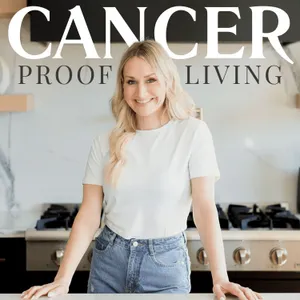
Free Daily Podcast Summary
Cancer Proof Living: Daily Summaries Delivered
by Michelle Patidar
So you’ve had cancer and now you’re wondering what comes next. Maybe you just finished treatment and feel overwhelmed trying to put the pieces of your life back together. Maybe you’re terrified of a recurrence and can’t stop worrying about every ache and pain. Or maybe you carry a cancer gene and are ready to do everything you can to prevent cancer in the first place. You want to heal your body, lose the treatment weight, rebuild your energy, and finally feel like yourself again, but you don’t know where to start. I’m Michelle, an 8-year Non-Hodgkin’s Lymphoma survivor, mom, and Integrative Nutrition Health Coach. I’ve been where you are, and on this podcast we’ll walk through it together. Here we talk about the real tools that help you detox and heal without the hype. We’ll cover everything from everyday ways to lower your toxin load to the top anti-cancer foods, how to rebuild your immune system, balance your hormones, and calm the fear of recurrence. You’ll also learn how to create a low-toxin home, what should be on your plate every day, and the surprising everyday things that can raise cancer risk. If you’re ready to rise from the ashes and build a body and a life you can trust, you’re in the right place. This is about more than surviving cancer. It’s about creating the healthiest, strongest version of you.
Latest Episodes
The most recent episodes — sign up to get AI-powered summaries of each one.
- 1 weeks ago1h 6m
39: The Best Tools That Heal Post-Cancer Trauma (From A Cancer Survivor) | Nerissa Balland
The part of cancer survivorship nobody prepares you for is not the treatment… It’s the identity crisis that shows up once everyone expects you to move on.Nerissa Balland is a visual artist, author, and therapeutic arts practitioner who was diagnosed with metastatic melanoma at 38 while five months pregnant and raising a toddler. She gives us actionable tools that actually make a difference.She walked into a renowned oncology office 48 hours after her diagnosis, waited six hours, and was dismissed in ten minutes because the doctor would not treat her unless she ended the pregnancy. What she went through next ultimately shaped the work she does today.After surviving, she interviewed more than 100 young mothers facing cancer and found the same patterns underneath every story: fear, uncertainty, lost identity, questions about motherhood, and the connections that slipped away.Her work layers therapeutic arts with CBT, REBT, and NLP, and she explains how each one does something different for a specific part of what you went through.Creativity is not about being an artist, processing is not the same as talking about what happened, and the real question is not “how do I go back to who I was” but “who am I becoming now.”Grab a pen. You are going to want one.You’ll learn:[0:00] Introduction[4:01] Diagnosed with metastatic melanoma while five months pregnant[7:57] Dismissed in ten minutes unless Nerissa terminated the pregnancy[12:52] What treatment looks like when you can’t have general anesthesia[17:14] Saying no to more immunotherapy at 11% odds[21:27] How finishing treatment can trigger an identity crisis[25:52] Feeling the need to justify not working by mentioning cancer[30:23] Being labeled the strong one feels so isolating[36:27] Why Nerissa’s four tools work like healing a torn rotator cuff [47:26] Inside the “Your Courage Has a Shape” workshop[54:42] The dog walk exercise that helped Nerissa name her feelings[57:25] How cancer became a wake-up call to what Nerissa had been ignoring Find more from Nerissa:Nerissa Balland | Website | Instagram | LinkedInCanvas of Courage by Nerissa Balland | Book or AudiobookThe Curious Curator by Nerissa Balland | <a href="https://www.amazon.com/Curious-Curator-Curiosity-Creativity-Discovery/dp/B0HDW7XW6L/ref=sr_1_1?crid=1TGHRZ12PUZNA&dib=eyJ2IjoiMSJ9.8SmHl-cPNdtgjlsTRwhEhA.54IfWohcyaoXKvj62JqGKhI1a_FwnLtmNCXCG3jQnFY&dib_tag=se&keywords=The+Curious+Curator+by+Nerissa+Balland&qid=1791996757&s=audible&sprefix=the+curious+
- 2 weeks ago1h 5m
Genetics Counselor Debunks The Myths Around Genetic Testing | Natalie Samson
A negative BRCA genetic test result is not the all-clear most people treat it as.Natalie Samson is a board-certified integrative genetic counselor and the founder of Golden Genetics, where she pairs medical diagnostic testing with functional genomics to build personalized action plans.My own counselor recently told me the panel I did has expanded from 13 genes to roughly 270, which means a result from years ago may not tell the whole story anymore.Natalie breaks down what genetic testing actually measures and how ancestry kits differ from medical panels at the technology level. Family history patterns matter as much as the test itself. The vertical pattern she looks for across generations signals that a genetic mutation may be getting passed down.A positive result is not a diagnosis. Insurance covers more than most people realize, and some cancer panels through her practice cost under $100.Her four Ps framework ties the whole conversation together: proactive, preventative, personalized, and precision care.If cancer, heart disease, or Alzheimer’s runs in your family, or you’ve been chasing symptoms with no answers, this episode gives you a clearer picture of what testing can do and when it’s worth pursuing. You’ll learn:[0:00] Introduction[4:45] What we’re actually testing when we test genes[8:38] An MTHFR variant is not the same as a BRCA mutation[14:27] My cancer was linked to glyphosate, not genes[17:14] Natalie’s father’s stage four cancer and the testing he was never offered[20:44] Why a negative BRCA result can give false reassurance[26:22] Cancers diagnosed under 50 and what they signal about genetic risk[31:41] Tumor sequencing and how it targets treatment[38:22] Testing positive for BRCA does not mean you will get cancer[44:35] Nutrigenomics and the cellular pathways it reads[54:14] Cutting 40 influencer supplements down to what works[1:00:01] Who should especially consider a genetic counselorResources mentioned:Quest Diagnostics | WebsiteLabCorp | WebsiteDr. William Li | WebsiteAngelina Jolie, inherited breast cancer and the BRCA1 gene by Scowcroft, H. | Article <strong style="background-color: tran
- 3 weeks ago1h 24m
37: What Doctors Don't Tell Women About Mammograms | Dr. Stephen Petteruti
This is what every woman needs to know before she says yes to a mammogram. Most women are told to get a mammogram without ever hearing about a Canadian study of 80,000 women that found no difference in breast cancer deaths between those who were screened and those who weren't.My guest, Dr. Stephen Petteruti, is a board-certified physician with more than 30 years of clinical experience in longevity-focused functional and integrative medicine, and the founder of Intellectual Medicine and the RDT Prostate Protocol.This is a different kind of breast health conversation. Dr. Petteruti breaks down mammograms versus ultrasound, the problem of false positives, the radiation exposure from routine CT scans after cancer treatment, and how reimbursement, malpractice risk, and habit shape the standard of care.He also explains the delayed relapse problem in breast cancer documented in the New England Journal of Medicine, and why he calls body fat percentage the "king of the hill" when it comes to prevention.You'll also hear his provocative case for testosterone therapy in women after breast cancer. Plus, he pushes back on oncologists who tell patients to eat whatever they want during treatment, since women who gain fat after breast cancer treatment have a much higher relapse rate.If you've ever felt rushed through a cancer decision or dismissed for asking a thoughtful question, this episode gives you the questions and the evidence to advocate for yourself.You’ll learn:[0:00] Introduction[3:26] Dr. Petteruti’s path from Army doctor to cancer prevention [11:08] Why cancer treatment itself raises future cancer risk[16:50] Heavy metals and why filtered tap water wins[24:20] A tumor’s seven-year head start before detection[34:04] The antioxidant paradox and why balance beats purity[36:25] The mammogram money machine and a Canadian study of 80,000 women[46:34] Prostate treatments that studies say don’t work[52:47] Questioning the three-month CAT scan protocol[1:02:53] Delayed relapse and the dandelion-seed problem[1:11:41] Monthly IV vitamin C and his theory on preventing relapse[1:14:24] The trouble with total body MRIs and cancer screening blood testsResources mentioned:The Structure of Scientific Revolutions by Thomas S. Kuhn | BookTwenty five year follow-up for breast cancer incidence and mortality of the Canadian National Breast Screening Study by Miller, A. et al. | ArticleSignatera (Natera) | WebsiteIntellectual Medicine University |<a href="https://www.imeduniversity.com" target="_blank" style="background-color: transparent; col
- 4 weeks ago7 min
36: 8 Grocery Store Foods That Help Starve Cancer (You Probably Have Them In Your Kitchen)
8 of the most powerful cancer-fighting foods are not only affordable, but also readily available at most grocery stores.As a nine-year cancer survivor and certified integrative nutrition health coach, I've built my personal anti-cancer plate around foods with real research behind them.You're about to learn the shortlist I actually eat from: 8 foods researched for their potential to cut off blood supply to tumors, lower inflammation, or train the immune system to spot abnormal cells earlier. No powders, no supplements, nothing you can't find on a regular grocery run.A few things on this list will probably surprise you. The baby stage of a vegetable you already know carries far more of the active compound than the mature version. One simple timing habit with garlic and onion helps you keep far more of their benefit before they hit the pan. The sharp, peppery bite at the back of your throat from good extra virgin olive oil is a signal worth noticing.I'm not promising any single food is a cure, and I won't pretend cancer is simple. What I will say is there's real research showing these foods make your body a harder place for cancer to take hold. Pick one you're not already eating and add it this week.You’ll learn:[0:00] Introduction[1:39] The one anti-cancer food I never cook[2:43] The 10-minute garlic trick that keeps far more of its benefit[3:28] The two fruits your gut bacteria absolutely love[5:11] The peppery bite that means your olive oil is the good stuff[7:04] These foods aren’t a cure, but they make cancer’s job harder Resources mentioned:Dr. William Li | WebsiteFind more from Michelle:Revival Health & Wellness | Instagram | Facebook | WebsiteCancer Proof Living | YouTubeMichelle Patidar | LinkedIn
- Sep 22, 20261h 8m
35: The Energy Crisis No One Is Talking About | Megan Brown
HOW you eat might be more important than WHAT you eat.My guest this week is Megan Brown, a functional health practitioner and certified health coach who helps women uncover the root causes of fatigue, digestive issues, hormone symptoms, and chronic inflammation when everything looks normal on paper.Megan's story started with a rheumatoid arthritis diagnosis fresh out of college. The real shift in her healing wasn't a protocol. It was releasing the perfectionist, all-or-nothing thinking that so many high-achieving women carry without noticing.Our conversation gets into the energy crisis nobody wants to name. Why so many women aren't hungry in the morning. What happens inside the body when you eat standing up, distracted, or in traffic. How habits like chewing, sitting down, and pausing before a meal shape your digestion, hormones, and energy over years.Megan also shares how eating in a stressed state can drop stomach acid by up to 60%, how hair tissue mineral testing reveals what bloodwork can't, and the electrolyte supplement brands she actually trusts.If you feel wired, tired, and stuck in an on state, this one is worth your full attention. Grab a pen.You’ll learn:[0:00] Introduction[4:29] The gap functional medicine doctors leave behind[11:19] Why so many women feel exhausted right now[15:34] Running on borrowed energy instead of building it[19:16] What chronic stress physically does inside the body[27:13] Practical tips to slow down and chew properly[33:36] Repairing a gut destroyed by cancer treatment[38:07] The biggest mistakes women make chasing energy back[44:55] Why eating every two hours wrecks blood sugar[53:42] Hair mineral testing reveals what blood work misses[58:58] Choosing electrolytes that are higher in potassium[1:04:01] Taking the sunglasses off on your morning walkResources mentioned:Jigsaw Potassium Cocktail | WebsiteBumbleroot Foods Electrolytes | WebsiteSeeking Health Optimal Electrolyte | WebsiteTraditional Medicinals Throat Coat Tea | WebsiteDr. Stephen Cabral | WebsiteFind more from Megan:Megan Brown - No Rules Nourishment | Website | Email<
- Sep 15, 20261h 4m
34: The Hidden Link Between Brain, Nutrient Deficiencies, & Cancer Risk | Ali Miller
Most people treat anxiety as a mental problem when it's often a metabolic one. My guest today is Ali Miller, a Registered Dietitian (RD), Certified Diabetes Educator (CDE), and Functional Medicine Practitioner who has spent the last two decades connecting nutrition, blood sugar, and nervous system regulation in ways conventional medicine still overlooks.Ali once pulled over on a Seattle highway during a panic attack she couldn't drive through. What she discovered in her own labs from there reframed how she treats anxiety, hormones, and chronic illness in every patient since.Her framework: mismanaged stress is the Achilles' heel to wellness. That includes the toxins in your car, the endotoxins from your gut, the caregiving load you can't put down, and the slow simmer you don't realize you're sitting in.We get into why the sympathetic overload most of us live in isn't caused by one big trauma but by a slow simmer. Ketones and their role in GABA production. Why protein deficiency makes you feel unhinged. The top three products from her supplement line she shouts out most, including Cellular Antiox for a climbing toxin and oxidative stress load. And the somatic tools she uses with clients that cost nothing and work in minutes.Ali argues that chasing calm through mindset alone misses the metabolic driver, and this conversation will change what you reach for next.You’ll learn:[0:00] Introduction[4:50] How mismanaged stress becomes the Achilles heel to wellness[8:09] Why everyday load counts as trauma to the body[15:31] Better progesterone at 41 than a decade ago, without hormones[18:40] Why humans were designed to run on both glucose and ketones[24:07] Protein-sparing modified fasts for perimenopausal women[32:05] Choline and why the anti-anxiety diet is hard to do vegan[38:18] The word safe as a vagus nerve reset[42:44] The human body as an antenna and piezoelectric bone[48:41] Seeking God frequency through grounding and high-frequency fabrics[56:44] Craving wellness once you reach optimal thrive mode[1:00:45] Cellular Antiox as an insurance policy for a dirty worldResources mentioned:Force of Nature Ancestral Blends | WebsiteGet Ali’s FREE 1-Week Keto Reset Meal Plan here. You’ll also want these three supplements for your reset: Cellular Antiox, Calm and Clear, and Relax and Regulate.Find more from Ali:Ali Miller, RD | Website<span style="bac
- Sep 8, 20261h 9m
33: The Everyday Foods That Put Parasites In Your Gut | Dr. Torrie Thompson
The mold making people sick right now isn't hiding behind the drywall; it's sitting in the coffee, grains, and peanuts they eat every day.Dr. Torrie Thompson is a functional wellness practitioner and founder of Meraki Wellness Center. She works with clients whose chronic symptoms don't add up on standard testing. She got into this work the hard way: A decade of doctors, exploratory surgery suggestions, a bottomed-out immune system flagged by accident, and eventually a mycotoxin test that came back thousands of times over the limit.Her whole framework rests on one idea: most chronic symptoms aren't one thing. They're five or six things stacked on top of each other.Mycotoxins pulling down the immune system. Parasites stealing minerals. Heavy metals and environmental toxins overloading the liver. Candida and SIBO showing up as symptoms of something deeper.Sushi lovers, this episode is going to sting a little. So is the section on why most online parasite cleanses backfire, and what the long, stringy stuff people post on the internet really is.Learn about testing, timing, order of operations, the two non-negotiables before any cleanse, and the foundational supplements Dr. Torrie uses across almost every client. It's the conversation I wish I'd had before my own mold diagnosis.You’ll learn:[0:00] Introduction[3:09] A decade of doctors who could not name what was wrong in a 12-year-old athlete[16:13] Sequencing a mold detox, and why it can take two years to clear[25:31] Why urine mycotoxin testing beats a blood allergy panel[33:45] What Dr. Torrie packs to protect her detox pathways when traveling[39:37] Common ways nearly everyone picks up parasites[44:27] Restless legs and teeth grinding as parasite warning signs[50:59] How often Americans should actually run a parasite cleanse[58:42] Biofilm marketing behind those viral worm photos[1:03:24] Foundational supplements Dr. Torrie reaches for over and overResources mentioned:CellCore | WebsiteDesigns for Health | WebsiteQuicksilver Scientific | WebsiteFunction Health | WebsiteDr. Mark Hyman | WebsiteFind more from Dr. Torrie:Dr. Torrie Thompson | Website | InstagramAligned Wellness Podcast | Spotify or <a href="https://pod
- Jun 23, 20269 min
32: The Most Important Anti-Cancer Veggies You NEED to Eat
Subscribe to my YouTube channel so you don't miss the next episode.Garlic was ranked the strongest anti-cancer vegetable out of the 34 tested, and most people destroy its benefits before it ever hits the pan.As a certified integrative nutrition health coach and a nine-year cancer survivor, this is the kind of research that changed how I cook, shop, and think about every meal.The interesting part is that a whole garlic clove doesn't actually contain much allicin, the compound everyone talks about. Allicin only forms when garlic is chopped, crushed, or minced. And there's a specific window of time involved that almost nobody respects.In this episode, I want to walk through what the research actually says about garlic, immune function, inflammation, and detoxification pathways. I also want to clear up the raw-versus-cooked debate, because that question comes up constantly.This isn't about eating 20 cloves a day or treating one food as a cure. It's about understanding food as information for your cells.You’ll learn:[0:00] Introduction[2:00] How allicin actually forms, and why whole cloves barely contain it[4:24] The biggest mistake people make while chopping garlic before cooking[6:07] Raw versus cooked garlic; which one is better for you?[7:38] Why cancer prevention is never one superfood, it's the patternResources mentioned:Antiproliferative and antioxidant activities of common vegetables: A comparative study by Boivin, D. et al. | ArticleFind more from Michelle:Revival Health & Wellness | Instagram | Facebook | WebsiteCancer Proof Living | YouTubeMichelle Patidar | LinkedIn
Get Cancer Proof Living summaries in your inbox
Free AI-powered daily recaps. Key takeaways, quotes, and mentions — in a 5-minute read.
Get Free Summaries →Free forever for up to 3 podcasts. No credit card required.
You Might Also Like
Listeners also like.

Thrive Through and Beyond Cancer
Season Johnson

INTERLUDE: Cancer Stories with Dr. Teplinsky
Eleonora Teplinsky

Rooted in Wellness with Mona Sharma
A holistic nutritionist blends ancient wellness practices with modern science to address mind, body, and soul health.
Get Better Faster
Doctors and researchers discuss functional medicine and root-cause approaches to chronic illness and health optimization.

Quiet the Diet
A dietitian shares her experience and knowledge to help people heal their relationship with food and make health choices based on self-awareness.

Made for Health | Peptides | Lyme | Chronic Infections | Long Covid | Insulin Resistance | Hypermobility
A physician explores science-based approaches to treating chronic conditions and restoring health.
The Dr. Hyman Show
Explores root causes of chronic disease and promotes functional medicine, nutrition, and preventive health through expert discussions.
The Health Continuum
High-performing professionals learn science-based health strategies to sustain energy, focus, and resilience in demanding careers.

High Vibe & Healthy: Gut Health | Functional Nutrition | Whole Foods
A functional nutritionist explores gut health and whole foods to help simplify wellness and boost energy.
The Art of Being Well
Explores holistic wellness through functional medicine, focusing on body, mind, spirit, and relationships as acts of self-respect.

The Dr. Josh Axe Show
Explores natural health, nutrition, emotional resilience, and personal growth through expert insights and practical strategies.
Treated with Dr. Sara Szal
Dr. Sara Szal explores holistic health solutions through conversations with experts and patients seeking mind, body, and soul healing.
About Cancer Proof Living
So you’ve had cancer and now you’re wondering what comes next. Maybe you just finished treatment and feel overwhelmed trying to put the pieces of your life back together. Maybe you’re terrified of a recurrence and can’t stop worrying about every ache and pain. Or maybe you carry a cancer gene and are ready to do everything you can to prevent cancer in the first place. You want to heal your body, lose the treatment weight, rebuild your energy, and finally feel like yourself again, but you don’t know where to start. I’m Michelle, an 8-year Non-Hodgkin’s Lymphoma survivor, mom, and Integrative Nutrition Health Coach. I’ve been where you are, and on this podcast we’ll walk through it together. Here we talk about the real tools that help you detox and heal without the hype. We’ll cover everything from everyday ways to lower your toxin load to the top anti-cancer foods, how to rebuild your immune system, balance your hormones, and calm the fear of recurrence. You’ll also learn how to create a low-toxin home, what should be on your plate every day, and the surprising everyday things that can raise cancer risk. If you’re ready to rise from the ashes and build a body and a life you can trust, you’re in the right place. This is about more than surviving cancer. It’s about creating the healthiest, strongest version of you.
Customized Recaps
AI-powered recaps with compact key takeaways, quotes, and insights.
Straight to Your Inbox
Get key takeaways from Cancer Proof Living in a 5-minute read.
Save Hours Every Week
Stay current on your favorite podcasts without falling behind.
Frequently Asked Questions
What is Podzilla's Cancer Proof Living daily summary?
It's a free AI-powered email that summarizes new episodes of Cancer Proof Living as soon as they're published. You get the key takeaways, notable quotes, and links & mentions — all in a quick read.
How does the Cancer Proof Living podcast summary work?
When a new episode drops, our AI transcribes and analyzes it, then generates a personalized summary tailored to your interests and profession. It's delivered to your inbox every morning.
Is this an official Cancer Proof Living product?
No. Podzilla is an independent service that summarizes publicly available podcast content. We're not affiliated with or endorsed by Michelle Patidar.
Can I get summaries of other podcasts too?
Absolutely! The free plan covers up to 3 podcasts, any in the catalog. Basic raises that to 15, Pro to 40 and Max to 100. Browse our full catalog at /podcasts.
How often does Cancer Proof Living release new episodes?
Cancer Proof Living publishes weekly. Our AI generates a summary within hours of each new episode.
What topics does Cancer Proof Living cover?
Cancer Proof Living covers topics including Nutrition, Fitness, Health & Fitness, Alternative. Our AI identifies the specific themes in each episode and highlights what matters most to you.
Start getting Cancer Proof Living summaries tomorrow morning.
Free forever for up to 3 podcasts. No credit card required.
Free forever for up to 3 podcasts. No credit card required.