Free Daily Podcast Summary
We Can Do Hard Things: Daily Summaries Delivered
by Treat Media and Glennon Doyle
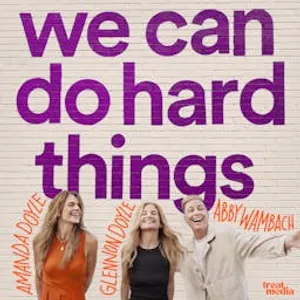
Come do life with Glennon Doyle, Abby Wambach, and Amanda Doyle. With more than half a billion plays, We Can Do Hard Things is a hilarious, raw, comforting “support system for braving the everyday.” The Pod Squad goes hard ($56 Million raised in global aid) and stays soft: meet here on Tuesdays to laugh, talk, and cry our way through the pain and magic of being human.
Latest Episodes
The most recent episodes — sign up to get AI-powered summaries of each one.
- 3 days ago59 min
(BEST OF) The Panini Generation: Caretaking Without Losing Yourself with Ai-jen Poo
Caregivers, you’re exhausted for a reason—and it’s not because you’re doing it wrong. Ai-jen Poo reveals why so many of us are burning out while caring for kids, aging parents, partners, and everyone in between—and why we were never meant to carry all of this alone. - The real reason caregivers are so burned out - How to care for the people you love without losing yourself - Why the “sandwich generation” is really the panini generation - How to build a “care squad” that actually supports you - Why care is the invisible work that makes everything else possible About Ai-jen: Ai-jen Poo is an award-winning organizer, author, and a leading voice in the women’s movement. She is the President of the National Domestic Workers Alliance, Executive Director of Caring Across Generations, Senior Advisor to Care in Action, Co-Founder of SuperMajority, and a Trustee of the Ford Foundation. Ai-jen is a nationally recognized expert on caregiving, the future of work, and what’s at stake for women of color. She is the author of the celebrated book, The Age of Dignity: Preparing for the Elder Boom in a Changing America. Follow We Can Do Hard Things on: Instagram — https://www.instagram.com/wecandohardthings
- 5 days ago1h 22m
Someone Tell G What People Do After Dinner!
What if the secret to moving forward is getting better at letting go of what just happened? Glennon, Abby, and Amanda catch up on empty nesting, parenting, sports, midlife, and the stories we tell ourselves when we mess up—and discover that golf may, unfortunately, be a metaphor for life. - Why we waste so much energy trying to explain or undo our mistakes - Glennon and Abby’s empty-nest question: What do people actually do between dinner and bedtime? - Abby on the skill of feeling your anger, releasing it, and saying: “Okay, next” - The parenting lesson that brought Glennon to tears: “Be the one w Follow We Can Do Hard Things on: Instagram — https://www.instagram.com/wecandohardthings
- 1 weeks ago58 min
(BEST OF) Hannah Gadsby: Neurodiverence & The Exfoliation of Shame
What if the key to understanding each other isn’t getting better at talking—but getting better at recognizing how differently our brains work? The brilliant and hilarious Hannah Gadsby joins us to talk about neurodivergence, relationships, shame, and what it really takes to meet people where they are. Hannah shares how a later-in-life autism diagnosis changed the way they understood themself—and why they describe it as an “exfoliation of shame.” - Why neurodivergent and neurotypical people can experience communication so differently - The invisible work of masking—and why a “casual” conversation can feel like a marathon - Why Hannah says we need to stop taking other people’s differences personally - How to better understand and connect with the neurodivergent people we love - Why Hannah stopped using self-deprecating humor—and what happened when they stopped apologizing for who they are About Hannah: Hannah Gadsby stopped stand-up comedy in its tracks with their multi-award-winning show Nanette, which played to sold-out houses in Australia, the UK, and New York. Its launch on Netflix, and subsequent Emmy and Peabody wins, took Nanette (and Hannah) to the world. Hannah’s difficult second album (which was also their eleventh solo show) was named Douglas, after their dog. Hannah walked Douglas around the world, selling out and scoring another Emmy nomination. Before all of this, Hannah appeared as a character called Hannah in Please Like Me (Hulu) and toured their native Australia and the UK as a stand-up comedian. They made art documentaries and did plenty of other things over the course of more than a decade in comedy, but that will do for now. Follow We Can Do Hard Things on: Instagram — https://www.instagram.com/wecandohardthings
- 1 weeks ago1h 31m
Why "We Never Fight" is a Red Flag: How to Fight Well with Priya Parker
What if the secret to stronger relationships isn’t avoiding conflict—but learning how to do it well? Conflict resolution expert and bestselling author Priya Parker joins us to teach us how to fight with more courage, clarity, and love—and how to know which relationships are actually worth the fight. - Why “we never fight” can be a warning sign, not a relationship goal - The difference between unhealthy peace and healthy heat - How to know when to confront, when to let go, and when to walk away - The simple rule that can make a hard conversation easier to hear: name the behavior, not the person - Why the relationships with the most depth often require some heat—and why fighting well can bring us closer For more, listen to: 256. How to Host a Magical Gathering with Priya Parker 163. How to Make Wrongs Right with Rabbi Danya Ruttenberg About Priya: PRIYA PARKER is a facilitator, strategic advisor, and acclaimed author of The Art of Gathering: How We Meet and Why It Matters. Trained in the field of conflict resolution, Parker has worked on race relations on American college campuses and on peace processes in the Arab world, southern Africa, and India. She studied organizational design at MIT, public policy at the Harvard Kennedy School, and political and social thought at the University of Virginia. Her new book THE ART OF FIGHTING: The Transformative Power of Conflict is available now. Follow We Can Do Hard Things on: Instagram — https://www.instagram.com/wecandohardthings
- 2 weeks ago49 min
(BEST OF) Gloria, Gloria Hallelujah: Gloria Steinem on How to Lead
Today, we remember Gloria Steinem—a woman who spent her life reminding us that we are not broken, just born into systems designed to break us. She taught us how to stay whole anyway, how to tell the truth, get free, find our people, get to work—and laugh while we work. Gloria showed us how to lead. Our turn. Gloria, Gloria, Hallelujah.
- 2 weeks ago53 min
(BEST OF) The Surprising Science of Heartbreak | Florence Williams
Heartbreak isn't just happening in your mind—it's happening in your body. In this Best Of conversation, science journalist Florence Williams joins us to discuss what heartbreak does to our brains, bodies, and nervous systems—and the surprising science behind healing. We explore why awe, beauty, and nature may be some of our most powerful medicines when life breaks us open. - What heartbreak actually does to your body - Why loneliness can make us physically sick - The surprising connection between awe and healing - How nature helps regulate our nervous systems - Simple practices to feel more alive after loss About Florence: Florence Williams is author of "The Nature Fix" and, most recently, Heartbreak: A Personal and Scientific Journey. Florence explores the connections between humans and the natural world, and reveals the profound psychological and physiological benefits of rewilding our lives. Follow We Can Do Hard Things on: Instagram — https://www.instagram.com/wecandohardthings
- 2 weeks ago58 min
(BEST OF) If Your Mind Won't Be Quiet, Listen to This
If you've been living inside your head lately, this conversation is for you. Glennon, Abby, and Amanda talk about the exhausting mental chatter that keeps so many of us anxious, overwhelmed, and disconnected from our lives. Glennon shares the surprising shift that helped her stop trusting every thought she had—and start finding a steadier place beneath the noise. - Why you are not your thoughts - Glennon's #1 sanity strategy - The "touch tree" practice for staying grounded - How Amanda stopped accepting assignments from strangers - The wedding-week rule that changed everything for Glennon and Abby Follow We Can Do Hard Things on: Instagram — https://www.instagram.com/wecandohardthings
- 3 weeks ago37 min
(BEST OF) Dolly Parton: Thank You for Everything
Today, we remember the one and only Dolly Parton. Dolly gave the world so much: her music, her humor, her generosity, her courage, and her unwavering commitment to being exactly who she was—and letting everyone else be exactly who they are, too. We feel incredibly lucky to have had this conversation with her about trusting yourself even when it breaks your heart, beginning again at any age, mothering the world, and living a life of many colors. We love you, Dolly. Thank you for showing all of us how to be more ourselves on purpose. Follow We Can Do Hard Things on: Instagram — https://www.instagram.com/wecandohardthings
Get We Can Do Hard Things summaries in your inbox
Free AI-powered daily recaps. Key takeaways, quotes, and mentions — in a 5-minute read.
Get Free Summaries →Free forever for up to 3 podcasts. No credit card required.
You Might Also Like
Listeners also like.
Unlocking Us with Brené Brown
Explores human connection through conversations on vulnerability, courage, and emotion with researchers, thinkers, and audiences.
Working Hard with Grace Beverley
Conversations with diverse achievers reveal raw insights on redefining success, balancing ambition, and learning from failure.

Everything Happens with Kate Bowler
A professor explores life, suffering, and resilience through conversations with thoughtful and humorous guests.

After Bedtime with Big Little Feelings
Parents discuss challenges like grief, relationships, and toddler behavior with honesty and practical advice.
Good Life Project
Explores meaningful living through conversations with experts in science, culture, and the arts.

Run Your Story Podcast
Runners and walkers share their personal stories, memories, and advice about the sport.

We're Out of Time
Discusses the fentanyl crisis, mental health, and resilience through interviews with recovery experts, survivors, and public figures.
The One You Feed | Personal Growth, Emotional Resilience & Purpose
Insightful conversations with leading thinkers on personal growth, emotional resilience, and living with purpose.

Something For Everybody
A former athlete explores mental health and human potential through personal stories and conversations about resilience and connection.
We Need To Talk with Paul C. Brunson
Hosted conversations about relationships, vulnerability, and personal growth through real-life stories and emotional breakthroughs.

A Really Good Cry
Radhi Devlukia hosts intimate, emotional conversations exploring life's challenges, vulnerabilities, and growth with guests and listeners.

the goop podcast
gwyneth paltrow
About We Can Do Hard Things
Come do life with Glennon Doyle, Abby Wambach, and Amanda Doyle. With more than half a billion plays, We Can Do Hard Things is a hilarious, raw, comforting “support system for braving the everyday.” The Pod Squad goes hard ($56 Million raised in global aid) and stays soft: meet here on Tuesdays to laugh, talk, and cry our way through the pain and magic of being human.
Customized Recaps
AI-powered recaps with compact key takeaways, quotes, and insights.
Straight to Your Inbox
Get key takeaways from We Can Do Hard Things in a 5-minute read.
Save Hours Every Week
Stay current on your favorite podcasts without falling behind.
Frequently Asked Questions
What is Podzilla's We Can Do Hard Things daily summary?
It's a free AI-powered email that summarizes new episodes of We Can Do Hard Things as soon as they're published. You get the key takeaways, notable quotes, and links & mentions — all in a quick read.
How does the We Can Do Hard Things podcast summary work?
When a new episode drops, our AI transcribes and analyzes it, then generates a personalized summary tailored to your interests and profession. It's delivered to your inbox every morning.
Is this an official We Can Do Hard Things product?
No. Podzilla is an independent service that summarizes publicly available podcast content. We're not affiliated with or endorsed by Treat Media and Glennon Doyle.
Can I get summaries of other podcasts too?
Absolutely! The free plan covers up to 3 podcasts. Upgrade to Pro for 15, or Premium for 50. Browse our full catalog at /podcasts.
How often does We Can Do Hard Things release new episodes?
We Can Do Hard Things publishes every few days. Our AI generates a summary within hours of each new episode.
What topics does We Can Do Hard Things cover?
We Can Do Hard Things covers topics including Education, Relationships, Culture, Society & Culture, Self-Improvement. Our AI identifies the specific themes in each episode and highlights what matters most to you.
Start getting We Can Do Hard Things summaries tomorrow morning.
Free forever for up to 3 podcasts. No credit card required.
Free forever for up to 3 podcasts. No credit card required.