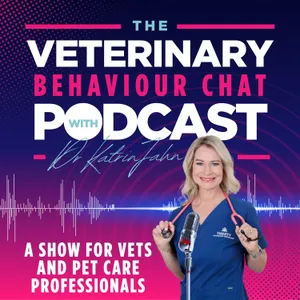
Free Daily Podcast Summary
Veterinary Behaviour Chat: Daily Summaries Delivered
by Dr Katrin Jahn, DrMedVet, CertVA, MANZCVS(VB), DACVB, DipECAWBM(BM), MRCVS
Every week, Double Board-Certified Veterinary Behaviourist and Veterinarian of over 25 years, Dr. Katrin Jahn provides education, knowledge and inspiration on all things Veterinary Behaviour Medicine aka Veterinary Psychiatry. This show is for fellow Vets, Veterinary Nurses and Pet Care Professionals who want to serve their patients and clients better by integrating Veterinary Behaviour Medicine into their everyday practice. The podcast features up-to-date, informative advice on diagnosing and treating behaviour problems in dogs, cats, rabbits, birds, and other companion animals in a variety of episodes, including interviews with some of the leading minds in Veterinary Behaviour Medicine. In our Case Study and Case De-Brief episodes, Dr. Katrin demonstrates how she approaches and treats Clinical Behaviour Cases on a practical level, and we hear from pet owners who have achieved fantastic results in treating their pets' behaviour problems. In our 15-minute Speed Coaching episodes, Dr Katrin consults with and coaches fellow professionals on Case Management, setting up Veterinary Behaviour Medicine protocols, using Psychopharmaceutical Medications, Career Progression and so much more! If you are a Veterinarian, Veterinary Nurse/Technician or Pet Care Professional and you want to elevate your skillset to the next level, this is the podcast for you! This podcast will provide answers to the following questions and so much more! • How do I safely and effectively use psychopharmacology for my veterinary patients? • What are the best veterinary Pre-Visit Pharmaceuticals? • How does my patient's physical health affect their behavioural health? • What physical diseases should I be screening for in patients that present with behaviour problems? • Why is pain such an important consideration for Behaviour Patients? • How do I treat dogs with Separation Anxiety? • How do I treat dogs with Noise Phobias? • How do I treat cats that are House Soiling? • How do I perform a risk assessment on a Veterinary Behaviour patient? • What are some Behavioural First Aid Strategies I can give to my clients? • How do I manage aggressive dogs in the Veterinary Clinic? • How do I manage aggressive cats in the Veterinary Clinic? • Why am I seeing so many anxious or fearful patients in my practice? • How do I treat dogs and cats with Cognitive Dysfunction Syndrome? • How do I treat dogs and cats with Abnormal Repetitive Behaviours? • What diets, supplements and nutraceuticals actually work at reducing stress in veterinary patients?
Latest Episodes
The most recent episodes — sign up to get AI-powered summaries of each one.
- 6 days ago22 min
152 15 Minute Speed Coaching with Drew Bedor – When to recommend a VB
Episode 152 – 15 Minute Speed Coaching with Drew Bedor – When to recommend a VB Welcome to another 15-minute Speed Coaching Session for Veterinary and Pet Care Professionals! The rules of the game are as follows: · Episodes will be in-the-moment, off-the-cuff and unscripted. · Coaching sessions will be 15 Minutes MAXIMUM, so wherever we finish, we finish… · Which means that we might not find complete resolution to your question, but we will certainly get the thought process started! <span lang= "EN-US" style= "font-size: 12.0pt; font-family: 'Calibri',sans-serif; mso-ascii-theme-font: major-latin; mso-fareast-f
- 1 weeks ago25 min
151 Arousal, Valence and links to Behavioural Signs and Treatment
Episode 151 – Arousal, Valence and links to Behavioural Signs and Treatment This episode is inspired by a listener request for me to have a chat about emotional arousal, valence and how these relate to behavioural signs and treatment strategies. I love this topic, which is why I have designed a resource, which you can find in the Trinity Professional Guides E-Book, that talks about exactly this – The Canine and Feline Circumplex of Emotions. Here's what you'll learn: · Definitions of arousal and valence as they relate to Veterinary Behaviour Medicine and The Circumplex of Emotions. <span lang="EN-US" style= "font-size: 12
- 2 weeks ago20 min
150 15 Minute Speed Coaching with Claire Rhodes – B'Mod for Noise Fears
Episode 150 – 15 Minute Speed Coaching with Claire Rhodes – B'Mod for Noise Fears Welcome to another 15-minute Speed Coaching Session for Veterinary and Pet Care Professionals! The rules of the game are as follows: · Episodes will be in-the-moment, off-the-cuff and unscripted. · Coaching sessions will be 15 Minutes MAXIMUM, so wherever we finish, we finish… · Which means that we might not find complete resolution to your question, but we will certainly get the thought process started! <span lang= "EN-US" style= "font-size: 12.0pt; font-family: 'Calibri',sans-serif; mso-ascii-theme-fon
- 3 weeks ago38 min
149 Acupuncture in Behaviour Medicine with Dr Carole Parsons
Episode 149 – Acupuncture in Behaviour Medicine with Dr Carole Parsons How do therapies such as acupuncture fit into Veterinary Behaviour Medicine? This is the topic I discuss with UK-based Vet, Dr Carole Parsons, who runs a mobile acupuncture clinic, in this episode of the podcast. I, myself, am a great believer in acupuncture and other complementary therapies but hearing the research evidence that Carole provided during this conversation as well as her clinical experience of using acupuncture for a variety of cases, really sealed the deal for me. Have a listen as we chat about the patients that can benefit from acupuncture, its indications in Veterinary Behaviour Medicine, its limitations and the cool things such as fMRI studies and neurotransmitter influence. If you're loo
- Aug 17, 202621 min
148 15 Minute Speed Coaching with Sharon Jones – Puppy Socialisation
Episode 148 – 15 Minute Speed Coaching with Sharon Jones – Puppy Socialisation Welcome to another 15-minute Speed Coaching Session for Veterinary and Pet Care Professionals! The rules of the game are as follows: · Episodes will be in-the-moment, off-the-cuff and unscripted. · Coaching sessions will be 15 Minutes MAXIMUM, so wherever we finish, we finish… · Which means that we might not find complete resolution to your question, but we will certainly get the thought process started! <span lang= "EN-US" style= "font-size: 12.0pt; font-family: 'Calibri',sans-serif; mso-ascii-theme-font: major-latin; mso-fareast-fo
- Aug 10, 202624 min
147 Guanfacine
Episode 147 – Guanfacine Welcome to the second in a little duo of episodes on oral alpha 2 agonists. In last week's episode (146), I spoke about clonidine, and this week, I'll be talking about guanfacine, comparing and contrasting the 2 for you in terms of use and indications. Guanfacine is a really useful psychopharmacological agent that is probably less commonly used than clonidine at this time, but I'm hoping this episode will give you a little more confidence to consider it for your patients. Here's what I think you, as professionals, need to know about this medication. Here's what you'll learn: · Indications for and uses of guanfacine as a daily adjunctive medication in Veterinary Behaviour Medicine. <p class="MsoListParagraph" style= "text-indent: -18.
- Aug 3, 202633 min
146 Clonidine
Episode 146 – Clonidine Welcome to the first in a little duo of episodes on oral alpha 2 agonists. This week, I'll be talking about clonidine, and next week, I'm going to talk about guanfacine – another oral alpha 2 agonist – and compare and contrast the 2 for you in terms of use and indications. Clonidine is a really useful psychopharmacological agent that is quite commonly used as both an event medication as well as a daily adjunct to baseline medications. So, I thought we'd do a bit of a deep dive into clonidine and the things you, as professionals, need to know about this medication. Here's what you'll learn: · Indications for and uses of clonidine as both an event- and a daily adjunctive medication in Veterinary Behaviour Medicine. <p class="MsoListPara
- Jul 27, 202625 min
145 PVPs for Cats
Episode 145 – PVPs for Cats Cats can be extremely fearful at the Veterinary Clinic and being able to administer medications such as gabapentin before vet visits has been absolutely game-changing for feline practice in the last 10 years or so. Have a listen as I talk you through PVP options other than gabapentin, what doses I commonly use, and which situations I might use them in. I also talk about a very exciting presentation I listened to from the Veterinary Behaviour Symposium in Seattle this June, on the use of Sileoâ (dexmedetomidine OTM gel) in cats. Here are the papers I reference in this episode: <span lang="EN" style= "font-size: 12.0pt; font-family:
About Veterinary Behaviour Chat
Every week, Double Board-Certified Veterinary Behaviourist and Veterinarian of over 25 years, Dr. Katrin Jahn provides education, knowledge and inspiration on all things Veterinary Behaviour Medicine aka Veterinary Psychiatry. This show is for fellow Vets, Veterinary Nurses and Pet Care Professionals who want to serve their patients and clients better by integrating Veterinary Behaviour Medicine into their everyday practice. The podcast features up-to-date, informative advice on diagnosing and treating behaviour problems in dogs, cats, rabbits, birds, and other companion animals in a variety of episodes, including interviews with some of the leading minds in Veterinary Behaviour Medicine. In our Case Study and Case De-Brief episodes, Dr. Katrin demonstrates how she approaches and treats Clinical Behaviour Cases on a practical level, and we hear from pet owners who have achieved fantastic results in treating their pets' behaviour problems. In our 15-minute Speed Coaching episodes, Dr Katrin consults with and coaches fellow professionals on Case Management, setting up Veterinary Behaviour Medicine protocols, using Psychopharmaceutical Medications, Career Progression and so much more! If you are a Veterinarian, Veterinary Nurse/Technician or Pet Care Professional and you want to elevate your skillset to the next level, this is the podcast for you! This podcast will provide answers to the following questions and so much more! • How do I safely and effectively use psychopharmacology for my veterinary patients? • What are the best veterinary Pre-Visit Pharmaceuticals? • How does my patient's physical health affect their behavioural health? • What physical diseases should I be screening for in patients that present with behaviour problems? • Why is pain such an important consideration for Behaviour Patients? • How do I treat dogs with Separation Anxiety? • How do I treat dogs with Noise Phobias? • How do I treat cats that are House Soiling? • How do I perform a risk assessment on a Veterinary Behaviour patient? • What are some Behavioural First Aid Strategies I can give to my clients? • How do I manage aggressive dogs in the Veterinary Clinic? • How do I manage aggressive cats in the Veterinary Clinic? • Why am I seeing so many anxious or fearful patients in my practice? • How do I treat dogs and cats with Cognitive Dysfunction Syndrome? • How do I treat dogs and cats with Abnormal Repetitive Behaviours? • What diets, supplements and nutraceuticals actually work at reducing stress in veterinary patients?
Customized Recaps
AI-powered recaps with compact key takeaways, quotes, and insights.
Straight to Your Inbox
Get key takeaways from Veterinary Behaviour Chat in a 5-minute read.
Save Hours Every Week
Stay current on your favorite podcasts without falling behind.
Frequently Asked Questions
What is Podzilla's Veterinary Behaviour Chat daily summary?
It's a free AI-powered email that summarizes new episodes of Veterinary Behaviour Chat as soon as they're published. You get the key takeaways, notable quotes, and links & mentions — all in a quick read.
How does the Veterinary Behaviour Chat podcast summary work?
When a new episode drops, our AI transcribes and analyzes it, then generates a personalized summary tailored to your interests and profession. It's delivered to your inbox every morning.
Is this an official Veterinary Behaviour Chat product?
No. Podzilla is an independent service that summarizes publicly available podcast content. We're not affiliated with or endorsed by Dr Katrin Jahn, DrMedVet, CertVA, MANZCVS(VB), DACVB, DipECAWBM(BM), MRCVS.
Can I get summaries of other podcasts too?
Absolutely! The free plan covers up to 3 podcasts. Upgrade to Pro for 15, or Premium for 50. Browse our full catalog at /podcasts.
How often does Veterinary Behaviour Chat release new episodes?
Veterinary Behaviour Chat publishes weekly. Our AI generates a summary within hours of each new episode.
What topics does Veterinary Behaviour Chat cover?
Veterinary Behaviour Chat covers topics including Science, Nature, Kids & Family, Animals, Family, Pets & Animals. Our AI identifies the specific themes in each episode and highlights what matters most to you.
Start getting Veterinary Behaviour Chat summaries tomorrow morning.
Free forever for up to 3 podcasts. No credit card required.
Free forever for up to 3 podcasts. No credit card required.