Free Daily Podcast Summary
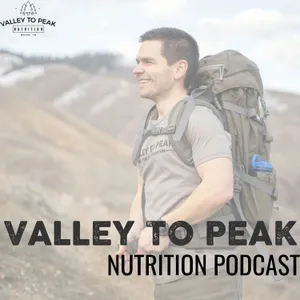
Valley to Peak Nutrition Podcast: Daily Summaries Delivered
by Kyle Kamp
This is a podcast built to help you develop a deeper understanding when it comes to nutrition to prepare for and perform optimally in the mountains. It’s geared towards taking the complexities, nuances, and fl combust out of the information that’s usually tied to the topic. You’ll receive expert coaching advice, strategies, and answers to your specific nutrition questions so you can gain clarity in less time and achieve more of your goals on- and off trail- than you ever have before.
Latest Episodes
The most recent episodes — sign up to get AI-powered summaries of each one.
- 6 days ago35 min
Stop Wasting Money on Electrolytes You Don't Need: Backcountry Hydration Guide (V2P X Argali)
This week, Kyle joins Brad Brooks from Argali to break down the essential components of electrolyte supplements and hydration management for hunters, mountaineers, and folks who love the trail. They analyze various popular product types, discuss how to assess individual needs based on exertion levels, and explain why testing these strategies during training is vital before heading into the backcountry. - - - - - Check out the video series here on the Argali Youtube channel. Check out all of Argali's array of backcountry gear products here. Check out Valley to Peak Resources here.
- 3 weeks ago19 min
Q&A: Road Trip Nutrition: How to Eat Well on Long Drives + Does Rhodiola Work for Altitude?
Long road trips can completely derail your nutrition. If you've ever driven 8–10+ hours, arrived at your destination feeling terrible, and realized you've spent the entire day eating gas-station snacks, fast food, or whatever was easiest, this episode is for you. In this Q&A, we tackle two questions from the community. First: How do you maintain good nutrition during long drives and busy travel days? The answer isn't finding the perfect road-trip food. It's having a repeatable plan. Then we tackle a second question: Does Rhodiola rosea actually help with fatigue or altitude? The goal isn't perfect nutrition. The goal is to make good nutrition easier when life gets busy. What You'll Learn In this episode: Why long road trips can derail otherwise good nutrition Why planning beats willpower when you're traveling How to determine how many meals and snacks you'll need How to build a travel nutrition plan around protein, carbohydrates, and fat What to consider when packing food for a 10+ hour drive When you need a cooler—and when you don't How your travel style should influence the foods you pack Why you should avoid relying entirely on gas stations and convenience stores How to create a repeatable road-trip grocery list Why having a backup food option is so important The limitations of packaged protein and energy bars What Rhodiola rosea is What the research says about Rhodiola and fatigue Whether Rhodiola may have applications for altitude Why small research studies shouldn't be overinterpreted The importance of individual response when evaluating supplements Why supplements shouldn't replace proper altitude preparation Valle to Peak Travel Plan (Written Notes) Valley to Peak Travel Plan (Graphic)
- Aug 16, 20261h 1m
Fueling the Trail Masterclass: How to Eat for Runs, Hikes, and Mountain Expeditions
Tired of bonking halfway through a hike or feeling wrecked for days after a long trail run? In this episode, we break down the simple science of fueling for endurance on the trail. Whether you're training for your local singletrack, a backcountry hunting trip, or a big mountain summit, this episode gives you a clear, no-nonsense roadmap for pre-workout meals, intra-run fueling, post-workout recovery, and hydration. YouTube Link Episode Highlights: What to eat before you head out (3-hour vs. 1-hour rules) How many calories you actually need per hour on the trail How to calculate protein based on desired weight, not total weight The Fueling Hierarchy: Why supplements won't save a bad diet How to manage electrolytes and avoid over-hydrating 🔗 Connect with us: V2PNutrition.com ⭐ Enjoyed the episode? Leave a 5-star rating and review on Apple Podcasts or Spotify!
- Jul 29, 202649 min
"Bigger Than Anything I’ve Done": Dylan Dowson’s NZ Hunt Prep & Daily Strategies for Long-Term Wins
When OnX’s Western Big Game Marketing Manager Dylan Dowson lined up a bucket-list tahr hunt in New Zealand and a mountain goat hunt in British Columbia, he realized his old strategy of "suffering through" the mountains wasn’t going to cut it anymore. In this episode, Dylan opens up about his evolution as a hunter—from growing up in eastern Montana to managing marketing for one of the biggest names in navigation. He breaks down the exact steps he took to transform his physical fitness and nutrition, the eye-opening reality of tracking calories, how he navigated trade shows and travel without derailing his progress, and what it actually felt like to conquer 3,000-foot vertical climbs in New Zealand without gassing out. Key Takeaways & Highlights The Shift from "Suffering Through" to Peak Prep: Why baseline toughness is fine for local hunts, but bucket-list trips demand a total lifestyle shift. The Nutrition "Aha!" Moment: Dylan’s experience going from knowing nothing about calorie intake to finding a sustainable rhythm that fuelled his body without over-restricting. Navigating the Chaos of Travel: Practical mindsets for staying on track during work trips, holidays, and trade show seasons (without resorting to extreme fasts or burnouts). Proof on the Mountain: What happens when the hard work pays off—gaining thousands of vertical feet on steep New Zealand terrain and coming off the mountain feeling energized, not broken. - - - - - Check out more resources at Valley to Peak Nutrition. Apply for coaching at Valley to Peak Nutrition Learn more about OnX
- Jul 8, 202646 min
Zone 2: Reclaiming the Basics in an Over-Optimized World (W/ Chantelle R. from Uphill Athlete and CC).
Welcome back to the Valley to Peak Nutrition Podcast. In this episode, we are thrilled to welcome back a crowd favorite for her fourth appearance on the show: endurance coach and writer, Chantelle Robitaille. If you’ve been a long-time listener, you know Chantelle's previous episode on Zone 2 training remains our most downloaded and listened-to episode of all time. Today, we dive into a topic that might ruffle a few feathers in the data-obsessed endurance community. Inspired by Chantel’s recent writings on her blog, Coach's Confidential, we unpack the controversial idea that your actual heart rate data might not matter as much as you think, and why it's time to stop being married to your watch. We cut through the noise, strip away the over-complication, and get right down to the nuts and bolts of what you actually need to know to build a stronger body and mind. Key Topics Covered in This Episode: The Problem with Over-Optimization: Why obsessing over every minor metric on your watch might actually be hindering your progress. Why Your Heart Rate Doesn't Matter (The Context): Unpacking the controversial take on why data is just one piece of a much larger puzzle. Back to the Nuts and Bolts: Breaking down Chantelle's latest three articles that focus on simple, actionable training basics. Training vs. Science Resources & Links Mentioned: Read Chantelle's Blog: Coach Confidential Chantel’s Past Episodes: Episode: Mastering Zone 2 Training Episode: High Altitude Training Strategies Episode: Goal Setting for the New Year Connect with Valley to Peak Nutrition: Visit V2PNutrition.com Connect With Us! Have a question you want us to cover or a nerdy science topic you want us to break down? Drop us an email at info@v2pnutrition.com—we would love to hear from you and answer your questions on an upcoming episode! Enjoyed the show? Since we don't run any outside advertisements, we rely entirely on word of mouth to get good info into the hands of endurance athletes who need it. You can help us a ton by: Rating and reviewing the show on your favorite podcast app. Sharing this episode with a running buddy or friend who needs to reclaim the basics!
- Jun 29, 202620 min
Am I Wasting My Time? Four Things To Minimize Muscle Loss After 40 (Bonus!)
Between the ages of 30 and 60, biology dictates that we naturally lose anywhere from 3% to 8% of our muscle mass per decade—a number that accelerates even faster once we cross the age of 60. But does that mean trying to improve your performance or build strength in your 30, 40s, 50s, or 60s is a waste of time? Spoiler: Nope! In this special bonus episode of the Valley to Peak Nutrition podcast, we address the common anxieties surrounding age-related muscle decline. We break down the unique advantage of "newbie gains" for late-bloomers or returning lifters , and lay out the exact 4-variable blueprint required to minimize muscle loss and put yourself in the best physiological position possible as you age. Plus, we dive deep into the truths and myths of protein sourcing, the power of leucine, and why you might be "splitting hairs" over animal vs. plant-based proteins. Head over to our website and check out our 100% Free 8-Week Challenge, alongside our self-guided courses and nutrition guides. Click the link in our show notes to get started today! Keywords: Age-related muscle loss, how to build muscle after 40, sarcopenia prevention, resistance training for seniors, muscle hypertrophy over 30. Leucine protein synthesis, bioavailability of plant protein, whey vs meat protein, valley to peak nutrition, minimum effective dose strength training, newbie gains over 40.
- Jun 17, 202631 min
Beyond the App: Backpacking Dehydration & Non-Tracking Nutrition Strategies (FAQ + More..)
This episode is a comprehensive nutrition Q&A designed to help hikers, hunters, backpackers, and outdoor enthusiasts optimize their fuel and achieve their fitness goals. In the first half of the episode, we address specific listener struggles and do a deep-dive into the logistics of DIY trail food dehydration, navigating weight loss within family-style dinners, and smart workarounds for tight meal-prep spaces. The second half introduces the "Non-Tracking Framework"—a set of practical "bumpers" for busy days, vacations, or high-stress periods when logging food into an app isn't feasible, ensuring listeners can still maintain boundaries and progress toward their fitness goals without burning out. Key Topics Covered Deep Dive: The DIY Dehydration Guide for Backpacking Round vs. Square Dehydrators:The pros, cons, fan placement, price points, and space considerations for each. Trail Logistics:How to package, break up, and rehydrate your meals (the golden 1:1 water ratio). Safe Cooking:Choosing between mylar bags, boil-safe Ziplocs, or just cooking straight in your Jetboil. Pescatarian on the Trail:Creative ideas using canned tuna, shrimp, and high-recovery vegetarian grain/legume combos. Weight Loss & Cultural Family-Style Meals Why you don'tneed to isolate yourself or quit eating traditional family meals to lose weight. How to create a caloric deficit by auditing your day, managing portions, and making micro-adjustments to cooking fats (oil, butter, coconut milk). Using tracking as a tool for awareness, not restriction. Meal Prepping with Minimal Freezer Space 4 practical workarounds for tiny kitchens: shorter 2-3 day prep cycles, component-only shopping, non-frozen convenience foods (rotisserie chicken + salad bags), and creating a healthy local restaurant "hybrid" rotation. The Non-Tracking Framework: Nutritional "Bumpers" What to do when life gets too busy to log your food. The Plate Compartment Rule:Balancing your macros visually (Protein, Fiber/Veggies, and Carbs) to protect your training energy. Time Blocking:Setting intentional eating windows to eliminate mindless snacking, fancy coffee drinks, and liquid calories. Managing Highly Palatable Foods:The science of why it’s easy to overeat Oreos or trail mix, but hard to overeat chicken and rice. The "No Doubling Up" Rule:Avoiding overlapping macros in a single meal (e.g., picking one starch, not three). Final Takeaways: Intentionality vs. Autopilot Matching your nutrition Strategy to your current bandwidth (The 1-to-5 Motivation Scale) so you never default to the drive-thru. Resources Mentioned in this Episode Valley to Peak DIY Dehydration Guide Valley to Peak Non-Tracking Cheat Sheet Connect with Us! Got a question for the next Q&A? Reach out here! If you enjoyed this episode, please leave us a review and share it with your hiking crew! See you in two weeks.
- Jun 1, 202622 min
Zone 2 Training & Fat as Fuel: Should You Eat More Fat to Perform Better?
Zone 2 training is often labeled as “fat burning,” but what does that actually mean in real-world performance? Should athletes, hunters, and endurance enthusiasts be eating more fat during long efforts? Or is the body primarily relying on stored energy systems regardless of what you eat? In this episode of the Valley to Peak Nutrition Podcast, we break down one of the most misunderstood concepts in endurance nutrition: fat as fuel. We explore whether the body is using dietary fat or stored body fat during low-intensity exercise, how carbohydrates still play a critical role, and why it’s never as simple as “fat vs carbs.” You’ll learn how energy systems actually interact during Zone 2 training, multi-day efforts, and long-duration mountain objectives—and why relying on a single fuel source can limit performance. If you’ve ever wondered how to properly fuel Zone 2 training, ultras, backcountry hunts, or long mountain days, this episode will give you the clarity you need. Download the cheat sheet Check out Valley to Peak and other Resources. In this episode: What “fat as fuel” actually means in Zone 2 training The difference between stored body fat and dietary fat How the body actually breaks down and uses fat for energy Why fat and carbohydrates are always used together (not separately) The role of intramuscular triglycerides in endurance performance Why muscle glycogen still matters—even at low intensities The real timeline for dietary fat to become usable energy Why higher intensity changes everything about fuel usage How carbohydrate supports fat metabolism (“fat burns in a carbohydrate flame”) Why calorie balance—not macronutrient manipulation—drives fat loss Key Takeaways: Zone 2 training is not 100% fat-burning—it’s a blend of fat and carbohydrate use Most fat used during exercise comes from stored body fat, not what you just ate Dietary fat takes hours to become usable fuel during activity Carbohydrates are essential for higher intensity and mental performance Fat and carbs work as a system—not competing fuel sources Great listen for those interested in: Endurance athletes Trail runners & ultrarunners Backcountry hunters and hikers Cyclists and hybrid athletes Anyone training in Zone 2 or long-duration efforts
Get Valley to Peak Nutrition Podcast summaries in your inbox
Free AI-powered daily recaps. Key takeaways, quotes, and mentions — in a 5-minute read.
Get Free Summaries →Free forever for up to 3 podcasts. No credit card required.
You Might Also Like
Listeners also like.
Peak Performance Life Podcast
Covers health, energy, and mental performance optimization through biohacking, nutrition, and lifestyle strategies.
The Nick Bare Podcast
Nick Bare discusses nutrition, performance, and habits for consistent personal growth through disciplined, principle-driven conversations.

The Dylan Gemelli Podcast
Discussions with health and wellness experts on fitness, biohacking, and performance enhancement to improve quality of life.
UNTAPPED with Spencer Matthews
Spencer Matthews interviews elite athletes to uncover practical insights on resilience, discipline, and pushing human potential.
SuperLife with Darin Olien
Conversations on nutrition, mental health, and sustainable living that explore everyday habits harming people and the planet.

TRAINED
Discusses fitness and wellness through interviews with athletes, scientists, and health experts on mindset, nutrition, movement, recovery, and sleep.
FoundMyFitness
A podcast exploring health, science, nutrition, aging, and fitness.

Trail Tales - Thru-Hiking & Backpacking
Thru-hiker Kyle O’Grady interviews fellow long-distance hikers about the realities of life on the trail.
Steep Life Media
Explores endurance sports and outdoor adventures through personal stories and interviews.
Science Of Ultra
Explores how sleep, nutrition, mindset, and movement affect endurance athletes' performance and health.
LONGEVITY with Nathalie Niddam
Explores science-backed strategies for extending healthspan through nutrition, biohacking, peptides, and emerging longevity research.
Modern Wisdom
Discussions with experts on psychology, philosophy, and self-improvement to help navigate life’s challenges.
About Valley to Peak Nutrition Podcast
This is a podcast built to help you develop a deeper understanding when it comes to nutrition to prepare for and perform optimally in the mountains. It’s geared towards taking the complexities, nuances, and fl combust out of the information that’s usually tied to the topic. You’ll receive expert coaching advice, strategies, and answers to your specific nutrition questions so you can gain clarity in less time and achieve more of your goals on- and off trail- than you ever have before.
Customized Recaps
AI-powered recaps with compact key takeaways, quotes, and insights.
Straight to Your Inbox
Get key takeaways from Valley to Peak Nutrition Podcast in a 5-minute read.
Save Hours Every Week
Stay current on your favorite podcasts without falling behind.
Frequently Asked Questions
What is Podzilla's Valley to Peak Nutrition Podcast daily summary?
It's a free AI-powered email that summarizes new episodes of Valley to Peak Nutrition Podcast as soon as they're published. You get the key takeaways, notable quotes, and links & mentions — all in a quick read.
How does the Valley to Peak Nutrition Podcast podcast summary work?
When a new episode drops, our AI transcribes and analyzes it, then generates a personalized summary tailored to your interests and profession. It's delivered to your inbox every morning.
Is this an official Valley to Peak Nutrition Podcast product?
No. Podzilla is an independent service that summarizes publicly available podcast content. We're not affiliated with or endorsed by Kyle Kamp.
Can I get summaries of other podcasts too?
Absolutely! The free plan covers up to 3 podcasts. Upgrade to Pro for 15, or Premium for 50. Browse our full catalog at /podcasts.
How often does Valley to Peak Nutrition Podcast release new episodes?
Valley to Peak Nutrition Podcast publishes biweekly. Our AI generates a summary within hours of each new episode.
What topics does Valley to Peak Nutrition Podcast cover?
Valley to Peak Nutrition Podcast covers topics including Nutrition, Fitness, Health & Fitness. Our AI identifies the specific themes in each episode and highlights what matters most to you.
Start getting Valley to Peak Nutrition Podcast summaries tomorrow morning.
Free forever for up to 3 podcasts. No credit card required.
Free forever for up to 3 podcasts. No credit card required.