Free Daily Podcast Summary
Typology: Daily Summaries Delivered
by Ian Morgan Cron
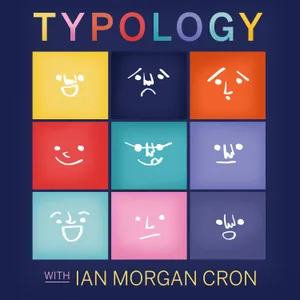
Who are we? Why do we act, think and feel the way we do? How can we become our best, most authentic selves? Welcome to Typology, a podcast that explores the mystery of the human personality and how we can use the Enneagram typing system as a tool to become our best, most authentic selves. Hosted by author, speaker and counselor, Ian Morgan Cron, Typology features interviews with thought leaders from every sphere of life, including renowned Enneagram authors and teachers, psychologists, theologians, artists, business leaders, neuroscientists, philosophers, and more. In other words, we'll be talking with people who are trying to become the best version of themselves in the world.
Latest Episodes
The most recent episodes — sign up to get AI-powered summaries of each one.
- 4 days ago40 min
Parenting Teens Through the Lens of the Enneagram, feat. Ainsley Britain (REVISIT)
What if you had learned the Enneagram when you were a teenager? In this replay of my conversation with Ainsley Britton, author of The Enneagram for Teens, we explore what self-awareness can look like during adolescence and how parents can use the Enneagram without turning it into another way of labeling or controlling their kids. Ainsley and I talk about why she believes teenagers can benefit from learning the Enneagram, why it should be held loosely, and why parents should never force it on a teenager who isn't interested. We also discuss parenting, curiosity, vulnerability, mental health, relationships, and one of the most important things we can remember about the Enneagram: We are more than our numbers. In this episode: The significance of the Enneagram for teens and its potential to aid in self-discovery. The challenges and joys of being an Enneagram Type 2. Practical advice for parents on introducing the Enneagram to their children without forcing it. The role of mental health awareness in today's youth and how the Enneagram can facilitate important conversations. Whether you're a parent, educator, or simply curious about the Enneagram, this episode is packed with insights and laughter that you won't want to miss! *This episode is a replay of an earlier conversation with Ainsley. ABOUT AINSLEY BRITAIN: Ainsley Britain is an Author, Podcast Host, and Enneagram Coach dedicated to helping young adults build confidence and foster healthy relationships. A Cajun at heart and native of Lafayette, Louisiana, Ainsley's journey took her through New York City and Nashville, shaping her relationships, experiences, and career. Her book, The Enneagram for Teens, offers young adults an introduction to the Enneagram during formative years of their lives and her podcast, Wild Confidence, shares insights from Ainsley's experiences, aiming to empower others. Now residing in Baton Rouge with her family, Ainsley embraces the vibrant culture of South Louisiana.
- 1 weeks ago58 min
From the NFL to the Pulpit: Derwin Gray on Forgiveness, Fear, and Finding Your Father
There's a particular kind of loneliness that comes from caring about something before anyone else in the room does. My guest today knows that loneliness intimately. Rev. Dr. Derwin L. Gray played in the NFL before founding Transformation Church in 2010. He's also an Enneagram Eight — and in this conversation, we get into what it actually feels like to live inside that number: the passion that gets mistaken for anger, the instinct to protect people before they've asked to be protected, and the particular ache of caring more than the room does. We explore the difference between using pain as fuel and actually healing it, because as he puts it, vengeance has a way of burning you up on its way out. He walks us through the HEAL framework from his new book, It's Time to Heal: Four God-Given Steps to Restore What Life Has Shattered and names his own core wound in three words I haven't stopped thinking about since we recorded. If you've ever confused surviving a wound with healing it, this episode's for you.
- 2 weeks ago55 min
The Spark Three: Stephanie Barron Hall on Chemistry, Performance, and the Search for Self
What happens when a Three stops performing and starts telling the truth — even to herself? Anthony and I sat down with Steph Baron Hall, author of Enneagram in Real Life and host of the Enneagram in Real Life podcast, for a conversation that starts with instinctual stacking and ends up somewhere much deeper. Steph — a sexual (or "spark") dominant Three — unpacks how the sexual instinct differs from the social Three most people picture, why she was so often mistaken for a Four, and how she's learned to notice the exact moment she starts performing instead of being present. We move through the difference between achieving your identity and receiving it, the religious trauma that shaped Steph's relationship to spirituality, and why she's going back to school in her late thirties to become a therapist. Along the way, I offer a memorable image for the false self — the "pinched self" — and the three of us talk honestly about what it actually costs to tell yourself the truth, not just other people. Steph is the author of Enneagram in Real Life, available wherever books are sold. Find her at ninetypes.co and on her own podcast, Enneagram in Real Life. ABOUT STEPHANIE BARRON HALL Stephanie Barron Hall (M.A. Organizational Communication & Leadership) is an Accredited Enneagram Practitioner, author of The Enneagram in Love (2020) and Enneagram in Real Life (2025), creator of @NineTypesCo, and host of the Enneagram in Real Life podcast. Stephanie has been facilitating personality-centric team development for years as an outside consultant for organizations ranging from small businesses to Fortune 100 companies. Stephanie's approach to the Enneagram is grounded in communication theory and emphasizes deep personal work through application, curiosity, and self-awareness.
- 3 weeks ago53 min
The Secure Soul: Dr. Alison Cook on Learning to Trust Yourself, Others, and God
Dr. Alison Cook, bestselling author of Boundaries for Your Soul, returns to Typology to talk about her new book, The Secure Soul: Finding Inner Strength and Connection When Trust Doesn't Come Easy. Alison is candid about her own lifelong wrestle with insecurity as an Enneagram Three, and we dig into two of her book's central characters: the controller, the part of us trying to earn love by managing how we're perceived, and the shadow, the part left holding everything we couldn't afford to feel. Drawing on Internal Family Systems, attachment theory, and contemplative Christian tradition, Alison offers a different way to think about the soul — not as a machine to fix, but as a mountain to explore, one shadowy valley at a time. Along the way: Gabor Maté's idea that children are forced to choose between attachment and authenticity, why "I am loved even here" might be the whole gospel in five words, and the real difference between fixing yourself and healing. About Dr. Alison Cook: Dr. Alison Cook is a psychologist of religion, licensed therapist, and host of the top-ranked The Best of You Podcast. She is the author of several bestselling books, including Boundaries for Your Soul. Known for her work at the intersection of faith, psychology, and spiritual formation, she helps people cultivate a secure inner life– healing past wounds, strengthening a grounded sense of self, building healthy relationships, and experiencing God as a steady and loving presence in their lives. She and her husband, Joe, are the parents of two adult children and call the mountains of Wyoming home. Facebook Instagram Website The Best of You Podcast
- Aug 20, 20261h 2m
Mistyping, Subtypes, and the Long Road to Finding Your Real Number — with Beatrice Chestnut
What happens when the type you've claimed for years turns out to be wrong? Today, I sit down with returning guest Beatrice Chestnut — Enneagram teacher, author, and co-founder of the Chestnut Paes Enneagram Academy — for a wide-ranging conversation on one of the most common (and most human) struggles in Enneagram work: mistyping. We dig into why mistyping happens, how to hold a hypothesis about someone's type without imposing it, and the subtype distinctions that resolve the Enneagram's trickiest lookalikes — especially Twos vs. Nines and the three very different faces of Type Four and Type Six. Beatrice also opens up about her own evolving growth path, and I share a personal story about the moment a single sentence in one of Beatrice's books changed how I understood myself. IN THIS EPISODE Why mistyping is a normal part of the self-discovery journey — not a system failure How to gently raise a hypothesis about someone's type without playing "Enneagram police" The key differences between Twos and Nines (emotional expression, image-consciousness, who initiates) Self-preservation, social, and sexual subtypes of Type Four — the "glad," "sad," and "mad" Fours Why Sixes so often don't recognize their own fear-based motivation until they find the Enneagram Beatrice's personal reflection on growing from a Four toward Eight-like strength What it actually feels like when your type finally "lands" ABOUT OUR GUEST Beatrice Chestnut, PhD, is the co-founder of the Chestnut Paes Enneagram Academy and author of The Complete Enneagram (new edition available next month) and The 9 Types of Leadership. Learn more at beatricechestnut.com.
- Aug 13, 202658 min
When Certainty Collapses: Chasing Francis – Chapter One
True spiritual transformation often begins at the exact moment our old answers stop working. This week, I'm sharing Chapter One of my newly revised novel, Chasing Francis: A Pilgrim's Tale. We follow Chase Falson, a megachurch pastor whose public confession of lost faith triggers an unexpected journey of the heart. While Chase's story is fictional, his hunger for something authentic mirrors my own season of wrestling with sterile religion. By sending Chase to Assisi to walk in the footsteps of St. Francis, I discovered that losing an inherited belief system isn't the end of faith—it's often the doorway into a far deeper, living encounter with God. Whether you haven't set foot in a church in a decade or you're sitting in a pew this Sunday, this episode is for anyone who's ever quietly wondered if there's something more. Resources & Links: Book: Pick up your copy of Chasing Francis: A Pilgrim's Tale Audio: Listen on Audible or wherever you listen to audiobooks Connect: Follow the show and connect with Ian on social at @ianmorgancron
- Aug 6, 202631 min
Enneagram Essentials: Passion and Virtue
Most Enneagram teaching is very good at describing what's wrong with you. This episode is about what's right. Every Enneagram type has a Passion — the chief emotional distortion the ego runs when it's disconnected from its truest self. Anger for the One. Pride for the Two. Deceit for the Three. Each of the nine types has one, and most of us have spent a lot of energy trying to manage ours without quite knowing what it is. But every type also has a Virtue. Not a moral achievement you add on top — a quality that naturally arises in the heart when the Passion loosens its grip. Serenity. Humility. Authenticity. Equanimity. Non-Attachment. Courage. Sobriety. Innocence. Right Action. These aren't things you build. They're things that emerge when you stop being in the way of yourself. In this final episode of the Enneagram Essentials series, Anthony and I walk through all nine Passions and their corresponding Virtues. I share what Equanimity feels like in my own life as a Four — when I manage to access it — and we close with two honest answers to the question of how any of this actually becomes real: contemplative practice, and a particular kind of willingness to stop running from pain. This is a hopeful episode. Everything in the series has been building toward this. The Enneagram has always been pointing here. This is Episode 5 of 5 in the Enneagram Essentials series. All five episodes are available now wherever you listen to Typology. RESOURCES FROM THIS EPISODE: The Road Back to You by Ian Morgan Cron The Story of You by Ian Morgan Cron Enneagram Assessment | Find Your Type Ian's speaking and organizational work Follow Ian on Instagram | Facebook | TikTok | YouTube
- Jul 30, 202636 min
Enneagram Essentials: Subtypes
When you combine an Enneagram type with a dominant instinct, you get a subtype — and there are 27 of them. This is the level at which most people finally, fully recognize themselves in the Enneagram. Not at the type level, not at the instinct level, but here — where the two come together into something precise enough to actually fit. In this episode, Anthony and I walk through what subtypes are, why they matter so much, and what some of the most striking examples look like in practice. We spend time on the counter-phobic Sexual Six, who presents so differently from the general Six description that mistyping as an Eight is extremely common. We look at the Self-Preservation Four — stoic, tough, nothing like the image most people carry of the Romantic type — and the Social Three, whose image management has become so sophisticated that they can appear humble and self-effacing while running every calculation in the room. We also talk through how to identify your own subtype, what Beatrice Chestnut's work has contributed to this area of teaching, and what to do with the discomfort that often arises when a subtype description lands a little too accurately. If you've ever felt like your type description is about right but something important is still missing — or if you've ever thought you might be two different types — this episode is the one that usually resolves it. This episode builds on Episode 3 (Instincts). Listen to that one first if you haven't. RESOURCES FROM THIS EPISODE: The Complete Enneagram: 27 Paths to Greater Self-Knowledge by Beatrice Chestnut The Road Back to You by Ian Morgan Cron The Story of You by Ian Morgan Cron Enneagram Assessment | Find Your Type Ian's speaking and organizational work Follow on Instagram | Facebook | TikTok | YouTube
Get Typology summaries in your inbox
Free AI-powered daily recaps. Key takeaways, quotes, and mentions — in a 5-minute read.
Get Free Summaries →Free forever for up to 3 podcasts. No credit card required.
You Might Also Like
Listeners also like.

The Psychology Podcast
Explores human potential and possibility through conversations with scientists, thinkers, and self-actualized individuals.

Get Obsessed : With Living Your Best Life
Experts and personal stories guide listeners through life changes, covering personal development, relationships, and overcoming fear.

The One You Feed | Personal Growth, Emotional Resilience & Purpose
Insightful conversations with leading thinkers on personal growth, emotional resilience, and living with purpose.

Becoming Something with Jonathan Pokluda
A weekly podcast offering Christian guidance on faith and life for young adults in their 20s and 30s.
Decoded | Unlock The Secrets of Human Behavior, Emotion and Motivation
Explores subconscious patterns behind human behavior and provides tools to rewire destructive cycles and live with intention.
Growth Mindset Psychology: The Science of Self-Improvement
Explores the science behind lasting self-improvement through psychology, neuroscience, and timeless wisdom traditions.

The Entrepreneur DNA
Entrepreneurs share lessons on building businesses and personal growth through real experiences and mistakes.
A Bit of Optimism
Conversations with thinkers and doers exploring what drives purpose, growth, and meaning in life.
Know Thyself
Explores self-discovery, consciousness, and human potential through conversations with experts in spirituality, science, and creativity.

Passion Struck with John R. Miles
Explores purpose, resilience, and connection through science-backed conversations with experts in psychology, neuroscience, and performance.

People Who Read People: A Behavior and Psychology Podcast
Explores human behavior through interviews with experts in psychology, law, sports, and poker.

Aubrey Marcus Podcast
Conversations on mindset, spirituality, and human optimization with a focus on psychedelics, health, and personal growth.
About Typology
Who are we? Why do we act, think and feel the way we do? How can we become our best, most authentic selves? Welcome to Typology, a podcast that explores the mystery of the human personality and how we can use the Enneagram typing system as a tool to become our best, most authentic selves. Hosted by author, speaker and counselor, Ian Morgan Cron, Typology features interviews with thought leaders from every sphere of life, including renowned Enneagram authors and teachers, psychologists, theologians, artists, business leaders, neuroscientists, philosophers, and more. In other words, we'll be talking with people who are trying to become the best version of themselves in the world.
Customized Recaps
AI-powered recaps with compact key takeaways, quotes, and insights.
Straight to Your Inbox
Get key takeaways from Typology in a 5-minute read.
Save Hours Every Week
Stay current on your favorite podcasts without falling behind.
Frequently Asked Questions
What is Podzilla's Typology daily summary?
It's a free AI-powered email that summarizes new episodes of Typology as soon as they're published. You get the key takeaways, notable quotes, and links & mentions — all in a quick read.
How does the Typology podcast summary work?
When a new episode drops, our AI transcribes and analyzes it, then generates a personalized summary tailored to your interests and profession. It's delivered to your inbox every morning.
Is this an official Typology product?
No. Podzilla is an independent service that summarizes publicly available podcast content. We're not affiliated with or endorsed by Ian Morgan Cron.
Can I get summaries of other podcasts too?
Absolutely! The free plan covers up to 3 podcasts. Upgrade to Pro for 15, or Premium for 50. Browse our full catalog at /podcasts.
How often does Typology release new episodes?
Typology publishes weekly. Our AI generates a summary within hours of each new episode.
What topics does Typology cover?
Typology covers topics including Fitness, Religion & Spirituality, Spirituality, Christianity, Health & Fitness. Our AI identifies the specific themes in each episode and highlights what matters most to you.
Start getting Typology summaries tomorrow morning.
Free forever for up to 3 podcasts. No credit card required.
Free forever for up to 3 podcasts. No credit card required.