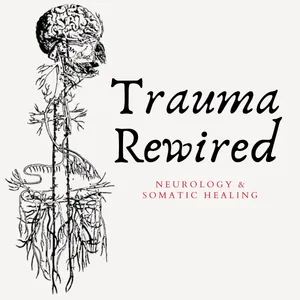
Free Daily Podcast Summary
Trauma Rewired: Daily Summaries Delivered
by Elisabeth Kristof & Jennifer Wallace
The Podcast that teaches you about your nervous system, how trauma gets stored in the body and what you can do to heal.
Latest Episodes
The most recent episodes — sign up to get AI-powered summaries of each one.
- 6 days ago52 min
How Trauma Creates High Achievers: Fight Response, Perfectionism & Burnout
Success can become a survival strategy when the nervous system learns that achievement equals safety. In this episode of Trauma Rewired, Jennifer Wallace and Elisabeth Kristof are joined by entrepreneur and Brain Based partner Margie Feltoon to explore how unresolved trauma can drive perfectionism, relentless productivity, emotional repression, and eventual burnout. Together, they unpack why so many high achievers feel successful on the outside while feeling disconnected, numb, or chronically stressed on the inside. You'll learn how the fight response can masquerade as ambition, why emotional repression often fuels performance until it no longer can, and how nervous system regulation allows success to become something you can actually experience instead of constantly chasing. If you've ever felt like you're accomplishing everything yet still can't relax, this conversation will help you understand why—and show you a different path toward sustainable achievement, healthier relationships, and authentic fulfillment. In This Episode Why high achievement is often rooted in nervous system survival rather than true capacity How the fight response fuels perfectionism, overworking, and burnout The hidden cost of emotional repression in business, leadership, and relationships Why external success cannot create internal safety How perfectionism, shame, and hypervigilance become performance strategies The difference between emotional repression and emotional suppression Why high performers often experience burnout despite outward success How emotional processing improves leadership, decision-making, and resilience The connection between chronic stress, migraines, pain, and emotional repression Why nervous system regulation creates sustainable success instead of survival-driven achievement How learning to process emotions leads to greater presence, authenticity, and healthier relationships Practical first steps for rewiring achievement patterns through Neurosomatic Intelligence (NSI). Featured in This Episode 🧠 The 15-Day Nervous System Rewire A guided introduction to nervous system regulation through 15 progressive practices designed to help you build self-attunement, regulate overwhelm, and begin creating lasting change. https://rewirecourse.com 🎁 Try Brain Based Free for Two Weeks Experience daily applied neurology exercises, emotional processing practices, and nervous system training inside the Brain Based membership. https://rewiretrial.com 🎓 Become NSI Certified Learn the neuroscience and practical application of Neurosomatic Intelligence through our professional certification program. https://neurosomaticintelligence.com Watch More Trauma Rewired Episodes Watch full episodes and subscribe on YouTube: https://www.youtube.com/@traumarewired Are you ready to become the woman who can carry the vision? Discover nervous system education, preparation, integration, and resources to support your journey at illuminatedwithjennifer.com Sacred Synapse Interested in the neuroscience of psychedelics, neuroplasticity, and nervous system preparation? Explore Jennifer Wallace's educational YouTube channel dedicated to evidence-informed psychedelic education and harm reduction. <a href= "https://www.youtube.c
- 1 weeks ago1h 4m
Why Trauma Changes the Brain: Complex Trauma, Inflammation & Neuroplasticity
Trauma doesn't just shape your memories. It changes how your brain predicts, interprets, and responds to the world. In this episode, Jennifer and Elisabeth sit down with clinical neuroscientist Dr. Mbemba Jabbi to explore the biology of complex trauma through the lens of neurogenetics, affective neuroscience, inflammation, and neuroplasticity. Together they unpack how early adversity reshapes emotional brain networks, why survival adaptations become deeply encoded, and what current neuroscience reveals about the connection between trauma, chronic disease, and healing. From the anterior insula and amygdala to inflammatory biomarkers like C-reactive protein, this conversation bridges cutting-edge neuroscience with practical understanding for survivors and practitioners alike. Most importantly, it offers hope: the brain remains plastic throughout life, and healing is possible. In This Episode Why trauma is an ongoing conversation between the brain, body, and environment—not simply a past event. How the brain's emotional networks continuously evaluate safety through sensory input. The role of the anterior insula, anterior cingulate cortex, and amygdala in emotional regulation and threat detection. Why many trauma responses are adaptive suppressions rather than deficits. How survival patterns formed during childhood often repeat throughout adulthood. The relationship between chronic trauma, inflammation, and long-term physical health. What C-reactive protein may reveal about the biological impact of childhood trauma. Why early childhood sexual trauma produces distinct biological effects compared with other forms of adversity. How genetics and environment interact to shape emotional health without determining destiny. Why neuroplasticity gives us the capacity to build new patterns throughout life. How nervous system training, supportive relationships, and therapeutic interventions help create lasting change. Why emotions are not separate from the body—they are deeply integrated with every system involved in survival and wellbeing. Featured in This Episode 🧠 Start your FREE two-week Rewire Trial Learn the same neurosomatic tools discussed throughout the podcast and begin training your nervous system with live classes, expert guidance, and an extensive on-demand library. https://www.rewiretrial.com RESOURCES ✨ Are you ready to become the woman who can carry the vision? Discover nervous system education, preparation, integration, and resources to support your journey at illuminatedwithjennifer.com. 🌿 Sacred Synapse Explore Jennifer's educational videos on psychedelic neuroscience, preparation, integration, and harm reduction. https://www.youtube.com/@sacredsynapse-23 📖 The Wayfinder Journal A guided psychedelic preparation and integration journal designed to help you embody insight and create lasting change. https://stan.store/illuminated Connect with Us 🌐 Website https://www.traumarewired.com 📸 Instagram https://www.instagram.com/trauma.rewired 👥 Facebook Community https://www.facebook.com/groups/761101225132846 Exclusive Offer 🥬 Receive a FREE bottle of AG1 with your subscription. https://www.drinkag1.com/rewired Podcast Disclaimer Trauma Rewired podcast is intended to educate and inform but does not constitute medical, psychological or other professional advice or
- 2 weeks ago49 min
Undiagnosed TBI: Why Brain Injuries Are Often Missed and Misunderstood
Traumatic brain injuries are incredibly common, yet many mild TBIs and concussions go unrecognized. And when the symptoms of a brain injury overlap with the effects of complex trauma, it can become difficult to understand what is actually driving changes in cognition, emotional regulation, behavior, energy, and capacity. In this episode of Trauma Rewired, Jennifer Wallace and Elisabeth Kristof are joined by Amanda Smith, certified brain injury specialist, applied neurology pain and performance coach, NSI educator, and founder of Amanda's Way, to explore the intersection of traumatic brain injury and complex trauma. Amanda shares her own experience recovering from concussion and whiplash and explains why symptoms such as brain fog, fatigue, irritability, emotional reactivity, poor concentration, sleep disruption, sensory sensitivity, and reduced capacity can easily be attributed to trauma, anxiety, depression, or stress when an underlying brain injury may also be contributing. Together, they explore how TBI can change the brain's ability to process visual, vestibular, sensory, and cognitive information; why everyday inputs can require significantly more resources after injury; and how reduced fuel and capacity can affect everything from relationships and work to emotional regulation and rehabilitation. The conversation also examines why practitioners working with trauma and the nervous system need a foundational understanding of concussion and TBI—and why those working with brain injury populations benefit from understanding the effects of complex trauma, chronic stress, and nervous system patterns. Rather than pushing through symptoms, recovery begins with understanding what the nervous system is actually experiencing, assessing capacity, working with the minimum effective dose, and recognizing when additional rehabilitation, referral, or collaborative care may be needed. In This Episode What traumatic brain injury and mild TBI can look like Why many concussions and mild TBIs go undiagnosed The overlap between TBI, anxiety, depression, PTSD, and complex trauma symptoms How brain injury can affect emotional regulation, cognition, memory, vision, and behavior Why irritability, withdrawal, overwhelm, and reduced capacity may emerge after concussion The relationship between complex trauma and persistent post-concussion symptoms Why women and other vulnerable populations may experience additional barriers to recovery How TBI can increase the energetic demands placed on the brain Visual, vestibular, sensory, and cognitive processing after brain injury Why pushing through symptoms can create diminishing returns Fuel, capacity, assessment, reassessment, and the minimum effective dose How Neurosomatic Intelligence can support individualized nervous system work Why practitioners need to recognize when referral or collaborative care is appropriate Beginning with simple awareness of breath, energy expenditure, restoration, and capacity The importance of compassion for ourselves and others when we cannot see what another nervous system has experienced Featured in This Episode BECOMING TBI & CONCUSSION INFORMED — LIVE WORKSHOP If you work with the nervous system, understanding concussion and traumatic brain injury is essential. Post-concussion symptoms can present as fatigue, overwhelm, emotional reactivity, difficulty concentrating, sensitivity to sound or light, inconsistent progress, or reduced capacity for stress. Join Amanda Smith on September 17 for Becoming TBI and Concussion Informed, a live workshop designed to help practitioners understand how a history of concussion, mild TBI, or head and neck trauma may be affecting what they observe in thei
- 3 weeks ago1h 2m
The Science of Feeling Safe in Your Body: Emotional Regulation and Trauma
Episode Summary Why do you know you're safe logically, but your body still reacts as though you're in danger? Emotional regulation isn't about staying calm, avoiding difficult emotions, or suppressing how you feel. It's about your brain and nervous system working together to accurately interpret what's happening inside and around you so you can respond with flexibility instead of survival. In this episode of Trauma Rewired, Jennifer Wallace and Elisabeth Kristof are joined by NSI educator Matt Bush to explore the neuroscience of emotional regulation through the lens of brain integration, interoception, sensory processing, and neuroplasticity. Together they unpack why trauma disrupts communication between key brain networks, how chronic stress creates fragmented emotional processing, and why many people remain stuck in cycles of overwhelm, shutdown, perfectionism, dissociation, binge eating, emotional flooding, or emotional numbness despite years of personal development or therapy. The conversation also explores why emotional regulation is a trainable neurological skill, how simple nervous system practices improve brain integration, why sensory mismatch contributes to chronic stress, and how properly preparing the nervous system creates safer, more effective emotional processing—including during psychedelic experiences. If you've ever wondered why insight alone doesn't create lasting change, why your emotions sometimes feel bigger than the situation, or why your body seems to react before your mind can catch up, this episode offers a neuroscience-based roadmap toward regulation, resilience, and post-traumatic growth. In This Episode We Discuss What emotional regulation actually is—and what it is not Why emotional regulation depends on brain integration The roles of the insula, anterior cingulate cortex, cerebellum, and prefrontal cortex How trauma disrupts communication between brain networks Why chronic stress creates fragmented emotional processing The relationship between interoception, proprioception, and emotional regulation Sensory mismatch and its hidden impact on nervous system health Emotional flooding, shutdown, perfectionism, binge eating, and dissociation Why "fake it until you make it" comes with a physiological cost The neuroscience behind predictive coding and emotional interpretation Why emotions are physiological—not simply psychological How movement, vocalization, and nervous system regulation support emotional processing Brain-body integration and the limits of insight alone Emotional regulation during psychedelic and peak somatic experiences Building nervous system capacity through daily regulation practices Practical neuroscience tools that support resilience and post-traumatic growth Featured in This Episode NSI Foundations Bundle Learn the foundational neuroscience and practical nervous system tools behind everything taught inside the NeuroSomatic Intelligence Certification. https://neurosomaticintelligence.com/foundations Start Here FREE 2-Week Rewire Trial https://www.rewiretrial.com Learn More About NeuroSomatic Intelligence https://www.neurosomaticintelligence.co
- Aug 17, 20261h 0m
Boundaries, Attachment, and the Fear of Losing Connection
Most people think boundaries are about saying "no," protecting themselves, or keeping others at a distance. But from a nervous system perspective, boundaries are something much deeper. They are not walls that separate us from connection—they are the foundation that makes authentic connection possible. In this episode, Jennifer Wallace, Elisabeth Kristof, and returning guest Margie Faltin explore boundaries through the lens of neuroscience, attachment, co-regulation, and post-traumatic growth. Together they examine why boundaries can feel so threatening after trauma, why receiving someone else's boundary can activate abandonment, and how early attachment experiences shape the way we relate to authenticity, conflict, and connection throughout our lives. Whether you've struggled with people-pleasing, over-functioning, conflict avoidance, or feeling guilty for putting your needs first, this conversation offers a compassionate, science-backed framework for understanding boundaries as an expression of nervous system health rather than emotional distance. Together they explore why boundaries become easier as nervous system capacity grows, how self-attunement changes the way we communicate our needs, why authenticity requires safety, and how learning to both set and receive boundaries creates stronger relationships, greater resilience, and lasting post-traumatic growth. Key Takeaways Why boundaries are a nervous system skill—not simply communication techniques. How attachment patterns shape the way we set and receive boundaries. Why receiving a boundary can feel like abandonment after trauma. The neuroscience of oxytocin, co-regulation, and the "tend-and-befriend" stress response. Why people-pleasing and fawning are survival adaptations rather than personality traits. The difference between reactive boundaries and boundaries rooted in regulation. Why self-attunement is foundational to authentic relationships. How rupture and repair help build secure attachment over time. Practical nervous system exercises for strengthening boundary capacity. Why authentic connection requires truth—not performance, perfection, or self-abandonment. If you've ever worried that speaking your truth would cost you love, feared disappointing others, or found yourself constantly prioritizing everyone else's needs above your own, this episode offers another perspective: healthy boundaries are not about pushing people away. They are about creating the safety, authenticity, and nervous system capacity that allow genuine connection to grow. Resources 🧠 Start Your Nervous System Journey — FREE for Two Weeks https://rewiretrial.com 🌿 NeuroSomatic Intelligence (NSI) Certification https://neurosomaticintelligence.com Are you ready to become the woman who can carry the vision? Discover nervous system education, preparation, integration, and resources to support your journey at illuminatedwithjennifer.com. 🎙️ Sacred Synapse with Jennifer Wallace https://www.youtube.com/@sacredsynapse 🎧 Watch Trauma Rewired on YouTube https://www.youtube.com/@traumarewired 📖 The Wayfinder Journal https://stan.store/illuminated Podcast Disclaimer Trauma Rewired podcast is intended to educate and inform but does not constitute medical, psychological or other professional advice or services. Always consult a qualified medical professional about your specific circumstances before making any decisions based on what you hear. We share our experiences, explore trauma, physical reactions, mental health and disease. If you become distressed by our content, p
- Aug 10, 202657 min
Sexual Fawning: When Survival Gets Mistaken for Intimacy
Why do so many trauma survivors say "yes" when every part of their body is saying "no"? In this deeply compassionate episode of Trauma Rewired, Jennifer Wallace and Elisabeth Kristof are joined by somatic educator Luis Mojica to explore one of the least understood trauma adaptations: sexual fawning. While many people recognize fawning as people-pleasing, sexual fawning often remains hidden beneath shame, confusion, and self-blame. Together, they unpack how the nervous system can mistake compliance for safety, why intimacy can become intertwined with survival, and how early developmental experiences shape adult relationships. You'll learn why fawning is not a personality trait but an intelligent physiological adaptation, how developmental trauma creates "over-couplings" between fear and pleasure, and why healing begins not with forcing different behaviors, but by learning to recognize the body's earliest protective signals. This conversation also explores the relationship between attachment wounds, body boundaries, shame, freeze responses, compassion, and nervous system capacity—offering a new framework for understanding sexuality through the lens of neuroscience, somatics, and post-traumatic growth. Whether you've experienced childhood trauma, struggle to maintain boundaries, or simply want a deeper understanding of how survival responses influence intimacy, this episode offers practical insights and profound hope for healing. In This Episode What the fawn response actually is—and why it's far more than people-pleasing The difference between fawning and sexual fawning How developmental trauma couples fear, shame, and arousal Why sexual fawning often occurs inside loving, committed relationships The physiology behind compliance, dissociation, and body boundaries How freeze and fawn work together during traumatic experiences Why shame is a physiological state—not a character flaw Understanding over-coupling and how the nervous system learns survival The difference between present danger and nervous system triggers How to recognize the first body signals before a fawn response occurs Why compassion can feel threatening to a traumatized nervous system The relationship between chronic people-pleasing, chronic illness, and nervous system capacity Practical somatic practices for interrupting the fawn response and rebuilding body trust Start Here If today's conversation resonated with you, these resources are a powerful next step: 🧠 The Nervous System Rewire Mini Course Learn the foundational practices for regulating your nervous system and creating lasting change. https://rewirecourse.com 🧠 Try Brain-Based Membership Free for Two Weeks Join Jennifer and Elisabeth for live nervous system training. https://rewiretrial.com 🧠 NSI Foundations Begin understanding how applie
- Aug 3, 202655 min
The Fawn Response Explained
The fawn response is one of the most common—and most misunderstood—trauma adaptations. While many people recognize it as people-pleasing, saying yes too often, or avoiding conflict, fawning is far more than a personality trait. It is a deeply wired survival response designed to preserve attachment, reduce threat, and maintain connection when the nervous system believes belonging is at risk. In this episode of Trauma Rewired, Jennifer Wallace and Elisabeth Kristof explore the neuroscience of the fawn response, explaining why so many people learn to abandon themselves in order to maintain relationships. They examine how developmental trauma teaches children to prioritize attachment over authenticity, why boundaries can feel physically threatening, and how chronic self-sacrifice eventually disconnects us from our own needs, emotions, and body. Jennifer also shares deeply personal reflections on her own healing journey, including how fawning shaped her relationships, her experience of people-pleasing, and her recovery after surviving a kidnapping for the purpose of sex trafficking. Together, Jennifer and Elisabeth distinguish between acute survival fawning during life-threatening events and the chronic relational fawning that quietly shapes everyday interactions, work, friendships, and intimate relationships. The conversation also explores sexual fawning—one of the least discussed trauma adaptations—and how nervous system dysregulation can cause people to override their body's own signals in order to preserve attachment, avoid conflict, or maintain connection. They discuss why these patterns often continue inside loving relationships, how dissociation disconnects us from authentic consent, and why rebuilding trust with our own body becomes one of the most important parts of healing. Rather than viewing fawning as weakness or codependency, Jennifer and Elisabeth invite listeners to understand it as an intelligent biological adaptation that once protected survival. Healing isn't about becoming less caring or less connected. It's about expanding nervous system capacity so connection no longer requires self-abandonment. Key Takeaways What the fawn response really is and why it is a biological survival adaptation rather than a personality trait. The difference between acute survival fawning and chronic relational fawning. Why people-pleasing, caretaking, and self-sacrifice are often nervous system responses rather than conscious choices. How developmental trauma teaches us to choose attachment over authenticity. Why boundaries often feel dangerous to the nervous system. The neuroscience of attachment, co-regulation, and social survival. Why connection is a regulated nervous system state—not simply an emotion. How chronic fawning contributes to emotional suppression, shame, inflammation, and nervous system dysregulation. How false connection develops through self-abandonment. Jennifer's personal reflections on surviving kidnapping and how fawning functioned during an acute survival experience. The hidden dynamics of sexual fawning and why it often persists inside loving relationships. How dissociation disconnects us from our body's "yes" and "no." Why emotional processing helps restore authentic boundaries and self-expression. Practical ways to begin rewiring the fawn response through daily nervous system practice. If you've ever struggled to say no, felt responsible for everyone else's emotions, or found yourself losing your voice in order to keep the peace, this episode offers a compassionate, neuroscience-informed understanding of why those patterns developed—and how they can begin to change. Healing starts by recognizing that your nervous system was protecting you. Recovery begins when your body learns that authentic connection no longer requires self-abandonment
- Jul 27, 202645 min
Why Being Yourself Can Feel Dangerous After Trauma
What if authenticity isn't a personality trait—but a sign of nervous system capacity? Many people believe they struggle to be themselves because they lack confidence, boundaries, or self-awareness. But after trauma, authenticity can feel physiologically dangerous. When the nervous system has learned that honesty risks rejection, conflict, or abandonment, masking, performing, people-pleasing, perfectionism, and emotional editing become intelligent survival strategies. In this episode of Trauma Rewired, Jennifer Wallace and Elisabeth Kristof explore why authenticity is one of the clearest markers of post-traumatic growth. They unpack the neuroscience behind masking, the relationship between performance and attachment, why "little lies" often emerge from protection rather than manipulation, and how increasing nervous system capacity allows authentic self-expression without collapse or self-abandonment. The conversation also explores how psychedelic experiences often create temporary feelings of authenticity and forgiveness—but why those insights only become lasting change through preparation, regulation, and integration. Jennifer also shares a deeply personal reflection on self-forgiveness, relational repair, and how nervous system regulation creates the capacity to tell the truth, remain connected, and experience genuine freedom. In This Episode, We Discuss Why authenticity is a marker of nervous system health—not personality. How complex trauma teaches the body that honesty can threaten attachment. The neuroscience behind masking, performance, and emotional editing. Why perfectionism is a survival strategy rather than a character trait. The relationship between authenticity and post-traumatic growth. How chronic self-suppression increases allostatic load and nervous system stress. Why "little lies" often function as protective nervous system adaptations. The difference between visibility and authentic expression. Oversharing versus authentic vulnerability. How nervous system capacity changes relationships. Why psychedelic insight alone does not create lasting transformation. The role of preparation and integration after psychedelic experiences. Self-forgiveness as a nervous system practice rather than a mindset. Why shame blocks neuroplasticity and learning. Attunement, emotional processing, and authentic change. Forgiveness without bypassing accountability. Breaking intergenerational trauma patterns through regulation and capacity building. Featured in This Episode The Nervous System Rewire Course Learn the foundational practices that help you regulate your nervous system, build self-attunement, and increase capacity through experiential exercises. https://rewirecourse.com Start Here The Rewire Trial Experience the Brain-Based Membership with a two-week trial. https://rewiretrial.com NSI Foundations Bundle Learn the fundamentals of Neurosomatic Intelligence. https://neurosomaticintelligence.com/workshops/ Capacity Gap Workshop Understand why capacity—not willpower—is the missing link in lasting nervous system change. https://rewirecapacity.com
Get Trauma Rewired summaries in your inbox
Free AI-powered daily recaps. Key takeaways, quotes, and mentions — in a 5-minute read.
Get Free Summaries →Free forever for up to 3 podcasts. No credit card required.
You Might Also Like
Listeners also like.

The Biology of Trauma With Dr. Aimie
Explores how trauma affects the body on a cellular level and offers a new model for healing in the modern world.

The One You Feed | Personal Growth, Emotional Resilience & Purpose
Insightful conversations with leading thinkers on personal growth, emotional resilience, and living with purpose.

All In The Mind
Explores the psychology behind human behavior, emotions, and mental health through expert interviews and personal stories.

Decoded | Unlock The Secrets of Human Behavior, Emotion and Motivation
Explores subconscious patterns behind human behavior and provides tools to rewire destructive cycles and live with intention.

The Psychology Podcast
Explores human potential and possibility through conversations with scientists, thinkers, and self-actualized individuals.

Change Your Brain Every Day
Dr. Daniel Amen and Tana Amen share science-based strategies to improve brain health and mental well-being.

Being Well with Forrest Hanson and Dr. Rick Hanson
Explores the science of lasting well-being through psychology, neuroscience, and mindfulness with expert guests.

UnF*ck Your Brain: Feminist Self-Help for Everyone
Teaches feminist self-help tools to overcome anxiety, burnout, and societal conditioning around gender, body image, work, and relationships.

Psychiatry & Psychotherapy Podcast
Explores psychiatry and psychotherapy through interviews with experts, trainees, and individuals sharing lived mental health experiences.
How We're Wired
Explores how the human brain shapes experiences from birth to death through neuroscience, personal stories, and cutting-edge research.
Naked Neuroscience, from the Naked Scientists
A monthly deep dive into how the nervous system works, exploring brain science in an engaging and interactive format.

Navigating Narcissism with Dr. Ramani
A clinical psychologist examines narcissistic abuse, covering manipulation, gaslighting, and emotional recovery through expert and survivor discussions.
About Trauma Rewired
The Podcast that teaches you about your nervous system, how trauma gets stored in the body and what you can do to heal.
Customized Recaps
AI-powered recaps with compact key takeaways, quotes, and insights.
Straight to Your Inbox
Get key takeaways from Trauma Rewired in a 5-minute read.
Save Hours Every Week
Stay current on your favorite podcasts without falling behind.
Frequently Asked Questions
What is Podzilla's Trauma Rewired daily summary?
It's a free AI-powered email that summarizes new episodes of Trauma Rewired as soon as they're published. You get the key takeaways, notable quotes, and links & mentions — all in a quick read.
How does the Trauma Rewired podcast summary work?
When a new episode drops, our AI transcribes and analyzes it, then generates a personalized summary tailored to your interests and profession. It's delivered to your inbox every morning.
Is this an official Trauma Rewired product?
No. Podzilla is an independent service that summarizes publicly available podcast content. We're not affiliated with or endorsed by Elisabeth Kristof & Jennifer Wallace.
Can I get summaries of other podcasts too?
Absolutely! The free plan covers up to 3 podcasts. Upgrade to Pro for 15, or Premium for 50. Browse our full catalog at /podcasts.
How often does Trauma Rewired release new episodes?
Trauma Rewired publishes weekly. Our AI generates a summary within hours of each new episode.
What topics does Trauma Rewired cover?
Trauma Rewired covers topics including Science, Education, Life Sciences, Self-Improvement. Our AI identifies the specific themes in each episode and highlights what matters most to you.
Start getting Trauma Rewired summaries tomorrow morning.
Free forever for up to 3 podcasts. No credit card required.
Free forever for up to 3 podcasts. No credit card required.