Free Daily Podcast Summary
Tiny Matters: Daily Summaries Delivered
by Multitude
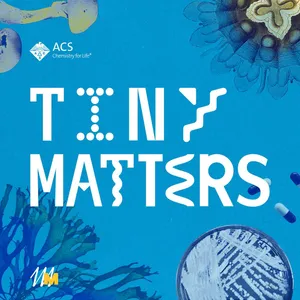
Science shapes every facet of our lives, but so much of its influence is overlooked or buried in the past. Tiny Matters is an award-winning science podcast about the small science of big things. From the microbes behind deadly diseases to the molecules informing our search for extraterrestrial life, hosts and former scientists Sam Jones and Deboki Chakravarti embrace the awe and messiness of science and its significance both today and in the past, asking questions like, "how was IVF invented?," "what do glaciers tell us about Earth’s ancient past?," and "why is smallpox the only human infectious disease we’ve eradicated?"
Latest Episodes
The most recent episodes — sign up to get AI-powered summaries of each one.
- 4 days ago37 min
Biofilms: The sticky, slimy communities behind some of medicine's toughest infections
Biofilms are everywhere: your teeth, your kitchen sponge, and even medical implants. Scientists are uncovering how these highly organized microbial communities protect bacteria from antibiotics and the immune system, and how understanding their hidden lives could help us fight some of the scariest infections, particularly those that disproportionately impact people with cystic fibrosis.Learn more about CALM here.Check out Wow If True wherever you listen to podcasts!A transcript and references for this episode can be found at acs.org/tinymatters.See Privacy Policy at https://art19.com/privacy and California Privacy Notice at https://art19.com/privacy#do-not-sell-my-info.
- 1 weeks ago23 min
[BONUS] ‘Drinking Grandma,’ digital cadavers and debunking a grave robbing myth: Tiny Show and Tell Us #55
In this episode of Tiny Show and Tell Us, we explore the fascinating history of embalming, from ancient mummies to arsenic-laced funeral practices (that weren’t all that long ago!). Then we chat about cadaver dissection, the importance of Leonardo da Vinci's anatomical drawings, and whether virtual reality could someday replace anatomy labs. Plus, what's the real story behind those creepy iron cages found above burial plots in old cemeteries?Learn more about CALM here.We need your stories — they're what make these bonus episodes possible! Write in to tinymatters@acs.org or fill out this form with your favorite science fact or science news story for a chance to be featured.A transcript and references for this episode can be found at acs.org/tinymatters.See Privacy Policy at https://art19.com/privacy and California Privacy Notice at https://art19.com/privacy#do-not-sell-my-info.
- 2 weeks ago1h 6m
The Turin Shroud: American Medieval x Tiny Matters crossover episode
In this special bonus episode, we join American Medieval with host Matthew Gabriele, a professor of medieval studies and who knows about a LOT of history that we don’t. We're there to chat with Matt about some new science research surrounding the Turin Shroud — a cloth that many Christians believe was used to wrap Jesus after he was killed. The debates over this artifact are fascinating and the science only adds to it! So if you like science, you like science history, you like a little controversy, you’re going to love this episode. American Medieval is a podcast about the Middle Ages, but with an American twist. Each week, Professor Matthew Gabriele is joined by expert guests to explore either some fascinating part of the medieval world, or some way Americans have used this period to help them understand themselves.Matthew Gabriele is a professor of Medieval History and an elected Fellow of the Royal Historical Society (UK). In addition to hosting the podcast "American Medieval," he’s the co-author of the books The Bright Ages: A New History of Medieval Europe (Harper Books, 2021), and Oathbreakers: The War of Brothers that Shattered an Empire and Made Medieval Europe (Harper Books, 2024). His new book, Violence: A Christian History, will be out with WW Norton in late 2027/ early 2028.See Privacy Policy at https://art19.com/privacy and California Privacy Notice at https://art19.com/privacy#do-not-sell-my-info.
- 2 weeks ago37 min
Foraminifera: The one-celled predators that shaped our planet (and kept the receipts)
Single-celled marine organisms called foraminifera may be microscopic, but they've had a massive impact on life on Earth. They also leave behind intricate shells that have become part of a fossil record stretching back more than 500 million years. Today, they're one of the most powerful tools scientists have for reconstructing Earth's past climates, helping us put the current (alarming) state of our warming planet into context.Check out Pale Blue pod here or wherever you listen to podcasts!A transcript and references for this episode can be found at acs.org/tinymatters.See Privacy Policy at https://art19.com/privacy and California Privacy Notice at https://art19.com/privacy#do-not-sell-my-info.
- 3 weeks ago25 min
[BONUS] Dangerously tiny frequencies, endometriosis tests, and cookies made from ... plastic?: Tiny Show and Tell Us #53
In this episode of Tiny Show and Tell Us, we discuss new blood tests and research into blood biomarkers that could make diagnosing endometriosis faster and less invasive. Next, we unpack subsynchronous resonance, a phenomenon that can damage power infrastructure, and is gaining new attention with so many AI data centers being built across the country. Then we hear from guest Emily Schneider who shares some delicious (maybe? You be the judge!) new research where scientists have engineered yeast to convert plastic waste and agricultural leftovers into cookies.We need your stories — they're what make these bonus episodes possible! Write in to tinymatters@acs.org or fill out this form with your favorite science fact or science news story for a chance to be featured.A transcript and references for this episode can be found at acs.org/tinymatters.See Privacy Policy at https://art19.com/privacy and California Privacy Notice at https://art19.com/privacy#do-not-sell-my-info.
- Aug 19, 202636 min
Giant viruses: How these amoeba-infecting behemoths are rewriting the rules of virology
Scientists spent decades searching for viruses by filtering out anything too large to be one. That strategy seemed to work well... until it didn't. When researchers discovered a microbe living inside an amoeba that looked like a bacterium but behaved like something else entirely, they uncovered a hidden world of giant viruses with massive genomes, unusual genes, and even their own viral parasites. In this episode, we dive into the discoveries that forced scientists to rethink what viruses are, how they evolve, and whether the rules historically used to define them still hold up.Check out Dreaming Against the Machine here or wherever you listen to podcasts!A transcript and references for this episode can be found at acs.org/tinymatters.See Privacy Policy at https://art19.com/privacy and California Privacy Notice at https://art19.com/privacy#do-not-sell-my-info.
- Aug 12, 202630 min
[BONUS] Fairy tale evolution and the 400(ish) year old elusive Greenland shark: Tiny Show and Tell Us #53
In this episode of Tiny Show and Tell Us, we explore how scientists are using evolutionary methods to reconstruct the history of folktales like Little Red Riding Hood, Beauty and the Beast, and Jack and the Beanstalk. Then guest Matt Gabriele, professor of medieval studies and host of the podcast American Medieval, shares his fascination with Greenland sharks, leading us into the science of radiocarbon dating, longevity genetics, and the ongoing debate over whether these elusive deep-sea predators truly live for 400 years or more.We need your stories — they're what make these bonus episodes possible! Write in to tinymatters@acs.org or fill out this form with your favorite science fact or science news story for a chance to be featured.A transcript and references for this episode can be found at acs.org/tinymatters.See Privacy Policy at https://art19.com/privacy and California Privacy Notice at https://art19.com/privacy#do-not-sell-my-info.
- Aug 5, 202635 min
From cow’s milk to blood banks: The surprising evolution of blood transfusions
Before modern blood transfusions, doctors tried some odd alternatives, including cow's milk. In this episode, we trace the fascinating history of blood transfusions, from risky animal experiments and failed milk injections to the discovery of blood types and disease screening. You'll hear how blood transfusions became one of medicine's safest procedures, why researchers are still debating exactly when patients need them, and what innovations could make blood easier to store, transport, and use in emergency situations including the military battlefield.Check out Dreaming Against the Machine here or wherever you listen to podcasts!A transcript and references for this episode can be found at acs.org/tinymatters.See Privacy Policy at https://art19.com/privacy and California Privacy Notice at https://art19.com/privacy#do-not-sell-my-info.
Get Tiny Matters summaries in your inbox
Free AI-powered daily recaps. Key takeaways, quotes, and mentions — in a 5-minute read.
Get Free Summaries →Free forever for up to 3 podcasts. No credit card required.
You Might Also Like
Listeners also like.
The Weirdest Thing I Learned This Week
Three science journalists share bizarre and little-known facts they’ve recently discovered.

The World, the Universe and Us
Explores big scientific questions about life, consciousness, climate, and the cosmos with expert scientists and New Scientist journalists.

Inquiring Minds
Explores the intersection of science and society through critical thinking and in-depth analysis.

Science Magazine Podcast
Weekly episodes covering original scientific research, global science news, and expert commentary.
Nature Podcast
Covers breakthrough research from Nature journal across all scientific fields, with insights from scientists and science journalists.

Science Friday
Explores diverse science and technology topics, from space to microscopic life, with engaging educational stories.
Stuff To Blow Your Mind
Explores the strange edges of science, consciousness, and reality through neuroscience, cosmology, evolution, and emerging technology.
Wild Thing
A narrative podcast exploring how humanity's quest to uncover scientific mysteries reveals deeper truths about ourselves.
Science Quickly
A bite-sized science podcast exploring discoveries with journalists and experts.

Radiolab Podcasts (Radiolab)
WNYC Studios
In Our Time: Science
Discusses scientific principles, theories, and influential figures in the development of science.
Unexpected Elements
Explores hidden scientific connections behind global news and everyday phenomena.
About Tiny Matters
Science shapes every facet of our lives, but so much of its influence is overlooked or buried in the past. Tiny Matters is an award-winning science podcast about the small science of big things. From the microbes behind deadly diseases to the molecules informing our search for extraterrestrial life, hosts and former scientists Sam Jones and Deboki Chakravarti embrace the awe and messiness of science and its significance both today and in the past, asking questions like, "how was IVF invented?," "what do glaciers tell us about Earth’s ancient past?," and "why is smallpox the only human infectious disease we’ve eradicated?"
Customized Recaps
AI-powered recaps with compact key takeaways, quotes, and insights.
Straight to Your Inbox
Get key takeaways from Tiny Matters in a 5-minute read.
Save Hours Every Week
Stay current on your favorite podcasts without falling behind.
Frequently Asked Questions
What is Podzilla's Tiny Matters daily summary?
It's a free AI-powered email that summarizes new episodes of Tiny Matters as soon as they're published. You get the key takeaways, notable quotes, and links & mentions — all in a quick read.
How does the Tiny Matters podcast summary work?
When a new episode drops, our AI transcribes and analyzes it, then generates a personalized summary tailored to your interests and profession. It's delivered to your inbox every morning.
Is this an official Tiny Matters product?
No. Podzilla is an independent service that summarizes publicly available podcast content. We're not affiliated with or endorsed by Multitude.
Can I get summaries of other podcasts too?
Absolutely! The free plan covers up to 3 podcasts. Upgrade to Pro for 15, or Premium for 50. Browse our full catalog at /podcasts.
How often does Tiny Matters release new episodes?
Tiny Matters publishes weekly. Our AI generates a summary within hours of each new episode.
What topics does Tiny Matters cover?
Tiny Matters covers topics including Science. Our AI identifies the specific themes in each episode and highlights what matters most to you.
Start getting Tiny Matters summaries tomorrow morning.
Free forever for up to 3 podcasts. No credit card required.
Free forever for up to 3 podcasts. No credit card required.