Free Daily Podcast Summary
The Philanthropists: Daily Summaries Delivered
by Quanda Allen & Meredith Hanley
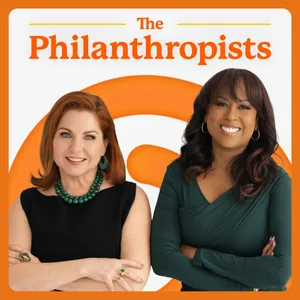
The Philanthropists is a weekly video podcast that shares deeply personal stories of extraordinary, human-centered philanthropy. The show uplifts both notable philanthropists and everyday givers—mentors, artists, founders, teachers, and neighbors—whose acts of generosity create real, measurable change in people's lives.
Latest Episodes
The most recent episodes — sign up to get AI-powered summaries of each one.
- 5 days ago52 min
Omidyar Network’s Former CEO Mike Kubzansky: AI Is Rewriting Philanthropy. What Happens Next?
Google earned about as much profit in 2024 as all of U.S. institutional philanthropy gives away in a year. Now AI is coming for every issue philanthropy cares about.Mike Kubzansky led Omidyar Network for more than eight years. He tells us why the sector is underestimating AI. He explains why only 9% of investors in one survey say they understand the AI risk in their portfolios. And he makes the case for why “we have 108,000 philanthropies in this country; we don’t need 109.”We also get into:How Omidyar Network invested in Anthropic and lobbied for AI bills in CaliforniaHis “five cities” theory of social changeWhy chasing the tax deduction misses the pointWhat he’s building now at Andaris AI00:00 Introduction00:52 From politics to business school04:47 Thinking in systems07:29 What microcredit taught him10:47 Joining Omidyar Network12:47 Investing in Anthropic and lobbying on AI17:15 The five cities of social change23:36 What philanthropy is missing about AI28:17 What worries him most31:19 Is AI a distraction from older fights?35:01 Advice for new philanthropists39:12 The tool philanthropy is afraid to use41:10 Building Andaris AI46:04 Our signature question48:50 Lightning round50:53 Where to start with your own givingListen on Apple Podcasts, Spotify, and thephilanthropistspodcast.orgWrite to us: hello@thephilanthropistspodcast.org#Philanthropy#ArtificialIntelligence#AIPolicy#ImpactInvesting#ThePhilanthropistsPodcast
- 3 weeks ago46 min
Should Philanthropy Stay Out of Politics? | One More Thing with Quanda Allen and Meredith Hanley
Should philanthropy stay out of politics? Quanda Allen and Meredith Hanley revisit their conversation with MTV co-founder and former Viacom CEO Tom Freston to look at how philanthropy, public policy, and advocacy work together.The question gets more complicated once you separate partisan politics from policy: the budgets, laws, and government decisions that determine whether millions of people can get healthcare, education, economic opportunity, and basic services.Tom’s global work spans hospitals, schools, media in Afghanistan, and nearly two decades of leadership with the ONE Campaign. It’s a clear example of direct giving and policy advocacy working side by side.In this 1 More Thing episode, we ask when charitable giving is enough, when policy becomes essential, and why some of philanthropy’s most important impact happens far from a ribbon cutting or a name on a building.This isn’t a conversation about partisan allegiance. It’s about whether donors who want lasting change can afford to ignore the public decisions shaping the problems they hope to solve.📖 Tom’s memoir: Unplugged: Adventures from MTV to Timbuktu🎧 Full interview with Tom Freston: https://www.youtube.com/watch?v=NuHjBpG_M_w🌐 Show notes and resources: https://thephilanthropistspodcast.org✉️ hello@thephilanthropistspodcast.orgCHAPTERS00:00 Tom Freston on giving with curiosity01:04 Setting the stage: Tom’s story04:42 Philanthropy as refuge and meaning07:29 Travel, proximity, and the gap year11:07 Afghanistan and the people behind the work16:09 Fired from Viacom: designing a second act20:19 Purpose, identity, and life after a title23:38 Five steps for a second-act transition26:52 Time and talent as philanthropic capital30:05 The ONE Campaign and PEPFAR31:36 Should philanthropy engage policy?36:09 Does scale distort how we see impact?38:36 Humility vs. imposter syndrome40:29 How to act on your own curiosity43:15 What stayed with usSubscribe for honest conversations about giving with purpose.#Philanthropy #TomFreston #ONECampaign
- Oct 7, 20261h 2m
MTV Co-Founder Tom Freston: What the World Taught Him About Giving
MTV co-founder and former Viacom CEO Tom Freston on getting fired twice, rebuilding media in Afghanistan, and nearly two decades chairing the ONE Campaign.Before MTV, Tom was running a clothing import business between New Delhi and Kabul. It made millions, then disappeared almost overnight when the Soviets invaded Afghanistan and new US quotas cut off imports from India. He was 33, back in New York, and in debt.What came next: helping build MTV into a network in 75 countries, running Viacom, making an offer to buy Facebook in 2005 (Zuckerberg said no), being blocked from buying YouTube, and getting fired over MySpace.Then the third chapter. An orphanage, hospital, clinic, and school in Burma. Twelve years helping build Afghanistan's leading independent TV network. And after the Taliban returned, turning that network into a classroom for girls shut out of school, with nearly 2,000 episodes of biology, math, and more.We talk with Tom about why injustice moves people more than pity, why his biggest philanthropic risk has been his time, and why he thinks you should give to the things you're most curious about.LINKS FROM THIS EPISODETom's memoir, Unplugged: Adventures from MTV to TimbuktuBookshop: https://bookshop.org/book/9781668089798Apple Books: https://books.apple.com/us/book/unplugged/id6741072419ONE Campaign: https://www.one.orgMOBY Group (Afghan media company behind TOLO TV): https://mobygroup.comNew America: https://www.newamerica.orgCHAPTERS0:00 Introducing Tom Freston1:43 Quitting advertising for Kabul and New Delhi3:00 Building a clothing business between India and Afghanistan5:12 Losing everything at 336:34 "Travel's the greatest classroom in the world"9:06 "I Want My MTV": how MTV broke through12:47 Taking MTV global14:20 Running MTV Networks and Viacom19:02 Trying to buy Facebook and YouTube22:00 MySpace, Sumner Redstone, and getting fired24:13 The chainsaw and the walk out of 1515 Broadway27:19 Reinvention: Burma, Oprah, and Bono29:14 Joining the ONE Campaign32:06 Building Afghanistan's leading TV network36:48 Teaching girls on TV under the Taliban41:40 Finding purpose in a third chapter44:13 What moves people from awareness to action51:57 Board leadership at ONE56:59 Imposter syndrome58:01 "My main risk has been in my time"1:01:47 Foreign aid and soft power1:05:41 Three Questions and a TipHosted by Quanda Allen and Meredith Hanley.More episodes: thephilanthropistspodcast.orgApple Podcasts:Spotify:#ThePhilanthropists #TomFreston #Philanthropy#MTV #ONECampaign #Afghanistan #GirlsEducation #ForeignAid
- Oct 1, 202639 min
Opening the Door Isn’t Enough | One More Thing with Quanda and Meredith
What is the difference between giving someone access—and making them feel that they truly belong?In this 1 More Thing conversation, Quanda Allen and Meredith Hanley reflect on their interview with museum philanthropist Amy Meadows and examine a central question facing arts organizations, museums, nonprofits, and donors:Is opening the door actually enough?Free museum admission may remove one barrier, but transportation, confidence, language, familiarity, staffing, education, cultural relevance, and repeated engagement can determine whether people ever develop a meaningful relationship with an institution.Quanda and Meredith explore Amy’s approach to museum philanthropy, why proximity can make donors better listeners, the role of artists and frontline staff in shaping philanthropic decisions, and how donors can balance long-term support with the flexibility organizations need to adapt.They also discuss trust-based philanthropy and a practical principle for donors:Don’t fund only the invitation. Fund the relationship that follows it.thephilanthropistspodcast.org
- Sep 24, 202658 min
Amy Frenkil Meadows: Why a $10 Million Museum Gift Was Never Really About the Money
What makes someone give more than $10 million to a museum?For Amy Meadows, the answer begins decades before the gift—with childhood art classes, repeated visits to museums, and the experience of learning that cultural institutions could feel like places where she belonged.Amy joins Quanda Allen and Meredith Hanley to discuss her lifelong relationship with art and museums and the more than $10 million promised gift she and her husband Marc made to establish an education endowment at the Baltimore Museum of Art.Their gift supports far more than museum admission. It helps fund transportation, family access, museum educators, apprenticeships, adult learning, and the infrastructure that allows people to build lasting relationships with art.The conversation also explores museum philanthropy, donor trust, board service, artists’ voices, the Obama portraits, Congressman Elijah Cummings, and what Amy learned through decades working directly with museum visitors and staff.Ultimately, this is a story about the difference between access and belonging—and why the real impact of a major gift cannot always be measured by its dollar amount.Links:Amy Sherald: American Sublime Videohttps://artbma.org/press-release/bma-announces-transformational-10-million-promised-gift-from-amy-and-marc-meadows-to-establish-education-endowment/thephilanthropistspodcast.org
- Sep 17, 202651 min
Are We Making Philanthropy Too Complicated? | One More Thing with Quanda and Meredith
Does effective philanthropy really require more applications, more reports, more committees, and more bureaucracy?In this 1 More Thing episode, Quanda Allen and Meredith Hanley use Craig Newmark’s unusually simple approach to giving to ask a bigger question:Are donors making philanthropy more complicated than it needs to be?They explore trust-based philanthropy, donor due diligence, nonprofit reporting burdens, philanthropic intermediaries, governance, accountability, succession planning, and the difference between simplifying the process and simplifying the thinking.Craig’s approach suggests that donors can conduct serious diligence without forcing nonprofits to repeatedly prove themselves through unnecessary paperwork—and that trusting strong leaders can be compatible with rigorous accountability.Quanda and Meredith also discuss why philanthropy should leave room for joy, personality, and the causes people simply love.For donors, foundations, nonprofit leaders, wealth advisors, family offices, and anyone interested in making charitable giving more effective, this episode challenges some deeply embedded assumptions about what “serious philanthropy” is supposed to look like.thephilanthropistspodcast.org
- Sep 8, 202647 min
Craigslist Founder Craig Newmark: Why He’s Giving Away His Fortune
Craigslist founder Craig Newmark built one of the internet’s most recognizable companies. Now he is directing much of his wealth toward philanthropy.In this conversation with Quanda Allen and Meredith Hanley, Craig talks about his approach to charitable giving, cybersecurity, scam prevention, trustworthy journalism, veterans and military families, women and girls in technology—and even pigeon rescue.But beneath the range of causes is a remarkably consistent philosophy: find capable people, do your homework, give them meaningful resources, and try not to make their work harder.Craig also talks candidly about charitable gifts that did not work as expected, why prestigious organizations are not automatically effective ones, and why donors should be willing to change course when evidence tells them something is not working.The conversation explores wealth, the Giving Pledge, philanthropic responsibility, trust-based giving, simplicity, due diligence, and the question every donor eventually confronts:How much is enough?Subscribe for conversations about philanthropy, charitable giving, wealth, social impact, cybersecurity, journalism, and purposeful generosity.https://craignewmarkphilanthropies.org/thephilanthropistspodcast.org
- Sep 1, 202630 min
The Check Is the Easy Part | One More Thing with Quanda and Meredith
Writing a charitable check takes minutes. Becoming deeply engaged with a cause can take years.In this 1 More Thing conversation, Quanda Allen and Meredith Hanley unpack their interview with Charles DeSantis and ask what really happens between a donor’s good intentions and meaningful impact.They explore Charles’s Believe. Verify. Engage. framework, why relationships matter in philanthropy, how board service can deepen a donor’s understanding of an organization, and why bringing other people to the table can sometimes be as valuable as the money you contribute.Quanda and Meredith also examine the “transaction trap”—what happens when giving is reduced to an ask followed by a check—and why donors can end up feeling disconnected from causes they genuinely care about.The central question: What if the check is actually the easiest part of giving well?For anyone interested in strategic philanthropy, board service, nonprofit leadership, charitable giving, family philanthropy, or simply becoming more intentional about generosity, this conversation offers a practical place to begin.thephilanthropistspodcast.org
Get The Philanthropists summaries in your inbox
Free AI-powered daily recaps. Key takeaways, quotes, and mentions — in a 5-minute read.
Get Free Summaries →Free forever for up to 3 podcasts. No credit card required.
You Might Also Like
Listeners also like.

Around with Randall
A concise weekly discussion on improving nonprofit effectiveness through practical philanthropy strategies.

Major Gifts Fundraiser Podcast-Hosted by Clark Vandeventer
Practical strategies and insights for development professionals to raise major gifts and build sustainable donor relationships.
The Money Mondays
Business discussions on investments, side hustles, and entrepreneurship with experts, athletes, and influencers in personal settings.
The TED Interview
Chris Anderson interviews leading thinkers and creators about their work and ideas, exploring themes like generosity and human connection.
Business for Good Podcast
Entrepreneurs and business leaders discuss building companies that solve global problems while generating profit.
Founder's Story
Raw conversations with entrepreneurs about the struggles, doubts, and pivotal moments behind their ventures.
FundraisingAI
Examines the ethical and practical use of AI in fundraising, including trends, data privacy, and social impact.
Exceptionally Good: Leaders for a Better World
Ryan Maxwell
Nonprofit Everything
A bi-weekly Q&A podcast covering topics related to nonprofits.
Community Catalysts
Leaders from local government and nonprofits share hard-won lessons and practical strategies for building stronger communities.
Nonprofit Hub Radio
Interviews with nonprofit leaders and experts offering practical insights to help organizations improve and grow.
My Legacy Podcast
Conversations with influential figures and their closest allies explore the personal stories behind lasting legacies.
About The Philanthropists
The Philanthropists is a weekly video podcast that shares deeply personal stories of extraordinary, human-centered philanthropy. The show uplifts both notable philanthropists and everyday givers—mentors, artists, founders, teachers, and neighbors—whose acts of generosity create real, measurable change in people's lives.
Customized Recaps
AI-powered recaps with compact key takeaways, quotes, and insights.
Straight to Your Inbox
Get key takeaways from The Philanthropists in a 5-minute read.
Save Hours Every Week
Stay current on your favorite podcasts without falling behind.
Frequently Asked Questions
What is Podzilla's The Philanthropists daily summary?
It's a free AI-powered email that summarizes new episodes of The Philanthropists as soon as they're published. You get the key takeaways, notable quotes, and links & mentions — all in a quick read.
How does the The Philanthropists podcast summary work?
When a new episode drops, our AI transcribes and analyzes it, then generates a personalized summary tailored to your interests and profession. It's delivered to your inbox every morning.
Is this an official The Philanthropists product?
No. Podzilla is an independent service that summarizes publicly available podcast content. We're not affiliated with or endorsed by Quanda Allen & Meredith Hanley.
Can I get summaries of other podcasts too?
Absolutely! The free plan covers up to 3 podcasts, any in the catalog. Basic raises that to 15, Pro to 40 and Max to 100. Browse our full catalog at /podcasts.
How often does The Philanthropists release new episodes?
The Philanthropists publishes weekly. Our AI generates a summary within hours of each new episode.
What topics does The Philanthropists cover?
The Philanthropists covers topics including Business, Non-Profit. Our AI identifies the specific themes in each episode and highlights what matters most to you.
Start getting The Philanthropists summaries tomorrow morning.
Free forever for up to 3 podcasts. No credit card required.
Free forever for up to 3 podcasts. No credit card required.