Free Daily Podcast Summary
The Method to Our Madness: Daily Summaries Delivered
by staceymerola
The Method to Our Madness is a podcast that explores the art, ethics, and impact of research and evaluation. Hosted by award-winning evaluator and musician Dr. Stacey Merola, and William Pate, who together have close to 50 years of evaluation experience, each episode dives into the stories behind the data. Join our two hosts as they discuss their trials and tribulations as program evaluators: how they engage stakeholders, ask questions, measure change, and translate findings into action. From equity-driven frameworks to creative data storytelling, this show brings together thought leaders, community advocates, and methodologists to rethink what meaningful evidence looks like. Whether you're a seasoned researcher or just curious about how evaluation shapes the world, tune in for insights that are rigorous, resonant, and real.
Latest Episodes
The most recent episodes — sign up to get AI-powered summaries of each one.
- 4 days ago43 min
AI in Qualitative Research: Promise, Pitfalls, and the Human Element
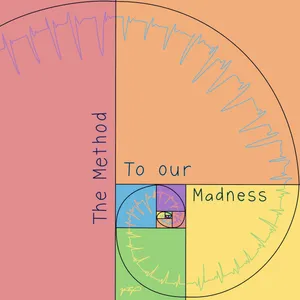
Can AI really handle coding qualitative data, or is it just a shortcut that costs you in the end? In this episode, Stacey and Bill sit down with Dr. Asher Beckwitt, a researcher with 26 years of experience across 5,000 qualitative and mixed-methods studies, to unpack where AI genuinely helps with qualitative data analysis, and where it falls short. Asher walks through choosing compliant, privacy-safe AI tools, why human verification of AI outputs is non-negotiable, and how to document AI use for transparency and IRB compliance (including the often-overlooked step of fully deleting data from AI systems). They also break down the differences between grounded theory, thematic analysis, and phenomenology, and where AI fits (or doesn't) in each. A must-listen for researchers weighing AI tools against methodological rigor in their qualitative research projects. This episode also touches a fish consumption study Asher led for a tribal nation using community-based participatory research methods. This was a separate, non-AI project worth a listen on its own. Dr. Asher Beckwitt can be reached at asherbeckwitt@gmail.com or www.asherconsult.com. A summary of this episode can be found here. The podcast music was written and produced by Stacey Merola. The podcast artwork was created by Zoe Targino.
- 2 weeks ago32 min
Equipment Cut in Half: Lessons in Planning from Systems Engineering
In this episode, Stacey and Bill talk with Joan Wagner about how systems engineering and industrial engineering (IE) work together. The former includes defining and verifying requirements, while the later involves optimizing processes and efficiency. Highlights include: The "Systems Engineering V" model and the importance of setting clear project boundaries Why Lean and Kaizen work best when the people doing the work drive the improvements A story about building stakeholder buy-in with a resistant shop-floor manager Costly planning failures, including a machine built too tall for its doorway Where Six Sigma works well, and where it gets misapplied The ongoing search for better systems-engineering documentation tools Joan's outreach work with ISE Day, bringing IE education to K–12 students Episode notes can be found here. The podcast music was written and produced by Stacey Merola. The podcast artwork was created by Zoe Targino.
- Aug 19, 202650 min
Actionable Evaluation: From Health Data to Policy Recommendations
Focusing on policy recommendations as part of the evaluation is critical because health data without policy recommendations grounded in data creates a dangerous blind spot for policymakers, often leading to well-intentioned regulations that fail on the ground. While quantitative metrics can pinpoint a drop in Medicaid enrollment, for example, they cannot capture the confusing administrative hurdles, conflicting agency rules, or frontline operational friction causing those trends. By integrating targeted focus groups and interviews into the data findings, evaluators can diagnose the actual root causes of systemic failures which can then provide opportunities for strong policy recommendations and policy frameworks. In this episode, we're joined by Nalini Pande, Managing Director at Sappho Health Strategies, to talk about the unique challenges of evaluating healthcare programs and translating results into policy. Drawing on her deep background in Medicaid, Medicare, and ACA policy, Nalini makes the case for weaving policy considerations into an evaluation from day one, rather than adding them on at the end. A summary of this episode can be found here. The music for this podcast was written and produced by Stacey Merola. The artwork was created by Zoe Targino.
- Aug 5, 202638 min
Summer Vibes: Mixed Methods, Moose, and Making Deals
What do mixed methods interrupted time series designs, business development, and moose have in common? More than you might think. In this episode of The Method to Our Madness, we explore the power of mixed methods interrupted time series designs and how they help researchers and evaluators understand change over time. We also share insights from the world of business development, including the challenges and opportunities of building partnerships, pursuing new work, and growing a business. Along the way, we take an unexpected detour into the world of moose, because sometimes the most memorable conversations happen when data, strategy, and wildlife collide. Whether you're interested in research methods, professional growth, or simply enjoy hearing smart people wander off on a tangent, this episode offers practical insights, candid reflections, and a few moose stories you didn't know you needed. Podcast music written and produced by Stacey Merola. Podcast artwork was created by Zoe Targino.
- Jul 23, 202626 min
Knowledge Maps: Seeing the Whole Picture
What if your logic model is too simple to capture how your program actually works? Hosts Dr. Stacey Merola, and Bill Pate sit down with Dr. Bernadette Wright to explore knowledge mapping. A knowledge map is a visual approach that uses circles and arrows to show the interconnected web of causes and effects behind real-world outcomes, instead of forcing everything into a rigid input-output framework. Dr. Wright walks through how knowledge maps are built (often with 20-25+ interconnected concepts), why multiple reviewers matter, and how the process helps teams surface feedback loops, catch oversimplified solutions, and get aligned on what's actually driving results. The conversation also covers popular mapping tools, how the approach compares to traditional logic models, and where generative AI might fit into the future of concept mapping. A must-listen for evaluators, researchers, and program leaders who want a clearer picture of complexity. An example of a knowledge map can be found here. Source: Strategic Knowledge Mapping: The Co-Creation of Useful Knowledge A summary of the episode can be found here. The podcast music was written and produced by Stacey Merola. The podcast artwork was created by Zoe Targino.
- Jul 9, 202634 min
Culturally Responsive Evaluation: Listening Before Measuring
Dr. Stacey Merola and Bill Pate sit down with Dr. Toks Fashola, research professor at American University, to unpack what it really means to do culturally responsive program evaluation. Dr. Fashola breaks down how spurious variables can quietly become confounding ones by using everyday examples like parking tickets in Baltimore and medication adherence in diabetes care and explains why understanding a community's history and context is essential to getting evaluation right. Drawing on her own experience with an after-school program in Baltimore, she makes the case for treating stakeholders as co-designers rather than subjects, and for asking whether disappointing results point to a flawed program rather than a flawed population. The conversation touches on the work of Jean Piaget and Maria Montessori as early models of culturally responsive practice and closes with a bigger idea: that done well, evaluation isn't just a technical exercise — it's a path toward social justice and mutual learning for evaluators and communities alike. Additional notes from this episode can be found here. The podcast music was written and produced by Stacey Merola. The podcast artwork was created by Zoe Targino.
- Jun 25, 202645 min
From Weeks to Minutes: How AI Is Transforming Research and Teaching
What if the most tedious parts of your research workflow could shrink from months to minutes? In this episode, hosts Stacey Merola and William Pate sit down with Ron Wilson, Assistant Graduate Program Director for the GIS program at the University of Maryland Baltimore County, to explore how AI is reshaping the way researchers and educators work. Ron shares how AI went from helping him stress-test research ideas to slashing coding time, generating synthetic datasets, and building classroom visualizations in 20 minutes flat. But it's not all hype — Ron also gets candid about responsible AI use, the importance of prompt engineering, and why treating AI as a tool rather than a revolution is the key to getting real results. Whether you're a data professional, educator, or just AI-curious, this episode is packed with practical insight. Links to additional information For a summary of this episode, check out the notes here. Learn more about the UMBC GIS graduate program here, including their GIS Master of Professional Studies which is a two-year (18 credits) program designed for early-to-mid-career professionals seeking a more foundational knowledge of GI that goes beyond learning the basics of technology or application of analytical tools. For more information about this topic, check out the UMBC Mic’d Up Podcast where they recently released an episode on GIS and AI. The podcast music was written and produced by Stacey Merola. The podcast artwork was created by Zoe Targino.
- Jun 11, 202629 min
The GovCon Stories Project: What Happens When Public Service Jobs Disappear
What does it mean to be “DOGEd”? In this powerful episode of The Method to Our Madness Podcast, hosts Stacey and Bill sit down with sociologist Tara Fannon, Ph.D. to unpack the human impact behind the 2025 federal funding cuts—and the often-overlooked fallout for government contractors. Drawing from her GovCon Stories Project, Tara shares insights from a mixed-methods study of 92 surveyed contractors and in-depth interviews with 20 individuals affected by sudden layoffs. What emerges is a deeply personal look at job loss in a sector once seen as stable: stories of disrupted identities, financial strain, lost healthcare, and the emotional toll of feeling invisible and disposable. This episode goes beyond the headlines to explore: The psychological impact of being laid off from mission-driven work How poor communication and lack of support compounded the crisis Why long-held assumptions about stability in government contracting no longer hold true How contractors are rebuilding—through entrepreneurship, upskilling, and new career paths Despite the challenges, this conversation also highlights resilience. Many impacted professionals remain committed to public-service values while reimagining what equitable and sustainable work could look like in the future. If you care about workforce equity, the future of government contracting, or the human stories behind economic disruption, this episode is a must-listen. A downloadable summary of the episode can be found here: Episode 14 notes If you are interested in finding out more about services provided by Mind the Movement, their website can be found here: Mind the Movement Podcast music written and produced by Stacey Merola. Podcast artwork created by Zoe Targino.
About The Method to Our Madness
The Method to Our Madness is a podcast that explores the art, ethics, and impact of research and evaluation. Hosted by award-winning evaluator and musician Dr. Stacey Merola, and William Pate, who together have close to 50 years of evaluation experience, each episode dives into the stories behind the data. Join our two hosts as they discuss their trials and tribulations as program evaluators: how they engage stakeholders, ask questions, measure change, and translate findings into action. From equity-driven frameworks to creative data storytelling, this show brings together thought leaders, community advocates, and methodologists to rethink what meaningful evidence looks like. Whether you're a seasoned researcher or just curious about how evaluation shapes the world, tune in for insights that are rigorous, resonant, and real.
Customized Recaps
AI-powered recaps with compact key takeaways, quotes, and insights.
Straight to Your Inbox
Get key takeaways from The Method to Our Madness in a 5-minute read.
Save Hours Every Week
Stay current on your favorite podcasts without falling behind.
Frequently Asked Questions
What is Podzilla's The Method to Our Madness daily summary?
It's a free AI-powered email that summarizes new episodes of The Method to Our Madness as soon as they're published. You get the key takeaways, notable quotes, and links & mentions — all in a quick read.
How does the The Method to Our Madness podcast summary work?
When a new episode drops, our AI transcribes and analyzes it, then generates a personalized summary tailored to your interests and profession. It's delivered to your inbox every morning.
Is this an official The Method to Our Madness product?
No. Podzilla is an independent service that summarizes publicly available podcast content. We're not affiliated with or endorsed by staceymerola.
Can I get summaries of other podcasts too?
Absolutely! The free plan covers up to 3 podcasts. Upgrade to Pro for 15, or Premium for 50. Browse our full catalog at /podcasts.
What topics does The Method to Our Madness cover?
The Method to Our Madness covers topics including Science, Social Sciences. Our AI identifies the specific themes in each episode and highlights what matters most to you.
Start getting The Method to Our Madness summaries tomorrow morning.
Free forever for up to 3 podcasts. No credit card required.
Free forever for up to 3 podcasts. No credit card required.