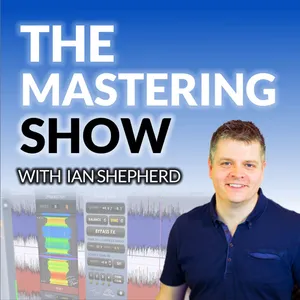
Free Daily Podcast Summary
The Mastering Show: Daily Summaries Delivered
by The Mastering Show Podcast
This is the show where we cover all aspects of mastering. If you're interested in mastering, want to learn how to get better results mastering your own music, or even want to be a mastering engineer, this is the show you want to hear!
Latest Episodes
The most recent episodes — sign up to get AI-powered summaries of each one.
- 2 weeks ago39 min
The Mastering Show #111 - Fix it in the master ?!
I hear this question all the time - would it be better to fix this in the mix, or in the master ?It’s a fascinating question, and you may think you already know my answer - but it may not be that simple !There are actually several things I think are better addressed in the master rather than the mixing stage, and in this episode I dig into exactly what they are, and why I say that.Talking about things like:What I never do on the mix busWhat I always do in the mix bussAnd why it could be risky not toDo mixes need to be perfect ?Choices that are best made at the mastering stageWhat you should never leave for masteringThe questions you should always ask if you’re thinking of fixing something in the masterLinks and more episodes here:www.themasteringshow.com/episode-110Mentioned in this episode:MasteringClick HERE to work with IanLeapwingFind out more about Leapwing's pluginsToolsFor Ian's mastering plugins, click HERE
- Jun 30, 202641 min
The Mastering Show #110 - What makes a REAL mastering engineer ?
I'm seeing several different discussions online about what makes a "real" mastering engineer – and some of them are getting pretty heated !So what really matters the most ? Expertise, experience, or credits ?In this episode I talk about my own opinions and reasoning, talking about:Why credits can be a complete red herring, especially onlineThe problem with credits even if they are reliableHow I got great results with (almost) zero experienceWhen years of experience might not be an advantageThe power (and problems) of trial and errorWhen expertise becomes a super-powerLinks and more episodes here:www.themasteringshow.com/episode-110Mentioned in this episode:Learn to master !Click HERE to see Ian's courses and mastering resourcesLeapwingFind out more about Leapwing's pluginsToolsFor Ian's mastering plugins, click HERE
- May 29, 202645 min
The Mastering Show #109 - Audio repair & fixing faults
Audio repair and restoration has always been a huge part of mastering – and not only for re-mastering vintage material.Even modern recordings can have problems like clicks, thumps, hiss, amp buzz, distortion and many more. Ideally they’d all be fixed in the mix, but sometimes it’s not possible or they get missed – or maybe the best tools for the task aren’t available.In this episode I talk to Mike & Alexey from iZotope about my personal favourite piece of software for this kind of task, and many more - iZotope RX.Version 12 of RX has just been released, with many new features and improvements. We talk about this and much more during the episode including:Why I love RX and have been using it since 2011My favourite featuresSome “secret weapon” strategiesThe toughest challenges for restorationHow using the “wrong” feature can sometimes be helpfulLinks and more episodes here:www.themasteringshow.com/episode-109Mentioned in this episode:MasteringClick HERE to work with IanLearn to master !Click HERE to see Ian's courses and mastering resources
- Apr 29, 202633 min
The Mastering Show #108 - Why I was wrong about Loudness Range
I used to say that the Loudness Range (LRA) measurement wasn't really useful when mastering - but recently I changed my mind. In this episode I explain why, and how loudness range is actually something you might want to pay attention to, as well.Topics include:What is the Loudness Range ?How is it different to Dynamic Range ?What even IS Dynamic Range, anyway ?Why did I say that LRA wasn't helpful ?How I changed my mind, and whyHow LRA could be useful for youLinks and more episodes here:www.themasteringshow.com/episode-108Mentioned in this episode:ToolsFor Ian's mastering plugins, click HERELearn to master !Click HERE to see Ian's courses and mastering resourcesLeapwingFind out more about Leapwing's plugins
- Mar 31, 20261h 8m
The Mastering Show #107 - Mastering for 1-Off Vinyl (and short runs)
More and more people are choosing to get vinyl copies of their music made one at a time, rather than having hundreds of copies pressed at once. Or in very small batches, or allowing fans to order copies on demand.So how does this work, and what does it mean ? How do you get the best quality results, and minimise the risk of getting something back that you're not happy with ?Mastering for vinyl is a whole different ball-game, as I discussed in detail with Scott Hull in Episode 94. So in this show, Joe Caithness and I dig into the topic in detail, discussing:What is a "lathe cut" or "dubplate"How are they made, and how are they different to traditionally pressed vinyl ?Do you always need to have your music mastered by a dedicated vinyl cutting engineer ?How do you get the specs for the audio you should supply ? AndWhy this can be trickier than it soundsDo you really need to mono the bass on vinyl ? And what about phase ?Links and more episodes here:www.themasteringshow.com/episode-107Mentioned in this episode:MasteringClick HERE to work with IanToolsFor Ian's mastering plugins, click HERELeapwingFind out more about Leapwing's plugins
- Feb 28, 202634 min
The Mastering Show #106 - Are dynamics dead ?!
I see it every day: “The Loudness Wars are over - loud won. Get over it”And it’s easy to see why. The average mainstream release hits -8 LUFS integrated or more; club releases regularly hit -6 or even -4 LUFS and are peaking well above zero; every other post you see on social media is about a new limiter or clipping strategy…As the creator of Dynamic Range Day and Loudness Penalty, I should probably just give up and get my hat, right ?Maybe….But maybe not.In this episode I dig into the evidence in 2026, and try to decide whether dynamics really are dead or not, looking at:The LUFS of the biggest recent releasesWhy no-one hears itAre mixes built too loud to be dynamic ?Why music fans don’t care (which could be good news) - and who doesWhat do we do about it ?Reasons to be optimistic about dynamics in 2026Links and more episodes here:www.themasteringshow.com/episode-106Mentioned in this episode:MasteringClick HERE to work with IanLeapwingFind out more about Leapwing's pluginsLearn to master !Click HERE to see Ian's courses and mastering resources
- Jan 31, 202627 min
The Mastering Show #105 - Loudness at the Grammys: is there REALLY a secret sauce ?
It was the Grammys this week - you can't have missed it !And somewhere along the way I saw an article by Ian Vargo assessing the loudness and dynamics of the nominees for Best Song.In this episode I talk about what he discovered, and what my reaction is – and along the way, I talk about:The highest (and lowest !) LUFS measurements of the Best Song nomineesHow I feel about thatWhat these songs sound like with more dynamicsWhat difference does it make ?Is loudness really "part of the aesthetic" ?And what really does make a difference ?Links and more episodes here:www.themasteringshow.com/episode-105Mentioned in this episode:MasteringClick HERE to work with IanLeapwingFind out more about Leapwing's pluginsToolsFor Ian's mastering plugins, click HERE
- Dec 23, 202547 min
The Mastering Show #104 - Mastering for Sync ? What, Why and How
Getting your music "synced" for licensing in TV, movies or ads can be an amazing opportunity for indie musicians to make money and gain exposure. But is it just a pipe dream, and is mastering a necessary part of the process ?Chris SD from Sync Songwriter is an expert in this topic – just in the last year they've had artists get songs placed in the soundtrack for the Oscar-winning movie "Anora", for example! And this episode I talk to him about this whole topic, including:What sync licensing isWhy song supervisors might be interested in hearing your musicHow people normally submit their music for possible sync opportunitiesA better way that you can connect with them to improve the odds of getting your music taken on for use in film, TV and advertsWhich types of songs and artists are most likely to be taken on andThe role mastering and audio production play in this processAnd lastly we talk about the free Sync Songwriter Music Supervisor Panel that he's put together to help you find out more about all this - which is taking place this January. For more details, click here – if you decide to give it a try, you'll be helping support The Mastering Show at the same time.Mentioned in this episode:Learn to master !Click HERE to see Ian's courses and mastering resourcesMasteringClick HERE to work with IanLeapwingFind out more about Leapwing's plugins
Get The Mastering Show summaries in your inbox
Free AI-powered daily recaps. Key takeaways, quotes, and mentions — in a 5-minute read.
Get Free Summaries →Free forever for up to 3 podcasts. No credit card required.
You Might Also Like
Listeners also like.
Podmastery: podcasting insights and advice for indie creators
Practical podcasting advice for independent creators aiming to grow their audience and improve production.

The SonicScoop Podcast | Music Production, Audio Engineering, and The Business of Music
Explores music production, audio engineering, and creative business practices through interviews and tutorials.
Mastering Nutrition
A nutrition scientist discusses mitochondrial health and personalized metabolism using genetics, biochemistry, and research.

Learn Jazz Standards Podcast
A jazz musician discusses improvisation, theory, and practice with guests and answers listener questions about playing jazz.

Master Plan
A journalist investigates a 50-year conspiracy by wealthy elites to undermine U.S. democracy and legalize political corruption.
Manager Tools
Provides practical management techniques and leadership strategies for professionals seeking to improve their performance.

The Honest Designers Show
A candid look at building a successful creative career, covering client work, personal style, branding, and fulfillment in design.

Twenty Thousand Hertz
Explores the hidden stories and science behind iconic sounds, from movie effects to jingles and animal communication.

Everyone Hates Marketers | No-BS Marketing & Brand Strategy Podcast
A marketing podcast offering practical insights on branding, strategy, and customer research from industry professionals.

Music Matters with Darrell Craig Harris
In-depth interviews with major music artists, producers, and industry leaders shaping the global music landscape.

Growth Triggers: Content Marketing & AI
A marketing expert shares proven podcasting strategies for growing audience reach, generating leads, and building authority in any niche.

The $100 MBA Show
A practical guide to starting and growing a business with minimal resources, covering idea validation, marketing, sales, and reinvestment.
About The Mastering Show
This is the show where we cover all aspects of mastering. If you're interested in mastering, want to learn how to get better results mastering your own music, or even want to be a mastering engineer, this is the show you want to hear!
Customized Recaps
AI-powered recaps with compact key takeaways, quotes, and insights.
Straight to Your Inbox
Get key takeaways from The Mastering Show in a 5-minute read.
Save Hours Every Week
Stay current on your favorite podcasts without falling behind.
Frequently Asked Questions
What is Podzilla's The Mastering Show daily summary?
It's a free AI-powered email that summarizes new episodes of The Mastering Show as soon as they're published. You get the key takeaways, notable quotes, and links & mentions — all in a quick read.
How does the The Mastering Show podcast summary work?
When a new episode drops, our AI transcribes and analyzes it, then generates a personalized summary tailored to your interests and profession. It's delivered to your inbox every morning.
Is this an official The Mastering Show product?
No. Podzilla is an independent service that summarizes publicly available podcast content. We're not affiliated with or endorsed by The Mastering Show Podcast.
Can I get summaries of other podcasts too?
Absolutely! The free plan covers up to 3 podcasts. Upgrade to Pro for 15, or Premium for 50. Browse our full catalog at /podcasts.
How often does The Mastering Show release new episodes?
The Mastering Show publishes monthly. Our AI generates a summary within hours of each new episode.
What topics does The Mastering Show cover?
The Mastering Show covers topics including Music, Education, Commentary. Our AI identifies the specific themes in each episode and highlights what matters most to you.
Start getting The Mastering Show summaries tomorrow morning.
Free forever for up to 3 podcasts. No credit card required.
Free forever for up to 3 podcasts. No credit card required.