Free Daily Podcast Summary
The Hybrid Lab with Dr. Alyssa Olenick: Daily Summaries Delivered
by Dr. Alyssa Olenick
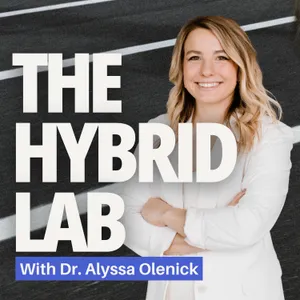
Welcome to The Hybrid Lab with Dr. Alyssa Olenick, Ph.D. in Exercise Physiology, 17x Ultrarunner, and hybrid athlete. This podcast is for hybrid fitness lovers, hyrox crushers, road and trail runners who want to push their limits with science-backed training. Alyssa merges her expertise in exercise, metabolism, female physiology, and endurance sports to provide you with the tools to optimize strength, stamina, and recovery. If you’re ready to balance running and strength training to crush your goals, tune in for actionable strategies and expert advice to train smarter and live stronger.
Latest Episodes
The most recent episodes — sign up to get AI-powered summaries of each one.
- 1 weeks ago13 min
EP 124: How to Get into Trail Running
Thinking about trying trail running?Whether you're a road runner looking to transition or just curious about running on trails, this video breaks down exactly how to get started—without overcomplicating it.→ This video is a podcast version of a full YouTube video! Watch it here on Spotify (video edition) or YouTube: https://youtu.be/fYB9wu6XNlAGet $20 off your first month with code PODCAST:→ https://www.thelyssmethod.com/ Trail running is different… and that’s the point.In this video, I cover:• How to transition from road running to trails• Why trail running feels slower (and why that’s normal)• The biggest mistakes beginners make• Why you don’t need special gear to start• How to adjust your training (time vs miles)• How to run on uneven terrain safely• When to walk vs run on trails• How strength training improves trail performance• Tips for downhill and uphill runningOne of the biggest mindset shifts?Stop focusing on pace—and start focusing on effort.Trail running is about time on feet, adaptability, and learning how to move efficiently over different terrain.And the best part?You don’t need to be “ready” to start.Just get out there.Subscribe for more running, hybrid training, and performance tips.🤘🏻 TRAIN WITH ME HERE → https://www.thelyssmethod.com/programs🤘🏻 FOLLOW ME ON IG → https://www.instagram.com/doclyssfitness/🤘🏻 LEARN MORE + FREE RESOURCES → https://doclyssfitness.com/
- 2 weeks ago10 min
EP 123: 'Perfect Form’ Is a Myth (What to Focus on Instead)
📲 Get my free lifting calculator & RPE guide to start actually training hard enough in the gym → https://bit.ly/4mtleF5Worried your lifting form isn’t perfect? You’re not alone.→ This video is a podcast version of a full YouTube video! Watch it here on Spotify (video edition) or YouTube: https://youtu.be/C_9fTfdkpb4Get $20 off your first month with code PODCAST:→ https://www.thelyssmethod.com/ In this video, Dr. Alyssa Olenick (PhD in Exercise Physiology) breaks down a common fear many beginners face: “What if my form isn’t perfect?” She explains why perfect form is a myth, how form exists on a spectrum, and why it's totally safe to start lifting even if you're still learning.You’ll learn:✔️ Why "good enough" form is often just fine to begin✔️ How to avoid injury while still improving technique✔️ What matters more than chasing perfect form✔️ How to gain confidence and progress safely in the gymThis is the encouragement and science-backed perspective beginners need to feel empowered, not intimidated, when starting their strength journey.Subscribe for weekly tips on lifting, running, and hybrid fitness for every level.🤘🏻 TRAIN WITH ME HERE → https://www.thelyssmethod.com/programs🤘🏻 FOLLOW ME ON IG → https://www.instagram.com/doclyssfitness/🤘🏻 LEARN MORE + FREE RESOURCES → https://doclyssfitness.com/#LiftingForm #BeginnerLifting #GymConfidence #StrengthTraining #DocLyssFitness #FormTips #WomenWhoLift #ExerciseScience #InjuryPrevention #HybridAthlete
- 4 weeks ago20 min
EP 122: Run Faster Without Adding a Single Mile
What if you could run faster, feel more resilient, and build stronger bones without adding a single mile?That's what plyometrics can do, and they're the most underrated tool most runners skip.→ This video is a podcast version of a full YouTube video! Watch it here on Spotify (video edition) or YouTube: https://youtu.be/nLoBynaF-NMGet $20 off your first month with code PODCAST:→ https://www.thelyssmethod.com/ Running is basically a series of small springy motions, so it makes sense that plyometric training carries over directly to how fast and efficient you run. Studies show plyometrics can improve running speed and efficiency by up to 8%, and they do a lot more than that. They build resilience in the tendons and tissues you use to create force, and the impact loads your bones in a way that improves density over time. That makes them a big deal for runners, aging athletes, and women, especially anyone worried about bone stress injuries or thinking about training through menopause.In this video I break down the science, then get practical. How often to program plyometrics (start with one day a week and build to two or three), where to put them in your session (before your lifts, when you're fresh), and roughly how many ground contacts make sense for your level. Then I demo real progressions from beginner to advanced: pogo hops, skips, double leg hops, jump squats, single leg work, skater hops, and depth jumps, using minimal equipment so most of you can do them wherever you train.The key is quality over quantity. Plyometrics aren't about doing a million jumps until you're sweaty. They're about power, reaction, and recovering enough to repeat it. Build up gradually, stop a set when your power drops off, and back off if anything starts to hurt in your feet, shins, or knees.Want plyometrics programmed for you, scaled to your level and paired with your running and strength goals? Take the quiz linked below to find your fit inside The Lyss Method, or email me and my coaches if you're not sure where to start. And tell me in the comments: have you been skipping plyos in your training?🎯 FIND YOUR PROGRAMTake the quiz to find your fit: https://quiz-thelyssmethod.com/🤘🏻 TRAIN WITH ME HERE → https://www.thelyssmethod.com/programs🤘🏻 FOLLOW ME ON IG → https://www.instagram.com/doclyssfitness/🤘🏻 LEARN MORE + FREE RESOURCES → https://doclyssfitness.com/
- Oct 1, 20268 min
EP 121: Why beginner runners CAN'T run in Zone 2 (and why they shouldn't)
Take the Quiz to Find Your Perfect Training Program!https://www.thelyssmethod.com/#quizBeginners Guide to Running!https://youtu.be/twuSS9Uu2p0Beginner runners are constantly told to “stay in Zone 2”… but if you’re new to running, that advice can actually make things harder, more frustrating, and way less sustainable.→ This video is a podcast version of a full YouTube video! Watch it here on Spotify (video edition) or YouTube: https://youtu.be/-w-ASvfHxuwGet $20 off your first month with code PODCAST:→ https://www.thelyssmethod.com/ In this video, I’m breaking down why Zone 2 training is often a terrible strategy for beginners. When you’re just starting out, your Zone 2 is extremely small — which means even a slow jog can push your heart rate into higher zones. That doesn’t mean you’re unfit, broken, or doing something wrong. It simply means your body is adapting and your aerobic system isn’t fully developed yet. That’s normal.Instead of stressing about staying in Zone 2, I’ll show you what beginners should actually focus on:1. Learning the skill of running2. Using RPE instead of obsessing over heart rate3. Using the talk test to guide effort4. Building fitness gradually without panic5. Allowing your aerobic base to develop over timeZone 2 absolutely has its place later in your running journey — but forcing yourself to live there too early can make running stressful, discouraging, and unnecessarily complicated. Let’s make this simpler, more beginner-friendly, and actually enjoyable.If you want support getting started with running in a way that feels realistic, sustainable, and confidence-building, check out my beginner running programs below. You don’t need to be perfect — you just need a smarter approach.🤘🏻 TRAIN WITH ME HERE → https://www.thelyssmethod.com/programs🤘🏻 FOLLOW ME ON IG → https://www.instagram.com/doclyssfitness/🤘🏻 LEARN MORE + FREE RESOURCES → https://doclyssfitness.com/
- Sep 17, 202633 min
EP 120: The Macro Tracking Approach You've Never Heard of Until Now
🔥 Get my free MACRO CALCULATOR here to help figure out how much to start eating to support your training. → https://bit.ly/4d8ZTMJIn this video, Dr. Lyss introduces a simple, game-changing approach to macro tracking - focusing on flexibility and intuition over rigid numbers. Learn how setting macronutrient ranges and minimums (instead of strict targets) can make tracking feel more natural and sustainable!Dr. Lyss also shares key tips on listening to your body’s hunger signals, adjusting tracking during holidays and travel, and how the MacroFactor app can help you stay on track without stressing about perfection. → This video is a podcast version of a full YouTube video! Watch it here on Spotify (video edition) or YouTube: https://youtu.be/Oe1m4N5wR0oGet $20 off your first month with code PODCAST:→ https://www.thelyssmethod.com/ 🤘🏻 TRAIN WITH ME HERE → https://www.thelyssmethod.com/programs🤘🏻 FOLLOW ME ON IG → https://www.instagram.com/doclyssfitness/🤘🏻 LEARN MORE + FREE RESOURCES → https://doclyssfitness.com/Time Stamps:0:00 - Introduction1:50 - My personal approach6:00 - MacroFactor app7:25 - Setting minimums/ranges12:25 - Listening to hunger/body17:25 - Tracking holidays/traveling/dining out23:40 - Ebb and flows of lifestyle nutrition26:00 - History of tracking and maintenance29:00 - Benefit and intention of tracking 32:20 - Wrap up#macrotracking #flexibledieting #IntuitiveEating #MacronutrientRanges #SustainableNutrition #HowToTrackMacros #MacroTrackingTips #DietFlexibility
- Sep 11, 20268 min
EP 119: Beginner’s Guide to Running: The Tips I Wish I Knew Starting Out
Ready to start running but not sure where to begin? In this video, Alyssa shares essential beginner running tips to help you ease into running safely and sustainably. Whether you’re new to fitness or just getting back into it, these tips will set you up for success.→ This video is a podcast version of a full YouTube video! Watch it here on Spotify (video edition) or YouTube: https://youtu.be/twuSS9Uu2p0 Get $20 off your first month with code PODCAST:→ https://www.thelyssmethod.com/ What you’ll learn:• Start with intervals: How to combine running and walking for a smooth start• Slow pace running: Why running at a slower pace is key for beginners• Gradual progress: How to safely increase your running frequency and volume• Walking breaks: Incorporating walking breaks to prevent burnout• Meet yourself where you are: The importance of honoring your fitness level for a more enjoyable experience🔥 Get my free ZONES CALCULATOR & PhD-backed running tips here:→ https://bit.ly/4lYPHKK Alyssa’s beginner-friendly tips will help you build a solid foundation for long-term running success and enjoy the process of getting fitter without the risk of injury.🤘🏻 TRAIN WITH ME HERE → https://www.thelyssmethod.com/programs🤘🏻 FOLLOW LYSS ON IG → https://www.instagram.com/doclyssfitness/🤘🏻 LEARN MORE + FREE RESOURCES → https://doclyssfitness.com/
- Sep 4, 20266 min
EP 118: Why Time on Feet Beats Mileage for Trail Running
Should you train for trail and ultra races by time on feet or by mileage? If you come from road running, this might change how you train completely.→ This video is a podcast version of a full YouTube video! Watch it here on Spotify (video edition) or YouTube: https://youtu.be/Tip41I5R6KQGet $20 off your first month with code PODCAST:→ https://www.thelyssmethod.com/ So many of us get obsessed with hitting specific mileage numbers, especially coming from the road running world. But trail running is slower, the terrain is wildly variable, and not all miles are created equal. You can train for the same distance race twice, spend the same time on feet, and log completely different mileage. That isn't a problem. A lot of the time it's the whole point.In this video I break down why time on feet belongs in your toolbox when training for a trail race or ultramarathon, how I use time caps instead of forcing arbitrary mileage, and real examples from training for my first 100 miler versus my first road marathon. I also get into why your total weekly and full training cycle volume matters more than any single long run, and why this is as much a pep talk about giving yourself grace as it is a training principle.This one is especially for my middle and back of the pack runners. I'm one of you. Adjusting for the fitness you're at doesn't mean you won't cross that finish line just like everyone else. Time on feet, time on feet, time on feet.If you want a program that blends time and mileage and adjusts to your race distance and fitness, check out our trail and ultra programs at The Lyss Method, linked below. Not sure what fits? Take the program quiz or reach out to our coaching team. And tell me in the comments: did this change how you think about mileage?🤘🏻 TRAIN WITH ME HERE → https://www.thelyssmethod.com/programs🤘🏻 FOLLOW ME ON IG → https://www.instagram.com/doclyssfitness/🤘🏻 LEARN MORE + FREE RESOURCES → https://doclyssfitness.com/0:00 Time on Feet vs Mileage0:19 Why Trail Miles Aren't Road Miles1:22 How We Program Time + Mileage for Clients2:59 My 100 Miler vs My Road Marathon4:11 What "Use Time as a Tool" Really Means4:37 It All Counts: Hiking, Vert, Trail, Road5:16 A Pep Talk for Middle & Back of Packers5:39 Give Yourself Grace and Time Cap6:02 Questions + Find Your Program
- Aug 28, 20261 min
EP 117: Does Creatine Timing Actually Matter?
Does it actually matter when you take your creatine each day?Short answer: no.→ This video is a podcast version of a full YouTube video! Watch it here on Spotify (video edition) or YouTube: https://youtu.be/-S2d5hvpaewGet $20 off your first month with code PODCAST:→ https://www.thelyssmethod.com/ Here's what actually matters instead.One of the questions I get most often, right after "is creatine going to hurt me" (it won't), is about timing. Is there a magic time of day you have to take creatine for it to work? The honest answer is that timing doesn't matter nearly as much as consistency. What drives the benefit is keeping your creatine stores saturated, and that comes from taking it every single day, not from hitting a perfect window.There's some early research on taking it right after a workout, but for most of us the real deciding factor is simply whether we remember to take it at all. So take it at breakfast, take it before bed, take it whenever it fits your life. Just take it daily, and if you keep forgetting, set an alarm on your phone.Want the full picture on creatine, including how much to take, why it works, and why it isn't scary? I've linked more of my creatine videos for you.New here? Subscribe for no-nonsense, evidence-based training, running, lifting, and nutrition science. And drop your creatine questions in the comments, I know you've got them.🤘🏻 TRAIN WITH ME HERE → https://www.thelyssmethod.com/programs🤘🏻 FOLLOW ME ON IG → https://www.instagram.com/doclyssfitness/🤘🏻 LEARN MORE + FREE RESOURCES → https://doclyssfitness.com/Creative Playlist: https://www.youtube.com/playlist?list=PLY-mwNEexZjY
Get The Hybrid Lab with Dr. Alyssa Olenick summaries in your inbox
Free AI-powered daily recaps. Key takeaways, quotes, and mentions — in a 5-minute read.
Get Free Summaries →Free forever for up to 3 podcasts. No credit card required.
You Might Also Like
Listeners also like.
Train Smart Run Strong
Victoria and Emily
TRAINED
Discusses fitness and wellness through interviews with athletes, scientists, and health experts on mindset, nutrition, movement, recovery, and sleep.
The Endurance Lab Podcast
Discusses running science with coaches, Olympians, and researchers to improve training understanding and performance.
The Fitness League
Alessandra and Josh Scutnik, Joelle Cavagnaro

The Average Runner
A podcast for runners of all levels that shares training tips, gear reviews, and inspiring stories from everyday athletes.
The RunDot Running Podcast
RunDot Training

The EMPWR Podcast
A fitness entrepreneur shares workout tips, nutrition advice, and personal stories to support holistic wellness and self-empowerment.
The Dr. Hyman Show
Explores root causes of chronic disease and promotes functional medicine, nutrition, and preventive health through expert discussions.

The Hunter Williams Podcast
Explores cutting-edge science in peptides, hormone optimization, and biohacking with experts pushing the limits of human performance.
The Ultramarathon Mindset: Trail Talk
Eric Deeter

Heart Led Wellness
Teaches women to heal their relationship with food through nervous system regulation and somatic practices.
The FastFit Podcast
FastFit
About The Hybrid Lab with Dr. Alyssa Olenick
Welcome to The Hybrid Lab with Dr. Alyssa Olenick, Ph.D. in Exercise Physiology, 17x Ultrarunner, and hybrid athlete. This podcast is for hybrid fitness lovers, hyrox crushers, road and trail runners who want to push their limits with science-backed training. Alyssa merges her expertise in exercise, metabolism, female physiology, and endurance sports to provide you with the tools to optimize strength, stamina, and recovery. If you’re ready to balance running and strength training to crush your goals, tune in for actionable strategies and expert advice to train smarter and live stronger.
Customized Recaps
AI-powered recaps with compact key takeaways, quotes, and insights.
Straight to Your Inbox
Get key takeaways from The Hybrid Lab with Dr. Alyssa Olenick in a 5-minute read.
Save Hours Every Week
Stay current on your favorite podcasts without falling behind.
Frequently Asked Questions
What is Podzilla's The Hybrid Lab with Dr. Alyssa Olenick daily summary?
It's a free AI-powered email that summarizes new episodes of The Hybrid Lab with Dr. Alyssa Olenick as soon as they're published. You get the key takeaways, notable quotes, and links & mentions — all in a quick read.
How does the The Hybrid Lab with Dr. Alyssa Olenick podcast summary work?
When a new episode drops, our AI transcribes and analyzes it, then generates a personalized summary tailored to your interests and profession. It's delivered to your inbox every morning.
Is this an official The Hybrid Lab with Dr. Alyssa Olenick product?
No. Podzilla is an independent service that summarizes publicly available podcast content. We're not affiliated with or endorsed by Dr. Alyssa Olenick.
Can I get summaries of other podcasts too?
Absolutely! The free plan covers up to 3 podcasts, any in the catalog. Basic raises that to 15, Pro to 40 and Max to 100. Browse our full catalog at /podcasts.
How often does The Hybrid Lab with Dr. Alyssa Olenick release new episodes?
The Hybrid Lab with Dr. Alyssa Olenick publishes weekly. Our AI generates a summary within hours of each new episode.
What topics does The Hybrid Lab with Dr. Alyssa Olenick cover?
The Hybrid Lab with Dr. Alyssa Olenick covers topics including Fitness, Health & Fitness. Our AI identifies the specific themes in each episode and highlights what matters most to you.
Start getting The Hybrid Lab with Dr. Alyssa Olenick summaries tomorrow morning.
Free forever for up to 3 podcasts. No credit card required.
Free forever for up to 3 podcasts. No credit card required.