Free Daily Podcast Summary
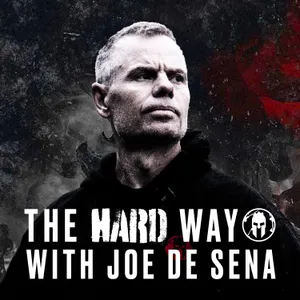
The Hard Way With Joe De Sena: Daily Summaries Delivered
by Joe De Sena
Learn the Spartan mindset. Founder & CEO of Spartan Race and NY Times best-selling author, travels the globe seeking answers from authors, academics, athletes, adventurers, entrepreneurs, CEOs and thought leaders. It will shift your thinking, make you laugh and give you the tools you need. He's on a mission to find the secrets to success in all aspects of life. Not only does Joe interview epic people, he has brought together an amazing panel to break down and analyze every aspect of these interviews. We give you the ultimate blueprint and action steps to assimilating these powerful conversations into your own life.
Latest Episodes
The most recent episodes — sign up to get AI-powered summaries of each one.
- 5 days ago22 min
Ashley Hunter on FitKids, 195 Schools, and Why Kids Need Hard Things Before They Need Anything Else
Ashley Hunter walked away from investment banking to teach kids how to move. Fifteen years later, Fit Kids operates in 195 schools across 13 states and has reached roughly 500,000 children. Joe De Sena sits down with Ashley to talk about why kids who already face hard lives every day benefit most from structured physical activity, how her program turns reluctant participants into kids who say burpees are their favorite exercise, and what any parent can do at home with zero equipment and zero money. Things You Will Learn: Why low-income kids in under-resourced schools lose access to physical activity first, and what Fit Kids does to reverse it. The approach that turns kids who are afraid of exercise into kids who request burpees by name. What any parent can do at home with bodyweight exercises and zero budget to build physical confidence in their children. Tools & Frameworks Covered: Make Fitness the Game: Embed burpees, lunges, and squats inside obstacle courses and relay races so kids associate effort with fun, not punishment. "You Can Do Hard Things. Period.": One sentence, no negotiation. Use it as a universal response when a child says something is too hard. End the conversation there. Free Bodyweight Protocol for Home" Push-ups, burpees, lunges, squats. No equipment. No cost. Available through fitkids.org for any parent who asks. Chapters: 0:00 Intro: Ashley Hunter has reached 500,000 kids through fitness 1:29 Growing up in Wayzata, Minnesota, with three sisters and a dad who wanted a boy 02:21 From investment banking to teaching to founding Fit Kids 3:44 How Fit Kids started at one school and grew to 195 5:44 Jay Jackson: the Green Beret's son who trained in the dark and disarmed an attacker 7:40 Physical activity teaches kids how to persevere through hard lives <span class= "author-d-1gg9uz65z1iz85zgdz68zmqkz84zo2qowz80zsz81z9ytz75zz83zc2kz79zwz71zz75znvz67zixvcz65zrz67zz73zz73zz85zdz87zz85z"
- 1 weeks ago24 min
Tyler Andrews on Surviving Aplastic Anemia, Running Everest in 9:55, and a Decade of Grinding
Joe De Sena sits down with Tyler Andrews, a cancer survivor turned elite endurance athlete who just set the fastest known time from Everest Base Camp to the summit: 9 hours and 55 minutes, breaking a 23-year-old record held by Lakpa Gelu by over an hour. This episode breaks down exactly how Tyler trained for Everest with hypoxic machines simulating 38,000 feet, a 6,000-foot mountain climb five days a week out his back door in Quito, and a strength program built with a Tour de France-level performance lab. They also dive into why a decade of consistency matters more than early talent, how to structure altitude and endurance training for extreme goals, and what it took to outpace a record that stood for over two decades. Things You Will Learn: Why the athlete who was not even the best runner on his Division Three team eventually broke a 23-year Everest speed record. The specific training structure Andrews used to prepare for a single-push summit attempt: hypoxic sessions, uphill volume, and strength work. What aplastic anemia survival at age six taught him about patience, gradual progress, and not boxing yourself into one identity. Tools & Frameworks Covered: Progressive Distance Scaling: Start at the distance where you are competitive, then move up one level at a time. 5K to 10K to half marathon to marathon to 50K to FKT to Everest. Each step confirms the next is possible. Hypoxic Layering: Train at moderate altitude daily (10,000 feet), add simulated extreme altitude on a stationary bike (up to 38,000 feet) for 10–12 hours per week, and stack that on top of sport-specific uphill volume. Decade Rule: Do not expect overnight results. A decade of consistent love of the process and daily grinding is what separates mediocre early performance from record-breaking later performance. If this episode moved you, do not just listen. Do something about it. Sign up. Show up. Do the work. Spartan.com. No more excuses. Chapters: <span class= "author-d-1gg9uz65z1iz85zgdz68zmqkz84zo2qowz80zsz81z9ytz75zz83zc2kz79zwz71zz75znvz67zixvcz65zrz67z
- 2 weeks ago21 min
Mark Allen, Dane Miller, James Lawrence, and Leif Babin on Daily Consistency, the Three Best Lifts, and Extreme Ownership
Joe De Sena opens this Labor Day episode with a direct question: what does it actually look like to show up every day, year after year, with no days off? Six-time Ironman World Champion Mark Allen, now 67, explains why consistency beats intensity at every age and how to stop competing with your younger self. Olympic strength coach Dane Miller breaks down the ESSE framework for matching training to any goal and names the three lifts most athletes avoid because they are hard: front squat, pull-up, and snatch. Iron Cowboy James Lawrence shares a pen-and-paper method for getting unstuck: write down everything in your head, cross out what you cannot control, and focus on what remains. Navy SEAL Leif Babin explains why actual combat was harder than Hell Week and how extreme ownership turns failure into the foundation for resilience. This episode delivers four direct perspectives on the same principle: daily work is the only strategy that compounds. Things You Will Learn: Why consistency matters more than volume, speed, or intensity, especially after 40. The three resistance training movements that transfer to every sport and why most people avoid them. A pen-and-paper method for breaking through fear-based paralysis when you feel stuck. Tools & Frameworks Covered: ESSE Framework: Evaluate every training goal through four lenses: Endurance, Strength, Speed, Explosiveness. Adjust gym time based on which lens your sport or life demands most. Pen-and-Paper Reset: When stuck, write down every thought. Cross out what you cannot control. Focus only on what remains. Repeat daily. Accountability Anchor: Find one simple, daily accountability tool and use it to remove the decision of whether to train. If this episode moved you, do not just listen. Do something about it. Sign up. Show up. Do the work. Spartan.com. No more excuses. Chapters: 0:00 Intro - Joe
- 3 weeks ago25 min
Andy Stumpf on Getting Shot, Watching Hundreds Quit SEAL Training, and Why Momentum Beats Direction
Andy Stumpf's BUD/S class started with 180 students. 18 graduated. As a BUD/S instructor years later, he got to do something most SEALs never do: sit down with the hundreds who quit and ask them why. The answer was almost always the same. Joe De Sena talks with Andy, a retired SEAL Team Six operator who was shot during a 2005 deployment, spent eighteen months rehabbing neuropathic nerve damage, and went on to fly charter jets, jump professionally, open a Black Rifle Coffee outpost in Montana, and write the book Drown Proof. This episode breaks down why the students who quit SEAL training all collapsed the same way, what the difference is between telling someone a run is four miles and telling them to run until you say stop, and why momentum matters more than knowing exactly where you are headed. Things You Will Learn: The single pattern that appeared in nearly every SEAL training dropout, and why it applies to any goal you have set and abandoned. Why starting to move matters more than knowing exactly where you are going. What changes when you shift from macro goals to micro execution under pressure. Tools & Frameworks Covered: Momentum Over Azimuth: Start moving before you have a perfect plan. Paralysis comes from needing the destination to be clear before taking the first step. Movement creates clarity. Stillness creates doubt. Macro Goal, Micro Living: Set the big target, then forget it. Shrink your world to the next step, the next hill, the next rep. The students who quit SEAL training all failed the same way: their view of time expanded until the distance between where they stood and the finish overwhelmed them. Ask for Help as Strength: The toughest people Stumpf has known all share one trait: when they hit the limit of their knowledge, they find an expert. When they are struggling, they ask. Nobody can read your mind. Until you ask, the people who care about you cannot help you. 'Heads up! I'll be a judge at The Baker House Challenge - A live entrepreneurship and real estate pitch competition where founders put real deals in front of Myself, Richard Baker, Adam Weitsman for a shot at $20,000 in prizes. Watch the full competition live here on YouTube August 29. Or Go to <a class="dy
- Aug 18, 202626 min
Richard Baker and Adam Weitsman on Capital, Discipline, and What Separates Entrepreneurs Who Survive
Richard Baker raised $700 million in February 2021 and burned through it in three years. Adam Weitsman served time in federal prison, lost his ego, and rebuilt his business with a level of discipline he did not have before. In this episode of The Hard Way, Joe De Sena sits down with both entrepreneurs to break down what really separates the people who survive in business from the ones who fold. Richard shares his "zoo bears vs. jungle bears" framework: the era of safe corporate jobs is changing, and entrepreneurs need to learn how to live on what they kill. Adam explains why he checks an entrepreneur's social media before hearing their pitch, because lifestyle often reveals work ethic faster than a slide deck. They cover capital as both a lifeline and a curse, why Adam runs on three hours of sleep while Richard protects his eight, what failure teaches you, and what they will be looking for when founders pitch live at the Baker House Challenge at Cornell University on August 29. Things You Will Learn Why Richard believes the world is moving from "zoo bears" to "jungle bears," and what that means for the next generation of entrepreneurs. Why Adam looks at how founders live before he listens to what they pitch. How capital can either fuel growth or make a business sloppy. Why discipline, resilience, and execution matter more than having a good idea. What separates entrepreneurs who can take a hit from those who quit when things get hard. Tools & Frameworks Covered Zoo Bears vs. Jungle Bearsa. Corporate life tra
- Aug 11, 202627 min
Joe McConaughy on the PCT Speed Record, Hallucinating at the Finish, and Why 50–90% of Every Race Is a Grind
Joe McConaughy was a college miler who had never raced anything longer than a mile when he Googled "run the Pacific Crest Trail" at 22 years old. 53 days and 2,600 miles later, he held the speed record. Joe De Sena sits down with Joe, a trail runner, coach, race director, and new dad, to break down what actually happens to your body and mind past day 40 of a multi-day speed record, why he spent the final 15 days running on a peg leg after his ankle lost function, and the hallucination at the top of Mount Whitney where an imaginary man named Andre offered to take his watch and finish the record for him. They cover the 50-to-90-percent grind zone where every race is won or lost, how an invisible competitor on a GPS tracker squeezed a stronger finish out of McConaughy than any training block ever could, and why he calls ultra running a silly, selfish sport. Things You Will Learn: Why the middle of every race, from a 5K to a 2,600-mile record attempt, is where performance is decided. Why a D1 college miler with zero ultra experience set a 2,600-mile speed record at 22 and what broke along the way. The differences among short, medium, and long multi-day efforts, and how sleep strategy changes for each. Tools & Frameworks Covered: The 50–90% Grind Zone: Between halfway and 90% of any race distance, you will believe it is impossible or that it will never end. Expect it. Plan for it. Push through it. Internal vs. External Activation" Ninety percent of an ultra is you against yourself. The remaining 10% can unlock performance you cannot access alone. Build external pressure into your race plan. Miles Over Smiles / Smiles Over Miles: The grind is real. The suffering is real. But if the process does not fill your cup on the other side, you will not keep showing up long enough to get good. If this episode moved you, do not just listen. Do something about it. Sign up. Show up. Do the work. Spartan.com. No more excuses. Chapters: 0:00 Intro: Joe McConaughy is a new dad, trail runner, and race director <span class= "author-d-1gg9uz65z1iz85zgdz
- Aug 4, 202622 min
Mike Sarraille on Leaving Delta Force, Scaling a Company to 500, and Why Entrepreneurship Is the Real Fight
Mike Sarraille served 20 years in special operations as a Recon Marine, scout sniper, Navy SEAL, and troop commander in Delta Force. He graduated number one out of three hundred in Marine boot camp, fought in some of the worst firefights of the Iraq War, and broke four world records skydiving across seven continents in under seven days. Then he started a company. Joe De Sena sits down with Mike to hear why he says building a business with no budget and no guaranteed resources is harder than anything he faced in combat, how he scaled a data center staffing company from fifty employees to five hundred in eighteen months, and what the tier-one military teaches about team performance that most corporate leaders get wrong. Things You Will Learn: Why a Delta Force troop commander says entrepreneurship tested him more than combat, and what specific skills transferred and which did not. The difference between warfighters and warriors, and why combining both creates the leaders people actually follow. Why productive conflict inside a high-performing team is the system itself, not a sign that something is broken. Tools & Frameworks Covered: Shared Hardship Bonding: Psychology shows that teams bonded through shared adversity build trust that cannot be replicated through offsites or team dinners. Find controlled hardship your team can experience together. Iron Sharpens Iron Selection: Always find a group where you are the underperformer. Clear the bar they hold as the standard. Then find the next group above that. Conflict as Operating System: High-performing teams fight over ideas constantly. The mission prevails, not individual egos. If everyone agrees all the time, the team is underperforming. If this episode moved you, do not just listen. Do something about it. Sign up. Show up. Do the work. Spartan.com. No more excuses. Chapters: 0:00 Intro 1:38 Twenty years of special operations and what came after 3:00 Sports that built the foundation 3:52 The kid who was impossible to wrangle and the quick end to college 5:08 His dad's reaction to enlisting and how g
- Jul 28, 202624 min
John Kelly on the Barkley Marathons, Quitting From the Lead, and Training for Real Adversity
Only twenty people have finished the Barkley Marathons in forty years. John Kelly has finished it twice. But between those two finishes, he quit from first place after two loops because he already knew what the remaining sixty hours would cost, and it did not seem worth it. Joe De Sena sits down with John, an ultra runner who has covered 260 miles through January storms on the Pennine Way, chased the Appalachian Trail speed record for 1,900 miles before injury stopped him 300 miles short, and built an altitude chamber in his home office to fix the one weakness his body refused to train away. They break down the difference between short-race decay and ultra-distance recovery cycles, why the sunk-cost fallacy can actually keep you alive past mile eighty, and how Kelly applied the resilience he built through running when Hurricane Helene destroyed his community. Things You Will Learn: The difference between short-race decay and ultra-distance low points and why confusing them causes most DNFs. Why the runner who quit from first place at the hardest race on earth came back and finished it two more times. A three-part framework for pushing through collapse: zoom out, zoom in, and treat the low point as the lesson. Tools & Frameworks Covered: Zoom Out / Zoom In: When you hit a low, zoom out to remember everything you invested and why quitting now would waste it. Then zoom in to the next step, the next hill, the next aid station. Toggle between the two as needed. Voluntary Artificial Adversity: Deliberately choose controlled suffering in training and racing so that when real adversity arrives, the resilience muscle is already trained. Reframe the Goal After First Success: Once you have proven you can finish, shift the motivation from "Can I do this?" to "How much can I learn about myself?" If this episode moved you, do not just listen. Do something about it. Sign up. Show up. Do the work. Spartan.com. No more excuses. Chapters:</spa
Get The Hard Way With Joe De Sena summaries in your inbox
Free AI-powered daily recaps. Key takeaways, quotes, and mentions — in a 5-minute read.
Get Free Summaries →Free forever for up to 3 podcasts. No credit card required.
You Might Also Like
Listeners also like.

The Rich Roll Podcast
Rich Roll interviews thought leaders in wellness, personal development, and performance to inspire authentic living.

Modern Wisdom
Discussions with experts on psychology, philosophy, and self-improvement to help navigate life’s challenges.
The Determined Society with Shawn French | Adversity & Mindset
Raw interviews with athletes, authors, and public figures on resilience, identity, and the mindset behind long-term success.

The School of Greatness
Features interviews with top performers across industries to help listeners develop mindset, health, and habits for personal growth.

The Jedburgh Podcast
Former Green Beret Fran Racioppi interviews elite leaders on leadership, preparation, and personal transformation.

The Entrepreneur DNA
Entrepreneurs share lessons on building businesses and personal growth through real experiences and mistakes.
The Secret To Success with CJ, Karl, Jemal & Eric Thomas
A no-nonsense podcast on mindset, money, and execution featuring real strategies from top performers on winning in life and business.
The Learning Leader Show With Ryan Hawk
Conversations with top leaders across industries exploring how continuous learning drives success.
SuperLife with Darin Olien
Conversations on nutrition, mental health, and sustainable living that explore everyday habits harming people and the planet.

The Nick Bare Podcast
Nick Bare discusses nutrition, performance, and habits for consistent personal growth through disciplined, principle-driven conversations.

Run Your Story Podcast
Runners and walkers share their personal stories, memories, and advice about the sport.
Mick Unplugged
A leadership podcast exploring the deep personal motivations behind high achievers’ success by asking what drives them at their core.
About The Hard Way With Joe De Sena
Learn the Spartan mindset. Founder & CEO of Spartan Race and NY Times best-selling author, travels the globe seeking answers from authors, academics, athletes, adventurers, entrepreneurs, CEOs and thought leaders. It will shift your thinking, make you laugh and give you the tools you need. He's on a mission to find the secrets to success in all aspects of life. Not only does Joe interview epic people, he has brought together an amazing panel to break down and analyze every aspect of these interviews. We give you the ultimate blueprint and action steps to assimilating these powerful conversations into your own life.
Customized Recaps
AI-powered recaps with compact key takeaways, quotes, and insights.
Straight to Your Inbox
Get key takeaways from The Hard Way With Joe De Sena in a 5-minute read.
Save Hours Every Week
Stay current on your favorite podcasts without falling behind.
Frequently Asked Questions
What is Podzilla's The Hard Way With Joe De Sena daily summary?
It's a free AI-powered email that summarizes new episodes of The Hard Way With Joe De Sena as soon as they're published. You get the key takeaways, notable quotes, and links & mentions — all in a quick read.
How does the The Hard Way With Joe De Sena podcast summary work?
When a new episode drops, our AI transcribes and analyzes it, then generates a personalized summary tailored to your interests and profession. It's delivered to your inbox every morning.
Is this an official The Hard Way With Joe De Sena product?
No. Podzilla is an independent service that summarizes publicly available podcast content. We're not affiliated with or endorsed by Joe De Sena.
Can I get summaries of other podcasts too?
Absolutely! The free plan covers up to 3 podcasts. Upgrade to Pro for 15, or Premium for 50. Browse our full catalog at /podcasts.
How often does The Hard Way With Joe De Sena release new episodes?
The Hard Way With Joe De Sena publishes weekly. Our AI generates a summary within hours of each new episode.
What topics does The Hard Way With Joe De Sena cover?
The Hard Way With Joe De Sena covers topics including Education, Fitness, Health & Fitness, Self-Improvement. Our AI identifies the specific themes in each episode and highlights what matters most to you.
Start getting The Hard Way With Joe De Sena summaries tomorrow morning.
Free forever for up to 3 podcasts. No credit card required.
Free forever for up to 3 podcasts. No credit card required.