Free Daily Podcast Summary
The Happy Hustle Podcast: Daily Summaries Delivered
by Cary Jack
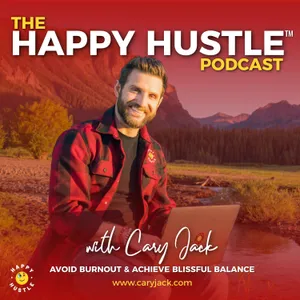
Cary Jack is a lifestyle entrepreneur, professional actor/model, biohacker, eco-warrior, and philanthropist striving to make a positive impact on this planet. The goal of The Happy Hustle Podcast is to educate, inspire, and entertain you, while reminding you to enjoy the journey, not just the destination, as you Happy Hustle for a life of passion and purpose. From successful entrepreneurs to spiritual masters, Cary Jack brings on an array of powerful guests to help you transform your dreams into a reality.
Latest Episodes
The most recent episodes — sign up to get AI-powered summaries of each one.
- 2 days ago17 min
Hike & Pod! 23 years of Building a Business using this 1 Concept with Founder/CEO of M&M Quality Solutions, Brian McMaster
There's a version of success that looks amazing on paper and feels completely empty on the inside. I know because I've talked to a lot of entrepreneurs who chased the number first and the meaning second, and most of them will tell you they got it backwards. This episode is a gut check on that exact thing, recorded on one of our favorite hiking pods out here in Montana.In this episode of The Happy Hustle Podcast, I hike & pod with Brian McMasters, founder of M&M Quality Solutions, a third party logistics company headquartered in Kansas City, Missouri with operations in Salt Lake City and York, Pennsylvania. Brian has been running M&M Quality Solutions for 23 years and has been part of our Happy Hustle community for three of them. He's built his business on a simple, unfashionable idea, that real people beat bots every single time, and that the fastest way to grow a company is to actually care about the people inside it. He's also a husband, a man of deep faith, and someone who's about to release a book on the lessons that took him decades to learn the hard way.What makes this one matter is how honest Brian gets about the cost of chasing money for money's sake. He's not some guru talking theory. He's a guy who built a real logistics company from the ground up, hit the wall that almost every entrepreneur hits, and came out the other side with a totally different definition of what winning actually looks like. If you've ever felt like the hustle was starting to hollow you out instead of fill you up, this conversation is for you.A few things stood out to me that I don't want you to miss.Persistence beats talent every time. Brian says the number one reason he's still standing after 23 years is that he never quit, plain and simple. He calls himself a survivor, and when you remember that most businesses don't even make it past year one, that word means something.Your business should reflect what you actually care about. M&M Quality Solutions started as a pick, pack, and ship operation, and Brian is now steering it toward health and wellness products because that's where his own passion lives. He's not interested in being another faceless 3PL with hidden fees and confusing invoices. He wants his team to care about what's inside the box, not just get it out the door.You cannot build a real business alone. Brian talks about how lonely entrepreneurship gets without a community around you, people who've actually done the work and not just read about it. That's a huge reason he's stuck with Happy Hustle for three years running.Giving beats getting, in business and in love. His advice on relationships hit hard. Don't go in looking for what you can get, go in looking for what you can give, and it comes back to you tenfold. He said the same thing basically applies to how he leads his team.The biggest regret is almost always the same one. Brian was honest that his one regret is spending too many years chasing the money instead of investing that time in his people. Once he flipped that, everything else started to make sense.We also get into his rapid fire round, which is always one of my favorite parts of these hikes. Steak for the food, A Few Good Men for the movie, Think and Grow Rich for the book, and squats for the workout, which he says he used to hate and now genuinely loves. We talk about his morning routine of fifteen to twenty minutes in silence with God before the day even starts, why he trusts a real advisor over just checking boxes with an accountant, and the working title of his upcoming book, which traces back to lessons from his uncle in some very muddy backyards.This conversation reminded me why I love these hiking pods so much. You get the real version of someone when their legs are burning and their guard is down, and Brian gave us all of it. Faith, family, failure, and the kind of hard won wisdom you can only get by staying in the game for over two decades.If you're ready to rethink what you're actually chasing and why, go listen to the full episode. Brian's story is proof that the businesses built on people, not just profit, are the ones that last. When I asked him for his parting wisdom, he kept it simple. Pray, get a brotherhood, get out in nature, and keep hustlin'.Go listen to the full conversation now at https://happyhustle.com/podcast.Connect with Brianhttps://www.facebook.com/brian.mcmaster.50https://www.instagram.com/mmqualitysolutionshttps://www.linkedin.com/company/m-&-m-quality-solutions/<a href="https://twitter.com/mmqualsolutions"
- 5 days ago1h 4m
CASH FLOW KING: The D.E.S.I.G.N Framework for Cash Flow Every Entrepreneur Needs with The Cash Flow Architect Matt Love
What if the thing you've been told your whole life, save for retirement, max out your 401k, play it safe, is actually the exact thing keeping you from real wealth? That question sat with me long after this conversation ended, and I think it's going to sit with you too.In this episode of The Happy Hustle Podcast, I sit down with Matt Love, a husband, father of three, investor, and cash flow coach who runs a company called Cash Flow Architects. Matt is also the author of The Entrepreneur's Asset, and his whole mission is helping business owners design cash flow in ways the IRS actually rewards, instead of following a financial playbook built for people who punch a time clock and dream of quitting at 65. Matt got into this work after watching a close friend inherit his mother's IRA, only to get hit with a massive tax bill on money she never got to enjoy. That moment changed how he looks at money, and it's shaped everything he teaches today.This episode matters because most of us were handed the same financial script, save, defer, retire, and never taught to question it. Matt breaks down why that script fails entrepreneurial minded people specifically, and gives you an actual framework to replace it with.Matt walks us through his six phase process, which he calls D.E.S.I.G.N. First, you define your inflows and outflows, because most people never really track where their money goes before it disappears. Second, you establish a reservoir, a savings account that becomes the first stop for every dollar instead of an afterthought. Third, you secure your net worth against the three things that can wipe out a family, a lawsuit, a disability, or a death. Fourth, you invest with purpose in things you actually understand, instead of a mutual fund you can't explain to save your life. Fifth, you give, because as Matt puts it, part of wealth is the fulfillment that comes from generosity, not just watching a number grow on a spreadsheet. And sixth, you normalize the whole thing, meaning you build a process your kids can actually inherit, not just your money.One of the biggest shifts in this conversation is how Matt reframes real estate versus a traditional retirement account. With a SEP IRA or 401k, you get a tax deferral and a bunch of statements you can't fully explain. With real estate, you get deductions today, a physical asset you can walk into, memories with your kids, and a tax free step up in basis for your family when you're gone. He calls it buy, borrow, die, and once you hear him lay it out, it's hard to unhear.We also get into disability insurance most entrepreneurs completely overlook, even though your ability to keep working is probably your biggest asset. Matt explains how a small monthly premium can replace a huge chunk of your income if something happens, so your family isn't left scrambling. And he shares how life insurance, done right, can quietly fund real estate deals, business investments, and more, all without showing up on your tax return.If there's one thing to take from this episode, it's that you don't need a retirement account to retire. You need cash flow. And how you architect that cash flow determines how much of it you actually get to keep.If you're ready to stop guessing with your money and start building a system that actually works for the life you want, this episode is for you. Go listen to the full conversation with Matt Love at https://happyhustle.com/podcast and start asking better questions about where your money is really going.What does Happy Hustlin' mean to you?Matt said that happy hustlin' means really living out the process he's built over the last 18 months, one centered on staying true to his own principles instead of just doing what someone else asks of him. He talked about setting real criteria for who he works with and not folding on that, and said protecting your confidence is crucial to being a happy hustler.Connect with Matthttps://www.facebook.com/matthew.love.942https://www.instagram.com/cashflowarchitects/https://www.youtube.com/@CashFlowArchitectshttps://www.linkedin.com/in/matthewblove/https://x.com/cash_flow_arch?s=20https://www.tiktok.com/@cashflowarchitectsFind Matt on this website: https://cashflowarchitects.com/Connect with Cary!
- 1 weeks ago13 min
Hike & Pod! The 2027 Real Estate Market Prediction and Business Wisdom with Founder of Chris Ball Properties Chris Ball
Ever notice how the version of you that quits would have it so much easier than the version that keeps showing up? Yeah, we've all felt that pull. This week on the Happy Hustle Podcast, we're getting honest about what it actually takes to stick with something when most people around you are bailing.In this episode of The Happy Hustle Podcast, I hike and pod during the Montana Mastermind with my buddy Chris Ball out on one of our hiking pods (we even got interrupted by actual moose mid conversation, more on that in a bit). Chris is the founder of Chris Ball Properties, a real estate team he built with Keller Williams out of Knoxville, Tennessee. He's been grinding in real estate for eight years now, and if you know that industry, that's no small feat. Most agents don't even make it past year three. Chris has been part of the Happy Hustle tribe for about a year and a half, and he brings a kind of light and energy that's contagious the second he walks into a room.This episode matters because Chris doesn't just talk about success, he talks about the grind underneath it. The burnout. The loneliness. The mornings where quitting sounds like a pretty reasonable option. Then he tells you exactly what got him through it, and that's the part worth your time.Never quit, period. That's the mentality Chris credits for surviving eight brutal years in an industry where about eighty percent of people fail out early. He's been burned out, lost his mojo, found it again, and kept moving anyway. He calls it falling forward and learning as you go, and honestly, that's about as real as advice gets.You don't have to carry it alone. A lot of entrepreneurs get stuck in their own head, working in a silo until the loneliness wears them down. Chris avoided that trap by building a small team around him and staying plugged into a mentor the whole way through. Add a supportive wife and a group of brothers who hold him accountable, and he's never felt like he was doing this by himself.Win the morning, win the day. Chris breaks his mornings into three twenty minute blocks, exercise, meditation or prayer, and learning. He wasn't always into what he calls the woo woo stuff, but meditation ended up being the thing that grounded him spiritually too.The market has room for everybody right now. Chris broke down where things stand for buyers and sellers. Buyers finally have some breathing room to negotiate instead of feeling pressured into a decision. Sellers are still walking away with strong numbers, and there's more inventory to choose from. It's rare to hear someone call the current market a win for both sides, but that's exactly how he sees it.Do less, better. That's the phrase Chris left us with, and it might be the simplest piece of wisdom in the whole episode. Instead of chasing everything at once, get intentional about fewer things and actually follow through. Go experience what you want to experience. Don't let fear make the call for you.We also got into what Chris is most grateful for these days, his faith, his family, and the relationships that keep him grounded, along with a very unfiltered rapid fire round that had all of us cracking up. If you're building something right now and it feels heavier than you expected, this one's for you.Go listen to the full conversation with Chris Ball at https://happyhustle.com/podcast and get ready to laugh, get inspired, and maybe rethink how you're starting your mornings. Keep on happy hustlin'.Connect with Chrishttps://www.facebook.com/ChrisBallProperties/https://www.instagram.com/chris.ball.sells.homeshttps://www.youtube.com/@chrisballpropertieshttps://www.linkedin.com/in/chris-ball-properties/https://x.com/ChrisBall125615?s=20 Check out Chris Ball Properties on X. #7 Knoxville Team by sides 2025 RealTrends Verified with $125M+ sold & 140+ 5 Star Reviews. East TN Luxury, STR, Expireds & FSBO Homes https://t.co/nXbTR6N8J2https://www.tiktok.com/@chris.ball.propertiesFind Chris on this website: https://soldbycbp.com/Connect with Cary!https://www.instagram.com/caryjack/<a href="https://www.facebook.com/S
- 1 weeks ago1h 6m
The Hateful Eight Seed Oils Secretly Wrecking Your Health with New York Bestselling Author, Dr. Cate Shanahan
Have you ever felt amazing on paper, eating clean, hitting your macros, doing everything right, and still felt like something was off? That was the question that sent me down a rabbit hole with this week's guest, and honestly, it changed the way I look at my own kitchen.In this episode of The Happy Hustle Podcast, I sit down with Dr. Cate Shanahan, a Cornell trained physician scientist whose work has sparked entire movements around bone broth, live culture ferments, and seed oil free living. She's the woman behind the LA Lakers nutrition program, a program so effective it's been copied by championship teams around the world. She's also a New York Times bestselling author and the founder of Rebel Well, where she helps everyday people make real food simple, affordable, and sustainable again. Dr. Cate has spent over two decades chasing root causes instead of quick fixes, and that obsession is exactly why this conversation hits so different.What makes this episode matter is that Dr. Cate doesn't just tell you seed oils are bad. She shows you the chemistry, the history, and the data behind why they're doing so much damage, and she does it in a way that's easy to actually understand and use. We talk about ancient tribes who lost inches of height in two generations after losing their traditional diet, the four pillars of a truly nourishing human diet, and the eight specific oils she calls the Hateful Eight that are quietly driving inflammation and disease in almost every home in America. If you've ever wondered why cutting out processed food makes such a massive difference, this episode gives you the actual science behind it.The four pillars of a real human diet matter more than any fad. Dr. Cate breaks down the four things she found common across every traditional diet she studied around the world. Fresh food, fermented and sprouted food, meat on the bone for the connective tissue, and organ meats for their dense, irreplaceable nutrients. Most modern diets are missing at least two or three of these, and she explains exactly why that gap matters for your energy, your joints, and your long term health.Your gut microbiome starts building itself from the moment you're born. From the birth canal to breast milk to literal dirt, Dr. Cate walks through how our bodies were designed to collect beneficial bacteria from nature itself, and how modern life has cut off most of those pathways. It's a wild reminder of just how intelligent and intricate our biology really is.The Hateful Eight seed oils are doing more damage than most people realize. Corn, canola, cottonseed, soy, sunflower, safflower, rice bran, and grapeseed oil are processed under extreme heat and pressure, which causes them to oxidize and form toxins similar to what you'd find in cigarette smoke. Dr. Cate shares research showing that a single ounce of potato chips can exceed the safe toxicological threshold for one of these compounds by over four thousand percent.Nutrition science has been quietly shaped by industry money. Dr. Cate doesn't hold back on this one. She explains how a small group of researchers with deep financial ties to processed food companies have influenced decades of dietary guidance, leaving doctors and dietitians working off outdated and, in some cases, intentionally misleading information.Small daily choices compound faster than you'd expect. From what you eat for breakfast to what oil your restaurant fries are cooked in, Dr. Cate makes the case that these aren't small details. They're the difference between chronic inflammation and real, lasting vitality.We also dive into how corporate greed and lobbying have shaped what gets taught in medical schools, why Dr. Cate believes processed food is actually a pretty simple category once you know what to look for, and how something as basic as swapping your breakfast can change the entire trajectory of your day.This conversation is a reminder that so much of what we've been taught about health has been shaped by people with a financial stake in keeping us confused. Dr. Cate isn't selling fear, she's handing you clarity, and clarity is powerful. Once you know what to avoid, the path forward gets a whole lot simpler.If you're ready to take back control of your health, start by learning the Hateful Eight and paying attention to what's actually in your food. Dr. Cate makes it easy to get started with her free Hateful Eight Challenge at drcate.com, where you can go eight days without these oils and feel the difference for yourself.Go listen to the full episode at https://happyhustle.com/podcast. Trust me, you're going to want to hear this one from start to finish.Connect with Dr. Cate!https://www.facebook.com/DoctorCate/<a href="https://www.instagram.com/drcateshan
- 2 weeks ago23 min
Part 2: Montana Mastermind Exclusive Session - 10 Alignments to Avoid Burnout and Find Blissful Balance with Cary Jack
When was the last time you actually graded your own life? Not your revenue, not your follower count, your actual life. Your marriage. Your mind. Your sense of purpose. Most of us never stop long enough to check.In this episode, I'm bringing you inside one of our Happy Hustle mastermind workshops, where I sat down with a room full of high performing entrepreneurs and walked them through something we call the ten alignments. It's a scoring exercise. Love, spirituality, financial abundance, personal growth, hobbies, impactful work, nature connection and a few more. Ten categories, one to five each, fifty points total. Forty and above means you're happy hustling. Anything under thirty nine means there's real work to do. And watching these guys score themselves out loud, in front of each other, was one of the most honest moments we've had in a workshop room.Here's the big shift I want you to walk away with. What you measure, you can manage. That's it. That's the whole thing. We spend our lives measuring revenue, conversion rates, follower growth, but we almost never measure the stuff that actually makes life worth living. So we drift. We tell ourselves we're fine. And then one day we look up and we haven't taken a real vacation in years, or we can't remember the last time we made our spouse feel truly loved. This exercise forces you to put a number on it, and numbers don't lie the way our excuses do.A few things that came out of this session stuck with me, and I think they'll stick with you too.Score your love life the same way you score your business. I shared our love calendar practice with the guys, where every night you ask your partner a simple question, what's your love score today, one to ten. You average the two numbers, write it down, and at the end of the month you know exactly how connected you were, not just how you felt about it in the moment.Your mind needs daily reps, not just good intentions. I walk through my I am mantras twice a day, once in the morning and once at night. I am focused and disciplined. I am a godly husband. I am the selfless servant of the causes I believe in. You either train your subconscious on purpose, or the automatic negative thoughts train it for you.Financial abundance starts with literacy, not more hustle. I told the guys straight up, there's no excuse to be financially illiterate anymore. You've got a supercomputer in your pocket that can explain a stock, a bond, an APR, anything, in plain English. Read for fifteen minutes a day on money and you will outpace most of your competition just by doing that alone.Awareness is the first step, not the whole journey. One of the guys in the room, Scotty, scored a twenty one on this same exercise six months ago. This time around he scored a thirty eight. That's not luck. That's someone who saw the truth about where he was lacking and actually did something about it, week after week.A real number beats a vague feeling every time. By the end of the workshop, every guy in that room had ten honest scores, a lowest alignment, and one specific action they committed to out loud in front of the group. Not a someday goal. A this week action.I built the Happy Hustle around one word, imbalance, because I lived it. I was completely out of whack at one point, sacrificing everything for profit and status and ego, and I know a lot of you reading this are somewhere in that same place right now. You don't need another hustle tip. You need an honest look at where you actually stand.So here's what I want you to do. Grab a piece of paper. Score yourself, one to five, across those ten areas. Add it up. Find your lowest alignment. And then write down one thing, just one, that you'll commit to this week to move that number. That's how real change starts, not with a huge overhaul, just an honest number and one next step.Go listen to the full episode and hear the whole room work through this live, the wins, the raw moments, all of it. It just might be the reset you didn't know you needed. You can catch it now at https://happyhustle.com/podcast.Connect with Cary!https://www.instagram.com/caryjack/https://www.facebook.com/SirCaryJackhttps://www.linkedin.com/in/cary-jack-kendzior/https://twitter.com/thehappyhustlehttps://www.tiktok.com/@caryjackhttps://www.youtube.com/channel/UCFDNsD59tLxv2JfEuSs
- 2 weeks ago38 min
Part 1: Montana Mastermind Exclusive Session - 10 Alignments to Avoid Burnout and Find Blissful Balance with Cary Jack
When was the last time you actually stopped and asked yourself how you're really doing? Not the autopilot answer you give people at the gym or in a group text. The real one. That's exactly where I took a room full of guys during a recent workshop, and it cracked something open for every single person in there, myself included. In this episode of The Happy Hustle Podcast, I'm sharing the Montana Mastermind Exclusive Session Part 1, where I walk through the 10 alignments I use to avoid burnout and build what I call blissful balance. This isn't some complicated system. It's not rocket science, and you don't need a PhD to get it. But it's profound because of how simple it is, and I've watched it transform thousands of lives, including my own back when I was running myself into the ground as an entrepreneur. Here's the big shift. Most of us think burnout is about working too much. It's not. Burnout happens when a handful of areas in your life go completely unattended while you pour everything into one or two. You can be crushing it in your career and still be running on empty because your health, your relationships, or your spirit are getting ignored. The fix isn't working less. It's getting honest about where you actually stand, then making small, intentional moves in the areas that need it. Here's what stood out most from this session. Give yourself an honest score, not a nostalgic one. I ask people to rate themselves one to five in each alignment based on the last 30 days only. Not high school. Not "the person I used to be." Just now. That single shift in perspective is what makes the exercise actually useful instead of a feel good exercise in self deception. Selfless service only counts when there's no string attached. Giving to your kids or your best friend feels good, but it lives in a different category. Real selfless service is time, insight, or money given to someone with zero personal connection and zero expectation of return. I use an app called Kiva to fund micro loans for entrepreneurs in developing countries, and I've never once pulled my money back out. I just keep reinvesting it into someone else's shot. Your environment might be sabotaging your health more than your diet. We talk a lot about food and workouts, but EMFs, mold, and tainted water are quietly wrecking people's health and nobody's checking for it. I know guys who look absolutely jacked on the outside and are falling apart on the inside because their house is full of black mold. You cannot out exercise a bad environment. It just doesn't work that way. Fifty five percent of communication is nonverbal, and twenty five percent is tone. That means only a small fraction of what you're actually saying comes from your words. In my marriage, I use something I call the love calendar. Every night my wife and I score the day one to ten, average it, and track it over the month. It sounds simple because it is, but it keeps us honest instead of letting resentment quietly pile up. Your morning is sacred territory, and most people give it away for free. Right when you wake up, your brain is still in a theta state, more connected and more open than at almost any other point in your day. The second you grab your phone, that's gone. I protect thirty minutes in the morning and thirty minutes before bed as phone free time, and it has changed how I show up for literally everything else. None of this is about being perfect. It's about knowing where you stand and choosing, on purpose, to close the gap. That's the whole game. When I actually run through these ten alignments consistently, my life gets fuller, my relationships get deeper, and honestly I just feel like myself again. That's what happy hustling actually means. Not hustling harder. Hustling with intention. If any part of this hit home, I'd love for you to listen to the full episode. There's a lot more in there than I can fit into a blog post, and it just might be the reset you didn't know you needed. You can catch it now at https://happyhustle.com/podcast. Connect with Cary!https://www.instagram.com/caryjack/https://www.facebook.com/SirCaryJackhttps://www.linkedin.com/in/cary-jack-kendzior/https://twitter.com/thehappyhustlehttps://www.tiktok.com/@caryjackhttps://www.youtube.com/channel/UCFDNsD59tLxv2JfEuSsNMOQ/featured
- 3 weeks ago25 min
Building Trust at Scale in the Age of AI, Hike & Pod from the Montana Mastermind with Media Scaling Co-Founder Logan Forsyth
Picture this. You're standing in the middle of untouched Montana wilderness, no cell service, no notifications, just you, a group of high level entrepreneurs, and whatever idea decides to show up in the silence. That's exactly where this conversation happened, and honestly, it's one of the reasons it hits different. In this episode of The Happy Hustle Podcast, I hike and pod during the Montana Mastermind with Logan Forsyth, co-founder and co-CEO of mediascaling.com, an eight figure content firm that works with founder led brands and high ticket businesses across the country. His team has generated over 10 billion views and 24 million followers for clients, with nine social media awards and third party verified stats to back it up. He runs a team of about 145 people, mostly remote, out of Los Angeles, and he's built his entire business around one core idea. Content isn't just marketing anymore, it's trust at scale. This episode matters because we're at a strange moment in business. Everyone has access to the same AI tools, the same templates, the same shortcuts. So what actually separates you from the next person doing the same thing? Logan breaks it down in a way that's simple but honestly kind of a gut check. It's not the tools you use. It's the brand and the proof you build behind them, and those two things can't be copied. We covered a lot, but here's what stood out most. Content is the new website. Logan put it plainly. People are doing full due diligence on you through your socials before they ever buy from you or book a call. If your content is underwhelming, you lose trust you never even knew you were losing, and there's no way to measure exactly how many deals walked away because of it. Brand and proof are the two assets nobody can copy. With AI, anyone can spin up an offer or an info product in twenty minutes. What they can't spin up is years of trust and a stack of real results behind your name. That's your moat now, and it's the one thing that actually compounds. Most people quit right before content starts working. Logan's seen it over and over. People track leads and sales only, don't see instant results, and walk away. Meanwhile their close rates, average order value, and retention are all quietly improving in the background because of the trust content builds. He said if you can stick with it for two to three years, most people won't, and that alone becomes your edge. Batching beats burnout every time. Trying to wake up and record a video every single day is a fast track to quitting. Logan's team researches, scripts, and batches thirty videos in about two hours of filming, then hands it off to editors. Structure isn't the boring part, it's actually what makes consistency possible. AI written scripts sound like everyone else's AI written scripts. Logan's team reviews thousands of sample scripts during hiring, and he said almost all of them read the same because everyone's feeding AI the same prompts. His advice was clear. Use AI to compete, but don't expect it to set you apart, because everyone already has it. We also got into why digital detoxes matter even for someone running a massive social media agency, how community and mastermind trips shake loose ideas you'd never find working alone, and Logan's own rapid fire answers on everything from his biggest regret to the advice he'd give his eighteen year old self. There's something grounding about hearing a guy who lives in the content world talk about how much clarity he finds by putting his phone away completely. It's a good reminder that the tools are supposed to serve the life, not the other way around. When I asked Logan for any final words for the happy hustlers listening, he didn't talk business at all. He talked about finding a wife who makes him better instead of someone he has to pull up alone, finding faith, building a family, and wanting to support not just his own people but thousands of others through what he builds. That's the whole episode in one answer honestly. If you're ready to rethink how you're showing up online, and you want the real strategy behind building trust that actually turns into revenue, go listen to the full episode at https://happyhustle.com/podcast. It just might change how you look at your own content for good. Connect with Loganhttps://www.facebook.com/loganforsythofficialhttps://www.instagram.com/loganforsyth/https://www.youtube.com/@loganforsythhttps://www.linkedin.com/in/loganforsyth/<a href="https://
- 3 weeks ago45 min
10 Areas Every Entrepreneur Must Master, The S.O.U.L.M.A.P.P.I.N. System with Cary Jack & Serial Entrepreneur, Founder of Speakeasy Mastermind, Eric Berman
Have you ever hit every single goal you set out for yourself and still felt completely empty inside? That's the exact moment I found myself in years ago, staring at a stack of investor paperwork worth millions, and I couldn't sign it. I was recently interviewed by Eric Berman on Inside The Speakeasy. It was a great experience! We discuss my journey from extreme burnout to creating a life centered around freedom, fulfillment, and intentional success. Inside The Speakeasy, hosted by Eric Berman, gives entrepreneurs, founders, marketers, and creators an inside look at what it really takes to build and scale a successful business. Each episode features candid conversations with ambitious leaders who share the strategies, lessons, failures, and breakthroughs that shaped their journey. From startup growth and marketing execution to leadership and innovation, guests reveal what is actually working in today's business landscape. If you're ready to think bigger, take smarter risks, and accelerate your growth, pull up a chair and step Inside The Speakeasy. In this conversation, Eric and I got real about what it actually costs to grind your way to the top. I told him the story of building a tech startup in New York City in my early twenties, working over a hundred hours a week, running on four or five hours of sleep, and finally landing seven figure funding deals with partnerships tied to companies like Microsoft and IBM. On paper, I had made it. In my gut, I was smoked. My brother and I sat in our tiny apartment in Queens and ripped up the paperwork instead of signing it. That decision changed the entire direction of my life. We talked about why so many high performing entrepreneurs are optimizing every part of their business while completely neglecting the systems that support their own happiness. It's easy to build a scoreboard for revenue and totally forget to build one for your own peace. That's actually the question I think every entrepreneur needs to sit with. Are you chasing your own definition of success, or somebody else's? I chased someone else's for a long time, and it nearly cost me everything that actually mattered. One of the bigger things we got into is what I call the more disease. It's this constant craving for more money, more status, more followers, more stuff, and it infects high performers especially hard because we're wired to always push for the next level. The cure isn't actually more. It's contentment. Getting crystal clear on what you truly want and then practicing real gratitude for it, that's what breaks the cycle. Success without fulfillment is a trap, and I've watched it swallow people who look like they have everything. We also dug into digital overload, and honestly this one hits people harder than they realize. Constant screens, constant notifications, constant comparison, it quietly wrecks your happiness, your focus, and your relationships without you even noticing it happening. I shared some of the simple habits I use to fight it, like keeping the first and last thirty minutes of my day completely screen free. And we talked about growth. Real growth doesn't happen by accident. It takes consistent investment, reading in the morning, listening to something good in the afternoon, watching something educational at night. Small, repeatable habits stacked on top of each other over time. That's the whole game. If any of this is landing for you, do yourself a favor and go listen to the full conversation with Eric on Inside The Speakeasy. And if you want to keep building your own freedom and fulfillment beyond this episode, head over to https://happyhustle.com/podcast. It just might be the reset you didn't know you needed. Connect with Erichttps://www.instagram.com/ericbbermanhttps://www.facebook.com/speakeasymastermindhttps://www.linkedin.com/in/ericbermanhttps://www.youtube.com/@SpeakeasyMastermind Find Eric on his website: https://speakeasymastermind.com/ Connect with Cary!https://www.instagram.com/caryjack/https://www.facebook.com/SirCaryJackhttps://www.linkedin.com/in/cary-jack-kendzior/https://twitter.com/t
Get The Happy Hustle Podcast summaries in your inbox
Free AI-powered daily recaps. Key takeaways, quotes, and mentions — in a 5-minute read.
Get Free Summaries →Free forever for up to 3 podcasts. No credit card required.
You Might Also Like
Listeners also like.
Hacks and Hobbies with Junaid Ahmed
Creators and entrepreneurs discuss turning hobbies into income through podcasting, content, and personal branding.

BiggerPockets Business Podcast
Real entrepreneurs share practical advice on starting, growing, and selling businesses, covering hiring, marketing, and raising capital.

Wake Up to Wealth
A real estate expert shares strategies and stories on building wealth through real estate, entrepreneurship, and financial mindset.

The Entrepreneur DNA
Entrepreneurs share lessons on building businesses and personal growth through real experiences and mistakes.
Money Making Conversations Master Class
Successful entrepreneurs and leaders share strategies for building businesses and creating wealth.
Working Hard with Grace Beverley
Conversations with diverse achievers reveal raw insights on redefining success, balancing ambition, and learning from failure.

Blaze Your Own Trail
Entrepreneurs and trailblazers share real stories and strategies for overcoming adversity and building success.
The MORE Show
A real estate investor shares systems and interviews successful peers to help listeners build wealth through property investing.

Young and Profiting (YAP) with Hala Taha: Entrepreneurship and Self-Improvement Podcast
Hala Taha interviews business leaders and experts to share practical advice on entrepreneurship, productivity, and personal growth.

The Money Mondays
Discusses investments, side hustles, and charity through interviews with entrepreneurs and celebrities in their homes and studios.

Entrepreneurs on Fire
John Lee Dumas of EOFire
Habits and Hustle
Explores the daily habits and personal routines of successful entrepreneurs and thought leaders through candid interviews.
About The Happy Hustle Podcast
Cary Jack is a lifestyle entrepreneur, professional actor/model, biohacker, eco-warrior, and philanthropist striving to make a positive impact on this planet. The goal of The Happy Hustle Podcast is to educate, inspire, and entertain you, while reminding you to enjoy the journey, not just the destination, as you Happy Hustle for a life of passion and purpose. From successful entrepreneurs to spiritual masters, Cary Jack brings on an array of powerful guests to help you transform your dreams into a reality.
Customized Recaps
AI-powered recaps with compact key takeaways, quotes, and insights.
Straight to Your Inbox
Get key takeaways from The Happy Hustle Podcast in a 5-minute read.
Save Hours Every Week
Stay current on your favorite podcasts without falling behind.
Frequently Asked Questions
What is Podzilla's The Happy Hustle Podcast daily summary?
It's a free AI-powered email that summarizes new episodes of The Happy Hustle Podcast as soon as they're published. You get the key takeaways, notable quotes, and links & mentions — all in a quick read.
How does the The Happy Hustle Podcast podcast summary work?
When a new episode drops, our AI transcribes and analyzes it, then generates a personalized summary tailored to your interests and profession. It's delivered to your inbox every morning.
Is this an official The Happy Hustle Podcast product?
No. Podzilla is an independent service that summarizes publicly available podcast content. We're not affiliated with or endorsed by Cary Jack.
Can I get summaries of other podcasts too?
Absolutely! The free plan covers up to 3 podcasts. Upgrade to Pro for 15, or Premium for 50. Browse our full catalog at /podcasts.
How often does The Happy Hustle Podcast release new episodes?
The Happy Hustle Podcast publishes 2x weekly. Our AI generates a summary within hours of each new episode.
What topics does The Happy Hustle Podcast cover?
The Happy Hustle Podcast covers topics including Education, Business, Entrepreneurship, Fitness, Health & Fitness, Mental Health, Self-Improvement. Our AI identifies the specific themes in each episode and highlights what matters most to you.
Start getting The Happy Hustle Podcast summaries tomorrow morning.
Free forever for up to 3 podcasts. No credit card required.
Free forever for up to 3 podcasts. No credit card required.