Free Daily Podcast Summary
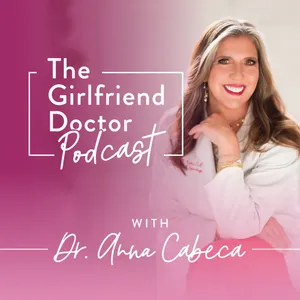
The Girlfriend Doctor w/ Dr. Anna Cabeca: Daily Summaries Delivered
by Dr. Anna Cabeca OB/GYN
Hosted by Dr. Anna Cabeca, triple-board-certified OB-GYN, bestselling author, and widely known as The Girlfriend Doctor, The Girlfriend Doctor Podcast is where expert medical advice meets honest, girlfriend-to-girlfriend conversations about women's health. From hormonal health and vitality, perimenopause, and menopause to sexual vitality, longevity, relationships, and vibrant aging, Dr. Anna brings together leading experts, groundbreaking insights, and practical, holistic solutions to help women take charge of their health and well-being. No topic is off-limits, and no question is too personal. It's about empowering women to feel vibrant, confident, healthy, and sexy at every stage of life; and to live with vitality, purpose, and passion. Because thriving isn't just about living longer, it's about living better.
Latest Episodes
The most recent episodes — sign up to get AI-powered summaries of each one.
- Today33 min
Which Herbs Do Your Hormones Love? 6 Menopause Plants with Magdalena Wszelaki
You walk past it every morning. The dandelion pushing through the crack in your driveway. The red clover at the edge of the trail. What if some of the plants herbalists have trusted for centuries are growing right outside your door? This week on The Girlfriend Doctor Show, I sit down with my dear friend Magdalena Wszelaki. Magdalena is a certified herbalist, health coach, and chef. She's the founder of Hormones Balance and Wellena, and the bestselling author of Cooking for Hormone Balance (HarperCollins) and Overcoming Estrogen Dominance. We recorded this one in person, and Magdalena went foraging that morning to show you a few plants. The hotel lawn was so perfect, she came back empty-handed. Not one weed. And that told us both something. In this episode, you'll learn: The no-weeds test that tells you a lawn has been sprayed Why herbalists say the liver loves bitters, and what your liver has to do with hormone balance How to use dandelion leaf and root, including an easy evening tea The 60-second trick for getting pomegranate seeds out, no water bath needed Why vitex is a lifeline for some women, and why it backfired for Magdalena How to make a red clover cold infusion, and why Magdalena drinks it as daily self-care What shatavari is, and why she calls it the next ashwagandha Herbs don't have to be an emergency kit. They can be part of how you care for yourself every single day. Know a girlfriend who loves her garden? Send her this episode. And if it gave you something to try, leave a review so another woman can find the show. Time Stamps: 00:00 Welcome, and why food is medicine 02:00 The no-weeds test for a sprayed lawn 03:50 Dandelion leaf, dandelion root, and why your liver loves bitters 07:35 Pomegranate, a fruit for brides and for menopause 10:30 The 60-second trick for pomegranate seeds 11:40 Pomegranate seed oil and pomegranate in the kitchen 14:10 Hibiscus, a cooling tea (and when to skip it) 15:50 Vitex, a lifeline for some women and a no-go for others 18:45 Broccoli sprouts and sprouting in a camper van 22:35 Magdalena's travel teas, rooibos and red clover 26:25 The horse trailer story Memorable Quotes: We have a saying in herbalism. The liver loves bitters. - Magdalena Wszelaki Not everything is for everybody. We all are bio-individually different. - Magdalena Wszelaki I don't have a problem, right? But I'm just doing that as part of self-care. - Magdalena Wszelaki Food is medicine. - Dr. Anna Cabeca Why did someone ever pick garlic out of the ground and think that would be a good idea to eat? - Dr. Anna Cabeca Don't you want something that you can make, you can pick, you can grow, and you know what it's been sprayed with? Nothing. - Dr. Anna Cabeca CONNECT WITH MAGDALENA Website hormonesbalance.com and wellena.com Instagram https://www.instagram.com/hormonebalance/ Facebook https://www.facebook.com/hormonesbalance TikTok https://www.tiktok.com/@hormonesbalance Pinterest https://www.pinterest.com/hormonebalance/ Books Cooking for Hormone Balance (HarperCollins) <a href= "https://www.amazon.com/Coo
- 6 days ago51 min
5 Signs of Nervous System Dysregulation in Women and Moms | Dr. Roseann Capanna-Hodge
Have you ever snapped at someone you love, felt overwhelmed by the smallest things, or wondered why you just can't seem to calm down? It may not be your personality. It may be your nervous system asking for support. Psychologist Dr. Roseann Capanna-Hodge joins Dr. Anna to explain nervous system dysregulation, why irritability, brain fog, poor sleep, and emotional overwhelm become more common in midlife, and how hormonal changes, including declining progesterone, can affect your ability to stay calm. With more than 30 years of experience, Dr. Roseann shares simple, practical tools you can start using today, including the 3-second love pause, 4-7-8 breathing, and everyday practices that help you move from reacting to responding. They also explore co-regulation, the vagus nerve, stress and memory, and how to create a calmer environment for yourself and your children. You'll discover why practicing calm before stress hits makes all the difference and how small, consistent changes can help you feel more connected, balanced, and in control. KEY TAKEAWAYS What nervous system dysregulation really means. Five common signs of nervous system dysregulation in midlife women. How declining progesterone and GABA affect emotional regulation. Why your nervous system syncs with the loudest person in the room. How co-regulation helps you and your children find calm. The 3-second love pause to help you respond instead of react. Simple daily practices, including 4-7-8 breathing and movement. Why small, consistent habits can create meaningful change. TIMESTAMPS Timestamp Chapter 00:00 Why Do You Snap at the People You Love? 02:17 What Does Nervous System Dysregulation Mean? 03:32 What Trolls Teaches Us About Stress and Connection 04:39 Co-Regulation: Borrowing Someone Else's Calm 08:24 5 Signs of Nervous System Dysregulation in Midlife 11:18 Progesterone, GABA, and a Shorter Fuse 15:49 The 3-Second Love Pause 17:32 4-7-8 Breathing, Tai Chi, and Everyday Stress Relief 27:44 Why Calming Your Nervous System Comes First 31:47 How Stress and Trauma Affect Memory 35:46 Can You Feel a Difference in 7 Days? 38:16 Why 30 Days of Consistency Matters NOTABLE QUOTES "If we try to learn in the dysregulation, it's like teaching somebody to swim when they're drowning." — Dr. Roseann Capanna-Hodge "I can be the most regulated person in that room." — Dr. Roseann Capanna-Hodge "The most amazing pharmacy in the world lives within us." — Dr. Anna Cabeca RESOURCES MENTIONED The Dysregulated Kid by Dr. Roseann Capanna-Hodge (print, library, and Audible). QEEG and Neurofeedback Providers: https://www.bcia.org Movie: Trolls Mighty Maca® Plus: https://dranna.c
- 2 weeks ago39 min
5 Egg Retrievals, 1 Baby. What a Fertility Doctor Wants You to Know | Dr. Dorette Noorhasan
Can fertility treatments really push you into early menopause? And what if the biggest clues about your fertility are being overlooked until it's too late? After five egg retrievals and a deeply personal journey through surrogacy, fertility specialist Dr. Dorette Noorhasan knows firsthand the heartbreak, uncertainty, and hope that can come with the road to motherhood. She joins Dr. Anna for an eye-opening conversation about the fertility questions every woman deserves answers to. Together, they explore whether fertility medications can trigger early menopause, which ovarian reserve tests to ask for in your 30s, and what AMH, FSH, and antral follicle count can reveal about reproductive health. Dr. Noorhasan explains the role of PGT-A embryo testing, why male factor contributes to half of infertility cases when a cause is identified, and the lifestyle habits and nutrients she discusses with her patients. They also look ahead at emerging fertility treatments, including PRP and stem cell research. Whether you're planning a family, have completed yours, or want to support your hormonal health for the long run, this episode offers practical insights, reassurance, and a powerful reminder that ovarian longevity is part of whole-body longevity. KEY TAKEAWAYS Fertility medications recruit eggs your body already set aside for that cycle, so according to Dr. Noorhasan they don't move menopause earlier. When a cause of infertility is found, it's roughly 50 percent female and 50 percent male factor, so both partners should be tested. Freezing eggs in your 20s or early 30s preserves both egg quantity and quality. Core ovarian reserve labs include cycle day 2 to 4 FSH, LH, and estradiol, plus AMH and an antral follicle count. Fertility test results are a snapshot of today, not a prediction of your future. Lifestyle can't change age or genetics, but it supports the health of every cell, including eggs and sperm. Ovarian longevity is a marker of overall longevity, whether or not you plan to have children. CHAPTERS 01:48 Your diagnosis is not your destiny. Meet Dr. Dorette Noorhasan 03:13 Career first, and "I forgot to have children" 04:53 Single mother by choice and the first two transfers 05:35 What is PGT-A testing? 06:49 The Halloween party that changed everything 07:26 Is infertility 50 percent male factor? 09:47 Egg retrievals three and four 12:37 "Do one more." The fifth retrieval 13:36 Do fertility drugs cause early menopause? 16:52 How IVF has changed since 1978 19:40 Why ovarian longevity matters for overall longevity 20:41 When should you freeze your eggs? 23:10 How lifestyle and smoking affect ovarian age 23:56 Growth hormone and PRP for fertility 27:49 4 labs to ask for in your 30s 28:45 The AMH, FSH, and follicle numbers to know 29:56 Why fertility tests are a Polaroid NOTABLE QUOTES "Your diagnosis is not your destiny." Dr. Anna Cabeca "My only regret is I didn't do another five egg retrievals to give my son a sibling." Dr. Dorette Noorhasan "The healthier you are, the healthier all your cells in your body are going to be, including your egg and sperm cells." Dr. Dorette Noorhasan RESOURCES MENTIONED Miracle Baby: A Fertility Doctor's Fight for Motherhood by Dr. Dorette Noorhasan The Fertility Manual: Reproductive Options For Your Family by Dr. Dorette Noorhasan Modern Parenthood podcast https://pionairepodcasting.com/modernparenthood/ Mighty Maca® Plus https://drannacabeca.com/products/mi
- 3 weeks ago45 min
Wired & Reactive: Histamine, the Nervous System & PEMF | Kiki Cordero-Drake
Shoulders up by your ears. Jaw clenched. Hives that show up out of nowhere. A body that stays braced no matter how clean you eat or how many supplements you take. If your mind is willing but your body is hesitant, Girlfriend, this episode is for you. ▶ Explore the EQ Flux Pod with IR Wand and use code DRANNA https://eqfluxwave.com/products/eq-flux-pod%e2%84%a2-w-ir-wand (EQ Flux Wave sponsored my Vitality Experience event. Full disclosure below.) On this episode of The Girlfriend Doctor Show, I sit down with Kiki Cordero-Drake, COO of EQ Flux Wave and founder of PEMFPilates™. Kiki is a Master Instructor in Pilates Sports Therapy who has worked in the field since 2007, and a Manual PEMF Practitioner since 2017. Her work blends frequency and vibration therapies, breathwork, bodywork, fascial stretching, and movement to support nervous system regulation, physical recovery, and performance. Kiki has lived this from the inside. Four shoulder surgeries before she turned 20. Then years of swelling, hives, and histamine reactions that no one could explain. She shares what she learned about feeling safe in her body again, and why healing is not one size fits all. In this episode, you'll learn • Why pain and stress feed each other, and how a nervous system stuck on high alert shows up in your body • What histamine is, and why reactions can flare in midlife • Why fascia, the "Cinderella organ," tightens with age • The link between your jaw, your breath, and your pelvic floor, and why an old C-section still matters • What PEMF is, in plain English, with a live demo on YouTube • Why "if you have a body, you're an athlete" Chapters 00:00 The mind is willing, the body is hesitant 03:10 Meet Kiki Cordero-Drake 03:40 Four shoulder surgeries before 20 08:05 When the histamine reactions started 09:05 Eating "clean" and still inflamed 13:50 Hives, swelling, and a body on high alert 18:15 Hydration, minerals, and running on empty 23:35 How PEMF came into Kiki's life 27:55 Pain creates stress, stress creates pain 31:15 Fascia, the Cinderella organ 38:45 If you have a body, you're an athlete 48:20 Your jaw, your breath, and your pelvic floor 51:55 Why old C-section scars still matter Memorable Quotes "The mind is willing, but the body is hesitant." Dr. Anna Cabeca "The one thing they don't talk about is the trauma that you hold within that injury that stays with you forever." Kiki Cordero-Drake "Pain creates stress and stress creates pain." Kiki Cordero-Drake "The fascia is our Cinderella organ." Dr. Anna Cabeca "If you have a body, you're an athlete." Kiki Cordero-Drake "Healing is not one size fits all." Kiki Cordero-Drake "The best years of your life are not behind you. They are waiting for you." Dr. Anna Cabeca Connect with Kiki EQ Flux Wave ▸ https://eqfluxwave.com/products/eq-flux-pod%e2%84%a2-w-ir-wand (code DRANNA) Instagram ▸ https://www.instagram.com/eqfluxwave TikTok ▸ https://www.tiktok.com/@eqfluxwave Connect with Dr. Anna Website ▸ https://dranna.com Instagram ▸ https://www.instagram.com/thegirlfrienddoctor/ YouTube ▸ https://www.youtube.com/@thegirlfrienddoctor TikTok ▸ https://www.tiktok.com/@drannacabeca Facebook ▸ https://www.facebook.com/thegirlfrienddoctor Know a girlfriend who's been told her aches are just part of getting older? Send her this episode, and leave a review so she can find the show too. Disclosure</s
- 4 weeks ago54 min
A Harvard Doctor on the Menopause Education Gap and How to Advocate for Yourself | Dr. Deborah Kwolek
You finally get the appointment. You tell your doctor you're not sleeping, the weight is climbing, and your moods feel like someone else's. You walk out with a prescription for an antidepressant, or with nothing at all. Dr. Deborah Kwolek, assistant professor of medicine at Harvard Medical School and director of Harvard's Women's Health and Menopause course, joins me to talk about why so many doctors were never taught menopause care and what she's doing to change it. We cover the exact questions to bring to your next appointment, your estrogen by the numbers, the labs to know, who may need to think harder about hormone therapy, and what to do when your doctor says, "I don't believe in hormones." Key Timestamps: 00:00 - Meet Dr. Deborah Kwolek 02:48 - Why Harvard had no menopause course 07:00 - Why most doctors were never trained in menopause 08:10 - Is the fear of hormone therapy out of proportion? 11:23 - 3 questions to ask your doctor 17:35 - Your estrogen levels, by the numbers 25:15 - Can you stay on hormones after 65? 33:46 - Who should think twice about hormone therapy? 50:08 - What to do when your doctor says no Memorable Quotes: "The fear among the providers and the fear among the patients. That's really out of proportion to the data." – Dr. Deborah Kwolek "You don't say that about anything else. I don't believe in statin drugs." – Dr. Deborah Kwolek "Almost every cell has estrogen receptors." – Dr. Deborah Kwolek "We don't stop someone's insulin at sixty-five. We don't stop their thyroid hormone at sixty-five. Where did that come from?" – Dr. Anna Cabeca "It's not hard. It's just unfamiliar." – Dr. Anna Cabeca "Your body is always speaking to you. Listen with curiosity, not criticism." – Dr. Anna Cabeca Connect With Guest: LinkedIn: http://www.linkedin.com/in/dkwolekmd Harvard Women's Health and Menopause course (for clinicians): https://learn.hms.harvard.edu/programs/primary-care-medicine Mass General Brigham: https://www.massgeneralbrigham.org/en/doctors/k/deborah-kwolek-3001790 Connect With Dr. Anna: Website: Dranna.comInstagram: https://www.instagram.com/thegirlfrienddoctor/ YouTube: https://www.youtube.com/@thegirlfrienddoctor TikTok: https://www.tiktok.com/@drannacabeca Facebook: https://www.facebook.com/thegirlfrienddoctor This episode is for educational purposes only and is not medical advice. Talk with your healthcare provider before making changes to your medications, supplements, or hormone therapy. Guest views are her own.
- Oct 15, 202653 min
Brain Defenders: How Hormones and Metabolism Shape Your Brain's Future | Dr. David Perlmutter
Your brain has its own immune cells, and the way you live each day helps decide whether they protect you or turn on you. Two-thirds of Americans living with Alzheimer's are women. Living longer doesn't explain that gap, girlfriend. So what does? I'm so happy to welcome back my dear friend Dr. David Perlmutter, board-certified neurologist and author of the New York Times bestseller Brain Defenders. He explains microglia, the immune cells that make up about 10% of your brain. On a good day, they're like firefighters in the firehouse, quietly repairing the blood-brain barrier and helping your brain build new connections. Under pressure from high blood sugar or inflammation, they can flip into what he calls the evil twin. Dr. Perlmutter walks me through what happens in the brain when estradiol drops in perimenopause and menopause, and how estrogen and your mitochondria, the energy makers inside your cells, keep each other going. He makes the case for caring about metabolic health in your 30s and 40s, long before memory changes show up. He shares the labs he wants on your radar, including hemoglobin A1C, homocysteine, fasting insulin, vitamin D and the p-tau217 blood test, plus why normal isn't the same as optimal. You'll hear why carrying the APOE4 gene is a predisposition, not a destiny, and exactly where he stands on hormone therapy for women. My favorite part was how oxytocin, my Queen Mother hormone, and time with the people you love help keep your brain's immune cells in their supportive state. You get to be the architect of your brain's destiny. This conversation shows you where to start. This episode is for educational purposes only and is not medical advice. Guest views are their own. Talk with your healthcare provider before making changes to your health routine or medications. Key Timestamps 00:00 Welcome back Dr. David Perlmutter and Brain Defenders 05:25 How blood sugar and inflammation create the evil twin 10:25 Falling estradiol and the loss of brain connections 12:50 How mitochondria and estrogen support each other 14:50 Blood sugar and brain risk 15:55 Why brain health starts in your 30s and 40s 16:45 Common medications and brain health 18:30 The labs you can ask for 20:05 A1C and why normal isn't optimal 22:55 The p-tau217 blood test 23:40 APOE4 is a predisposition, not a destiny 31:35 Oxytocin, connection and your brain's immune cells 33:20 Where Dr. Perlmutter stands on hormone therapy 38:10 Cortisol, sleep and your daily rhythm 41:35 What FSH may be telling you after menopause Memorable Quotes 1. "It's really all about agency, about each of us being the architect of our brain's destiny." — Dr. David Perlmutter 2. "Hormone imbalances and mood disorders are metabolic until proven otherwise." — Dr. Anna Cabeca 3. "It's time that we re-message what's going on with this genetic predisposition, and not a predetermination." — Dr. David Perlmutter 4. "One of the biggest threats for brain decline is isolation." — Dr. David Perlmutter 5. "Some is good. Too much is bad. The devil is in the dose." — Dr. David Perlmutter Connect With Dr. David Perlmutter Instagram: @davidperlmutter LinkedIn: David Perlmutter, MD YouTube: <a href= "https://www.youtube.com/user/D
- Oct 8, 202653 min
The Hidden Stress Behind Your Hormone Imbalance | Dr. Sue Morter
A divorce. A layoff. A season where you held everything together for everyone. Your body flipped into fight or flight to protect you, exactly the way it was built to. But what happens when the stress passes and your nervous system never gets the message? Bioenergetic medicine expert Dr. Sue Morter, author of The Energy Codes and The Anatomy of Awakening, explains the hidden stress your body can keep carrying for years. She shows how that old emergency ripples through your adrenals, your thyroid, and your hormones in midlife. Then she walks me through her first two steps. The wise belly breath, which helps engage the calming side of your nervous system. And pratyahara, an ancient practice for calling your energy back from the people and situations that drain you. Dr. Sue and I also get into what releasing anger means (hint, it's not dumping it on someone), how to work with a feeling without needing the whole story, and why meditation can feel impossible at first. If you've been doing everything right and still feel wired, tired, and on edge, Gorgeous, this one is for you. Key takeaways Your nervous system can stay locked in fight or flight long after a stressful event ends, because it never received the signal that the danger passed. That hidden stress keeps your adrenals pumping out cortisol, and Dr. Sue describes the thyroid stepping in to compensate until your whole hormonal system starts to roller-coaster. Your body works on a priority basis, so survival comes before repair, detox, and renewal. A slow belly breath, low first and then rising into the chest, is Dr. Sue's simplest first step for telling your body the coast is clear. Pratyahara means drawing your senses back onto yourself, so you can stay in a hard conversation without handing over your energy. Releasing anger means feeling and moving the energy in your body, not unloading it on someone else. If meditation feels impossible, build body awareness first so stillness becomes easier. Key Timestamps 01:00 Growing up with a pioneer of energy medicine 03:05 Root cause versus symptom care 05:00 The hidden stress keeping you in fight or flight 06:15 The trap door between the thalamus and hypothalamus 09:25 Step one, the belly breath 13:15 Why your belly is wise 14:15 The doorway exercise 18:20 What if you're the one who triggers someone 26:15 The two systems that run your body 31:30 What releasing anger means 40:00 When meditation feels impossible 42:30 Take it to the body practices Memorable quotes "It's doing the right thing, but it's doing it at the wrong time." Dr. Sue Morter "Work with the energy instead of the label, work with the energy instead of the story." Dr. Sue Morter "We are the CEO of our body, and the best years of our lives are not behind us. They are waiting for us." Dr. Anna Cabeca Resources mentioned The Energy Codes by Dr. Sue Morter The Anatomy of Awakening by Dr. Sue Morter Dr. Sue's courses and classes at drsuemorter.com </l
- Oct 1, 20261h 7m
What Caused Your Cancer? The Question Nobody Asked Dr. Nasha Winters
When a woman sits across from Dr. Anna after a breast cancer diagnosis, she asks one question. What did your oncologist say caused it? Almost every time, the answer is a blank stare. Dr. Nasha Winters has lived that silence from the inside. By 19, she had collected a decade of diagnoses, including PCOS, endometriosis, IBS, anxiety, and thyroid trouble. Then she landed in the ER with a grapefruit-sized tumor and was told she was too ill for treatment. In this conversation, she shares the three things she credits with changing her path. She also explains how childhood trauma can shape the immune system and why she sees the body as a garden to tend rather than a battlefield. Dr. Nasha is a naturopathic doctor and the author of The Metabolic Approach to Cancer. She walks through the ten areas of terrain she evaluates, the neutrophil-to-lymphocyte ratio hiding in a standard CBC, and her inflammation "trifecta" of CRP, sed rate, and LDH. She explains why ringing the bell after treatment is the beginning of rebuilding. She also shares the four S's she sees as common threads in breast health. Key takeaways Recurring symptoms and diagnoses can be signals worth investigating, not just labels to manage. Dr. Nasha looks at ten areas of terrain and now starts with mental and emotional health. A standard CBC can reveal your neutrophil to lymphocyte ratio. She prefers it closer to 2 to 1. She tracks CRP, sed rate, and LDH together as a picture of inflammation and metabolic health. In her view, finishing treatment is when the work of rebuilding healthy cells begins. Research links a balanced microbiome with a better response to immunotherapy. Her four S's for breast health are sugar, stress, sleep, and sex. Timestamps 00:00 The question most women are never asked 05:45 A terminal ovarian cancer diagnosis at 19 12:15 The three "accidents" she credits 17:00 Dr. Anna on the 13-hour overnight fast 19:00 The ACE score and psychoneuroimmunology 37:45 The 10 areas of terrain 44:40 The neutrophil to lymphocyte ratio 48:15 CRP, sed rate, and LDH 53:30 Why ringing the bell is the beginning 56:00 The microbiome and immunotherapy 61:30 Saliva vs. urine pH and your body's capacity 71:00 The four S's of breast health Memorable quotes "So I thought I was pre-med. Cancer had another story for me." Dr. Nasha Winters "They were trying to be a guidepost of, hey, there's something wrong here that needs our attention." Dr. Nasha Winters, on her early diagnoses "It's very simple. Test, assess, address, don't guess." Dr. Nasha Winters "What I tell folks is that's actually just the beginning." Dr. Nasha Winters, on ringing the bell after treatment "Your body is always speaking to you." Dr. Anna Cabeca "The best years of your life aren't behind you. They're waiting for you." Dr. Anna Cabeca Resources mentioned Dr. Nasha Winters at drnasha.com, which has her books, terrain questionnaire, podcast, Substack, and free resources on what to do after a diagnosis The Metabolic Approach to Cancer by Dr. Nasha Winters Mistletoe and the Emerging Future of Integrative Oncology by Dr. Nasha Winters The Adverse Childhood Experiences (ACE) questionnaire The 2016 JAMA Oncology study on overnight fasting and breast cancer recurrence The Girlfriend Doctor community [TEAM TO ADD LINK] Connect with Dr. Nasha Winter Website: https://drnasha.com Podcast: https://www.youtube.com/@drnashawinters <p dir="ltr" role="presentati
Get The Girlfriend Doctor w/ Dr. Anna Cabeca summaries in your inbox
Free AI-powered daily recaps. Key takeaways, quotes, and mentions — in a 5-minute read.
Get Free Summaries →Free forever for up to 3 podcasts. No credit card required.
You Might Also Like
Listeners also like.

unPAUSED with Dr. Mary Claire Haver
A board-certified OB-GYN hosts candid discussions with experts and leaders on women's health, identity, and empowerment in midlife.
Everyday Wellness: Midlife Hormones, Menopause, and Science for Women 35+
A nurse practitioner shares science-based strategies for managing midlife hormones, menopause, and women's health.
Red Pill Your Healthcast
Two healthcare providers discuss overlooked health issues and empower listeners to make informed decisions for their families.
Live Like a Girl with Dr. Mindy Pelz
Dr. Mindy Pelz explores women's health through hormone science and wellness conversations to help women live in rhythm with their bodies.

The Dr Vonda Show
An orthopedic surgeon discusses aging, movement, bone health, and resilience with experts and women athletes.

The Food Medic
Dr. Hazel Wallace
Treated with Dr. Sara Szal
Dr. Sara Szal explores holistic health solutions through conversations with experts and patients seeking mind, body, and soul healing.
You Are Not Broken
A urologic surgeon hosts experts to discuss women's health, hormones, and sexuality with science-backed insights and candid conversation.

Afterpause
Evidence-based guidance on menopause, hormone health, sleep, and metabolism from a certified wellness coach and women's health experts.

The Antisocial Doctors Podcast
Sonia Singh MD & Rebecca Berens MD

The Dr. Hyman Show
Explores root causes of chronic disease and promotes functional medicine, nutrition, and preventive health through expert discussions.

Renee Belz & Lauren Sambataro
Biohacker Babes
About The Girlfriend Doctor w/ Dr. Anna Cabeca
Hosted by Dr. Anna Cabeca, triple-board-certified OB-GYN, bestselling author, and widely known as The Girlfriend Doctor, The Girlfriend Doctor Podcast is where expert medical advice meets honest, girlfriend-to-girlfriend conversations about women's health. From hormonal health and vitality, perimenopause, and menopause to sexual vitality, longevity, relationships, and vibrant aging, Dr. Anna brings together leading experts, groundbreaking insights, and practical, holistic solutions to help women take charge of their health and well-being. No topic is off-limits, and no question is too personal. It's about empowering women to feel vibrant, confident, healthy, and sexy at every stage of life; and to live with vitality, purpose, and passion. Because thriving isn't just about living longer, it's about living better.
Customized Recaps
AI-powered recaps with compact key takeaways, quotes, and insights.
Straight to Your Inbox
Get key takeaways from The Girlfriend Doctor w/ Dr. Anna Cabeca in a 5-minute read.
Save Hours Every Week
Stay current on your favorite podcasts without falling behind.
Frequently Asked Questions
What is Podzilla's The Girlfriend Doctor w/ Dr. Anna Cabeca daily summary?
It's a free AI-powered email that summarizes new episodes of The Girlfriend Doctor w/ Dr. Anna Cabeca as soon as they're published. You get the key takeaways, notable quotes, and links & mentions — all in a quick read.
How does the The Girlfriend Doctor w/ Dr. Anna Cabeca podcast summary work?
When a new episode drops, our AI transcribes and analyzes it, then generates a personalized summary tailored to your interests and profession. It's delivered to your inbox every morning.
Is this an official The Girlfriend Doctor w/ Dr. Anna Cabeca product?
No. Podzilla is an independent service that summarizes publicly available podcast content. We're not affiliated with or endorsed by Dr. Anna Cabeca OB/GYN.
Can I get summaries of other podcasts too?
Absolutely! The free plan covers up to 3 podcasts, any in the catalog. Basic raises that to 15, Pro to 40 and Max to 100. Browse our full catalog at /podcasts.
How often does The Girlfriend Doctor w/ Dr. Anna Cabeca release new episodes?
The Girlfriend Doctor w/ Dr. Anna Cabeca publishes weekly. Our AI generates a summary within hours of each new episode.
What topics does The Girlfriend Doctor w/ Dr. Anna Cabeca cover?
The Girlfriend Doctor w/ Dr. Anna Cabeca covers topics including Medicine, Sexuality, Fitness, Health & Fitness, Alternative. Our AI identifies the specific themes in each episode and highlights what matters most to you.
Start getting The Girlfriend Doctor w/ Dr. Anna Cabeca summaries tomorrow morning.
Free forever for up to 3 podcasts. No credit card required.
Free forever for up to 3 podcasts. No credit card required.