Free Daily Podcast Summary
The Failure Gap: Daily Summaries Delivered
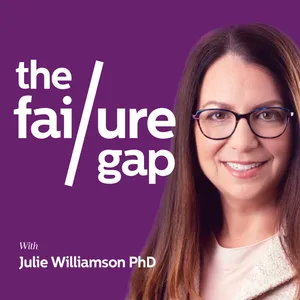
by Julie Williamson, Ph.D.
The Failure Gap podcast is hosted by Julie Williamson, Ph.D., the CEO and a Managing Partner at Karrikins Group, a Denver-based, global-serving business consultancy. Julie delves into the critical space between agreement and alignment - where even the best ideas falter without decisive action. Through candid conversations with a diverse mix of leaders, this podcast explores both the successes and failures that shape the journey of leadership. Featuring visionary leaders from companies of all sizes, from billion-dollar giants to mid-market innovators, to scrappy start-ups, The Failure Gap uncovers the real-life challenges of transforming ideas into impactful outcomes. Tune in to learn how top leaders bridge the gap and drive meaningful progress in their organizations.
Latest Episodes
The most recent episodes — sign up to get AI-powered summaries of each one.
- 5 days ago53 min
A Conversation With Debra P. Wilson, President of NAIS
Debra Wilson, president of the National Association of Independent Schools (NAIS), took an unconventional path into education leadership. After law school and a start at the Department of Justice, she staged what she calls a “self-intervention” and asked what work would truly fill her cup. The answer led her to NAIS, where she spent nearly 20 years moving from regulatory work into governance, risk management, and organizational leadership. After serving as president of the Southern Association of Independent Schools, including leading through the pandemic, Debra returned to NAIS as president.Her journey offers a useful reminder that there may be no wrong step, just the next one. Sometimes the best leadership move is recognizing when it’s time to find a different trail.Episode TakeawaysBuild strategy with people, not for them. Debra's team engaged staff and members throughout strategic planning, creating shared meaning before the polished plan ever appeared. Agreement is easier when people receive a strategy. Alignment gets stronger when they help build it.Going slow can help you go fast. Debra has a bias toward action, but she recognizes that transformation requires time to build clarity, common language, and commitment. Otherwise, leaders risk adding more initiatives while wondering why nothing moves.Acknowledge the messy middle. Transformation asks people to sustain existing work while building new capabilities. Leaders need to recognize that reality, provide resources, and make trade-offs rather than quietly piling more onto already-full plates.Treat boards as learning ecosystems. Healthy board alignment requires more than good governance hygiene. Board members need context, education, clear expectations, and meaningful opportunities to contribute strategically. Simply telling someone to “be strategic” is not much of a strategy.Lead with clarity, culture, and empathy. Debra encourages leaders to simplify communication, build shared language, pay attention to culture, and get curious when someone responds unexpectedly. Misalignment may be signaling something people believe is at risk.Debra leaves us with an invitation to align around curiosity. Imagine bringing together people with dramatically different perspectives to explore how education works around the world, then asking a bigger question: If we could build education again from the ground up, what would we create? Alignment doesn’t require everyone to arrive with the same answer. It creates the context for people to wrestle with important questions together.---------------Dr. Julie Williamson wrote the book on how to Make HOW Matter. After working with hundreds of executives and leadership teams at Fortune 500 and S&P 500 companies, she created the Make HOW Matter Accelerator™ to bring the power of leadership alignment to more leaders at every level.Grounded in both real-world business experience and social science, this virtual, self-paced program helps you turn the principles of Make HOW Matter into practical leadership skills you can use every day. Whether you’re a small business owner, leading a division, or simply looking to increase your influence and drive better results, you’ll learn how to close the gap between agreement and true alignment, and turn priorities into action. Ready to make HOW matter? Explore the Make HOW Matter Accelerator™.Learn more about Julie and Karrikins Group:Connect with Julie on LinkedInFollow Karrikins Group on LinkedIn Check out Julie's book, 'Make HOW Matter: Key Conversations for Leaders to Build Alignment and Accelerate Growth'Learn more about how Karrikins Group helps enterprise teams drive better results
- 2 weeks ago42 min
A Conversation With Emily Cates, VP Sales Transformation & Revenue Ops, Zebra Technologies Corporation
Emily Cates, Head of Go-to-Market Transformation and Operations at Zebra Technologies, has built a career by saying yes to opportunities before having every detail figured out. Starting in HR and talent development, she moved into the business through chief of staff, services operations, P&L leadership, and eventually enterprise transformation. Along the way, she experienced startups, hypergrowth, acquisitions, and a successful business turnaround. Her journey has given her a unique perspective on what it takes to move people from agreeing that change is necessary to aligning around HOW to make it happen together.Episode Takeaways:Treat transformation like value selling. Enterprise leaders need a compelling reason to participate in change. Emily emphasizes understanding what matters to each stakeholder, investing in those relationships over time, and connecting transformation to the value they need to see.Build it together. Bringing leaders a fully baked solution can invite resistance. Emily prefers giving stakeholders something they can shape together, creating shared ownership instead of hoping everyone enthusiastically embraces someone else’s brilliant PowerPoint.Put the truth on the wall. During a professional services turnaround, Emily gathered candid feedback from customers, partners, and colleagues and created a literal “wall of truth.” Seeing the challenges together allowed the leadership team to identify themes, confront root causes, and align around what needed to change.Anchor transformation in shared meaning. Whether the goal is becoming more customer-first or changing a go-to-market model, leaders need clarity about what those ideas actually mean in behaviors and decisions. Connecting transformation to existing values and cultural expectations can make that alignment stronger.Use radical thinking to break groupthink. When teams get stuck, Emily deliberately introduces an idea far outside the current thinking. The team may never adopt the radical option, but exploring it can move everyone beyond the comfortable circle of familiar answers.Emily leaves us with a timely challenge around AI. Its speed makes traditional, sequential approaches to alignment difficult. The opportunity is to figure out how to move far and fast without leaving alignment behind. That means treating alignment as iterative work, continuously learning, shaping, and adjusting together rather than waiting for the perfect answer before moving.To connect with Emily Cates outside of this episode, connect with him on LinkedIn here.---------------Dr. Julie Williamson wrote the book on how to Make HOW Matter. After working with hundreds of executives and leadership teams at Fortune 500 and S&P 500 companies, she created the Make HOW Matter Accelerator™ to bring the power of leadership alignment to more leaders at every level.Grounded in both real-world business experience and social science, this virtual, self-paced program helps you turn the principles of Make HOW Matter into practical leadership skills you can use every day. Whether you’re a small business owner, leading a division, or simply looking to increase your influence and drive better results, you’ll learn how to close the gap between agreement and true alignment, and turn priorities into action. Ready to make HOW matter? Explore the Make HOW Matter Accelerator™.Learn more about Julie and Karrikins Group:Connect with Julie on LinkedInFollow Karrikins Group on LinkedIn Check out Julie's book, 'Make HOW Matter: Key Conversations for Leaders to Build Alignment and Accelerate Growth'Learn more about how Karrikins Group helps enterprise teams drive better results
- Aug 19, 202644 min
A Conversation With Alex Pregnolato, Group CFO, Liberty London
Alex Pregnolato, Group CFO of Liberty London, has built a career by staying curious, taking calculated risks, and refusing to get too comfortable. Born and raised in Italy, Alex’s finance journey has taken him from Ferrero to Prada, MCM, Versace, De Beers, and now Liberty London, with stops in New York, China, and London along the way. His experience has taught him that functional expertise is only part of leadership. To have real influence, leaders need to understand the business, connect their work to the bigger picture, and be willing to adapt when the plan meets reality.Episode TakeawaysStrategy needs execution. Organizations can spend enormous energy creating a three-year strategy, but the hard work is breaking it into clear actions, assigning accountability, and maintaining focus long enough to see results.Don’t confuse transformation with change. Alex argues that “transformation” has become an overused label. A turnaround, digital initiative, or new sales channel may require very different leadership, so clarity about the actual challenge matters.Expect the plan to change. No strategy survives exactly as written. Strong leadership teams learn, adjust, and pivot without abandoning the larger ambition every time something goes sideways.Manage expectations with truth, not optimism. Especially with boards and investors, Alex believes leaders build credibility by being clear about what a strategy will require, how long it will take, and where investment must come before returns.Make the bigger picture visible. Alex keeps teams connected by explaining why the work matters, sharing broader business performance, and connecting with people as humans. People are much more likely to align around a goal when they understand the context, not just their assignment.Alex’s ideas reinforce a central theme of Make HOW Matter: knowing WHAT you want to accomplish and WHY it matters is insufficient without alignment around HOW leaders will deliver together. His final challenge gives us something refreshingly tangible to align around: cleaner streets and cities. It’s a reminder that alignment becomes meaningful when agreement turns into individual action. And, conveniently, picking up the occasional piece of trash requires considerably less effort than most three-year strategic plans.To connect with Alex Pregnolato outside of this episode, connect with him on LinkedIn here.--------------------Dr. Julie Williamson wrote the book on how to Make HOW Matter. After working with hundreds of executives and leadership teams at Fortune 500 and S&P 500 companies, she created the Make HOW Matter Accelerator™ to bring the power of leadership alignment to more leaders at every level.Grounded in both real-world business experience and social science, this virtual, self-paced program helps you turn the principles of Make HOW Matter into practical leadership skills you can use every day. Whether you’re a small business owner, leading a division, or simply looking to increase your influence and drive better results, you’ll learn how to close the gap between agreement and true alignment, and turn priorities into action. Ready to make HOW matter? Explore the Make HOW Matter Accelerator™.Learn more about Julie and Karrikins Group:Connect with Julie on LinkedInFollow Karrikins Group on LinkedIn Check out Julie's book, 'Make HOW Matter: Key Conversations for Leaders to Build Alignment and Accelerate Growth'Learn more about how Karrikins Group helps enterprise teams drive better results
- Jul 7, 202645 min
A Conversation With Susan Lintonsmith, President/CEO, Regis Corporation
Susan Lintonsmith has built a career by saying yes to opportunities that stretched her leadership. From marketing roles at Pizza Hut and Coca-Cola to leading Quiznos as CEO and now serving as President and CEO of Regis Corporation, her journey reflects a commitment to learning, enterprise thinking, and leading through change. Along the way, she has also served on multiple boards, bringing a broad perspective to leadership across industries. One lesson is clear: if you want the next role, start leading like you're already in it. It's easier to ask for the marker when you've already been sketching the future.Episode Takeaways:Think beyond your function. Enterprise leaders stand out by understanding how decisions ripple across the entire business, not just their own department. Silos might keep your inbox organized, but they rarely grow great companies.Alignment requires clarity, not just agreement. Teams move faster when everyone understands the why, their role, and how progress will be measured. Getting in the boat is agreement. Picking up the oar is alignment.Create a culture where respectful challenge is expected. Strong leaders invite pushback, reward curiosity, and make it safe for people to question ideas in the room, not after the meeting in the hallway.Look for the real source of resistance. What appears to be reluctance is often a communication gap or an operational concern. Leaders who stay curious uncover the invisible barriers instead of assuming people simply dislike change.Courage starts with the leader. Alignment grows when leaders model openness, ask thoughtful questions, encourage healthy debate, and build an environment where the best ideas win, regardless of whose idea they were.Susan's perspective reinforces that leadership is less about having every answer and more about creating the conditions for better conversations. Enterprise leaders who make the invisible visible, stay curious, and invite honest dialogue build stronger alignment and achieve results that no single function can deliver alone. The work is not always easy, but as Susan reminds us, progress usually starts with someone willing to pick up the marker.To connect with Susan Lintonsmith outside of this episode, connect with her on LinkedIn here.--------------------Is misalignment holding your organization back?Aligned teams deliver better results more consistently, and they have deeper connections to each other and their organizations. Download our free Leadership Alignment Evaluation Tool and take the first step toward transforming how your team works together.Learn more about Julie and Karrikins Group:Connect with Julie on LinkedInFollow Karrikins Group on LinkedIn Check out Julie's book, 'Make HOW Matter: Key Conversations for Leaders to Build Alignment and Accelerate Growth'Learn more about how Karrikins Group helps enterprise teams drive better results
- Jun 16, 202645 min
A Conversation With Kristin Russell, CEO and Board Member, CBTS
Kristen Russell’s leadership journey is anything but linear. From managing engineers at Sun Microsystems to leading global operations at Oracle, serving as Colorado’s first Secretary of Technology, and now guiding CBTS as CEO, her career has been shaped by two questions: Can I learn? and Can I contribute? That curiosity has helped her lead large-scale transformations across industries and navigate the often-messy space between agreement and alignment.Episode TakeawaysTransformation is emotional, not just strategic. Leaders often focus on the intellectual side of strategy while overlooking the emotions people experience during change. As Kristen puts it, “strategy is intellectual, transformation is emotional.” Communication is never one-and-done. Alignment requires ongoing dialogue, listening, and clarification. If you're tired of repeating yourself, your team may just be starting to absorb the message. Focus on advocates, not just skeptics. Early in her career, Kristen spent too much energy trying to convert the loudest detractors. She learned that investing in champions creates momentum that helps bring the broader organization along. Clarity is a leader’s primary job. In the absence of clarity, people fill in the blanks themselves. Transparency about what is working, what is not, and what remains uncertain builds trust and keeps teams moving forward. Work on the team before the strategy. At CBTS, Kristen prioritized leadership team alignment, role clarity, and shared ways of working before tackling ambitious transformation efforts. Sometimes the fastest path forward starts with slowing down long enough to get aligned. One of the most memorable ideas from this conversation is that leaders cannot simply sponsor change for others. They must change how they lead. Alignment is not a presentation, a project plan, or a motivational poster collecting dust in the break room. It is the daily work of creating clarity, building trust, having the hard conversations, and keeping your hands on the wheel as the road changes.To connect with Kristin Russell outside of this episode, connect with her on LinkedIn here.--------------------Is misalignment holding your organization back?Aligned teams deliver better results more consistently, and they have deeper connections to each other and their organizations. Download our free Leadership Alignment Evaluation Tool and take the first step toward transforming how your team works together.Learn more about Julie and Karrikins Group:Connect with Julie on LinkedInFollow Karrikins Group on LinkedIn Check out Julie's book, 'Make HOW Matter: Key Conversations for Leaders to Build Alignment and Accelerate Growth'Learn more about how Karrikins Group helps enterprise teams drive better results
- Jun 2, 202644 min
A Conversation With Sergio Rodriguez, President and CEO, The Hector and Gloria Lopez Foundation
Sergio Rodriguez’s leadership journey is a reminder that careers rarely follow a straight line. Starting as an architect, moving into technology consulting, and eventually becoming President and CEO of The Hector and Gloria Lopez Foundation, Sergio’s path reflects the power of staying open to opportunity. Today, he leads a foundation dedicated to helping first-generation Texas students earn bachelor’s degrees through scholarships and comprehensive support that extends far beyond tuition.Throughout the conversation, Sergio shares how helping his aunt and uncle plan their philanthropic legacy became an unexpected calling. What began as estate planning evolved into building a foundation that has already awarded tens of millions of dollars in support to first-generation students. Along the way, he learned that leadership is often less about moving fast and more about bringing others along with clarity, trust, and connection.Episode Takeaways Leadership journeys rarely follow a linear path. Being open to unexpected opportunities can create impact far beyond your original career plans Boards move at the speed of trust. Consistent communication, transparency, and personal connection help transform agreement into meaningful alignment First-generation students often face barriers beyond tuition, including transportation, childcare, financial emergencies, and navigating university systems Small obstacles can have outsized consequences. Sometimes an $80 parking ticket or a flat tire creates a bigger barrier than a difficult exam Building alignment requires leaders to meet people where they are, whether that is a board member attending quarterly meetings or a student navigating college for the first timeOne of the most compelling themes in this conversation is the idea that alignment grows through connection. Sergio’s approach with both board members and students reflects a simple but powerful principle: people are far more likely to commit when they understand the purpose, feel informed, and see the impact firsthand. As organizations tackle growth, change, or transformation, leaders would be wise to remember that spreadsheets rarely inspire people, but stories and relationships often do. Sometimes the shortest path to results starts with a conversation rather than another meeting about the meeting.To learn more about the amazing work of The Hector and Gloria Lopez Foundation, click here. Or connect with Sergio on LinkedIn here.-------------------------Is misalignment holding your organization back?Aligned teams deliver better results more consistently, and they have deeper connections to each other and their organizations. Download our free Leadership Alignment Evaluation Tool and take the first step toward transforming how your team works together.Learn more about Julie and Karrikins Group:Connect with Julie on LinkedInFollow Karrikins Group on LinkedIn Check out Julie's book, 'Make HOW Matter: Key Conversations for Leaders to Build Alignment and Accelerate Growth'Learn more about how Karrikins Group helps enterprise teams drive better results
- May 19, 202646 min
A Conversation With Richard Kopelman, CEO of Aprio
Richard Kopelman, CEO of Aprio Advisory Group, has spent more than three decades with the firm, evolving from a generalist learning the craft to leading a rapidly scaling, global organization. Along the way, he built and grew practices, leaned into specialization, and then expanded back out into enterprise leadership. He describes becoming CEO as “starting over as a freshman,” a mindset that seems to have served him well through 50+ mergers and significant growth. His leadership journey reflects a pattern of exploration, reinvention, and a willingness to take calculated swings… even if not every one is a home run.Episode TakeawaysA growth mindset is a deliberate leadership choice. Aprio’s shift away from “why not” thinking toward abundance unlocked expansion, including bold moves like acquiring a law firmIf everything is working, you are probably not taking enough risks. Richard’s “bat .500” philosophy reinforces that smart experimentation beats perfectionLeaders must let go of technical identity to lead the business, but still dive deep when needed. It is less about abandoning expertise and more about using it strategicallyAlignment requires repetition. If you are tired of talking about the strategy, your team is just starting to hear itTrust is the backbone of execution. Healthy debate in the room is critical, but once a decision is made, alignment means no back-channeling and full commitmentRichard’s perspective reinforces a familiar but often ignored truth. Agreement is easy, especially in rooms full of smart people. Alignment is harder and requires trust, repetition, and the discipline to move forward together even when opinions differ. His emphasis on blameless problem solving and “locked arms” execution is a practical reminder that leaders do not need perfect consensus; they need shared commitment. The real opportunity for any leadership team is to ask where they are still debating after the meeting instead of delivering after it.Connect with Richard Kopelman outside of this episode on LinkedIn here or through Aprio here.-------------------------Is misalignment holding your organization back?Aligned teams deliver better results more consistently, and they have deeper connections to each other and their organizations. Download our free Leadership Alignment Evaluation Tool and take the first step toward transforming how your team works together.Learn more about Julie and Karrikins Group:Connect with Julie on LinkedInFollow Karrikins Group on LinkedIn Check out Julie's book, 'Make HOW Matter: Key Conversations for Leaders to Build Alignment and Accelerate Growth'Learn more about how Karrikins Group helps enterprise teams drive better results
- May 6, 202632 min
A Conversation With Kristi Cappelletti-Matthews, Chief Human Resources Officer, VSP Vision
Kristi Cappelletti-Matthews is the Chief Human Resources Officer at VSP Vision, bringing more than three decades of HR leadership across healthcare and high tech. Her journey to CHRO started with a chance gym conversation that turned into a career-defining opportunity. Beginning as a compensation specialist, she expanded her scope by consistently connecting her expertise to broader business outcomes, eventually stepping into enterprise leadership where alignment across functions became essential.Episode Takeaways:Alignment requires more than agreement. Leaders must actively connect decisions to enterprise impact and involve stakeholders early to avoid siloed thinkingCulture doesn’t scale by accident. VSP intentionally evolved its culture during COVID to ensure connection and inclusion across a distributed workforceIntegration starts with culture. Bringing acquired companies into the “family” works best when values are clear but flexibility is preserved. Enterprise mindset is a learned shift. Leaders moving from smaller organizations must adapt from owning decisions to sharing them, which takes clarity and ongoing dialogueGood meetings drive alignment. Clear outcomes, purposeful conversation, and real dialogue beat calendar overload every timeKristi’s perspective reinforces a core truth: alignment is less about grand declarations and more about consistent, sometimes uncomfortable conversations that connect people to the bigger picture. Whether integrating systems, evolving culture, or simply trying to stick to a workout plan, success comes down to commitment, realistic expectations, and a willingness to adjust along the way. Or, as she subtly reminds us, “good enough” often beats endlessly perfect and never delivered.Connect with Kristi outside of this episode on LinkedIn here or through VSP Vision here.-------------------------Is misalignment holding your organization back?Aligned teams deliver better results more consistently, and they have deeper connections to each other and their organizations. Download our free Leadership Alignment Evaluation Tool and take the first step toward transforming how your team works together.Learn more about Julie and Karrikins Group:Connect with Julie on LinkedInFollow Karrikins Group on LinkedIn Check out Julie's book, 'Make HOW Matter: Key Conversations for Leaders to Build Alignment and Accelerate Growth'Learn more about how Karrikins Group helps enterprise teams drive better results
About The Failure Gap
The Failure Gap podcast is hosted by Julie Williamson, Ph.D., the CEO and a Managing Partner at Karrikins Group, a Denver-based, global-serving business consultancy. Julie delves into the critical space between agreement and alignment - where even the best ideas falter without decisive action. Through candid conversations with a diverse mix of leaders, this podcast explores both the successes and failures that shape the journey of leadership. Featuring visionary leaders from companies of all sizes, from billion-dollar giants to mid-market innovators, to scrappy start-ups, The Failure Gap uncovers the real-life challenges of transforming ideas into impactful outcomes. Tune in to learn how top leaders bridge the gap and drive meaningful progress in their organizations.
Customized Recaps
AI-powered recaps with compact key takeaways, quotes, and insights.
Straight to Your Inbox
Get key takeaways from The Failure Gap in a 5-minute read.
Save Hours Every Week
Stay current on your favorite podcasts without falling behind.
Frequently Asked Questions
What is Podzilla's The Failure Gap daily summary?
It's a free AI-powered email that summarizes new episodes of The Failure Gap as soon as they're published. You get the key takeaways, notable quotes, and links & mentions — all in a quick read.
How does the The Failure Gap podcast summary work?
When a new episode drops, our AI transcribes and analyzes it, then generates a personalized summary tailored to your interests and profession. It's delivered to your inbox every morning.
Is this an official The Failure Gap product?
No. Podzilla is an independent service that summarizes publicly available podcast content. We're not affiliated with or endorsed by Julie Williamson, Ph.D..
Can I get summaries of other podcasts too?
Absolutely! The free plan covers up to 3 podcasts. Upgrade to Pro for 15, or Premium for 50. Browse our full catalog at /podcasts.
How often does The Failure Gap release new episodes?
The Failure Gap publishes biweekly. Our AI generates a summary within hours of each new episode.
What topics does The Failure Gap cover?
The Failure Gap covers topics including Business, Management. Our AI identifies the specific themes in each episode and highlights what matters most to you.
Start getting The Failure Gap summaries tomorrow morning.
Free forever for up to 3 podcasts. No credit card required.
Free forever for up to 3 podcasts. No credit card required.