Free Daily Podcast Summary
The Drug Science Podcast: Daily Summaries Delivered
by Drug Science
Get key takeaways, quotes, and insights from The Drug Science Podcast in a 5-minute read. Delivered straight to your inbox.
Latest Episodes
The most recent episodes — sign up to get AI-powered summaries of each one.
- 6 days ago57 min
150. Synthetic Alcohol with David Orren
Join us in this episode of the Drug Science Podcast as Prof Jo Neill speaks with David Orren, CEO of GABA Labs, which has pioneered functional drinks with SENTIA Spirits. David recounts his initial communication with David Nutt and emphasises their shared mission to speak to younger generations’ desires for less harmful alternatives to alcohol. He touches on the neurological underpinnings of the drink and explores the future for the company as it expands and partners with other drink producers.GABA Labs SENTIA Spirits Alcohol Background on GABA Scientific Overview of Functional Drinks ★ Support this podcast ★
- 2 weeks ago54 min
149. Psilocybin for Cancer with Dr Lauren Macdonald
In this episode, we speak to Dr Lauren Macdonald, a psychiatrist, psychedelic therapist, and group retreat facilitator. She details her path to psychedelics, in particular her cancer diagnosis that left her with existential dread that she felt fully dissipate only after a psychedelic experience. She goes on to discuss her interest in group retreats and treating existential distress. Before closing, she explains problems with the current medical model in the UK and where psychedelics fit. LINK TO THE 2026 RETURNING TO WHOLENESS RETREAT Links Psilocybin Imperial Centre for Psychedelic Research Essence Medicine Psilocybin and Cancer-Related Distress ★ Support this podcast ★
- Apr 15, 202654 min
148. Sleep, Dreams and Sigmund Freud with Prof Mark Solms
Join us in this episode as Prof Nutt speaks to Prof Mark Solms, a leading expert on Freud and author of the new book The Only Cure. Mark details his early fascination with neuropsychology that led him to study the neurological underpinnings of sleep and dreams. He explains how some of his own research lent more credence to Freud’s claims and deepened his interest in psychoanalysis. Mark concludes by discussing what the only cure symbolizes: talking therapies that address the root causes of psychopathology, as opposed to treatments that mask the symptoms. Links● Prof Mark Solms● The Only Cure● PET Sleep Scan● Dreaming Study● MDMA ★ Support this podcast ★
- Apr 1, 202642 min
147. Rewarding the Human Mind with Dr Harriet De Wit
Join us in this episode as we speak to Dr Harriet de Witt, professor of psychiatry and neuropharmacology at the University of Chicago. She shares how she fell in love with the field, studying the animal model of self-administration, and how that work fed into her later research with human participants. As a leading expert on the pharmacology of MDMA, she explores the subtle differences between amphetamine and MDMA, before talking about the results from both her MDMA and LSD studies. Links● UChicago Profile● Amphetamine● MDMA● LSD● MDMA/Amphetamine/Alcohol Sociality Study● LSD Microdosing & Emotionality Study ★ Support this podcast ★
- Mar 18, 202653 min
146. Vaping in Schools with Hannah Dawes and Dr Rachael Andrews
Join us in this episode as we speak to Dr. Rachel Andrews, an addiction and harm reduction researcher at the University of Bath, and Hannah Dawes, a PSHE teacher and the creator of the podcast The Exchange. The conversation focuses on the prevalence of vaping in schools, particularly exploring the ways in which vapes have been marketed to children and the patterns of use in schools. Rachel provides data from her team’s analysis of that shows what’s really in the vapes students are using, while Hannah lends her perspective within schools, explaining how a supportive approach to students using vapes is more successful than punitive measures. LinksNicotineDrug Science BlogSpiceCannabisTeaching About Nicotine and VapingDaniel Spargo-Mabbs FoundationThe ExchangeSpice Comic ★ Support this podcast ★
- Mar 4, 202636 min
145. Psychedelics, Power and the Price of Healing with Erica Rex
In this episode of the Drug Science Podcast, Prof Nutt speaks with Erica Rex, author of the book Seeing What is There, which explores the complex history of psychedelic therapy. She shares her own experiences with psychedelic-assisted therapy, while providing context on the guardrails that are necessary for these treatments to maximize benefits and minimize harms. Viewing psychedelics as therapeutic accelerants, Erica speaks on the current state of mental health treatments and explores how complex trauma and other mental health problems could be better treated.Erica Instagram Erica Substack Links● Seeing What is There● The Culture Is the Poison: Why Psychedelics Are Dangerous Medicine in a Neoliberal Society● Psilocybin● MDMA● 5-MeO-DMT● More From Erica ★ Support this podcast ★
- Feb 18, 202623 min
144. On Drugs: Philosophy, Consciousness and Sobriety with Justin Smith-Ruiu
In this episode, we’re joined by Justin Smith-Ruiu, a philosopher at Université Paris Cité and the author of On Drugs. He discusses his motivations behind the book, rooted in his early experiences with psychedelics and the many cultural roles he has seen them play across different contexts. As the conversation unfolds, Smith-Ruiu reflects on his decision to quit drinking in favor of psychedelics and the profound positive changes that choice has brought to his life. LinksJustin Smith-RuiuOn DrugsPsilocybin ★ Support this podcast ★
- Feb 4, 202627 min
143. Psychedelics for Palliative care with Prof Robert Schoevers
Join us in this episode as we talk to Robert Schoevers, a professor of psychiatry at the University of Groningen and one of the pioneers of psychedelic-assisted therapy. He explains why human complexity led him to psychiatry, begoring discussing how his early psychedelic research into esketamine aimed to meet the unmet needs of treatment-resistant patients. Schoevers goes on to explore the ways in which his approach to ketamine-assisted therapy has transitioned over time and has led him to lead bigger projects, like the EU-funded palliative care project, PsyPal. LinksProfileKetamineCompass PaperPsyPal ★ Support this podcast ★
Get The Drug Science Podcast summaries in your inbox
Free AI-powered daily recaps. Key takeaways, quotes, and mentions — in a 5-minute read.
Get Free Summaries →Free forever for up to 3 podcasts. No credit card required.
You Might Also Like
Listeners also like.
PSYCHOACTIVE
iHeartPodcasts and Protozoa
The Psychedelic Podcast
Third Wave
Addiction Audio
Addiction journal
On Drugs
CBC
Psychedelic Medicine Podcast with Dr. Lynn Marie Morski
Lynn Marie Morski, MD, JD
Drug Story
Thomas Goetz
The Addiction Psychologist
Samuel Acuff and Noah Emery
The Dr. Junkie Show
Benjamin Boyce
The Illusion of Consensus
Rav Arora
Mind & Matter
Nick Jikomes
The Fair Food Forager & Friends Show
Fair Food Forager / Paul Hellier
Science in Society
Drew & Liv
About The Drug Science Podcast
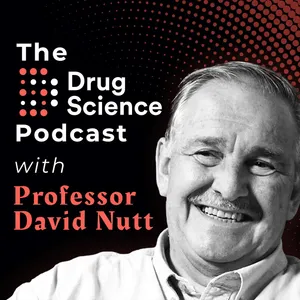
Professor David Nutt has spent a career making the argument for a rational, evidence-based approach to drug policy and drug use. The scientific evidence still challenges perceived wisdom on drugs and for that reason can appear to be contentious. In this podcast, the Professor explores the actual harms and potential benefits of various drugs, challenging myths surrounding classification and legislation, and exploring the societal impact of poorly informed drug policy. Using evidence in public policy should not be controversial. A podcast for anyone interested in understanding the scientific truth about drugs, free from political or moral concern.
Customized Recaps
AI-powered recaps with compact key takeaways, quotes, and insights.
Straight to Your Inbox
Get key takeaways from The Drug Science Podcast in a 5-minute read.
Save Hours Every Week
Stay current on your favorite podcasts without falling behind.
Frequently Asked Questions
What is Podzilla's The Drug Science Podcast daily summary?
It's a free AI-powered email that summarizes new episodes of The Drug Science Podcast as soon as they're published. You get the key takeaways, notable quotes, and links & mentions — all in a quick read.
How does the The Drug Science Podcast podcast summary work?
When a new episode drops, our AI transcribes and analyzes it, then generates a personalized summary tailored to your interests and profession. It's delivered to your inbox every morning.
Is this an official The Drug Science Podcast product?
No. Podzilla is an independent service that summarizes publicly available podcast content. We're not affiliated with or endorsed by Drug Science.
Can I get summaries of other podcasts too?
Absolutely! The free plan covers up to 3 podcasts. Upgrade to Pro for 15, or Premium for 50. Browse our full catalog at /podcasts.
How often does The Drug Science Podcast release new episodes?
The Drug Science Podcast publishes biweekly. Our AI generates a summary within hours of each new episode.
What topics does The Drug Science Podcast cover?
The Drug Science Podcast covers topics including Science, Culture, Society & Culture. Our AI identifies the specific themes in each episode and highlights what matters most to you.
Start getting The Drug Science Podcast summaries tomorrow morning.
Free forever for up to 3 podcasts. No credit card required.
Free forever for up to 3 podcasts. No credit card required.