Free Daily Podcast Summary
PSYCHOACTIVE: Daily Summaries Delivered
by iHeartPodcasts and Protozoa
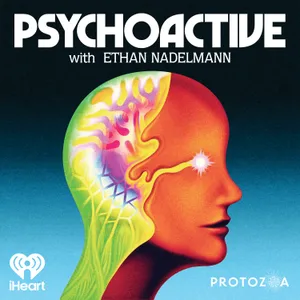
Drugs, drugs, drugs. Almost everyone uses them. Almost everyone has an opinion about them. Drug policy pioneer Ethan Nadelmann gets to the bottom of our strange relationship to drugs by talking with those who love them, hate them, and study them.
Latest Episodes
The most recent episodes — sign up to get AI-powered summaries of each one.
- Jan 26, 20231h 32m
Steve Rolles on Legalizing Drugs
The notion of legalizing any sort of illicit drug seemed preposterous to most people just twenty years ago. Now cannabis is being legalized in a growing number of states and countries, psychedelic legalization is proceeding much faster than anyone expected, and in Colombia the president and other leading political figures are talking openly of legalizing cocaine. There are, of course, many ways to legally regulate previously illegal psychoactive drugs. Perhaps no one is more expert on these issues than Steve Rolles at the UK-based Transform Drug Policy Foundation. We talked and debated about various models of legally regulating cannabis, psychedelics and stimulants; the evolving role of the US government and UN agencies; and current developments in Europe, the Americas and Asia.See omnystudio.com/listener for privacy information.
- Jan 19, 20231h 3m
Charley & Shelley Wininger On Healthy Aging & Sex with MDMA
It ain’t easy getting old but the right drugs, used in the right ways, can help. Charley Wininger is a psychotherapist, called “The Love Doctor,” who recently authored of Listening to Ecstasy: The Transformative Power of MDMA. I talked with him and his wife, Shelley, about the ways in which MDMA has proven invaluable in their love relationship, in building deep communities and enhancing sexuality, and in dealing with grief. MDMA, Charley says, “is not an antidote but a salve, a tonic, a rejuvenating vacation that can replenish the fountain of one’s youth.”See omnystudio.com/listener for privacy information.
- Jan 12, 20231h 1m
Paul Gootenberg on the Global History of Drugs
There’s more or less never been a drug free society in human history but scholarly examination of the history of psychoactive drugs was surprisingly sparce until just a few decades ago. Paul Gootenberg is a distinguished professor of history, author of books on the history of cocaine, editor of the recently published Oxford Handbook of Global Drug History, and president of the rapidly growing Alcohol and Drugs History Society. We talked about the evolution of this interdisciplinary field of study from its mostly anthropological origins, its connections to commodity, consumption and cultural studies as well as medicine, sociology and politics, and the pioneering works shaping the field.See omnystudio.com/listener for privacy information.
- Jan 5, 20231h 1m
Dennis McKenna on The Brotherhood of the Screaming Abyss
The renowned ethnopharmacologist and research pharmacognosist, Dennis McKenna, wrote "The Brotherhood of the Screaming Abyss: My Life with Terence McKenna," ten years ago. That book is being republished, with a new afterword by Dennis, this month, so it seemed the right moment to talk about their relationship and respective evolutions, the experiences, people, literature and ideas that shaped them, and why Dennis regards the book that he and Terence co-authored in the mid-1970s, Magic Mushroom Grower’s Guide, as perhaps their most significant accomplishment.See omnystudio.com/listener for privacy information.
- Dec 29, 20221h 3m
Neil Carrier on Khat
I’ve long been fascinated by khat, the psychoactive plant that is legal and consumed widely in Yemen and the Horn of Africa (Somalia, Ethiopia and Djibouti) but that was criminalized in recent decades in the United States, Europe and other parts of the world as Somali and other émigré communities grew. Its history and uses are somewhat analogous to coca in Latin America. Neil Carrier, a social anthropologist teaching at the University of Bristol, is one of the world’s leading experts on khat – its history, economics, markets, social roles, consumption and conflicts over its benefits, harms and “quasi-legality.”See omnystudio.com/listener for privacy information.
- Dec 22, 20221h 9m
Bonus episode: Psychedelic Confessions - Speaking Personally
I’m often a guest on other podcasts. Among the conversations I most enjoyed, and which many listeners may find particularly interesting, was with Giancarlo Canavesio on his Mangu.TV Podcast. He asked me to be his first guest in a series entitled “Psychedelic Confessions,” during which we reflected on our respective experiences with psilocybin mushrooms, LSD, ayahuasca, mescaline, ketamine, DMT, MDMA, cannabis, and other psychoactive substances. This was, perhaps not surprisingly, one of my most personal interviews.See omnystudio.com/listener for privacy information.
- Dec 15, 20221h 6m
Lisa McGirr on Alcohol Prohibition and the Rise of the American State
The Prohibition era (1920-33) plays a far more significant role in U.S. history than is commonly assumed. Yes, it clearly failed in its objectives. And, yes, the assumptions that led to the rapid enactment of the 18th Amendment were massively flawed. But Prohibition was, as Lisa McGirr, professor of history at Harvard, argues in her book, The War on Alcohol: Prohibition and the Rise of the American State, “one of the boldest and most radical social efforts to alter personal behavior in the nation’s history and one that would have dramatic though unintended consequences for nation-state building and for politics.” It is also, not surprisingly, inseparable from the broader history of drug prohibition and drug wars since the start of the 20th century.See omnystudio.com/listener for privacy information.
- Dec 8, 202257 min
Gabor Maté on Trauma and the Myth of Normal
“Our culture’s skewed idea of normality,” says the well known physician and author, Dr. Gabor Maté, “is the single biggest impediment to fostering a healthier world, even keeping us from acting on what we already know.” Some years ago, his book, In the Realm of Hungry Ghosts, touched and helped a tremendous number of people looking for insight into their addictive behaviors with his focus on traumas suffered at a young age. Addiction, he stressed, is one result of inadequate and counter-productive efforts to treat one’s pain. In his new book, The Myth of Normal, Gabor makes the case for viewing trauma as the common template underlying most physical and mental maladies. We discussed Gabor’s perspectives and personal evolution, including his growing appreciation for the value of psychedelics in identifying and healing trauma.See omnystudio.com/listener for privacy information.
Get PSYCHOACTIVE summaries in your inbox
Free AI-powered daily recaps. Key takeaways, quotes, and mentions — in a 5-minute read.
Get Free Summaries →Free forever for up to 3 podcasts. No credit card required.
You Might Also Like
Listeners also like.
The Psychology Podcast
Explores human potential and possibility through conversations with scientists, thinkers, and self-actualized individuals.

Psychiatry & Psychotherapy Podcast
Explores psychiatry and psychotherapy through interviews with experts, trainees, and individuals sharing lived mental health experiences.
Mushroom Revival Podcast
Explores the role of fungi in health, science, technology, and culture.

Culture Apothecary with Alex Clark
Experts share holistic remedies to heal cultural wounds through candid conversations on wellness, identity, and systemic change.
Cannabis Cultivation and Science Podcast
Experts discuss science-based organic cannabis cultivation techniques and advancements in growing technology.

Peak Performance Life Podcast
Covers health, energy, and mental performance optimization through biohacking, nutrition, and lifestyle strategies.
Decoded | Unlock The Secrets of Human Behavior, Emotion and Motivation
Explores subconscious patterns behind human behavior and provides tools to rewire destructive cycles and live with intention.
Paul Saladino MD podcast
A physician explores the root causes of chronic disease and optimal health through science and personal experimentation.
We're Out of Time
Discusses the fentanyl crisis, mental health, and resilience through interviews with recovery experts, survivors, and public figures.
Aubrey Marcus Podcast
Conversations on mindset, spirituality, and human optimization with a focus on psychedelics, health, and personal growth.

Macrodosing: Arian Foster and PFT Commenter
Arian Foster and PFT Commenter explore conspiracy theories and historical events with a rotating cast of guests.
Stanford Psychology Podcast
Students interview psychologists about recent research and its real-world applications in mental health, behavior, and cognition.
About PSYCHOACTIVE
Drugs, drugs, drugs. Almost everyone uses them. Almost everyone has an opinion about them. Drug policy pioneer Ethan Nadelmann gets to the bottom of our strange relationship to drugs by talking with those who love them, hate them, and study them.
Customized Recaps
AI-powered recaps with compact key takeaways, quotes, and insights.
Straight to Your Inbox
Get key takeaways from PSYCHOACTIVE in a 5-minute read.
Save Hours Every Week
Stay current on your favorite podcasts without falling behind.
Frequently Asked Questions
What is Podzilla's PSYCHOACTIVE daily summary?
It's a free AI-powered email that summarizes new episodes of PSYCHOACTIVE as soon as they're published. You get the key takeaways, notable quotes, and links & mentions — all in a quick read.
How does the PSYCHOACTIVE podcast summary work?
When a new episode drops, our AI transcribes and analyzes it, then generates a personalized summary tailored to your interests and profession. It's delivered to your inbox every morning.
Is this an official PSYCHOACTIVE product?
No. Podzilla is an independent service that summarizes publicly available podcast content. We're not affiliated with or endorsed by iHeartPodcasts and Protozoa.
Can I get summaries of other podcasts too?
Absolutely! The free plan covers up to 3 podcasts. Upgrade to Pro for 15, or Premium for 50. Browse our full catalog at /podcasts.
How often does PSYCHOACTIVE release new episodes?
PSYCHOACTIVE publishes weekly. Our AI generates a summary within hours of each new episode.
What topics does PSYCHOACTIVE cover?
PSYCHOACTIVE covers topics including Fitness, Culture, Health & Fitness, Society & Culture. Our AI identifies the specific themes in each episode and highlights what matters most to you.
Start getting PSYCHOACTIVE summaries tomorrow morning.
Free forever for up to 3 podcasts. No credit card required.
Free forever for up to 3 podcasts. No credit card required.