Free Daily Podcast Summary
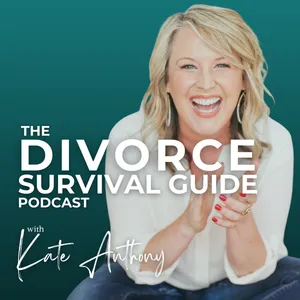
The Divorce Survival Guide Podcast: Daily Summaries Delivered
by Kate Anthony, CPCC
On the Divorce Survival Guide Podcast we have open and honest conversations about co-parenting, separation, divorce, and the hardest question of all, should you stay or should you go? Hosted by Kate Anthony, your Divorce Survival Guide.
Latest Episodes
The most recent episodes — sign up to get AI-powered summaries of each one.
- 3 days ago49 min
Episode 384: End Emotional Outsourcing with Beatriz Victoria Albina, NP
There was a stretch of my life where I could not be alone. Not because I loved being social so much, but because without someone else in the room, I did not know who I was. No plans for the night meant a full blown panic attack. What was I supposed to do with myself? More importantly, who even was I? Turns out that is not just a me thing. It has a name, emotional outsourcing, and it is exactly what I dig into with my guest Beatriz (Béa) Victoria Albina, author of End Emotional Outsourcing: How to Overcome Your Codependent, Perfectionist, and People-Pleasing Habits. She also hosts the Feminist Wellness Podcast, and from the first minute we hit record, it was clear this was going to be one of those conversations we could have kept going all day. We get into emotional outsourcing, the term Béa uses for the codependent, people-pleasing, and perfectionist habits so many of us learned as survival strategies. We also talk about how somatic work actually changes us, instead of just helping us understand our patterns intellectually. And if you are Gen X or a Xennial, this is your bonus round. Somewhere around the Mac LE2 and Saved by the Bell, we take a short detour into nostalgia. What you'll hear about in this episode: What emotional outsourcing actually is, and why Béa uses it as the catch-all term underneath codependency, people-pleasing, and perfectionism Using TV and movies as a mirror for healthy relating, and why even a show as savage as Veep can retrain your brain to recognize what it's missing How Béa defines the differences between codependency, people-pleasing, and perfectionism, and why they are survival habits, not character flaws Why knowing your patterns intellectually isn't the same as changing them, and how somatic experiencing helps your body believe a new story The reticular activating system and the default mode network, the two brain regions that keep us running the same old stories until we interrupt them Béa's "kitten steps" approach to rebuilding trust with yourself, starting as small as actually letting yourself pee when you have to pee Learn more about Beatriz (Béa) Victoria Albina, NP, MPH, SEP: Beatriz (Béa) Victoria Albina, NP, MPH, SEP (she/her) is a UCSF-trained Family Nurse Practitioner, Somatic Experiencing Practitioner, Master Certified Somatic Life Coach, author of the bestselling "End Emotional Outsourcing: How to Overcoming Your Codependent, Perfectionist and People Pleasing Habits" and Breathwork Meditation Guide with a passion for helping humans socialized as women to reconnect with their bodies, regulate their nervous systems and rewire their minds, so they can break free from codependency, perfectionism and people pleasing and reclaim their joy.
- 1 weeks ago23 min
Encore Episode: When You Give Up the Authentic Fight
This week's episode is an encore episode. I'm away at my Unbreakable Retreat, so I'm revisiting one that felt right to bring back. I asked a friend who is going through a divorce what I should talk about on this episode. He said I should talk about cravings. He explained it this way, "Given the shit happening in the world, we turn to safety, fantasy, and imagination to numb our true selves and we give up the authentic fight." How beautiful is that? There is so much happening in the world right now. And my friend is right, we numb out as a way to escape. We numb with food, drinking, or shopping. When it comes to relationships, we numb out by fantasizing about other people, hoping they are the cure for a troubled marriage. Turning to other people, places, or things will not lead you to true fulfillment. Doing so simply covers up the pain, momentarily. Succumbing to cravings is giving up the authentic fight. What happens if you just sit still with all of the shit that is happening in your life? What if you gazed into all of your own holes and examined them for what they are? What if? What might be possible for your relationship, for your marriage, or most importantly, for you? That's what this episode is about. I hope you tune in. What You'll Hear About In This Episode: Why a marriage is not responsible for fulfilling you 100% Discernment work is so complex, but necessary The importance of recognizing your own 'made-up' stories and changing the narrative Links and Resources: Unbreakable Retreat Kate Anthony's Complete Parenting Plan Focused Strategy Sessions with Kate The Divorce Strategy Toolkit Phoenix Rising: A Divorce Empowerment Collective Kate on Instagram Kate on Facebook Kate's Substack Newsletter: Divorce Coaching Dispatch Episodes are also available YouTube! Seven Step Mindset Reset for Divorce Disclaimer: The commentary and opinions available on this podcast are for informational and entertainment purposes only and not for the purpose of providing legal or psychological advice. You should contact an attorney, coach, or therapist in your state to obtain advice with respect to any particular issue or problem.
- 2 weeks ago51 min
Episode 383: Medical Decision-Making in High-Conflict Co-Parenting with Dr. Madeleine Gagnon
After divorce, medical decisions don't stop. Kids still need vaccines, dental appointments, medications, evaluations, therapy, all of it. In high-conflict or parallel parenting, even basic healthcare decisions can become a new arena for control, misinformation, and sabotage. To help navigate this, I'm talking with board-certified pediatrician Dr. Madeline Gagnon, a complex care specialist who has worked with families at Boston Children's Hospital and other leading institutions. We get into how kids get pulled into adult conflict without realizing it, what healthy conflict actually looks like between co-parents, and what child-centered medical decision-making means when parents don't agree. We also tackle a question that comes up constantly: if you're going to keep fighting these battles anyway, shouldn't you just stay in the marriage? It's a conversation about knowing what's worth going to bat for, what isn't, and how to keep your kids at the center. What you'll hear about in this episode: What child-centered medical decision-making looks like when you and your co-parent don't agree How triangulation shows up in divorced families, often more subtly than you'd expect, and how kids get pulled into it without even realizing what's happening Whether staying together just to keep the peace and avoid future battles is really the safer choice for your kids Wisdom for the mom who feels like she's fighting an uphill battle just to get her kid the care they need What healthy conflict actually looks like between exes, and how to move toward it instead of away from it Learn more about Dr. Madeleine Gagnon: Dr. Madeleine Gagnon is a board-certified pediatrician, qualified neutral mediator, and advocate for family communication and conflict resolution. A graduate of Georgetown University School of Medicine, she has worked for leading institutions including Boston Children's Hospital. She is the founder of BRIDGE Health Consulting, which helps families navigate conflict, grief, trauma, and life transitions; PULSE, a social initiative for teens and their parents that promotes communication and confidence through mentorship and social media; and BRIDGE To Home, which provides in-home support services for individuals with disabilities and mental health needs. Through years of work spanning both the clinic and community, Dr. Gagnon delivers practical, real-world approaches to everyday challenges that resonate meaningfully with parents, children, and teens alike. A trusted voice on parenting, adolescence, and family dynamics, Dr. Gagnon is frequently featured as a medical expert on network television and public radio affiliates. Resources & Links: Kate Anthony's Complete Parenting Plan Focused Strategy Sessions with Kate The Divorce Strategy Toolkit Phoenix Rising: A Divorce Empowerment Collective Kate on Instagram Kate on Facebook Kate's Substack Newsletter: Divorce Coaching Dispatch Episodes are also available YouTube! Seven Step Mindset Reset for Divorce Listeners can exclusively book a free 15–20 minute Parent Strategy Call with Dr. Gagnon <p dir="
- 3 weeks ago35 min
[Encore Episode] Your Divorce Roadmap: The Stages and Phases of Divorce
Encore Episode!! After over a decade of working with thousands of women, I've become really good at mapping out the entire divorce process and pinpointing where on that map someone might land. I've become so good at it that I actually created something I'm calling The Divorce Roadmap. In this episode, I share the three stages of the Roadmap: Awareness, Action, and Moving On, and explore the various phases within each stage. Divorce journeys are almost never linear, they ebb and flow and have hard times and times when things fall neatly into place. Knowing where you are on your journey can help you prepare for what's to come. If, after listening to this episode, you have found yourself somewhere along the map described, I have resources for every phase and every stage. You can download your divorce roadmap after listening to this episode. What you'll hear about in this episode: The three stages of the Divorce Roadmap: Awareness, Action, and Moving On Awareness stage: questioning, dawning realization, begging and bargaining, and finally acceptance Action stage: having the talk, making big decisions, telling the kids, and more Moving On stage: co-parenting, dating, single by choice, a first relationship, a first heartbreak, and possibly family blending <li data-slate-node="element" data-slate-fragment= "JTVCJTdCJTIydHlwZSUyMiUzQSUyMmRvY3VtZW50JTIyJTJDJTIydGhlbWUlMjIlM0ElN0IlMjJkb2N1bWVudCUyMiUzQSU3QiUyMmJhY2tncm91bmRDb2xvciUyMiUzQSUyMiUyM0ZGRkZGRiUyMiU3RCU3RCUyQyUyMmNoaWxkcmVuJTIyJTNBJTVCJTdCJTIydHlwZSUyMiUzQSUyMnVub3JkZXJlZC1saXN0JTIyJTJDJTIyY2hpbGRyZW4lMjIlM0ElNUIlN0IlMjJ0eXBlJTIyJTNBJTIybGlzdC1pdGVtJTIyJTJDJTIyY2hpbGRyZW4lMjIlM0ElNUIlN0IlMjJ0eXBlJTIyJTNBJTIybGlzdC1pdGVtLWNoaWxkJTIyJTJDJTIyY2hpbGRyZW4lMjIlM0ElNUIlN0IlMjJ0ZXh0JTIyJTNBJTIyVGhlJTIwdGhyZWUlMjBzdGFnZXMlMjBvZiUyMHRoZSUyMERpdm9yY2UlMjBSb2FkbWFwJTNBJTIwQXdhcmVuZXNzJTJDJTIwQWN0aW9uJTJDJTIwYW5kJTIwTW92aW5nJTIwT24lMjIlN0QlNUQlN0QlNUQlN0QlMkMlN0IlMjJ0eXBlJTIyJTNBJTIybGlzdC1pdGVtJTIyJTJDJTIyY2hpbGRyZW4lMjIlM0ElNUIlN0IlMjJ0eXBlJTIyJTNBJTIybGlzdC1pdGVtLWNoaWxkJTIyJTJDJTIyY2hpbGRyZW4lMjIlM0ElNUIlN0IlMjJ0ZXh0JTIyJTNBJTIyQXdhcmVuZXNzJTIwc3RhZ2UlM0ElMjBxdWVzdGlvbmluZyUyQyUyMGRhd25pbmclMjByZWFsaXphdGlvbiUyQyUyMGJlZ2dpbmclMjBhbmQlMjBiYXJnYWluaW5nJTJDJTIwYW5kJTIwZmluYWxseSUyMGFjY2VwdGFuY2UlMjIlN0QlNUQlN0QlNUQlN0QlMkMlN0IlMjJ0eXBlJTIyJTNBJTIybGlzdC1pdGVtJTIyJTJDJTIyY2hpbGRyZW4lMjIlM0ElNUIlN0IlMjJ0eXBlJTIyJTNBJTIybGlzdC1pdGVtLWNoaWxkJTIyJTJDJTIyY2hpbGRyZW4lMjIlM0ElNUIlN0IlMjJ0ZXh0JTIyJTNBJTIyQWN0aW9uJTIwc3RhZ2UlM0ElMjBoYXZpbmclMjB0aGUlMjB0YWxrJTJDJTIwbWFraW5nJTIwYmlnJTIwZGVjaXNpb25zJTJDJTIwdGVsbGluZyUyMHRoZSUyMGtpZHMlMkMlMjBhbmQlMjBtb3JlJTIyJTdEJTVEJTdEJTVEJTdEJTJDJTdCJTIydHlwZSUyMiUzQSUyMmxpc3QtaXRlbSUyMiUyQyUyMmNoaWxkcmVuJTIyJTNBJTVCJTdCJTIydHlwZSUyMiUzQSUyMmxpc3QtaXRlbS1jaGlsZCUyMiUyQyUyMmNoaWxkcmVuJTIyJTNBJTVCJTdCJTIydGV4dCUyMiUzQSUyMk1vdmluZyUyME9uJTIwc3RhZ2UlM0ElMjBjby1wYXJlbnRpbmclMkMlMjBkYXRpbmclMkMlMjBzaW5nbGUlMjBieSUyMGNob2ljZSUyQyUyMGElMjBmaXJzdCUyMHJlbGF0aW9uc2hpcCUyQyUyMGElMjBmaXJzdCUyMGhlYXJ0YnJlYWslMkMlMjBhbmQlMjBwb3NzaWJseSUyMGZhbWlseSUyMGJsZW5kaW5nJTIyJTdEJTVEJTdEJTVEJTdEJTJDJTdCJTIydHlwZSUyMiUzQSUyMmxpc3QtaXRlbSUyMiUyQyUyMmNoaWxkcmVuJTIyJTNBJTVCJTdCJTIydHlwZSUyMiUzQSUyMmxpc3QtaXRlbS1jaGlsZCUyMiUyQyUyMmNoaWxkcmVuJTIyJTNBJTVCJTdCJTIydGV4dCUyMiUzQSU
- Aug 20, 202649 min
Episode 382: The Rise of Misogyny: What Midlife Women Need to Know with Laurie James
Laurie James, somatic practitioner, coach, and author of Sandwiched, returns to talk about the rise of misogyny and what it means for women inside their relationships, their families, and the broader culture. This is a conversation we've both been having for years—in our own lives and with the women we work with every day—and it felt like time to have it out loud, together. Throughout our conversation, we unpack what misogyny actually is, how it shows up in ways women are often taught to minimize or normalize, and what living with it does to the body and nervous system over time. We also talk about what happens when the overwhelm becomes so intense that even identifying the next step—let alone making a plan—feels impossible. And we get into the question of when survival is no longer enough. When is it time to stop simply getting through the day and begin pushing back, speaking up, or making a change? That timing is deeply personal, and it matters more than people often realize. We're not having this conversation to frighten women or tell them what they should do. We're having it so they can better understand what they're experiencing, trust what their bodies have been telling them, and begin finding their way toward safety. What you'll hear about in this episode: What misogyny actually means and how it can show up inside a relationship The physical toll of living under chronic stress, including the possible connection to autoimmune disease Practical ways to regulate your nervous system when you're too overwhelmed to think clearly, much less make a plan What current data reveals about the rise of misogyny in the United States over the past several years Why healing may need to come before advocacy How to approach dating with less fear in a cultural climate that can make it feel increasingly unsafe Learn more about Laurie James: Laurie James is a mother, divorcée, recovering caregiver turned author, certified somatic practitioner & coach, and podcaster. With over 15 years' experience in energy work, somatic healing, parts work, and coaching. Laurie's podcast, Confessions of a Freebird, was inspired by her youngest of four children leaving the nest and is the sequel to her book, Sandwiched: A Memoir of Holding On and Letting Go. Laurie's book is about her journey from loneliness to finding belonging during a time when she was raising four teenage daughters, her mother had a heart attack and needed care, all while her marriage began to crumble. Now Laurie helps people divorce, heal, and date differently in midlife. She blends her coaching, somatic experiencing, and internal family systems training to help improve her clients relationships through befriending their body, nervous system, and parts that are protecting them. Doing so allows them to find the inner freedom to experience more happiness, joy, and create the life they desire. When she is not coaching clients or podcasting, she can be found nurturing her free spirit by walking her dog, skiing, sailing, hiking, volunteering, spending time with close friends or planning her next adventure. Resources & Links: Kate Anthony's Complete Parenting Plan Focused Strategy Sessions with Kate The Divorce Strategy Toolkit Phoenix Rising: A Divorce Empowerment Collective Kate on Instagram Kate on Facebook Kate's Substack Newsletter: Divorce Coaching Dispatch Episodes are also available YouTube! Seven Step Mindset Reset for Divorce Laurie's website Laur
- Aug 13, 202631 min
Episode 381: Kate On: The Peace Self-Care Can't Give You
What if self-care never quite fixed things because it was never designed to? There's a particular kind of exhaustion that comes from trying to create peace inside a relationship that keeps taking it away from you. You buy the lavender spray. You take the baths. You book the massages. You go to therapy. Some of it helps for an hour, an evening, maybe even a weekend. Then he walks through the door, and your body tenses right back up. In this solo episode, I talk about why self-care may have helped you survive your marriage without ever making it feel safe. Self-care can ease stress, but it cannot cure coercive control, make emotional abuse less abusive, or turn chronic criticism into intimacy. A massage might release the tension in your shoulders. It cannot make a deceptive or volatile partner trustworthy. The larger system remains fully intact while you play Whac-A-Mole with the symptoms, trying to create a sense of peace that the relationship keeps disrupting. I also talk about what happens in your body when you get real distance from that system, whether it's a work trip, a weekend away, or moving out for good. Sometimes the most revealing part is the profound peace that shows up when you are no longer being asked to monitor another adult all day long. What you'll hear about in this episode: Why self-care so often helps you survive a harmful marriage without ever making it safe The joy and calmness of finding profound peace Why some self-care genuinely helps you find the strength to climb out, even as it can quietly extend your tolerance for the intolerable The difference between coping better with a harmful dynamic and that dynamic actually improving How grief and calm can coexist after separation The deeper questions worth sitting with, like what becomes possible once you're no longer immersed in toxicity every single day Resources & Links: Phoenix Rising: A Divorce Empowerment Collective Focused Strategy Sessions with Kate The Divorce Strategy Toolkit Kate Anthony's Complete Parenting Plan The D Word: Making the Ultimate Decision About Your Marriage Seven Step Mindset Reset for Divorce Kate on Instagram Kate on Facebook Kate's Substack Newsletter: Divorce Coaching Dispatch Episodes are also available YouTube! =================== DISCLAIMER: THE COMMENTARY AND OPINIONS AVAILABLE ON THIS PODCAST ARE FOR INFORMATIONAL AND ENTERTAINMENT PURPOSES ONLY AND NOT FOR THE PURPOSE OF PROVIDING LEGAL OR PSYCHOLOGICAL ADVICE. YOU SHOULD CONTACT AN ATTORNEY, COACH, OR THERAPIST IN YOUR STATE TO OBTAIN ADVICE WITH RESPECT TO ANY PARTICULAR ISSUE OR PROBLEM. ===================
- Aug 6, 202642 min
Episode 380: When Supporting Your Trans Child Changes Your Marriage with Elle Baade
They say art imitates life, and this episode is a perfect example. My guest—and new bestie—is Elle Baade, author of the novel Consequences of Normal. The book follows Jane, a mother fighting to find her voice and advocate for her child, who is clearly and joyfully transgender, while her husband insists it's only a phase. As Jane supports her child, the journey begins to reshape their entire family, including her marriage, and raises a much bigger question: What is normal, anyway? While the novel is fiction, Elle is the mother of a transgender child herself. Jane's story draws from everything Elle has learned while raising her own child, as well as the experiences of the many parents she's met along the way. What you'll hear about in this episode: What inspired Elle to write Consequences of Normal and why this story feels especially important right now How a child coming out as transgender can affect a marriage, particularly when one parent is further along in understanding and acceptance than the other The devastating rates of self-harm among transgender youth—and why supporting a trans child isn't simply about affirmation, but can be a matter of life and death Why "normal" is a social construct, and how questioning it can open the door to greater honesty and authenticity The conversations Elle hopes this book will spark among families struggling to understand and support one another Learn more about Elle Baade: After years of writing freelance for local and regional publications, Elle Baade now writes upmarket women's fiction about empowering women. She writes about unique family dynamics to show that we are all more alike than we are different and that there is no such thing as normal. Elle writes to open pathways for communication around hard things where women have historically been encouraged to stay silent. Elle is the mother of four children, one of whom is transgender. Resources & Links: Kate Anthony's Complete Parenting Plan Focused Strategy Sessions with Kate The Divorce Strategy Toolkit Phoenix Rising: A Divorce Empowerment Collective Kate on Instagram Kate on Facebook Kate's Substack Newsletter: Divorce Coaching Dispatch Episodes are also available YouTube! Seven Step Mindset Reset for Divorce Elle's book, Consequences of Normal Elle on TikTok Elle on Instagram Elle on Facebook Elle's website =================== DISCLAIMER: THE COMMENTARY AND OPINIONS AVAILABLE ON THIS PODCAST ARE FOR INFORMATIONAL AND ENTERTAINMENT PURPOSES ONLY AND NOT FOR THE PURPOSE OF PROVIDING LEGAL OR PSYCHOLOGICAL ADVICE. YOU SHOULD CONTACT AN ATTORNEY, COACH, OR THERAPIST IN YOUR STATE TO OBTAIN ADVICE WITH RESPECT TO ANY PARTICULAR ISSUE OR PROBLEM. ===================
- Jul 30, 202640 min
Episode 379: Kate On: What Boundaries Actually Are and How to Set Them So They Stick
If setting boundaries were easy, we wouldn't need podcasts, books, or frameworks to teach us how to make and hold them. Boundaries are hard. But they're also essential to keeping sanity, strength, and confidence before, during, and after divorce. In this episode, I break down what a boundary actually is, and why most of us were never taught it in the first place. Most of what we call boundaries are actually requests, expectations, or desperate pleas for someone to finally understand how much they're hurting us. But that's not a boundary. I walk through Pia Mellody's framework from her book Facing Codependence, the difference between external and internal boundaries, and how a real boundary describes what you will do, not what you need someone else to do. From there, I get into consequences versus punishment, why follow through matters more than the perfect script, and why a boundary is never the same thing as a wall. Boundaries are both internal and external, and they both protect you and contain you. It's not about becoming less loving, it's about creating space for love that doesn't require losing yourself. Maybe the most important boundary you'll ever set is the one inside yourself that says you will no longer abandon yourself to keep someone else comfortable. What you'll hear about in this episode: Why most of us were never actually taught what a boundary is The difference between external boundaries and internal boundaries Why a boundary describes what you will do, not what you need someone else to do The difference between a boundary consequence and a punishment Why your boundary isn't proven by whether the other person likes it or not What to do if enforcing a boundary could put you in physical danger Why follow through matters more than the perfect script The internal boundaries you never have to announce to anyone Resources & Links: The D Word: Making the Ultimate Decision About Your MarriageKate Anthony's Complete Parenting Plan Focused Strategy Sessions with Kate The Divorce Strategy ToolkitPhoenix Rising: A Divorce Empowerment CollectiveKate on InstagramKate on FacebookKate's Substack Newsletter: Divorce Coaching DispatchEpisodes are also available YouTube! Seven Step Mindset Reset for Divorce Facing Codependence, Pia Mellody =================== DISCLAIMER: THE COMMENTARY AND OPINIONS AVAILABLE ON THIS PODCAST ARE FOR INFORMATIONAL AND ENTERTAINMENT PURPOSES ONLY AND NOT FOR THE PURPOSE OF PROVIDING LEGAL OR PSYCHOLOGICAL ADVICE. YOU SHOULD CONTACT AN ATTORNEY, COACH, OR THERAPIST IN YOUR STATE TO OBTAIN ADVICE WITH RESPECT TO ANY PARTICULAR ISSUE OR PROBLEM. ===================
About The Divorce Survival Guide Podcast
On the Divorce Survival Guide Podcast we have open and honest conversations about co-parenting, separation, divorce, and the hardest question of all, should you stay or should you go? Hosted by Kate Anthony, your Divorce Survival Guide.
Customized Recaps
AI-powered recaps with compact key takeaways, quotes, and insights.
Straight to Your Inbox
Get key takeaways from The Divorce Survival Guide Podcast in a 5-minute read.
Save Hours Every Week
Stay current on your favorite podcasts without falling behind.
Frequently Asked Questions
What is Podzilla's The Divorce Survival Guide Podcast daily summary?
It's a free AI-powered email that summarizes new episodes of The Divorce Survival Guide Podcast as soon as they're published. You get the key takeaways, notable quotes, and links & mentions — all in a quick read.
How does the The Divorce Survival Guide Podcast podcast summary work?
When a new episode drops, our AI transcribes and analyzes it, then generates a personalized summary tailored to your interests and profession. It's delivered to your inbox every morning.
Is this an official The Divorce Survival Guide Podcast product?
No. Podzilla is an independent service that summarizes publicly available podcast content. We're not affiliated with or endorsed by Kate Anthony, CPCC.
Can I get summaries of other podcasts too?
Absolutely! The free plan covers up to 3 podcasts. Upgrade to Pro for 15, or Premium for 50. Browse our full catalog at /podcasts.
How often does The Divorce Survival Guide Podcast release new episodes?
The Divorce Survival Guide Podcast publishes weekly. Our AI generates a summary within hours of each new episode.
What topics does The Divorce Survival Guide Podcast cover?
The Divorce Survival Guide Podcast covers topics including Education, Relationships, Culture, Society & Culture, Self-Improvement. Our AI identifies the specific themes in each episode and highlights what matters most to you.
Start getting The Divorce Survival Guide Podcast summaries tomorrow morning.
Free forever for up to 3 podcasts. No credit card required.
Free forever for up to 3 podcasts. No credit card required.