Free Daily Podcast Summary
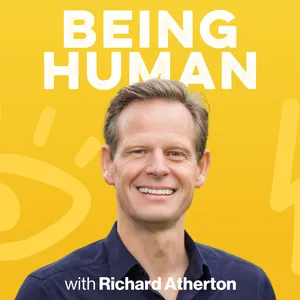
The Being Human Podcast with Richard Atherton: Daily Summaries Delivered
by Richard Atherton
Get key takeaways, quotes, and insights from The Being Human Podcast with Richard Atherton in a 5-minute read. Delivered straight to your inbox.
Latest Episodes
The most recent episodes — sign up to get AI-powered summaries of each one.
- 3 days ago1h 13m
#370 Has Feminism Delivered? - Carrie Gress
▶️ Connect with Richard on LinkedIn: https://www.linkedin.com/in/richardatherton-firsthuman/ What if the movement meant to free women has actually made them less happy, and people have struggled to discuss it? In this episode of Being Human, Richard Atherton talks with Carrie Gress, a philosopher, co-founder of The Theology of Home, and author of eleven books, including The End of Woman: How Smashing the Patriarchy Has Destroyed Us. Carrie, who has a PhD in philosophy, originally planned to write a short chapter on first-wave feminism. Instead, she spent four years discovering how its roots are closely linked to socialism, the occult, and a view of womanhood shaped more by envy than by freedom. She links Mary Wollstonecraft's call for equality to the consciousness-raising methods used in Mao's China, revealing a history that is new to many people. Her argument is not against women. Instead, she argues for restoring what feminism has quietly removed: the unique strengths women bring to families, workplaces, and culture when they embrace their own identity. We discuss: The hidden origins of feminism Why women are less happy now Motherhood as feature, not flaw The false binary no one questions What men really love about women Links: Carrie Gress / The Theology of Home The End of Woman (Book) Carrie’s Substack
- 1 weeks ago1h 2m
#369 From Refugee Camp to CEO — What 40 Jobs Taught Him About Leadership - Ali Mahlodji
▶️ Connect with Richard on LinkedIn: https://www.linkedin.com/in/richardatherton-firsthuman/ Have you ever thought that the hardest things you’ve faced might actually be preparing you for the life you’re meant to live? In this episode of Being Human, Richard Atherton talks with Ali Mahlodji, CEO of futureOne, keynote speaker, five-time author, and guest lecturer at the University of Cambridge. As a toddler, Ali found himself in a refugee camp in Austria. At 13 he started stuttering and didn’t stop until he was 22. He left school early, worked more than 40 jobs ranging from floor cleaner to carpenter, and taught himself software engineering using library books. After 70 application letters to OG Silicon Valley giant, Sun Microsystems, Ali lands himself his first tech role. What made the difference for him was something his mother did every day, no matter how tough things got: she told him she loved him just as he was. Not for his grades or achievements, but simply for being himself. Now, through futureOne’s Heroes programme, he helps people in 40 countries break free from old patterns. In this conversation, he shares why, with AI on the rise, doing this inner work is more important than ever. We discuss: Escaping Iran aged 2 Dealing with his father's mental breakdown Getting his break in Tech Building a start-up and exiting Recovering from burnout and building futureOne Links: Ali's Website futureOne
- 2 weeks ago1h 30m
#368 How to Rewire Your Mindset to Transform Your Health and Connections - David Robson
▶️ Connect with Richard on LinkedIn: https://www.linkedin.com/in/richardatherton-firsthuman/ What if drinking the same milkshake could make you gain or lose weight, just based on what you believe about it? The same idea could also affect your stress, how you age, and your relationships. In this episode of Being Human, Richard Atherton talks with David Robson, a science writer and author of The Expectation Effect: How Your Mindset Can Transform Your Life and The Laws of Connection. David used his mind training approach to go from an average student to getting in to Cambridge University to study mathematics. He is now a respected science journalist in the UK, writing for the BBC, The Guardian, and New Scientist. His work explores how our beliefs not only shape our actions but also affect our cortisol levels and our health. For example, just having a positive view of ageing can add 7.5 years to your life. David also challenges the idea that willpower runs out as the day goes on, showing that what we believe about self-control is more important than the time of day. He explains why self-compassion is the key to lasting performance, backed by scientific evidence. We discuss: The art of being a "Beautiful Mess" How to rapidly build rapport It's not just about listening to them Why they might like you more than you think How to eat decadently and lose weight Links: David’s Website
- 3 weeks ago1h 18m
#367 Who Do You Need to Become? - Andrew Bryant
▶️ Connect with Richard on LinkedIn: https://www.linkedin.com/in/richardatherton-firsthuman/ What if the most important leadership skill has nothing to do with leading others and everything to do with the person you're choosing to become? In this episode of Being Human, Richard Atherton is joined by Andrew Bryant, worldwide self-leadership thought leader, keynote speaker, and author of five books, including Potential-ize: How Leaders Unlock Human Potential in the Age of AI. Andrew trained as a physiotherapist in London in the early eighties, working with athletes, football players, and even a ballet company, learning how the body performs under pressure. But what he was really learning was that performance lives or dies in the narrative, our internal dialogue, that we tell ourselves in the moments that matter. That insight carried him from sports clinics to boardrooms across 40 countries, and ultimately into a framework for self-leadership that treats intentionality, identity, and personal agency as the foundation on which everything else is built. When a cancer scare during lockdown brought him face-to-face with his own mortality, the philosophy he'd spent decades teaching became the philosophy that carried him through. We discuss: Self-leadership as daily practice Identity shifts that transform everything The IGNITE framework explained AI efficiency vs human effectiveness The Pygmalion Effect at work Links: Andrew’s Website Potential-ize - The Book
- Apr 17, 20261h 35m
#366 The 18th Century Scientist Who Mapped the Afterlife - Curtis Childs
▶️ Connect with Richard on LinkedIn: https://www.linkedin.com/in/richardatherton-firsthuman/ What to make of a man who designed Sweden's mining infrastructure, mapped the human brain, and then spent the last 30 years of his life in daily conversation with the dead? Could Emanuel Swedenborg be the greatest 18th century thinker you've never heard of? In this episode of Being Human, Richard Atherton is joined by Curtis Childs, producer and director of Off the Left Eye, a YouTube channel approaching 2,000 videos on the life and teachings of Swedenborg. After spending 30 years as one of Sweden's greatest scientists, inventors and anatomists, at 53 he started having what we would now call near-death experiences, except he appeared to be able to slip in and out of these states with ease. He documented these across 30 volumes, work that would go on to influence Carl Jung, and quite possibly the 12-step programme. Curtis came to Swedenborg not as a scholar but as someone in crisis, searching for a model of consciousness that made sense of the chaos inside his own mind. This conversation explores what that model offers people navigating mental health challenges and interior growth, and those seeking potential answers to what lies beyond. We discuss: How Swedenborg eased Curtis’ depression How the Enlightenment and Christianity can threaten spiritual growth The real meaning of Heaven and Hell Sorting things out in the After Life The Self as Selector Links: Off the Left Eye Curtis' Website
- Apr 10, 20261h 8m
#365 The Leadership Blind Spots That Are Killing Your Transformation - Rupert Brown
▶️ Connect with Richard on LinkedIn: https://www.linkedin.com/in/richardatherton-firsthuman/ Richard is joined by Rupert Brown, a fractional Chief Transformation Officer. In January 2005, Rupert was driving down a motorway when he heard on the radio that Procter & Gamble had just bought his company, Gillette, for $57 billion. Nobody had thought to tell the employees first, and so started Rupert’s quest to figure out how to do change well. Rupert has since penned Lost in Transformation: Discover the Leadership Blind Spots Derailing Change, detailing his time at Gillette and elsewhere. He has over 30 years of HR experience across some of the world's most complex organisations. Rupert’s experiences taught him something most change stalls because leaders can't see their own blind spots: the arbitrary deadlines that crush emotional processing, the flattery that makes us say yes without thinking, the inner voice we never make time to hear. We dive into the wisdom gained from Rupert’s interviews with over 30 executives as well as his own formidable track record. We discuss: Five blind spots derailing change Kairos vs Kronos timing Why empathy disappears at work Three levels of resistance explained Leading with integrity under pressure Links: Rupert’s Website
- Apr 5, 20261h 3m
#364 Finding the Off Switch - Justin Hai
▶️ Connect with Richard on LinkedIn: https://www.linkedin.com/in/richardatherton-firsthuman/ Most of us know that modern tech is hijacking our nervous system at some level, and, if you’re anything like me, even after trying to get a lot of ‘tech hygiene’ right, you’re still feeling some of the effects. On this episode of Being Human, Richard Atherton is joined by Justin Hai, an award-winning British entrepreneur and author of the international bestseller, Stress Nation: Escape the Technology Trap and Eliminate Stress. Justin started his work in health in the biotech skincare industry. His company, Alastin, which specialises in regenerative skincare with peptides and growth hormones, was sold to Galderma in 2022 for over a billion dollars. But in the process of his research, Justin stumbled upon something he called "the master hormone": cortisol. Justin discovered that increased levels of cortisol suppress melatonin, leading to sleep deprivation, which stops the body from producing the necessary hormones – and once this cycle keeps going, things start falling apart. Weight gain, brain fog, poor libido, mood swings, and exhaustion. Not as individual issues to deal with, but all manifestations of an underlying problem are being exacerbated each year due to technology. We discuss: Why cortisol is the master hormone and how it controls everything How the modern world removed your body's natural off switch Why 95% of the supplements you're taking are destroyed in your stomach Men go through menopause too — and most have no idea Simple daily habits that bring cortisol down and sleep quality up Links: Stress Nation - The Book
- Mar 27, 20261h 20m
#363 Can Ayahuasca Heal What Therapy Cannot? - Sam Believ
▶️ Connect with Richard on LinkedIn: https://www.linkedin.com/in/richardatherton-firsthuman/ What if your healing journey that took you years could have taken months and the tool to get there is growing in the Colombian jungle? In this episode of Being Human, Richard Atherton is joined by Sam Believ, marine engineer and founder of Lawayra, an ayahuasca healing retreat in the Colombian countryside. Born in the Soviet Union and raised in post-independence Latvia, Sam grew up in a household shaped by intergenerational trauma: alcoholic, abusive father, an emotionally unavailable mother, and a culture where emotions were a sign of weakness. He channelled everything into his engineering career, built the life he was supposed to want, and found himself empty. After quitting his job and travelling South America, Sam discovered ayahuasca in Colombia. Initially it was out of curiosity, he then rediscovered it in a crisis. When the lockdowns forced him to stop for the first time in his life, everything he had suppressed caught up with him. A ceremony gave him both his healing and his purpose. He never left. Today Sam has guided close to 3,000 people through ceremonies at LaWayra, where the mission is simple: connect, heal, grow. We discuss: Surviving Soviet childhood trauma and escaping intergenerational pain Why achieving the "right" life left him completely empty What actually happens inside an ayahuasca ceremony Therapy vs ayahuasca Addressing abuse by shamans Links: LaWayra Retreats Sam's Website
Get The Being Human Podcast with Richard Atherton summaries in your inbox
Free AI-powered daily recaps. Key takeaways, quotes, and mentions — in a 5-minute read.
Get Free Summaries →Free forever for up to 3 podcasts. No credit card required.
You Might Also Like
Listeners also like.
Being Human
Relate Malaysia
Being Human
Talk with Jenna
How to Be Human
Anna Toonk
Being Human
Angela Silver
How Humans Work Podcast
Jef Szi

Being Human
Nic
The Humanley Podcast
humanley
Leading Human
Chad Prevost

Being Human
People Helping People

On Being Human Religiously
Dr. John Gilmore D.Min.
Being Human
Dr. Gregory Bottaro
Being Human
Public Anthropologists
About The Being Human Podcast with Richard Atherton
Being Human is for people who want go deep on what it means to be a human making a difference. We’ll discover how to be better humans at work and in life. We’ll explore leadership, relationships and how to make changes in ourselves and our environments. Nothing will be off limits. Welcome.
Customized Recaps
AI-powered recaps with compact key takeaways, quotes, and insights.
Straight to Your Inbox
Get key takeaways from The Being Human Podcast with Richard Atherton in a 5-minute read.
Save Hours Every Week
Stay current on your favorite podcasts without falling behind.
Frequently Asked Questions
What is Podzilla's The Being Human Podcast with Richard Atherton daily summary?
It's a free AI-powered email that summarizes new episodes of The Being Human Podcast with Richard Atherton as soon as they're published. You get the key takeaways, notable quotes, and links & mentions — all in a quick read.
How does the The Being Human Podcast with Richard Atherton podcast summary work?
When a new episode drops, our AI transcribes and analyzes it, then generates a personalized summary tailored to your interests and profession. It's delivered to your inbox every morning.
Is this an official The Being Human Podcast with Richard Atherton product?
No. Podzilla is an independent service that summarizes publicly available podcast content. We're not affiliated with or endorsed by Richard Atherton.
Can I get summaries of other podcasts too?
Absolutely! The free plan covers up to 3 podcasts. Upgrade to Pro for 15, or Premium for 50. Browse our full catalog at /podcasts.
How often does The Being Human Podcast with Richard Atherton release new episodes?
The Being Human Podcast with Richard Atherton publishes weekly. Our AI generates a summary within hours of each new episode.
What topics does The Being Human Podcast with Richard Atherton cover?
The Being Human Podcast with Richard Atherton covers topics including Business, Fitness, Health & Fitness, Mental Health. Our AI identifies the specific themes in each episode and highlights what matters most to you.
Start getting The Being Human Podcast with Richard Atherton summaries tomorrow morning.
Free forever for up to 3 podcasts. No credit card required.
Free forever for up to 3 podcasts. No credit card required.